
 About the Fellowship
Michael Brooks

Michael Brooks is a senior features editor at New Scientist magazine in London, handling the magazine's physics, math, and technology features. Before joining New Scientist five years ago, he wrote freelance for many publications, including the UK's Guardian, Observer, and Independent newspapers, and edited a book on quantum computing. His interest in issues of science, religion, and culture stems from his involvement in a church in his hometown of Lewes in the south of England, and time spent teaching physics to schoolchildren in West Africa.
| Article |
 The Spark Rises in the EastChina, driven by a desire for prestige and its own Nobel laureates, could soon lead the world in scientific research. 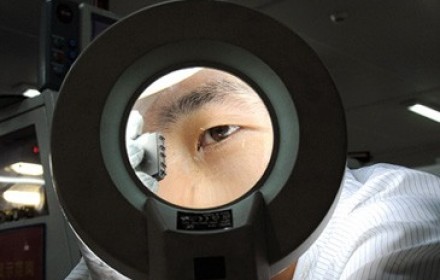 Science is rising in the east. China's strategies for economic development, which are centred on creating a world-beating science base, don't sound like much. They go by odd names: the 863 Programme and Project 211, for instance, and the Torch and Spark programmes. But they are proving to be more powerful than even the Chinese government could have hoped. Last year, following a decade of phenomenal growth, China became the second-biggest producer of scientific knowledge in the world. In 1998, Chinese scientists published about 20,000 articles. In 2009, they produced more than 120,000. Only the US turns out more. According to figures released this year by the US National Science Foundation, there are now as many researchers working in China as there are working in the US or the EU. The state is encouraging Chinese scientists trained in the west to return home, offering them enormous salaries and access to world-class laboratories. In 2008, for example, the molecular biologist Yigong Shi, one of Princeton University's rising stars, walked away from a $10m research grant to set up a lab at Tsinghua University in Beijing. In January, the Chinese equivalent of the US National Institutes of Health was unveiled with £150m in its pockets, which will be distributed to new medical research projects. "China is focusing on developing an elite group of institutions and the performance of these is going to go on improving," says Jonathan Adams, director of research evaluation at Thomson Reuters in London and lead author of a 2009 report into China's scientific research strategies and achievements. If present trends continue, China will be the world leader in science by the end of this decade. "There's going to be a new geography," Adams says. "The map that people have in their minds of where science is taking place will have to be adjusted." Scientists working in the west need to react, according to Xiaoqin Wang, director of a biomedical engineering centre that Johns Hopkins University runs jointly with Tsing hua University. "Collaboration will become more and more important," he says. Canny European and North American scientists are already reaching out to China. The number of east-west collaborations has doubled in the past five years and organisations such as the UK Research Councils, the British Council and the US National Science Foundation have made brokering such partnerships a priority. |
| Article |
20 New Ideas in ScienceToday's most cutting-edge scientific thinking: from switching off ageing to finding dark matter.  Today’s most cutting-edge scientific thinking: from switching off ageing to "enhancing" our babies; understanding consciousness to finding dark matter. You read it here first. Humans are still evolvingThe modern world hasn't stayed evolution's hand. Comparisons of different genomes show that natural pressures are still doing their thing. The gene for digesting lactose, for example, is slowly spreading from European populations to the rest of humanity. A gene that appears to enhance fertility is also becoming more common across Europe. Disease is still a big driver of human evolution: people with particular genetic arrangements are more likely to survive malaria and HIV, for example. And almost all humans have lost the caspase 12 gene from their genomes, probably because those who have it are more susceptible to bacterial infections. It happens slowly, but we're still changing. This is one of many universesPhysicists like to know why things are as they are. Which makes it frustrating that some facts about the universe appear inexplicable. There are certain constants of nature - the numbers that determine how strong forces such as gravity are - that seem to be "just so" for no good reason. That wouldn't be so bad if they weren't so exquisitely perfect for allowing life to develop in our universe. Naively speaking, it looks as if someone designed the universe. That doesn't seem like a satisfying explanation to most physicists, so they have come up with a better one: that there are many universes, all with different properties. It is impossible to move from one to another, so we can't test this idea, but it does take away the "specialness" of the conditions we find ourselves in. Of course the universe is perfect for us: if it were any different we wouldn't be here to observe it. We might be able to turn off ageingCan we flick a switch in our genome that will greatly extend our lifespan? Experiments on worms, mice and fruit flies indicate that stopping certain genes from functioning, or altering others so that they flood the body with particular combinations of chemicals, can dramatically slow the rate at which an organism ages. It can even be done by more low-tech means: changing the chemical environment of the body by altering the diet or by injecting certain hormones can slow ageing, too. It's an alluring avenue of research, but it is also controversial. Plenty of biologists still say it's a mirage because we will never overcome the biological programme whereby cells die after a certain time, or indeed the rigours of wear and tear on the genome. Add that to the dangerous genetic copying errors that occur as cells divide and, for these naysayers, growing old remains an unavoidable future for humanity. Nevertheless, the consensus is that the fight against biological ageing has moved from impossible to enormously difficult, and that is exciting progress. |
| Column |
Out-of-Body Experiences A couple of days before the government announced that the Human Fertilisation and Embryology Authority (HFEA) will be axed, the journal Human Reproduction published a report on why, nearly 40 years ago, the UK Medical Research Council refused to fund Patrick Steptoe's and Robert Edwards's attempt to produce a test-tube baby. One surprising factor was that they weren't part of the in-crowd: Steptoe "came from a minor northern hospital" and Edwards wasn't even a professor. Properly shocking, however, is the news that the refusal came in part because government research was focused on limiting fertility, rather than increasing it. If ever we questioned the need for an "arm's-length" body to distance government policy from reproductive science, surely that little bombshell is enough to make us think again. No doubt fertility clinics are rejoicing at the HFEA news. Scientists, if they know what's good for them, won't be. The HFEA was designed not to deal with the minutiae of regulating clinics, but to facilitate a public appraisal of the dilemmas that science creates. The regulation of fertility and embryology research will now be hidden within the remit of the Care Quality Commission (CQC). There will be repercussions. These are life-and-death issues, and people care far more about them than whether the Mid Staffordshire NHS Foundation Trust is reducing the incidence of bedsores (the subject of a recent CQC press release). Without a distinct, visible body to oversee reproductive ethics, scientists in the field stand to lose public trust. The HFEA has tackled some daunting issues in its time. Remember Diane Blood, who wanted to be impregnated using her dead husband's frozen sperm? The child, now nearly 12, was conceived and born despite the HFEA's disapproval. Perhaps the HFEA didn't get that right, but it has made some good calls, too. In 2004, the UK became the first European nation to permit research on cloned human cells. In 2007, scientists breathed a sigh of relief when the HFEA permitted women to donate eggs for research projects under certain circumstances. Another sensible decision, transparently made. What was right in every case was that a high-profile public debate took place; scientists were not given carte blanche. Will this continue when reproductive ethics is a minor part of the CQC's remit? |
| Column |
Keep It In Your Genes You really do get by with a little help from your friends. Recent US research indicates that if you have lots of friends, you are likely to live much longer. The study tracked more than 300,000 people over seven years and concluded that having a good support network is as influential a factor in your long-term health as whether or not you're a smoker. The researchers involved are calling for doctors to add patients' social networks to the health-care checklist. If your doctor asking about your friends seems unlikely (more unlikely, at least, than insurance companies pushing up premiums for loners), perhaps that's because this finding seems entirely unsurprising. Friends keep you happy, which helps keep you healthy. They also assist with practical issues, such as getting to a hospital check-up. But research into life expectancy can throw out surprises. Take its relation to teenage pregnancy, for example: people in low life-expectancy groups become parents earlier. It has been known for a while that, in the face of deprivation, stress or direct threats, many animals embark on reproduction much quicker. It is now becoming clear that the animal we know as Homo sapiens is no different. Young teenagers' experiences of being threatened, getting into fights or being offered drugs provoke a biological reaction: they become parents much sooner. Teenage pregnancies aren't just another fact of life in a difficult upbringing. When biologists use controls for all the social factors, an early exposure to menace or mortality seems to be a biological trigger for reproduction. A brush with death makes you broody. Perhaps it shouldn't really come as a surprise. If your primary goal is to live for ever by passing your genes on to the next generation, there is always a balance to be struck. You want to maximise your progeny's chances of survival by providing a good, stable upbringing. But you also don't want to die childless while waiting for the right conditions. Poverty brings low life expectancy, a low chance of future prosperity, an increased chance of debilitating illness and greater exposure to life-threatening crime. The genes' response? Get on with getting it on before it's too late. Anyone hoping for a quick fix to teenage pregnancy would do well to step back and look at this bigger picture; the recent announcement that 28 per cent of all teenage girls who are eligible for free school meals have been pregnant at least once (and 7 per cent twice) makes perfect evolutionary sense. |
| Column |
Unknown Unknowns In his first Reith lecture, Martin Rees discussed the "scientific citizen". How we proceed in areas such as genetics, brain science and artificial intelligence ought to involve the views of the public, he said. And that means they need to be able to make informed choices. Rees argued that this includes giving people a sense of how confident we can be in science's claims; the public needs to know about what Donald Rumsfeld would term the "known unknowns". But Rees didn't talk about the unknown unknowns. At this year's meeting of the American Association for the Advancement of Science, a panel of statisticians demonstrated that many scientific findings are much weaker than even scientists realise. Reruns of published health studies, for example, get the same finding as the original only 5 per cent of the time. Then there are the results that are clearly wrong. "Statistically significant" studies have shown, for instance, that breathing in pollution reduces heart problems, and that living in a polluted city is as harmful as smoking 40 cigarettes a day. Somehow these results were peer-reviewed and published, yet common sense tells us they are implausible. Yet often the studies are too complex for common sense to penetrate the data - and here is where things go awry. Usually, scientists use statistics to decide whether there is less than a 5 per cent chance that their apparently significant result could be the result of random effects. But the small print says this depends on their doing a simple, single test that is decided upon in advance. If you test many things at once, or make decisions on analysis after looking at the data, the probability of a mistaken conclusion goes through the roof. A study published in 2008 in the Journal of the American Medical Association showcases a typical pratfall. The study analysed the results of exposure to 275 chemicals, looking at 32 possible resulting health problems. It found that exposure to BPA, a chemical used in the manufacture of plastics, could result in diabetes and liver and heart problems. But the result is meaningless. In total, the study involved nearly 9,000 different tests and offered nine million different ways to analyse the data. Any of its findings could reasonably be the result of chance. |
| Column |
 Taking a Stand for ScienceScience writer Michael Brooks plans to stand in the general election against Bosworth MP David Tredinnick, who wants homeopathy to keep receiving NHS funding.  Science, most people would agree, has been quite a success. It has improved life expectancy, given us the wonder of the internet and the tools to feed vast numbers of people. It has taught us the history of the universe and shown us the wonderful secrets of life. It has even been able to put your entire CD collection neatly in your pocket. So why don't we value it in this country? We have taken this shining example of the best that human beings can do, and put it in the care of people who don't really don't care about it. I'm talking about our MPs. Many of them don't seem to get just how important science is. They allowed the government to bail out the financial sector to the tune of billions but barely raised a murmur when the government declared that science can't expect to be properly funded in this financial climate. When the industries built on physics inject as much money into Britain's GDP as the financial services sector, that's not rational. But that's the point. MPs don't have to be rational. It's not a standard we've ever held them to. Which is why we now have 70 of them trying to suppress a science-based recommendation that the NHS stop funding homeopathy. Their ringleader is David Tredinnick, MP for Bosworth. When the science and technology select committee recommended that taxpayers not foot the bill for what seems to be a placebo, he tabled an early day motion suggesting the committee's analysis was flawed. No surprises there. Tredinnick is a believer in the power of the stars to direct our fate and heal our bodies. He claimed more than £700 of taxpayers' money – repaid earlier this year – for astrology computer software and training. Today in the Leicester Mercury he asks why, when healthcare systems in India and China have linked medicine and astronomy for centuries, we don't think about doing the same. "Are we really just dismissing their views?" he asks. Well, yes, we are. We've done the analysis and are reasonably sure that balls of burning gas millions of miles away in outer space won't directly affect our health. |
| Column |
 Did Darwin Write a Blockbuster Novel? Want your scientific discoveries to make the kind of impact that Darwin made? Write them up like pulp fiction. I'm at a seminar on science and religion at Cambridge University. Gillian Beer, a distinguished professor of English Literature, has been arguing today that Darwin's voracious consumption of the Victorian novel, with all its adultery, racial and class politics and family scandals, was a big factor in the lasting success of the Origin Of Species. Darwin was a great fan of fiction. He had his wife read to him from novels every afternoon. In his autobiography he stated that novels "have been for years a wonderful relief and pleasure to me, and I often bless all novelists." He loved a happy ending, and characters that he could root for - "and if a pretty woman all the better," he said. Beer's analysis of the language of the Origin of Species leads her to believe that his use of metaphor and his instinct for storytelling earned the Origin a much wider audience than any scientific work would normally get. "He used things that were familiar to his readers," she said. Even on a broad level, the Origin has the elements of the world's most successful narratives. The idea that there are only a handful of basic plots - overcoming the monster; rags to riches; the quest; voyage and return; comedy; tragedy; rebirth - is widely established in Hollywood. |
| Column |
 Homeopathy: Sometimes a Dose of Nothing Can Do You a Power of Good.Homeopathic remedies such as essence of crop circle and 'F sharp minor' may sound daft but they have a vital role to play in modern medicine.  hould homeopathy be available on the NHS? Absolutely – it's possibly the safest, most ethical and most effective placebo there is. Where money is truly wasted is in trying to find evidence that homeopathy works. If you think that what passes for homeopathy today can be properly assessed by modern science, it should only take a visit to a homeopathic pharmacy to change your mind. As part of my research for my book 13 Things That Don't Make Sense, I did just that. On the shelves I found remedies made from "F sharp minor", "Gog and Magog, Oaks at Glastonbury", "Flapjack" and "Crop Circle". Also stored somewhere at that pharmacy - I didn't see it, but I had read about it - was a homeopathic remedy made from the blood of an HIV positive man. There were remedies made from more conventional substances too, plants that any herbalist might use. But where do you draw the line when trying to assess this field? Whatever you do, there is going to be a hell of a lot of noise in the data. The same is true for the legions of people who say homeopathy works for them. During my research I came across perfectly sane people whose initial scepticism had been blown away after their reluctant use of homeopathic treatments was followed by dramatic improvements in their symptoms. But anecdote, however impassioned, is not scientific evidence – there are always too many unknowns behind each success story. Having said all that, you might think that I'm against homeopathic treatments being funded on the NHS. I would certainly agree with the vast majority of scientists who say that homeopathy is almost certainly no more effective than placebo. But there are two qualifications I should make about that statement – and they make all the difference. The first qualification is that the claim homeopathy doesn't work is a prejudice, not a scientifically proven fact. The second qualification is much more important. I don't actually know what "no more effective than placebo" means. And neither does anyone else. |
| Article |
Born BelieversHow your brain creates God 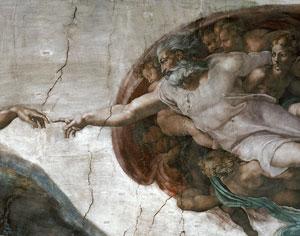 WHILE many institutions collapsed during the Great Depression that began in 1929, one kind did rather well. During this leanest of times, the strictest, most authoritarian churches saw a surge in attendance. This anomaly was documented in the early 1970s, but only now is science beginning to tell us why. It turns out that human beings have a natural inclination for religious belief, especially during hard times. Our brains effortlessly conjure up an imaginary world of spirits, gods and monsters, and the more insecure we feel, the harder it is to resist the pull of this supernatural world. It seems that our minds are finely tuned to believe in gods. Religious ideas are common to all cultures: like language and music, they seem to be part of what it is to be human. Until recently, science has largely shied away from asking why. "It's not that religion is not important," says Paul Bloom, a psychologist at Yale University, "it's that the taboo nature of the topic has meant there has been little progress." The origin of religious belief is something of a mystery, but in recent years scientists have started to make suggestions. One leading idea is that religion is an evolutionary adaptation that makes people more likely to survive and pass their genes onto the next generation. In this view, shared religious belief helped our ancestors form tightly knit groups that cooperated in hunting, foraging and childcare, enabling these groups to outcompete others. In this way, the theory goes, religion was selected for by evolution, and eventually permeated every human society. The religion-as-an-adaptation theory doesn't wash with everybody, however. As anthropologist Scott Atran of the University of Michigan in Ann Arbor points out, the benefits of holding such unfounded beliefs are questionable, in terms of evolutionary fitness. "I don't think the idea makes much sense, given the kinds of things you find in religion," he says. A belief in life after death, for example, is hardly compatible with surviving in the here-and-now and propagating your genes. Moreover, if there are adaptive advantages of religion, they do not explain its origin, but simply how it spread. An alternative being put forward by Atran and others is that religion emerges as a natural by-product of the way the human mind works. That's not to say that the human brain has a "god module" in the same way that it has a language module that evolved specifically for acquiring language. Rather, some of the unique cognitive capacities that have made us so successful as a species also work together to |
| Column |
Five Mysteries of the Universe Even today, there are scientific phenomena that defy explanation. If history is anything to go by, resolving these anomalies could lead to a great leap forward, so what are the greatest mysteries, and what scientific revolutions might they bring? 1 The missing universeEverything in the universe is either mass or energy, but there's not enough of either. Scientists think 96% of the cosmos is missing. They have come up with names for the missing stuff - "dark energy" and "dark matter" - but that doesn't really tell us anything about them. And it's not as if they're not important: dark energy is continually creating new swaths of space and time, while dark matter appears to be holding all the galaxies together. No wonder cosmologists are searching for clues to their whereabouts. 2 LifeI know you think you're more than a sack of molecules, but why? Next time you see a tree, ask yourself why that is alive when your wooden dining table is not. The phenomenon we call life is something that biologists have almost given up trying to define - instead they're investigating ways to make different combinations of molecules come alive. Bizarrely, the best hope is similar in chemical terms to laundry detergent. 3 DeathHere's the flip side: in biology, things eventually die, but there's no good explanation for it. There are hints that switching genes on and off controls ageing, but if our theory is right, those switches shouldn't have survived natural selection. Then there's the argument that an accumulation of faults does us in. However, there are plenty of whales and turtles who seem to age ridiculously slowly - if at all. Of course, if we can work out why, that could be great news for future humans (if not for the planet). 4 SexCharles Darwin might have fathered 10 children, but he couldn't understand why almost everything in biology uses sexual reproduction rather than asexual cloning - sex is a highly inefficient way to reproduce. We still don't know the answer. The suggestion that sex's gene shuffling makes us more able to deal with changing environments seems plausible, but the evidence is scarce. At the moment, sex only seems to exist to give males some role in life. 5 Free willIf you want to keep your sanity, look away now. Neuroscientists are almost convinced that free will is an illusion. Their experiments show that our brains allow us to think we are controlling our bodies, but our movements begin before we make a conscious decision to move. Some researchers have already been approached to testify in court that the defendant is not to blame for anything they did. A scary legal future awaits. |
| Article |
 The Truth about Truth he truth is not out there, after all - even in science. A gathering of European scientists, philosophers, historians and theologians this weekend unanimously concluded that there is no reason for science to claim a monopoly on the truth about how the world works. In a democratic society, the observations of science must not be given a privileged status in debates on issues such as embryonic stem cell research. Instead, scientific consensus must be laid out for members of that society to use as they see fit. The meeting, held in Lugano, Switzerland, discussed the notion of "truth". Science is not a source of indisputable truth, but best seen as "organised skepticism" with a diversity of opinion on any subject at any one time, Oxford University biologist and former UK chief scientist Robert May told the assembly. Though science creates opportunities to improve life for all, we should continue to think carefully about which of these opportunities we want to take. Just because it has made some things possible, that does not give scientists the right to choose whether they should be followed through. "Science has no special voice," May said. "The job of science is to frame the debate clearly, making plain the possible benefits and costs – and the uncertainties." The symposium was sponsored by the Balzan foundation, an Italian-Swiss charity that aims to promote debate in the sciences and humanities. If there was a central message to the meeting it was that nothing is reliable – and nothing is sacred. After a Roman Catholic cardinal had attempted to make a virtue of the unknowability of God by discussing the mystery of the incarnation, Oxford University’s Geza Vermes, a Jewish scholar, swept the point aside by laying out historical evidence suggesting Jesus was nothing more that a particularly charismatic Jewish teacher whose work was rudely interrupted by a crucifixion. Not that history is reliable either – as it turns out, historians have long given up worrying about the truth in their discipline. "Historians don’t have to have a theory of truth," Cambridge University’s Quentin Skinner told the gathering. And, he said, science should adopt the same position. Science is no different to history, Skinner reckons. "Scientists have a method they work by, but historians have a very similar method," he said in an interview after the meeting. "They ask how a belief about the past sits with any other beliefs, whether there any obvious contradictions, does it all hang together? Scientists do the same. All scientists can do is say of some phenomenon that everyone who has investigated the matter will affirm the same thing. That doesn’t make it true, he contends. "What’s added by saying that it’s true?" Skinner says. "I really don’t want to talk about truth, because I don’t know what it is. Is it a property that things have?" |
| Article |
It's Time for the Vatican to Accept IVFLOUISE BROWN, the world's first test-tube baby, turns 30 this week. She is no longer the miracle she once seemed: more than 3 million people have now been conceived through in vitro fertilisation. Indeed, IVF has become such a common means of conception that it is hard to believe the Catholic church still opposes it. At the time of Brown's birth, the church was undecided about the morals and ethics of IVF, but it has since banned its members from using the technology, declaring it "morally unacceptable". That is primarily because it views fertilised embryos as potential human beings, and thus sees the destruction of embryos, a common aspect of the IVF process, as equivalent to murder. That is not the only problem: there is also a moral question over the extent to which humans should usurp the role of the divine. In 1986 Cardinal Ratzinger, now Pope Benedict XVI, wrote that IVF "entrusts the life and identity of the embryo into the power of doctors and biologists and establishes the domination of technology over the origin and destiny of the human person". In other words, IVF allows us to play God. The Catholic church's position is looking ever more absurd, especially when you consider that it stands virtually alone on this matter. The vast majority of Jewish, Muslim, Buddhist and Hindu groups see IVF as a useful means to an essential end: overcoming infertility. Muslim scholars issued their first proclamation, or fatwa, on IVF within two years of Brown's birth. This came from the leaders of the majority Sunni group, to which over 90 per cent of the world's 1.3 billion Muslims belong. The fatwa decreed that a married couple |
| Article |
Beyond BeliefIn Place of God 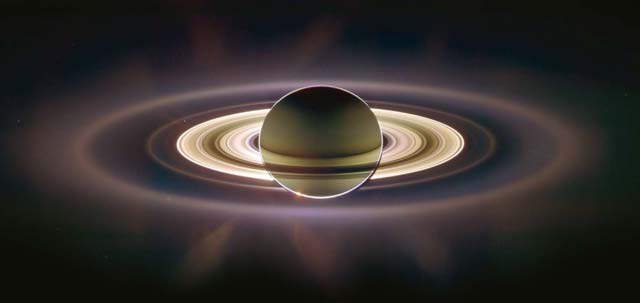 It had all the fervour of a revivalist meeting. True, there were no hallelujahs, gospel songs or swooning, but there was plenty of preaching, mostly to the converted, and much spontaneous applause for exhortations to follow the path of righteousness. And right there at the forefront of everyone's thoughts was God. Yet this was no religious gathering–quite the opposite. Some of the leading practitioners of modern science, many of them vocal atheists, were gathered last week in La Jolla, California, for a symposium entitled Beyond belief: Science, religion, reason and survival hosted by the Science Network, a science-promoting coalition of scientists and media professionals convening at the Salk Institute for Biological Studies. They were there to address three questions. Should science do away with religion? What would science put in religion's place? And can we be good without God? First up to address the initial question was cosmologist Steven Weinberg of the University of Texas, Austin. His answer was an unequivocal yes. "The world needs to wake up from the long nightmare of religion," Weinberg told the congregation. "Anything we scientists can do to weaken the hold of religion should be done, and may in fact be our greatest contribution to civilisation." Those uncompromising words won Weinberg a rapturous response. Yet not long afterwards he was being excoriated for not being tough enough on religion, and admitting he would miss it once it was gone. Religion was, Weinberg had said, like "a crazy old aunt" who tells lies and stirs up mischief. "She was beautiful once," he suggested. "She's been with us a long time. When she's gone we may miss |
| Article |
Keeping God From the CourtroomWhat a lost opportunity! When Harriet Miers withdrew as a nominee for the US supreme court, her Christian critics missed out on a chance to show that it is possible to combine integrity and rationality with religious belief. It's an opportunity that these days presents itself all too rarely. Now President Bush has chosen a nominee to please the conservative Christians who operate under the bizarre assumption that faith gives believers special authority on moral issues. Bush spent weeks under sustained attack for not putting up a hard-line conservative candidate for the supreme court, a siege that eventually broke the Miers nomination. The conservatives' grievance was that Miers, though an evangelical Christian, is not against abortion per se. Indeed, she seems unwilling to use the tenets of her faith to lay down the law on issues of modern ethics. In a 1993 speech unearthed shortly before her nomination was withdrawn, Miers declared that "when science cannot determine the facts and decisions vary based upon religious belief, then government should not act". The hardliners feared she would not vote the "Christian" way on issues such as stem cells and human reproductive cloning, so they got her removed. Although she didn't say so explicitly, Miers's view seems to be that on many of these issues there is no such thing as a "Christian position". Such a view is correct, and never has there been a greater need for it to be stated explicitly. Advances in science and technology have thrown up many subjects for debate, but the Bible cannot be said to speak to these issues more clearly than most human beings' moral sense. In fact, those Christians who say their faith somehow gives them special authority on questions of bioethics couldn't be more wrong: they are if anything less well placed than everyone else. That's because, instead of considering the facts of an issue purely on their merits, they are forced to consider also how comfortably these facts sit with their beliefs. They have, in effect, a conflict of interest. |
| Article |
Fundamentalists Are Just Like UsScott Atran knows a thing or two about fundamentalists, and as far as he's concerned, they are nice people. "I certainly find very little hatred; they act out of love," he says. "These people are very compassionate." Atran, who studies group dynamics at the University of Michigan, is talking about suicide bombers, extremists by anyone's standards and not representative of fundamentalist ideology in general (New Scientist, 23 July, page 18). But surprisingly, much of what Atran has discovered about suicide bombers helps to explain the psychology of all fundamentalist movements. Ideas about the nature of fundamentalist belief initially drew heavily on work from the 1950s, when psychologists were trying to explain why some people were drawn to authoritarian ideologies such as Nazism. Guided by that research, psychologists focused on individuals, looking for personality traits, modes of thinking and even psychological flaws that might mark fundamentalists out from other people. The conclusion they came to was that there is no real difference between fundamentalists and everybody else. "The fundamentalist mentality is part of human nature," writes Stuart Sim, a cultural theorist at the University of Sunderland in the UK. "All of us are capable of exhibiting this kind of behaviour." Attention has now turned away from individual psychology to focus on the power of the group. "We evolved to have close and intimate group contacts: we cooperate to compete," says Atran. The psychology of fundamentalism is, literally, more than the sum of its parts; taken individually, fundamentalists are rather unremarkable. "The notion that you might be able to find something in a fundamentalist's brain scan is a non-starter," says John Brooke, a professor of science and religion at the University of Oxford. |
| Article |
Illusions of a Starry, Starry NightAstronomers like to think they know where the stars are. They can point to them in the night sky: there's Polaris, there's Vega, there's Adhara... We've had the night sky mapped for millennia now. But how do we know the maps are right? After all, no one has been out to check that the stars really are where we think they are. Our celestial maps are based on the assumption that photons of light almost always travel from the stars to our telescopes on Earth in a straight line. Is that a fair assumption? Maybe not. "The universe is roughly 13 billion years old: a lot of things could have happened to photon trajectories in that time," says Akhlesh Lakhtakia. It is an unusual claim from someone in his job. Lakhtakia is not an astronomer, but an electrical engineer based at Penn State University in University Park, Pennsylvania. Nonetheless, working with Tom Mackay, a mathematician at the University of Edinburgh in the UK, he has now published a string of peer-reviewed papers showing that some of our astronomical observations really could be wrong. They have demonstrated that our cherished night sky could be replete with optical illusions created by the gravitational fields of black holes. |