

Jeremy Manier
Jeremy Manier is a science and medical reporter for the Chicago Tribune. His work covers a range of research—from stem cell policy to the manned space program—often focusing on its ethical, religious, or political implications. He joined the Tribune in 1996 as a journalism fellow with the American Association for the Advancement of Science. He was part of a three-person team that won the 2006 Lisagor Award for in-depth reporting from the Chicago Headline Club for a series on the commercial and biological basis of America's love affair with junk food.
| Article |
 Scientists Poised to Create LifeResearchers say they are one step away from first man-made organism. 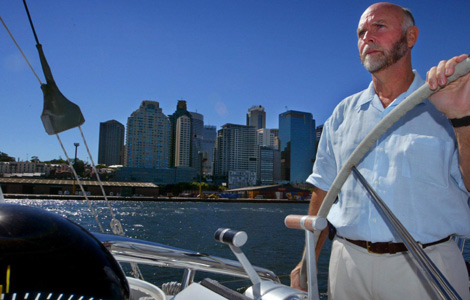 Like cooks whipping up a recipe from scratch, a team of genetics researchers has artificially assembled all of the genes needed to make a simple bacterium, in hopes of creating a synthetic organism by the end of the year. The team led by maverick scientist J. Craig Venter chose the smallest target possible by building the genome of Mycoplasma genitalium, one of the tiniest known species of bacteria. But they have much larger ambitions, such as understanding the most basic requirements for life and designing new bacterial life-forms capable of producing biofuels. “If the experiments are successful, we could enter into a new design phase of biology,” Venter said Thursday during a press teleconference from Davos, Switzerland. Despite such lofty goals, the new study published online in the journal Science does not demonstrate godlike control over life. The team has tried but failed to insert the genes into a bacterial cell and”reboot” the cell into a new, living organism. Venter’s colleagues said theyare hard at work on the problem, which is complicated by cellular compoundsthat can break down DNA before it takes hold. So far, the researchers have been able to string together a copy of the 582,970 chemical components in the existing bacterium’s DNA. The copy is perfect, except it disrupts a gene necessary for the bacteria to infect people and contains genetic “watermarks” the group |
| Article |
The New TheologyReconciling the biblical God with Darwin's theories would challenge even an omnipotent being. But a growing number of thinkers and scientists are altering their concept of the deity to make room for evolution.  More than 350 years after the inquisition hounded Galileo over charges of heresy, physicist Howard Van Till, of Calvin College in Michigan, confronted a little inquisition of his own. Van Till roused a small but fervent pack of enemies at the conservative college with his book, “The Fourth Day,” in which he argued that the stories of the Bible and science’s account of evolution could both be true. His critics on the school’s board of trustees had no interest in reconciling the religious account of creation with a naturalist explanation of how life and the universe have evolved over the ages. For years after the book’s release in 1986, Van Till reported to a monthly interrogation where he struggled to reassure college officials that his scientific teachings fit within their creed. Van Till’s career survived the ordeal, but his Calvinist faith did not. Over the next two decades, he became the heretic his critics had suspected. Maybe the inquisitors were right to see contradictions between his science and their religion, he thought. Their beliefs demanded a God of absolute power who intervened constantly in the history of life and in human affairs. But Van Till found that picture increasingly at odds with his conviction that everything from stars to starfish has evolved according to natural laws. The college inquiry, he says now, “shook me awake.” He could have dropped all faith in God, in the long tradition of scientific atheists, whose most recent champion is British biologist Richard Dawkins, author of “The God Delusion.” |