

William Saletan
William Saletan is the national correspondent for the online magazine Slate, which he joined in 1996 and where he now writes the Human Nature column covering science, technology, and society. A graduate of Swarthmore College, he is a former editor of the Hotline, a former reporter for the New Republic and The Washingtonian, and a contributor to numerous publications including the New York Times, the Washington Post, the Wall Street Journal, the Los Angeles Times, Washington Monthly, Mother Jones, and National Review. He is also a panelist on the weekly television program Eye on Washington. His books include Bearing Right: How Conservatives Won the Abortion War (2003) and Slate's Field Guide to the Candidates 2004 (2003).
| Column |
 Focus on Your FamilyThe pro-life case for pregnancy termination 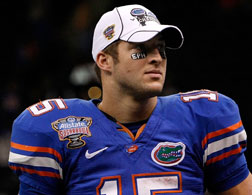 Focus on the Family certainly knows how to stir up an abortion debate. For two weeks, the country was buzzing about the group's Super Bowl ad. The ad, which featured college football star Tim Tebow and his mother, was expected to be preachy and controversial. Then Sunday arrived, and the commercial aired. What a letdown! Tim hugged his mom, they smiled, they said sweet things about love and family. Not a word about abortion. Liberals shrugged and moved on. But wait a minute. Let's throw a challenge flag and review the video. The 30-second spot that ran on TV was just a teaser. It drew people to the Focus on the Family Web site. There, Focus has posted a much longer follow-up video in which its president, Jim Daly, interviews Tim's parents, Pam and Bob Tebow. That's where you'll find the abortion preaching we were expecting in the TV ad. In the interview, Pam confirms and clarifies details of Tim's birth. Her pregnancy was every bit as dangerous as I inferred last week. She was 37 and working as a missionary in a remote part of the Philippines. "I was considered high-risk," she says. To make matters worse, "We lived in an area that didn't have great medical care." She recalls taking a pill and then realizing that its label said it could "cause severe birth defects." In a previous account, Pam said she had been diagnosed with placental abruption, a premature—and often dangerous or lethal—detachment of the placenta from the uterine wall. In the Focus interview, Bob confirms that the abruption was serious. When Tim was born, "There was a great big clump of blood that came out where the placenta wasn't properly attached basically for the whole nine months," he says. "He was a miracle baby." |
| Column |
The iBrainThe mobile communication device in your head 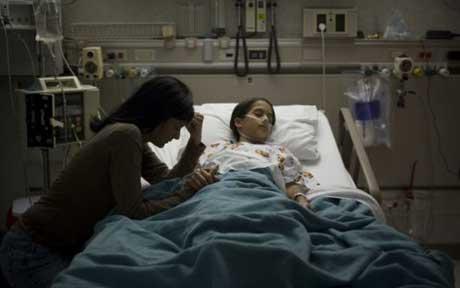 Here's a real-life horror story: Five people have been found buried alive inside their bodies. Paralyzed by brain injuries, they lay inert for years, seemingly oblivious to the doctors and loved ones around them. Four were diagnosed as vegetative. Then a European research team scanned their brains. It turns out they're aware; they just can't speak or move. God knows how many more are trapped like this. On the heels of this frightening idea comes another: The scans that exposed these patients' thoughts could expose yours. They could read your mind. "Governments are interested in the thoughts of their citizens—whether their voting intentions or their propensities to crime," warns Colin Blakemore, an Oxford neuroscientist. In the European scans, he sees "the possibility that brain science could bring an era of surveillance that will make the epidemic of CCTV cameras look trivial." Relax. The brain scans are wonderful news. The patients were trapped anyway; the scans have simply restored their ability to communicate. Better yet, that communication remains voluntary. Without the patients' cooperation, the scans would have found nothing. That's the most marvelous thing the scans have discovered: Human minds stripped of every other power can still control one last organ—the brain. In the age of neuroscience, this sounds ridiculous. We think of the brain as its own master, controlling or fabricating the mind. The New York Times, for instance, says that when the first pseudo-vegetative patient was scanned, "areas of her motor cortex leapt to life," and "spatial areas in the brain became active"—as though these areas animated themselves. The Times of London calls the organ in the scans "the talking brain." Blakemore sees the scans as part of a new understanding: Our intentions, far from guiding of our behavior, are really just products of brain cells that have already "made up their minds." |
| Article |
The Structure of Scientific EvolutionsEvolution's place in a created universe  The quarrel between religion and evolution has taken an interesting turn. Instead of attacking religion, some Darwinists have embraced it as a product of human evolution. Now they're debating to what extent this evolution was biological. Evolution and biology are coming apart. This is a tricky concept to grapple with in today's biologically dominated era of science. Let me try to explain where we are. Three years ago, while on a Templeton fellowship at the University of Cambridge, I heard one of those ideas that not only sticks in your head but starts to reorganize your thinking. The idea was convergence. The speaker was Simon Conway Morris, the Cambridge paleontologist and author of Life's Solution. Conway Morris affirmed evolution as a mechanical explanation of animal and human development. But he also argued that evolution takes place in an ordered world. Because similar features evolve repeatedly in different contexts, there must be something about the world that favors such features. There's nothing inherently spooky or religious about this idea. We have a straightforward model of it in the well-known pattern of phase changes. At certain temperatures and pressures, this or that element will naturally change from solid to liquid to gas. The fact that such transitions can be explained mechanically doesn't erase the fact that the points at which they'll happen can be predicted independently. In that sense, they're caused not just by heating or cooling but by the pre-existing structure of the |
| Column |
Culture of DeathThe right-wing assault on abortion reduction A new fault line has opened in the abortion debate. The fight is no longer between pro-lifers and pro-choicers. It's between militants and pragmatists. While some extremists have been raising hell and shooting doctors, pragmatists have been hashing out common-ground legislation. Their latest bill, introduced Thursday, is the Preventing Unintended Pregnancies, Reducing the Need for Abortion, and Supporting Parents Act. If that sounds like a jumble of ideas from both sides, it's because lots of bargaining went into it. Among other things, pro-choicers got money for contraception and sex education. Pro-lifers got abstinence-friendly curriculum, a bigger adoption tax credit, and financial support for women who continue their pregnancies. The two sides talked, listened, and compromised. Pro-lifers couldn't stand postcoital birth-control pills, fearing they might kill early embryos. The fear was unwarranted, but pro-choicers agreed to leave the pills out. Pro-choicers couldn't stand even the vaguest legislative description of what doctors should tell patients. That anxiety, too, was unnecessary, but pro-lifers agreed to drop the language. Pro-choicers hated abstinence-only education but agreed to fund "evidence-based programs that encourage teens to delay sexual activity." Pro-lifers wanted women to see prenatal ultrasound images but settled for money to make the machines more widely available. Each side faced the other's truths. Joel Hunter, an evangelical minister and former president-elect of the Christian Coalition, endorsed the bill's provision of "better access to contraception." So did two other pro-life theologians. Frances Kissling, who served for 25 years as president of Catholics for Choice, embraced pregnancy-prevention efforts that "meet women's own goal of avoiding abortion where possible." Rep. Rosa DeLauro, D-Conn., the bill's principal pro-choice sponsor, said at a Thursday press conference that "we all want to |
| Column |
Tiller's KillerIs it wrong to murder an abortionist?  If abortion is murder, the most efficient thing you could have done to prevent such murders this month was to kill George Tiller. Tiller was the country's bravest or most ruthless abortion provider, depending on how you saw him. The pregnancies he ended were the latest of the late. If your local clinic said you were too far along, and they sent you to a late-term provider who said you were too late even for her, Tiller was your last shot. If Tiller said no, you were going to have a baby, or a dying baby, or a stillbirth, or whatever nature and circumstance had in store for you. To me, Tiller was brave. His work makes me want to puke. But so does combat, the kind where guts are spilled and people choke on their own blood. I like to think I love my country and would fight for it. But I doubt I have the stomach to pull the trigger, much less put my life on the line. Several years ago, I went to a conference of abortionists. Some of the late-term providers were there. A row of tables displayed forceps for sale. They started small and got bigger and bigger. Walking along the row, you could ask yourself: Would I use these forceps? How about those? Where would I stop? The people who do late-term abortions are the ones who don't flinch. They're like the veterans you sometimes see in war documentaries, quietly recounting what they faced and did. You think you're pro-choice. You think marching or phone-banking makes you an activist. You know nothing. There's you, and then there are the people who work in the clinics. And then there are the people who use the forceps. And then there are the people who use the forceps nobody else will use. At the end of the line, there's George Tiller. Now he's gone. Who will pick up his forceps? Tiller's murder is different from all previous murders of abortion providers. If you kill an ordinary abortionist, somebody else will step in. But if you kill the guy at the end of the line, some of his patients won't be able to find an alternative. You will have directly prevented abortions. |
| Column |
Torture, Mind, and BodyDoes torture inflict lasting psychological harm? 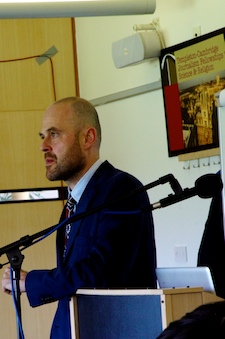 Yesterday we examined the CIA's reasons for involving psychologists in the Bush torture—sorry, I meant detainee interrogation program. The psychologist's job was to figure out how to inflict unbearable anguish on prisoners without requiring violence, or at least without leaving visible scars. But what about mental scars? In the Los Angeles Times, Sarah Gantz and Ben Meyerson look into the controversy: The conclusion in recently released Justice Department memos that CIA interrogation techniques would not cause prolonged mental harm is disputed by some doctors and psychologists, who say that the mental damage incurred from the practices is significant and undeniable. ... Interrogation techniques undoubtedly have lasting effects, [professor Nina Thomas of NYU] said, such as paranoia, anxiety, hyper-vigilance and "the destruction of people's personalities." ... "Some of these [techniques] clearly have a very real physical component," said Dr. Allen Keller, director of the Bellevue/NYU Program for Survivors of Torture. He cited waterboarding. ... A prisoner deprived of sleep may be overwhelmed with memories of torture when they become tired years later, Keller said. The same is true, he said, for the stomach growls of those tortured by starvation. I'll go a step further. The problem isn't just that the techniques are physical. The problem is that the mind itself is physical. I just got back from a conference at Cambridge University sponsored by the John Templeton Foundation. In a series of seminars with neuroscientists and philosophers—among them, Chris Frith of University College London, Alva Noe of the University of California-Berkeley, and Fraser Watts of Cambridge—we explored how physiology, mental activity, and environmental conditions transform one another. You can't torture the mind without altering the brain. And since the brain is part of the body—in fact, the part of the body that most influences all the others—the marks you leave are pervasive. You can alter any physical process in which the mind is involved: sleep, eating, conversation, love, going out in public, or all of the above. |
| Column |
Winning SmuglyYou just won the stem-cell war. Don't lose your soul. On Monday, President Obama lifted the ban on federal funding of stem-cell research using destroyed human embryos. If you support this research, congratulations: You won. Now for your next challenge: Don't lose your soul. Obama announces the end of the ban on stem-cell research The best way to understand this peril is to look at an issue that has become the mirror image of the stem-cell fight. That issue is torture. On Jan. 22, Obama signed an executive order prohibiting interrogation methods used by the Bush administration to extract information from accused terrorists. "We can abide by a rule that says we don't torture, but that we can still effectively obtain the intelligence that we need," the president declared. "We are willing to observe core standards of conduct not just when it's easy, but also when it's hard." The next day, former Bush aide Karl Rove accused Obama of endangering the country by impeding interrogations of the enemy. "They don't recognize we're in a war," said Rove. "In a war, you do not take tools that are working and stop using them and say we'll get back to you in four months, |
| Article |
 This Is the Way the Culture Wars EndPRESIDENT OBAMA wants to end the culture wars. He recently called for "common ground" on abortion reduction and an end to the "stale and fruitless debate" over family planning. His joint address to Congress this week could be an opportunity to change that debate. But to make a real difference, he'll have to tell two truths that the left and the right don't want to hear: that morality has to be practical, and that practicality requires morals. Start with abortion. Pro-lifers tend to show up after a woman is pregnant, imagining that laws and preaching will make her bear a child she doesn't want. They're mistaken. Worse, they're too late. To prevent abortions, we have to prevent unintended pregnancies. How? The conservative answer is abstinence. That's a worthy aspiration. But as a stand-alone national policy for avoiding pregnancies, it's foolish. Mating is the engine of history. It has overpowered every stricture put in its way. The liberal answer is birth-control availability. In recent years, this has become a second front in the culture wars. Many pharmacists have refused to sell oral contraceptives. In December, President George W. Bush extended that right of refusal to cover other medical professionals unwilling to participate in birth control. Mr. Bush also halted American aid to international family-planning |
| Review |
Little ChildrenEmbryo: A Defense of Human Life by Robert P. George and Christopher Tollefsen  Thirty-five years after Roe v. Wade, the pro-life movement faces a new challenge: biotechnology. The first human biotech issue, embryonic stem-cell research, looks like an easy call. Stem cells could save millions of lives. And the entity we currently sacrifice to get them—a sacrifice that may soon be unnecessary—is a tiny, undeveloped ball of cells. The question, like the embryo, seems a no-brainer. For pro-lifers, that’s precisely the problem. Biotechnology is arguably more insidious than abortion. Abortions take place one at a time and generally as a response to an accident, lapse or nasty surprise. Their gruesomeness actually limits their prevalence by arousing revulsion and political opposition. Conventional stem-cell harvesting is quieter but bolder. It’s deliberate and industrial, not accidental and personal. In combination with cloning, it entails the mass production, exploitation and destruction of human embryos. Yet its victims don’t look human. You can’t protest outside a fertility clinic waving a picture of a blastocyst. You have to explain what it is and why people should care about it. This is the task Robert George and Christopher Tollefsen undertake in Embryo. To reach a secular and skeptical public, they avoid religion and stake their case on science. George, a professor of jurisprudence at Princeton and a member of the President’s Council on Bioethics, and Tollefsen, a philosopher at the University of South Carolina, locate humanity not in a soul but in a biological program. “To be a complete human organism,” they write, “an entity must possess a developmental program (including both its DNA and epigenetic factors) oriented toward developing a brain and central nervous system.” The program begins at conception; therefore, so does personhood. The argument’s absolutism is crucial. In the last three months, scientists have announced two ways to get stem cells without killing |
| Article |
The Deity in the DataWhat the Latest Prayer Study Tells Us About God. Brother, have you heard the bad news? It was supposed to be good news, like the kind in the Bible. After three years, $2.4 million, and 1.7 million prayers, the biggest and best study ever was supposed to show that the prayers of faraway strangers help patients recover after heart surgery. But things didn’t go as ordained. Patients who knowingly received prayers developed more post-surgery complications than did patients who unknowingly received prayers—and patients who were prayed for did no better than patients who weren’t prayed for. In fact, patients who received prayers without their knowledge ended up with more major complications than did patients who received no prayers at all. If the data had turned out the other way, clerics would be trumpeting the power of prayer on every street corner. Instead, the study’s authors and many media outlets are straining to brush off the results. The study “cannot address a large number of religious questions, such as whether God exists, whether God answers intercessory prayers, or whether prayers from one religious group work in the same way as prayers from other groups,” the authors. Bull. If these findings involved any other kind of therapy, doctors would spin hypotheses about the underlying mechanisms and why the treatment failed or backfired. And that’s exactly what theologians and scientists are doing as they try to explain away the data. They’re implicitly sketching possibilities as to what sort of God could account for the results. Here’s a list.
|
| Article |
 Life after RoeFor the first time in 14 years, legal abortion in the United States is in serious jeopardy. In recent days, the shape of this assault has become clear. First, on the morning of Justice Samuel Alito Jr.’s debut, the Supreme Court announced that it would review the constitutionality of the Partial-Birth Abortion Ban Act, setting up what anti-abortion activists hope will be the beginning of the end of Roe v. Wade . The next day, South Dakota lawmakers passed a ban on virtually all abortions, and abortion rights groups vowed to litigate it all the way to the high court, which would force the justices either to overturn or reaffirm Roe. A few days later, the court told the abortion rights side it could no longer use racketeering laws to halt blockades and protests at abortion clinics. The impending legal battles put us on the verge of repeating the last two decades of the abortion war: anti-abortion victory, abortion rights backlash. At the end of the cycle 20 years from now, we’ll be right back where we are today. Unless, that is, we find a way out. |
| Review |
Irreconcilable DifferencesBook Review: No Two Alike: Human Nature and Human Individuality by Judith Rich Harris 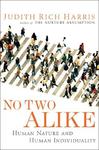 Judith Rich Harris calls No Two Alike a “scientific detective story.” The mystery is why people—even identical twins who grow up in the same home with the same genes—end up with different personalities. The detective is Harris herself, a crotchety amateur, housebound because of an illness, who takes on the academic establishment armed only with a sharp mind and an Internet connection. Harris the author scrupulously follows clues; Harris the protagonist drives the story forward through force of character, arriving at a theory of personality that could be said to describe herself. Eight years ago, Harris’s book The Nurture Assumption set academic psychology on fire by attacking the notion that parenting styles shape children. Scholars, irked by this upstart former textbook writer and grad-school reject, scorned her argument. In her new book, Harris tries to embarrass her critics while synthesizing her work into a theory of personality. No Two Alike is two books: a display of human weakness, and a display of scientific courage and imagination. Every detective has a favorite method. Harris’s is behavioral genetics, which attempts to tease out the genetic bases of behavior. To sort genetic from environmental factors, you study people with the same genes but different environments: identical twins raised apart. Or you study people with different genes but the same environment: adoptive siblings raised together. |