

Rob Stein
Rob Stein is a national science reporter for the Washington Post, focusing on health and medicine. A graduate of the University of Massachusetts at Amherst, he began his science journalism career in 1987, when he became health reporter for United Press International in Boston. After covering health and medicine for UPI for five years, he became UPI's science editor, overseeing the news agency's science coverage. He moved to National Public Radio in 1992 to become a science editor at the radio network. In 1996 he took over as the science editor at the Post, a position he held until taking over the health and medicine beat in 2002.
| Column |
 New Health-Care Law Raises Concerns about Respecting ConsciencesDeep within the massive health-care overhaul legislation, a few little-noticed provisions have quietly reignited one of the bitterest debates in medicine: how to balance the right of doctors, nurses and other workers to refuse to provide services on moral or religious grounds with the right of patients to get care. Advocates for protecting health workers argue the new law leaves vulnerable those with qualms about abortion, morning-after pills, stem cell research and therapies, assisted suicide and a host of other services. Proponents of patients' rights, meanwhile, contend that, if anything, the legislation favors those who oppose some end-of-life therapies and the termination of pregnancies and creates new obstacles for dying patients and women seeking abortions. Both sides acknowledge that the scope of any new conflicts that might arise under the legislation will become clear only as the implications of the overhaul unfold. But both agree that clashes are probably inevitable. "It's sort of the son of the 'death panels,' " said Loren Lomasky, a University of Virginia professor of philosophy who studies conflicts of conscience in health care, referring to last summer's controversy about end-of-life counseling. "This is a major transformation of the health-care system. And when this sort of thing happens, fissures can open up and you can fall into them if you're not careful." The debate has focused attention on President Obama's plan to rescind a federal regulation put into effect by the previous administration to protect workers who refuse to provide care they find objectionable. Soon after taking office, Obama announced he would lift the rule, arguing it could create obstacles to abortion and other reproductive health services. But a final decision about whether to kill, keep or replace the rule with a compromise has been pending as the debate over the health law raged. The outcome is being closely watched as a bellwether of how the administration will handle a possible thicket of conflicts under the health legislation. |
| Article |
Lab Produces Monkeys with Two MothersResearch may help women with genetic disorders but raises ethical questions.  Scientists have produced monkeys with genetic material from two mothers, an advance that could help women with some inherited diseases have healthy children but that would raise a host of safety, legal, ethical and social questions if attempted in people. Using cloning-related techniques, the researchers developed a way to replace most of the genes in the eggs of one rhesus macaque monkey with genes from another monkey. They then fertilized the eggs with sperm, transferred the resulting embryos into animals' wombs and produced four apparently healthy offspring. The technique was developed for women who have disorders caused by defects in a form of DNA passed only from females to their children, and the researchers said they hope the work will eventually translate into therapies for people. "We believe this technique can be applied pretty quickly to humans and believe it will work," said Shoukhrat Mitalipov of the Oregon Health & Science University in Portland, who led the work, published online Wednesday by the journal Nature. Many scientists hailed the research as a technically impressive feat that could help many families rid themselves of a variety of terrible disorders caused by defects in genetic material known as mitochondrial DNA. "This is of great importance. This approach will be beneficial to many families," said Jan Smeitink, a professor of mitochondrial medicine at Radboud University Nijmegen in the Netherlands. But the work could also raise thorny ethical and legal issues, including questions surrounding the creation of offspring with DNA from two mothers and a father. |
| Article |
Obama's Order on Stem Cells Leaves Key Questions to NIHPresident Obama's open-ended order lifting limits on federal funding for stem cell research raises the prospect that taxpayer money could be used for a much broader, much more controversial array of studies than many scientists, officials and activists anticipated. Although the decision to allow expanded funding had been long expected, many thought Obama would limit federally funded scientists to working with cell lines derived from embryos destined to be discarded at infertility clinics. Instead, he left that key issue open. The task of deciding what kinds of studies will be supported now falls to the National Institutes of Health, which finds itself confronting far more extensive questions than its officials were contemplating. It has 120 days to do the job. Among other things, officials will have to decide whether to endorse studies on cells obtained from much more contentious sources, such as embryos created specifically for research or by means of cloning techniques. "He left it wide open," said Thomas H. Murray, director of the Hastings Center, a bioethics think tank. "Now we are going to have to face a host of morally complicated, politically charged questions. There's not an easy path forward for them out of here." Richard Doerflinger of the U.S. Conference of Catholic Bishops, a leading opponent of embryonic stem cell research, said, "If they go |
| Article |
Health Workers' 'Conscience' Rule Set to Be VoidedMove to rescind broad new job protections triggered a political storm.  The Obama administration's move to rescind broad new job protections for health workers who refuse to provide care they find objectionable triggered an immediate political storm yesterday, underscoring the difficulties the president faces in his effort to find common ground on anything related to the explosive issue of abortion. The administration's plans, revealed quietly with a terse posting on a federal Web site, unleashed a flood of heated reaction, with supporters praising the proposal as a crucial victory for women's health and reproductive rights, and opponents condemning it as a devastating setback for freedom of religion. Perhaps most tellingly, the move drew deep disappointment from some conservatives who have been hopeful about working with the administration to try to defuse the debate on abortion, long one of the most divisive political issues. "This is going to be a political hit for the administration," said Joel Hunter, senior pastor of the Northland Church in Longwood, Fla., whom Obama recently named to his Advisory Council on Faith-Based and Neighborhood Partnerships. "This will be one of those things that kind of says, 'I knew it. They talk about common ground, but really what they want is their own way.' " Administration officials stressed that the proposal will be subject to 30 days of public comment, which could result in a compromise. They said they remain committed to seeking a middle ground but acknowledged that will not always be possible."We recognize we are not going to be able to agree on every issue," said an administration official, who spoke on the condition of anonymity because the process has just begun. "But there remains a substantive area of common ground, and we continue to believe we can make progress and will make progress." The announcement capped a week when anger among conservatives was already running high because of the ambitious progressive |
| Article |
Rule Shields Health Workers Who Withhold Care Based on BeliefsThe Bush administration yesterday granted sweeping new protections to health workers who refuse to provide care that violates their personal beliefs, setting off an intense battle over opponents' plans to try to repeal the measure. Critics began consulting with the incoming Obama administration on strategies to reverse the regulation as quickly as possible while supporters started mobilizing to fight such efforts. The far-reaching regulation cuts off federal funding for any state or local government, hospital, health plan, clinic or other entity that does not accommodate doctors, nurses, pharmacists and other employees who refuse to participate in care they find ethically, morally or religiously objectionable. It was sought by conservative groups, abortion opponents and others to safeguard workers from being fired, disciplined or penalized in other ways. But women's health advocates, family planning proponents, abortion rights activists and some members of Congress condemned the regulation, saying it will be a major obstacle to providing many health services, including abortion, family planning, infertility treatment, and end-of-life care, as well as possibly a wide range of scientific research. The 127-page rule, which was issued just in time to take effect in the 30 days before the change in administrations, is the latest that |
| Article |
Vatican Ethics Guide Stirs ControversyChurch decries stem cell research, infertility treatments 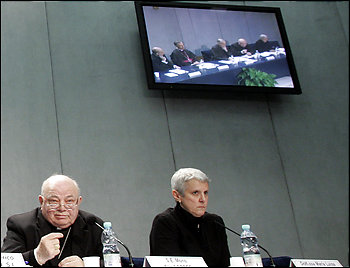 (Article co-written by Michelle Boorstein) The Vatican's first authoritative statement on reproductive science in 21 years triggered intense debate yesterday about some of the most contentious issues in modern biological research, including stem cells, designer babies, cloning, and a host of techniques widely used to prevent pregnancy and to help infertile couples have children. The broad 32-page document, from the Catholic Church's highest rule-making authority, condemns as immoral the destruction of human embryos to obtain stem cells or treat infertility, and denounces any attempts at more futuristic possibilities such as cloning people or using gene therapy to enhance the human race. But the church also decries procedures already commonly used to help couples have children, such as the freezing of unfertilized eggs and embryos, the injection of sperm into eggs, and genetic testing of embryos to identify those with defects. In addition, the document condemns the morning-after pill and the RU-486 abortion pill. While many of the arguments in "Dignitas Personae" -- Latin for "the dignity of a person" -- have been made before by Pope Benedict XVI and his predecessor, Pope John Paul II, a church "instruction" from the Congregation for the Doctrine of the Faith is far more authoritative and made a number of new declarations. It reflects the Vatican's desire to focus attention on ethical questions raised by a new generation of technologies that are becoming increasingly common in the |
| Article |
Infant Transplant Procedure Ignites DebateEthicists question strategy in which hearts are removed minutes after they stop beating.  Surgeons in Denver are publishing their first account of a procedure in which they remove the hearts of severely brain-damaged newborns less than two minutes after the babies are disconnected from life support, and their hearts stop beating, so the organs can be transplanted into infants who would otherwise die. A detailed description of the transplants in today's issue of the New England Journal of Medicine has ignited an intense debate about whether the first-of-their-kind procedures are pushing an already controversial organ-retrieval strategy beyond acceptable legal, moral and ethical bounds. The doctors who performed the operations as part of a federally funded research project defended the practice, and some advocates for organ donation praised the operations as offering the first clear evidence that the procedures could provide desperately needed hearts for terminally ill babies. Critics, however, are questioning the propriety of removing hearts from patients, especially babies, who are not brain-dead and are asking whether the Denver doctors wait long enough to make sure the infants met either of the long-accepted definitions of death -- complete, irreversible cessation of brain function or of heart and lung function. Some even said the operations are tantamount to murder. "This bold experiment is pushing the boundaries and raising many questions," said James L. Bernat, a Dartmouth medical professor who wrote one of four commentaries that the journal published with the report -- an unusual step that anticipated the firestorm of reaction the procedures would cause. The journal posted them on its Web site with a videotaped debate among three prominent |
| Article |
Workers' Religious Freedom vs. Patients' RightsProposal would deny federal money if employees must provide care to which they object. A Bush administration proposal aimed at protecting health-care workers who object to abortion, and to birth-control methods they consider tantamount to abortion, has escalated a bitter debate over the balance between religious freedom and patients’ rights. The Department of Health and Human Services is reviewing a draft regulation that would deny federal funding to any hospital, clinic, health plan or other entity that does not accommodate employees who want to opt out of participating in care that runs counter to their personal convictions, including providing birth-control pills, IUDs and the Plan B emergency contraceptive. Conservative groups, abortion opponents and some members of Congress are welcoming the initiative as necessary to safeguard doctors, nurses and other health workers who, they say, are increasingly facing discrimination because of their beliefs or are being coerced into delivering services they find repugnant. But the draft proposal has sparked intense criticism by family planning advocates, women’s health activists, and members of Congress who say the regulation would create overwhelming obstacles for women seeking abortions and birth control. There is also deep concern that the rule could have far-reaching, but less obvious, implications. Because of its wide scope and because it would—apparently for the first time—define abortion in a federal regulation as anything that affects a fertilized egg, the regulation could raise questions about a broad spectrum of scientific research and care, |
| Article |
“Pro-Life” Drugstores Market BeliefsNo Contraceptives for Chantilly Shop  When DMC Pharmacy opens this summer on Route 50 in Chantilly, the shelves will be stocked with allergy remedies, pain relievers, antiseptic ointments and almost everything else sold in any drugstore. But anyone who wants condoms, birth control pills or the Plan B emergency contraceptive will be turned away. That’s because the drugstore, located in a typical shopping plaza featuring a Ruby Tuesday, a Papa John’s and a Kmart, will be a “pro-life pharmacy”—meaning, among other things, that it will eschew all contraceptives. The pharmacy is one of a small but growing number of drugstores around the country that have become the latest front in a conflict pitting patients’ rights against those of health-care workers who assert a “right of conscience” to refuse to provide care or products that they find objectionable. “The United States was founded on the idea that people act on their conscience—that they have a sense of right and wrong and do what they think is right and moral,” said Tom Brejcha, president and chief counsel at the Thomas More Society, a Chicago public-interest law firm that is defending a pharmacist who was fined and reprimanded for refusing to fill prescriptions for birth control pills. “Every pharmacist has the right to do the same thing,” Brejcha said. But critics say the stores could create dangerous obstacles for women seeking legal, safe and widely used birth control methods. “I’m very, very troubled by this,” said Marcia Greenberger of the National Women’s Law Center, a Washington advocacy group. “Contraception is essential for women’s health. A pharmacy like this is walling off an essential part of health care. That could endanger women’s health.” The pharmacies are emerging at a time when a variety of health-care workers are refusing to perform medical procedures they find objectionable. Fertility doctors have refused to inseminate gay women. Ambulance drivers have refused to transport patients for abortions. Anesthesiologists have refused to assist in sterilizations. The most common, widely publicized conflicts have involved pharmacists who refuse to fill prescriptions for birth control pills, morning- |
| Article |
New Trend in Organ Donation Raises QuestionsAs alternative approach becomes more frequent, doctors worry that It puts donors at risk.  The number of kidneys, livers and other body parts surgeons are harvesting through a controversial approach to organ donation has started to rise rapidly, a trend that is saving the lives of more waiting patients but, some say, risks sacrificing the interests of the donors. Under the procedure, surgeons are removing organs within minutes after the heart stops beating and doctors declare a patient dead. Since the 1970s, most organs have been removed only after doctors declared a patient brain dead. Federal health officials, transplant surgeons and organ banks are promoting the alternative as a way to meet the increasing demand for organs and to give more dying patients and their families the solace of helping others. Some doctors and bioethicists, however, say the practice raises the disturbing specter of transplant surgeons preying on dying patients for their organs, possibly pressuring doctors and families to discontinue treatment, adversely affecting donors' care in their final days and even hastening their deaths. Nevertheless, the number of these donations is on the rise. It more than doubled from 268 in 2003 to at least 605 in 2006, enabling surgeons to transplant more than 1,200 additional kidneys, livers, lungs, hearts and other organs. "It's starting to go up exponentially," said James Burdick, who leads organ-donor efforts at the federal Department of Health and |
| Article |
Institute Practices Reproductive Medicine—and CatholicismCraig Turczynski traveled from Texas to find ways to help infertile women that do not conflict with his religious beliefs. Cherie LeFevre came from St. Louis to learn how to treat her OB-GYN patients in obedience to her Catholicism. Amie Holmes flew from Ohio so she could practice medicine in conformity with church teachings when she graduates from medical school. On a journey that would blend the aura of a pilgrimage with the ambience of a medical seminar, the three arrived at an unassuming three-story red-brick building on a quiet side street in this Missouri River city. Their destination was the Pope Paul VI Institute for the Study of Human Reproduction, which has become perhaps the most prominent women’s health center serving Catholics and other doctors, medical students and patients who object for religious reasons to in vitro fertilization, contraceptives and other aspects of modern reproductive medicine. “We have built a new women’s health science,” said Thomas W. Hilgers, who runs the institute. “Our system works cooperatively with the natural fertility cycle and enables doctors to treat women and married couples, especially Catholic married couples, in a way that allows them to live out their faith.” Hilgers and his supporters say the approach, called “natural procreative technology” or “NaProTechnology,” can address a spectrum of women’s health issues, including family planning, premenstrual syndrome, postpartum depression and infertility, without the use of birth control pills, sterilization, abortion or in vitro fertilization (IVF). Instead, Hilgers said, he uses diagnostics, hormones and surgery to identify and treat underlying causes of reproductive ailments that other doctors often miss. |
| Article |
Woman in Vegetative State, Brain Shows Surprising ActivityTests Indicate Awareness, Imagination According to all the tests, the young woman was deep in a “vegetative state”—completely unresponsive and unaware of her surroundings. But then a team of scientists decided to do an unprecedented experiment, employing sophisticated technology to try to peer behind the veil of her brain injury for any signs of conscious awareness. Without any hint that she might have a sense of what was happening, the researchers put the woman in a scanner that detects brain activity and told her that in a few minutes they would say the word “tennis,” signaling her to imagine she was serving, volleying and chasing down balls. When they did, the neurologists were shocked to see her brain “light up” exactly as an uninjured person’s would. It happened again and again. And the doctors got the same result when they repeatedly cued her to picture herself wandering, room to room, through her own home. “I was absolutely stunned,” said Adrian M. Owen, a British neurologist who led the team reporting the case in today’s issue of the journal Science. “We had no idea whether she would understand our instructions. But this showed that she is aware.” While cautioning that the study involved just one patient who had been in a vegetative state for a relatively short time, the researchers said it could force a rethinking of how medicine evaluates brain-damaged patients. “We have found a method for determining if a patient is aware,” Owen said. “It provides us with a tool that may be able to help make difficult decisions about these patients.” |
| Article |
Medical Practices Blend Health and FaithDoctors, Patients Distance Themselves From Care They Consider Immoral Sandwiched between a swimming pool store and a spice shop on Lee Highway in Fairfax, the Tepeyac Family Center looks like any other suburban doctor's office. But it isn't. The practice combines "the best of modern medicine with the healing presence of Jesus Christ," a brochure at the reception desk announces. An image of the Madonna greets every patient. Doctors, nurses and staff members gather to pray each day before the first appointments. The center is one of a small but growing number of practices around the country that tailor the care they provide to the religious beliefs of their doctors, shunning birth-control and morning-after pills, IUDs and other contraceptive devices, sterilizations, and abortions, as well as in vitro fertilization. Instead, doctors offer "natural family planning" -- teaching couples to monitor a woman's temperature and other bodily signals to time intercourse. Proponents say the practices allow doctors to avoid conflicts with patients who want services the practitioners find objectionable, as well as to provide care that conforms with many patients' own values. The approach, they say, provides an alternative to mainstream medicine's reliance on drugs and devices that, they argue, carry side effects and negatively affect |
| Article |
Medical Practices Blend Health and FaithDoctors, Patients Distance Themselves From Care They Consider Immoral Sandwiched between a swimming pool store and a spice shop on Lee Highway in Fairfax, the Tepeyac Family Center looks like any other suburban doctor's office. But it isn't. The practice combines “the best of modern medicine with the healing presence of Jesus Christ,” a brochure at the reception desk announces. An image of the Madonna greets every patient. Doctors, nurses and staff members gather to pray each day before the first appointments. The center is one of a small but growing number of practices around the country that tailor the care they provide to the religious beliefs of their doctors, shunning birth-control and morning-after pills, IUDs and other contraceptive devices, sterilizations, and abortions, as well as in vitro fertilization. Instead, doctors offer “natural family planning”—teaching couples to monitor a woman’s temperature and other bodily signals to time intercourse. |
| Radio Broadcast |
 Ethics vs. Responsibility in MedicineIn hospitals and medical practices around the country, doctors and nurses refuse to perform certain medical procedures because of their personal beliefs. Guests on the program discuss the rights of the patient, and whether or not a health care professional’s personal convictions should outweigh his or her professional responsibilities. |
| Discussion |
 Right of ConscienceAround the United States, health workers and patients are clashing when providers balk at giving care that they feel violates their beliefs, sparking an intense, complex, and often bitter debate over religious freedom vs. patients’ rights. For example, some anesthesiologists refuse to assist in sterilization procedures, respiratory therapists sometimes object to removing ventilators from terminally ill patients, and gynecologists around the country have declined to prescribe birth control pills. Legal and political battles have followed. Patients are suing and filing complaints after being spurned. Workers are charging religious discrimination after being disciplined or fired. Congress and more than a dozen states are considering new laws to compel workers to provide care—or, conversely, to shield them from punishment. |
| Article |
Seeking Care, and RefusedDesperate to have a baby, Guadalupe Benitez was hoping her next try would finally work. So Benitez was stunned when a crucial moment arrived in her cycle and her fertility clinic refused to do the insemination procedure. “I was in tears,” said Benitez, 34, of Oceanside, Calif. “I wanted to be a mom. I was in a panic.” The clinic told Benitez, who is gay, that staff members were uncomfortable about treating her because of their religious values. “I couldn’t believe what I was hearing. It was almost surreal,” Benitez said. “It was so upsetting.” Benitez eventually conceived a boy, then twin girls, with the help of another specialist. But she sued the clinic and two of its doctors in 2001, charging discrimination. “The psychological scars are still with me,” said Benitez, whose case is before the California Supreme Court. “I grew up in a very religious family. But I don’t think that religion tells you you can judge other people.” Patients around the country describe similar experiences—being shocked, judged, humiliated, frightened and angered when they have encountered health-care workers who are overt in some religious beliefs. Sometimes providers proselytize gay or unmarried patients but do provide care. Sometimes they refuse to fill prescriptions for birth control or morning-after pills but refer patients elsewhere. Other times they refuse to treat them at all. Many patients decline to be identified because the refusals occur at deeply personal, often traumatic moments, such as the point of discontinuing care for a dying loved one. But some patients agreed to be interviewed, including Deb, who was turned away by pharmacist Gene Herr at a drugstore in Denton, Tex., in 2004, when she tried to get the morning-after pill after being raped on a date. She discussed her experience with a reporter for |
| Article |
For Some, There Is No Choice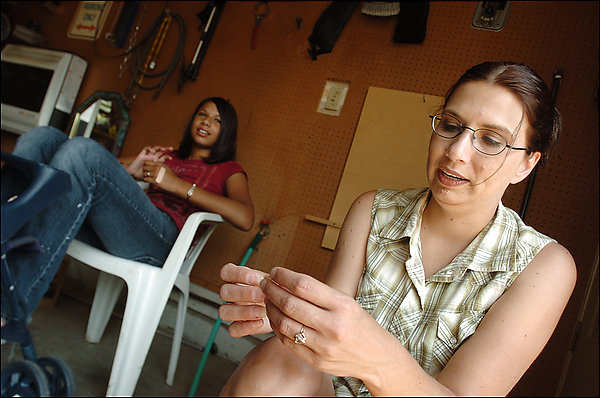 When the dispatcher called, Stephanie Adamson knew this might be the run she had feared. But it wasn't until her ambulance arrived at the hospital and she saw the words “elective abortion” on the patient's chart that she knew she had to make a choice. “I just got a sick feeling in my stomach,” said Adamson, an emergency medical technician from Channahon, Ill.Adamson called her boss to say she could not transport the patient to the other hospital where the procedure was scheduled. “I just knew I couldn’t do it. I’ve never been for abortion—I’ve always been against it,” Adamson said. “I was brought up in a Christian home and always believed life was precious.” Adamson’s supervisor fired her on the spot and dispatched another ambulance to transfer the distraught young patient.“It was a very long drive home,” said Adamson, who sued the ambulance company in May 2004, charging religious discrimination over her 2003 dismissal. “I pretty much cried all the way. I was very upset and scared.” Many religious health workers find no conflict between their beliefs and their jobs. But others describe what amounts to a sense of siege, with the secular world increasingly demanding they capitulate to doing procedures, prescribing pills or performing tasks that they find morally reprehensible. Beginning in medical and nursing schools, some health workers describe struggling over where to draw the line. Will they refuse to |
| Article |
A Medical Crisis of ConscienceFaith drives some to refuse patients medication or care.  In Chicago, an ambulance driver refused to transport a patient for an abortion. In California, fertility specialists rebuffed a gay woman seeking artificial insemination. In Texas, a pharmacist turned away a rape victim seeking the morning-after pill. Around the United States, health workers and patients are clashing when providers balk at giving care that they feel violates their beliefs, sparking an intense, complex and often bitter debate over religious freedom vs. patients' rights. Proponents of a “right of conscience” for health workers argue that there is nothing more American than protecting citizens from being forced to violate their moral and religious values. Patient advocates and others point to a deep tradition in medicine of healers having an ethical and professional responsibility to put patients first.The issue is driven by the rise in religious expression and its political prominence in the United States, and by medicine’s push into controversial new Legal and political battles have followed. Patients are suing and filing complaints after being spurned. Workers are charging religious discrimination after being disciplined or fired. Congress and more than a dozen states are considering laws to compel workers to provide care—or, conversely, to shield them |
| Article |
Researchers Look at Prayer and HealingConclusions and Premises Debated as Big Study's Release Nears  At the Fairfax Community Church in Virginia, the faithful regularly pray for ailing strangers. Same goes at the Adas Israel synagogue in Washington and the Islamic Center of Maryland in Gaithersburg. In churches, mosques, ashrams, “healing rooms,” prayer groups and homes nationwide, millions of Americans offer prayers daily to heal themselves, family, friends, co-workers and even people found through the Internet. Fueled by the upsurge in religious expression in the United States, prayer is the most common complement to mainstream medicine, far outpacing acupuncture, herbs, vitamins and other alternative remedies. “Judaism, Christianity, Islam, Buddhism—every religion believes in prayer for healing,” said Paul Parker, a professor of theology and religion at Elmhurst College outside Chicago. “Some call it prayer, some call it cleansing the mind. The words or posture may vary. But in times of illness, all religions look towards their source of authority.” The outpouring of spiritual healing has inspired a small group of researchers to attempt to use the tools of modern science to test the power of prayer to cure others. The results have been mixed and highly controversial. Skeptics say ay the work is a deeply flawed and misguided waste of money that irresponsibly attempts to validate the supernatural with science. And some believers say it is pointless to try to divine the workings of with experiments devised by mortals. Proponents, however, maintain the research is valuable, given the large numbers of people who believe in the power of prayer to influence health. Surveys Surveys have found that perhaps half of Americans regularly pray for their own health, and |
| Radio Broadcast |
Health Workers Face Issues of Moral ConflictSeveral states consider laws protecting health workers who refuse to provide services that conflict with their beliefs. Where is the line between an individual's religious or moral beliefs and one's duties as a licensed professional? And what about the rights of patients? listen… [link to audio recording on npr.org] |
| Article |
Health Workers' Choice DebatedProposals back right not to treat. More than a dozen states are considering new laws to protect health workers who do not want to provide care that conflicts with their personal beliefs, a surge of legislation that reflects the intensifying tension between asserting individual religious values and defending patients' rights.
About half of the proposals would shield pharmacists who refuse to fill prescriptions for birth control and “morning-after” pills because they believe the drugs cause abortions. But many are far broader measures that would shelter a doctor, nurse, aide, technician or other employee who objects to any therapy. That might include in-vitro fertilization, physician-assisted suicide, embryonic stem cells and perhaps even providing treatment to gays and lesbians.
Because many legislatures have just convened, advocates on both sides are predicting that the number debating such proposals will increase. At least 18 states are already considering 36 bills. “It’s already a very hot issue,” said Edward R. Martin Jr. of the Americans United for Life, who is advising legislators around the country pushing such bills. “I think it’s going to get even hotter, for lots of reasons and in lots of places.” The flurry of political activity is being welcomed by conservative groups that consider it crucial to prevent health workers from being coerced into participating in care they find morally repugnant—protecting their “right of conscience” or “right of refusal.” |