
 About the Fellowship
Jori Lewis
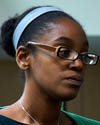
Jori Lewis is a freelance writer and radio journalist based in Brooklyn, NY. She covers a wide range of topics, from the environment to social and criminal justice to music and cultural politics. She reports for numerous online publications and broadcast outlets including Public Radio International's The World, Radio Netherlands, the Online NewsHour, and Salon. She was a contributing reporter to the 2006 George Polk Award-winning series Early Signs: Reports from a Warming Planet. In 2007, she was a finalist for the Livingston Award for Young Journalists.
| Article |
 Rough SeasSenegal's Threatened Fisheries 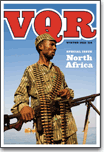 In the late afternoon, the Soumbe-dioune Market in Dakar is mostly empty—populated by women rolling peanuts into bags as snacks, a few people brewing up vats of Cafe Touba (a spiced and sugary coffee), and others wiping down their cleaning stations in anticipation of the evening ahead. But when the sun starts to set on the Atlantic Ocean, the market comes alive. The boats pull in, bringing loads of fish in shades of orange, gray, and pink. There’s langouste and mackerel, mussels and barracuda. Massive groupers, bigger than small children, lie on concrete counters, and cases of red mullet and a spread of long, fat eels wait on the sand. Vendors position their products, calling out prices as buyers browse. The diversity springs from Senegal’s place in the West African Ecoregion, one of the richest and most diverse fishing grounds in the world. The upwelling of cold water along the coast brings nutrients from the depths of the ocean to feed over a thousand of species of fish. Such abundance must have attracted early peoples to the coast, says Papa Gora Ndiaye, a Dakar-based economist and director of the environmental organization ENDA-REPAO. "They had only to take a tree," he says, "cut it and put it into the ocean to take some fish." By the middle of the twentieth century, people in the government started to realize that the biodiversity of their waters was an asset that could be harnessed, caught, frozen, and airlifted to places in Europe or America or Asia where buyers would pay a lot of money to get it. Mamadou Goudiaby, a researcher from the Office of Maritime Fishing, says that the government hoped to develop the local economy by expanding the fishery and making small-scale fishermen more efficient. "At the beginning, we said the fishery resources were not sufficiently exploited," said Goudiaby. "And the government put programs into place to be able to exploit the fishery." In the 1970s and 1980s, the government helped small fishermen buy motors so they could go farther out into the ocean. At the same time, the region suffered from a major drought that drove farmers to the coasts, where they thought they could find sure survival and a new career in the sea. And individual fishermen began to prosper. In a small village called Nianing, Mansour Thiaow says that they learned to fish for those foreign markets. Together Mansour Thiaow and his brothers own six pirogues, small, wooden fishing boats, painted bright blue inside and festooned with the red, yellow, and green Senegalese flags on the outside. The Thiaows fish for everything and anything: giant squid for local hotels, huge mollusks prized as aphrodisiacs by buyers in Japan, and lots and lots of octopus. That’s one of the big money makers. He says that the fishermen only recently learned how profitable octopus could be. "Gradually, people came and said, ‘Wait, this octopus is commercial.’ So we had to create techniques to attract the octopus and to send it to the European, Asian, or American markets." Thiaow says that his family has done well. "Before, there wasn’t any electricity at our house. For us, it was candles. Now there is electricity," he says. "There wasn’t water. We went over there," he says gesturing to the ocean. "Now there is a tap at the house. There is a telephone. There are plenty of little things." |
| Radio Broadcast |
 Senegal Farmers Push Local Food MovementAdherents of the local food movement argue: buying produce that’s grown nearby is good for the community, good for the planet and good for your health. Some farmers in the West African nation of Senegal are trying to make that case to their fellow countrymen, but it’s not so easy to get people to change their buying habits. The World’s Jori Lewis has the story. ******** MARCO WERMAN: Many environmentalists these days are proponents of the local food movement. They argue buying produce that’s grown nearby is good for the community, good for the planet, and good for your health. Some farmers in the West African nation of Senegal are trying to make that case, but they’ve found it’s not so easy to get people to change their buying habits. Jori Lewis has the story. JORI LEWIS: In the north of Senegal as you near the border with Mauritania, the land becomes progressively more arid and brown, all sand dunes and scrubby brush, and you realize that you are close to the edge of the Sahara. But in the valley of the Senegal River they are growing what seems an unlikely crop: rice. Moustapha Fall comes from a family that’s been farming rice here for decades. MOUSTAPHA FALL: It’s good quality rice that we can sell and that can feed the country. LEWIS: Fall smokes non-stop while we drive to his fields in his pickup truck, past rows of green crops surrounded by water canals and dusty lanes. Farm workers take shelter under the shade of a spindly tree. Moustapha Fall says there are lots of challenges to farming here. There’s the price of fuel to run the irrigation pumps. There are the aggressive grain-eating birds. And there are periodic droughts. But he contends that the biggest threat to his livelihood as a rice farmer has nothing to do with the environment. FALL: The biggest problem is actually selling the rice. Most of it just sits at the mill. You see over there, the mill? There’s a lot of rice stashed away there. It hasn’t been sold. LEWIS: It’s not that people in Senegal dislike rice. On the contrary, most people here eat rice every day. The problem is that local rice farmers have to compete with imports. In Senegal’s capital, Dakar, I slide through a small doorway into the Tilene Market’s main food hall. Vendors man tables crowded with bags of rice from all over the world, places like Vietnam, the Philippines and India. There’s even rice from the US that comes packed in bags with the USAID logo. That rice is probably part of a US program that allows countries to sell food aid to raise money for development projects. |
| Radio Broadcast |
Senegal Street Children and Religious Schooling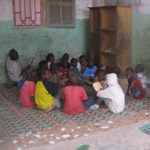 In most any city in the world, you’ll find beggars — the homeless, the disabled, those down on their luck. In the West African city of Dakar, the capital of Senegal, many beggars are children. How those children end up on the streets is a complex tale that often involves Senegal’s religious schooling system. It’s a system that many now want to reform. Jori Lewis has the story from Dakar. **** MARCO WERMAN: In most any city in the world, you’ll find beggars, the homeless, the disabled, those down on their luck. In the West African city of Dakar, the capital of Senegal, many beggars are children. How those children end up on the streets is a complex tale that often involves Senegal’s religious schooling system. It’s a system that many now want to reform. Jori Lewis has the story from Dakar. JORI LEWIS: There is a word for runaway children here. In the local language Wolof, they’re called Fakhman. I visit a known Fakhman hang out near the bus station and the prison. People mill about in the evening getting food from tiny stands. A group of men sings religious songs to pass the time. A boy comes up to me. His friends follow. Here is the Fakhman house, he says, gesturing to the crowded street. One 13-year-old boy named Baye Zaal Faye tells me he’s been on the street for a year. INTERPRETER: I beg and sometimes I gather scrap metal. LEWIS: He says life on the street is difficult. It’s hard to make money and even when he does, it’s not so easy to keep. INTERPRETER: Sometimes when you go to sleep there are people who come and take your money right out of your pocket. LEWIS: Child beggars are everywhere you look here. In the shadow of the Senghor Stadium, by a camp fire at the Soumbedioune fish market, on the sidewalks of downtown Dakar’s major thoroughfares where boys unroll cardboard boxes for bedding and sleep with pink rice sacks for blankets. And among the children you see on the street, there is an astonishing diversity. There are children sent by their poor parents to make money. Children with no families at all to return to. But for many of these kids, the path to the streets begins in school, traditional Koranic schools called daaras. At this daara in the northern Senegalese city of Saint Louis, children recite their lessons from wooden tablets. Moussa Sow is the lead teacher of the daara. He says boys from all over Senegal come live at the school for several years, learning Arabic and the Koran. INTERPRETER: Each child who completes a daara education, that will make him a great man. LEWIS: He says a daara education makes men who are good citizens. That’s why some parents choose this religious education over secular state schools. It’s a kind of gift a father gives to his son. Some of the parents send money to support the school too, but not many. The school largely serves the poor, so it doesn’t ask for a fee. Moussa Sow says it’s hard to provide for all of the students’ needs. |
| Radio Broadcast |
Lead Recycling Exacts High Price for Health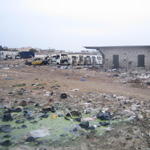 In the West African nation of Senegal, an informal recycling industry has poisoned children and left a neighborhood severely polluted. Residents caused the contamination by pulling apart car batteries to extract the lead. The government is now cleaning up the site, but many of the children will never be the same. Jori Lewis reports. ***** MARCO WERMAN: I’m Marco Werman. This is The World. Over the past few years, charitable efforts that focus on children’s health have grown. Philanthropists are donating billions of dollars to the cause, providing medicines and vaccines to protect the world’s poorest kids form infectious diseases like malaria and polio. But there are other threats to the health of children that don’t receive as much attention. Reporter Jori Lewis brings us the story of one such threat. It caused widespread poisoning of children in West Africa, in a poor town outside Dakar, Senegal. JORI LEWIS: A woman named Seynabou Barry lives in a house by the railroad tracks in a neighborhood called Ngagne Diaw. One day a couple of years ago her toddler son, Mamadou, got sick. TRANSLATOR (FOR SEYNABOU BARRY, SPEAKING IN WOLOF): It just happened suddenly. He started to throw up and we took him to the hospital. LEWIS: When he got there, he started to have seizures. And then he died. She said the doctors didn’t know why. But other children in the neighborhood, all infants and toddlers, they were dying, too. Five dead children became ten, and then became fifteen. They were dying almost every week. And so people started to wonder if something was going on in the neighborhood in Ngagne Diaw. Local doctors looked into it. Amadou Diouf is with the Senegalese Health Ministry. INTERPRETER (FOR AMADOU DIOUF): They investigated and they ruled out malaria. They ruled out epilepsy. LEWIS: They also ruled out cholera and meningitis. And finally they went to the site, to Ngagne Diaw. And they found the answer. It was lead. There was lead everywhere. Lead in slag piles; in peoples’ homes; in the sand that blew through town. And it was in the children. Many had blood lead levels that indicated severe lead poisoning. The lead mostly came from one source: car batteries. For years a group of local women had been pulling apart old batteries to sell the lead inside. Kine Dior started doing it 20 years ago, when a man showed her how. read more… listen… [] |
| Article |
 Transgender and Christian: Finding IdentityThe idea of transgender Christianity shocks people on both sides of the divide: conservative religious reject any kind of gender variance and the LGBT community can be suspicious of organized religion. In all of this, trans-Christians are forging a new spirituality.  Allyson Robinson is an ordained Baptist minister. But until a few years ago, she lived life as a man. Robinson had struggled with her transgender identity all of her life, growing up as a little boy who longed for dresses. "I grew up in my mom’s closet," she said. "For most of my life that was just something I did. It was not who I was. And I understood it as something that was wrong. Then that wrongness became a sin. God was clearly displeased with my need to express myself in feminine ways." Robinson tried to suppress this desire. She married, had kids and went to divinity school. As a man, Robinson pastored a Baptist church in a small town in Central Texas. "We were in the kind of place where a pastor’s coming out, it would have been on the front page of the local paper," she said. Robinson said that those congregants, nice and well-meaning as they were, would not have been comfortable with a transgender pastor. She worried about how the community’s reaction would affect her children. So when she made the decision to become a woman, she quietly resigned. A False Dichotomy
The Human Rights Campaign estimates that transsexuals represent approximately .25 to 1 percent of the US population. That number does not include the transgender people who haven’t undergone sex reassignment surgery (a process many people call "the |
| Broadcast |
Senegal's Traditional HealersJori Lewis reports on traditional medicine in the West African nation of Senegal.
Traditional medicine is big business in the West African nation of Senegal. Critics say regulation is needed, while others say traditional healers are their only hope. KATY CLARK: In many parts of Africa, when people get sick, there’s a good chance that they won’t go to the doctor for a visit or the pharmacist for a prescription. They’ll go to a traditional healer for some herbs or some prayers or a ceremony or two. They do it for lots of reasons: limited access to medical care, the prohibitive costs of Western medicines or because their spiritual beliefs tell them to. Jori Lewis reports from the West African nation Senegal where traditional medicine is big business. JORI LEWIS: Rokhaya Pouye had been suffering from years. She couldn’t eat. She couldn’t walk. She couldn’t sleep. When her family took her to the hospital, the doctors couldn’t find anything wrong with her. So her family decided if it wasn’t the body, it had to be the spirit – or spirits, to be precise. Madame Pouye says she turned to traditional medicine. The spirits, she says, asked her to kill three oxen in a ten-day ceremony to protect herself from the sorcerers. She says she was healed by an ndeup ceremony. It’s a ritual that involves prayer, animal sacrifice and dance. And now she helps out at local ndeup ceremonies, like this one in a suburb of Dakar. The women of this extended family whirl, jump and fling themselves around a courtyard. They move to the drums until they feel the spirits taking over their bodies. One woman falls to the ground, tears running down her face. Another picks up a drummer and carries him around. He doesn’t miss a beat. It’s beautiful to watch. But is this medicine? Mamadou Ngom oversees the traditional medicine sector for the World Health Organization in Dakar. His answer is an emphatic yes. NGOM: Yes, that’s traditional medicine. The problem that we have as scientists is that we are grounded in reason and scientific criteria. We say, "What are they doing?" But it’s something that they have done many times over many years, and they know they will get the same results. |
| Article |
 Memphis BluesTaking on infant mortality 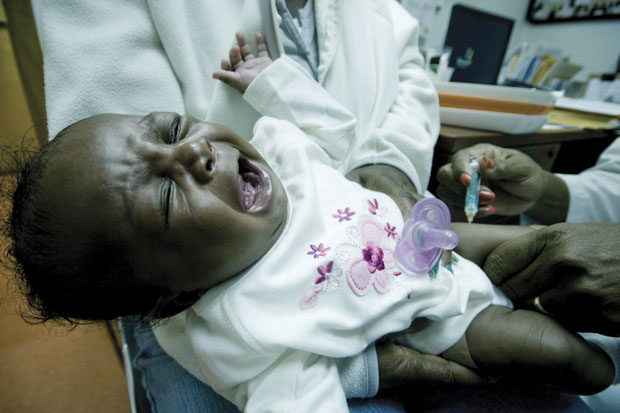 In Memphis’ Shelby County Cemetery, there’s a place they call Babyland. More than 10,000 infants are buried there, left to the public cemetery by families who couldn’t afford to take them anywhere else. The babies are tucked away in small coffins, and most of their plots are marked with metal discs engraved with numbers, but not names. Memphis is known for a lot of things: its sweet barbecue sauce, its blues singers and Elvis, its Beale Street nightlife, and in some circles, its high infant mortality rate. Babies die for all sorts of reasons. They get diarrhea and dehydrate; they catch pneumonia and their lungs are overwhelmed; or they are born prematurely, before their bodies can handle life on the outside. Some deaths are predictable, others sudden. But infant mortality rates are definitely higher in poorer countries: Angola has a rate of 180 deaths (before age one) per 1,000 live births, while Sweden has a rate of 2.75. But the correlation between a country’s wealth and its infant mortality rate is not necessarily a strict one. The U.S., the richest country in the world, has a rate of 6 — at the lower end of the spectrum, but higher than that of about 40 countries. And in parts of the U.S. and for certain populations, the infant mortality rates are much higher. Shelby County, Tenn., where Memphis is the main municipality, is one of those places. In 2007, the latest year for which data is available, 193 infants died, making the county’s overall infant mortality rate 12.7 — or twice the national average. And the infant mortality rate for black babies in Shelby County is 17.8. Nationally, black women are twice as likely to have a child that will die before its first birthday than white women. Even when you control for income and education level, the disparity stands. |
