

 About the Fellowship
Evolution
Can Evolutionary Theorists Ever Make Sense of Religion?
A new theory disregards the dominant evolutionary story, and explores instead religion's origins in playtime and ritual.


The currently dominant evolutionary story for the origin of religions might be called the "byproduct theory". It goes something like this.
The human brain evolved a series of cognitive modules, a bit like a smartphone downloading applications. One was good for locomotion, another seeing, another empathy, and so on. However, different modules could interfere with one another, called "domain violation" in the literature. The app for locomotion might overrun the app for empathy and, as a result, the hapless owner of that brain might discern a spirit shifting in the rustling trees, because the branches sway a little like limbs moving. The anthropologist Pascal Boyer calls such interpretations "minimally counterintuitive". They can't be too random or they wouldn't grip your imagination. But, clearly, they are not rational. Religion is, therefore, a cognitive mistake. It might once have delivered adaptive advantages: swaying branches could indicate a stalking predator, and so you'd be saved if you fled, even if you believed the threat was a ghost. But rational individuals such as, say, evolutionary theorists now see religious beliefs for what they really are.
Given that this is the story that often does the rounds, it is striking that Robert Bellah's new book, "Religion in Human Evolution," has no time for it whatsoever. Literally. Look up "Boyer" in the index and you are led to a footnote. "I have found particularly unhelpful those who think of the mind as composed of modules and of religion as explained by a module for supernatural beings," Bellah remarks. They have a "tendency toward speculative theorizing and [a] lack of insight into religion as actually lived". In short, the story is neither convincing when it comes to cognition, nor when it comes to describing religious practice.
Bellah's judgment matters because he is a venerable sociologist of religion who takes evolution seriously: it can be revealing about the nature of religion, he insists, though only if you are talking about religions as they actually exist. So what goes wrong? A fundamental mistake, Bellah argues, is to conceive of religion as primarily a matter of propositional beliefs. It is not just that this is empirically false. There are good evolutionary reasons for understanding religion in an entirely different way, too.
Go back deep into evolutionary time, long before hominids, Bellah invites his readers, because here can be found the basic capacity required for religion to emerge. It is mimesis or imitative action, when animals communicate their intentions, often sexual or aggressive, by standard behaviours. Often such signals seem to be genetically determined, though some animals, like mammals, are freer and more creative. It can then be called play, meant in a straightforward sense of "not work", work being activity that is necessary for survival.
At Least Creationists Have Given it Some Thought
Would you rather an indifferent or a passionately wrong child in the science classroom? Let's not simply sneer at Darwin deniers.

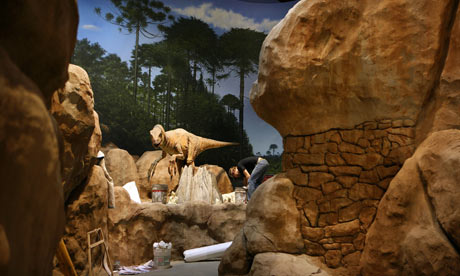
Yes yes, we're all agreed that evolution is true, and that the biblical (or Qur'anic) accounts of creation are literally false and should not be taught any other way in science classes. This has been the case for at least the last 50 years. Yet studies show that the number of creationists, or at least those who deny or fail to understand the fact of evolution, is very large among the adult population. Last year's Theos study, for example, showed something like 40% of the UK's adult population unclear on the concept. There are also stupefying numbers for the proportion of the British population who think, or who at least will assent to the proposition, that the Earth is around 10,000 years old.
This is quite clearly not a problem caused by religious belief. Even if we assume that all Muslims are creationists, and all Baptists, they would only be one in 10 of the self-reported creationists or young Earthers. What we have here is essentially a failure, on a quite staggering scale, of science and maths education. The people who think the Earth is 10,000 years old are essentially counting like the trolls in Terry Pratchett: "one, lots, many". Ten thousand is to them a figure incalculably huge.
I don't think this particular innumeracy matters nearly as much as the related inability to calculate that, say 29.3% annual interest on credit card debt is in many ways a much larger and more dangerous number than 10,000 years. But you can't blame either flaw on religious belief. You could perhaps blame it on human nature. There is a lot of good research to show that children are natural creationists, who suppose that there is purpose to the world, and that we have evolved that way. That needn't worry teachers terribly much. A great deal of the world that science reveals is absurdly counter-intuitive and in one sense the whole purpose of education is to lead children away from the "folk beliefs" that they develop naturally.
Putting Evolution to Work

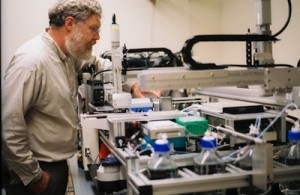
It is perhaps fitting that the new prototype of a machine Harvard Medical School geneticist George Church developed to "mass produce" new genes looks a little like a high-end stove. (Linked Photo courtesy of Marie Wu.) "Cooking," as one lab director once told me, is basically what lab researchers do. They cook with genes.
The MAGE (multiplex automated genome engineering device) will allow scientists to cook exponentially faster.
One of the major obstacles to genetic engineering has been the cost and labor involved in changing even a small number of genes in an organism. The most basic of traits (for example, the redness of a tomato) can depend on a complicated network of several sequences of genetic code. If any progress is to be made in changing multiple traits in organisms (especially the kind that scientists and entrepreneurs hope can be used to synthetically ‘grow’ alternative forms of fuel), then they will need to come up with a more efficient way to do it.
One way, some have suggested, is to let Darwin do the work. And that’s where the MAGE comes in.
Church’s machine in essence allows genetic engineers to introduce multiple versions of genes–written and synthesized in the lab–into bacterial cultures. Researchers can then ‘encourage’ (zap) the bacteria into incorporating the new genes, and once assimilated into the organisms’ genomes, multiple generations can be grown in a matter of a few days. In the process, variants of the new genes evolve and the engineers can screen the new organisms for the genomes that are most useful to them.
Should We Clone Neanderthals?
Given reliable technology, could it ever be ethical to bring our prehistoric relatives back from the dead?

I am at a conference in Dubai on science, religion and modernity, and the best question to come up was "should we clone Neanderthals?" Let's assume the kind of technical progress which would make this look like a possibly ethical thing to do: the failure rate with mammalian cloning has been so high that it really would be rather dodgy to inflict the process on a human being. But for the sake of argument assume a reliable technology and a sufficiency of DNA to work with.
Of course, the first difficulty from the strictly utilitarian point of view is that we don't know what the consequences would be. Neanderthal brains were physically different from ours and we have no idea how that impacted their consciousness. We assume they had speech, but this is obviously something that does not fossilise. So it's hard to judge the consequences inflicted on a sentient being when we have no clear idea of what kind of sentience is involved.
So a straightforward calculation of the likely consequences can't be done in the way that it can at least be attempted in bioethical questions as they affect homo sapiens. That doesn't mean that religion can provide answers, either. I haven't asked a Roman Catholic but assume that they would apply the same kind of precautionary principle as is applied in the case of abortion: that something which might be a human being should always be given the benefit of the doubt. But other religions, and other forms of Christianity, are not opposed to human cloning. They might not be opposed to cloning Neanderthals.
So let's not set it up as a science v religion argument. There will be ethical disagreement, but this will lie between believers as much as between unbelievers. Does it make a difference that this would be an experiment? It's science, which means that we discover things by trial and error. These trials are carefully constructed to ensure that the errors are as instructive as possible, but the outcome can't be known in advance. It's not easy to see how one could be certain of having a complete and viable sequence of Neanderthal DNA when there is nothing to compare it with and only the broad assumption that if the specimen from which it was extracted made it to adulthood it was reasonably healthy.
The Myth... of the Myth of Junk DNA
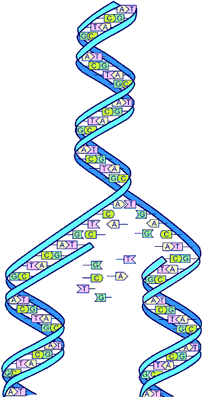
Some interesting items this week in the science blogosphere related to Junk DNA. As University of Toronto biochemist Larry Moran points out, ID proponents are gearing up to tout a new book claiming Junk DNA is a myth–and that the human genome is filled with intelligently designed genes with functions scientists are only now beginning to understand.
Key to the "myth" talking points of creationists is the notion that when biologists back in the 1970s first began realizing how large a percentage of the human genome was non-coding, they simply asserted it was functionless ‘junk’ in line with their innate Darwinian bias. And now, suddenly, to their utter surprise and chagrin, various functions are in fact being discovered for the junk.
From which we are to conclude, the creationist argument goes, that most scientists are knee-jerk ideological Darwinists, and isn’t this another good reason to get a better theory like intelligent design into the public school science classrooms.
T. Ryan Gregory at Genomicron has tirelessly pointed out the problems with the myth argument over the past few years. He cites a number of articles from the journals of the time to show that scientists never dismissed junk DNA in the literature. His blog is a great resource on the subject in general.
But also of interest, this week, are two posts (part one, part two) by botanist Stan Rice, author of Life of Earth: Portrait of a Beautiful, Middle-Aged, Stressed Out World reviewing John C. Avise’s book on just how not-so-intelligently designed the human genome actually is.
Niles Eldredge Awarded a “Friend of Darwin”
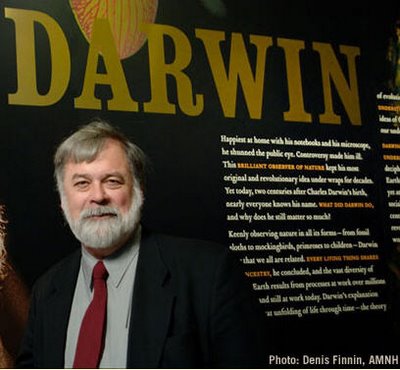
This week the National Center for Science Education awarded paleontologist and writer Niles Eldredge its Friend of Darwin award for 2011. Eldredge, who is Curator and Research Paleontologist at the American Museum of Natural History, is the author of several books on evolution and a leading opponent of creationist attempts to undercut the teaching of evolution in the public schools.
In the early 1970s, Eldredge, along with his colleague the late Stephen Jay Gould, formulated the theory of punctuated equilibrium, arguing that evolution over the eons was not as gradual as Darwin argued in his Origin of Species.
While Eldredge and Gould engaged in spirited debates about their theory with more ‘gene-centric’ biologists, such as Richard Dawkins, creationists tried to take advantage of the sometimes acrimonious discussion by claiming that Eldredge and Gould had fundamentally undermined "Darwinism" at its core.
I contacted Eldredge about this on the day after receiving his award and asked him if this made his theory harder to defend in the early days.
"Yes," he said. "Last night when I accepted the NCSE Friend of Darwin award, I started off by saying that in our early years, Steve and I were indeed considered by many, professionals and not—to be no friends of Darwin’s. And creationists did indeed seize on this."
For example, he said, in 1980 former aerospace engineer Luther Sunderland, a widely known creationist, prevailed upon Ronald Reagan’s speechwriters to have Reagan allege at a fundamentalist preachers’ gathering in Texas, that evolution is only a theory—and that some scientists were beginning to have problems with it.
"The syllogism was Evolution equals Darwin," said Eldredge. "Thus any criticism of Darwin was an expression of doubt about evolution. Ironically, all that was the prime mover to get me to write The Monkey Business [his first book]—to begin to confront this sorry mess."
Darwin Pushed to Margins
Why is resistance to evolution so strong among science teachers?


Despite winning court battles at every turn, advocates for teaching evolution as the unshakable bedrock of high school biology courses have been losing on the ground to an astonishing degree.
In a recent essay in Science, Penn State political scientists Eric Plutzer and Michael B. Berkman reported that their survey of U.S. public high school biology teachers show that only a relative small minority unambiguously teach the mainstream scientific view of evolution. Only 28 percent of the 926 instructors surveyed consistently implement the recommendations of the National Research Council, which calls on high school biology instructors to present without qualification the overwhelming evidence for evolution. About 13 percent of these public school instructors are active advocates for creationism or Intelligent Design as "valid scientific alternatives" to evolution — and, says Plutzer, "an additional five percent of teachers take the same position, though typically in brief responses to student questions."
Plutzer, co-author (with Berkman) of Evolution, Creationism, and the Battle to Control America’s Classrooms (Cambridge, 2010), discusses in a Big Questions Online interview more surprising facts uncovered by the survey, and their implications for science education in America.
Many assume that resistance to evolution is something largely confined to the rural South. Do the survey data indicate that the phenomenon is limited to one or more regions of the country?
Prior to our study, there were many surveys of teachers that also pointed to widespread teaching of creationism. But these earlier studies never included studies of the California, New York and the New England states. Our national probability sample of teachers confirmed what several scholars had suspected, that active proponents of creationism as science can be found in every state, even in fairly cosmopolitan school districts. Skepticism about evolution can be found all over the country, and many future teachers begin their education as evolution deniers. Those with strong feelings are unchanged by their college science education and bring these feelings to their classrooms.
What role does the local community play in the kind of biology taught in their public high schools?
The local community plays several important roles, and perhaps the most important is in the hiring and retention of teachers. We found that (on average, of course) teachers who do not accept human evolution tend to find jobs in the most socially conservative districts. Thus many teachers share values with their communities and find it easy to teach in accord with those values. Of course, "mismatches" are quite common, and teachers who find themselves at odds with local sensibilities may try to leave or fit in as best they can without stirring up controversy.
However, fitting in and avoiding controversy is not always possible. Many communities have large pro- and anti-evolution constituencies. We found that the teachers who experienced the most pressures to teach in a particular way were those in school districts with both a large number of doctrinally conservative Protestants and a large number of highly educated citizens. In these districts, there is no easy path for teachers to teach in accord with local opinion because local opinion is polarized.
Ultra-Darwinists and the pious gene
Richard Dawkins won't like it, but he and creationists are singing from similar hymn sheets, according to a new book.
Here are three questions of the kind evolutionary theorists love. First, why do most mammals walk on four legs? Second, how come some single-celled protists have genomes much larger than humans? Third, why have camera eyes evolved independently in vertebrates and octopuses?
They're important questions as they challenge certain versions of Darwinism that are dominant today in popular discourse. They are posed, alongside many others, in a rich mix of high theory and low knockabout in a new book by Conor Cunningham, Darwin's pious idea: How the ultra-Darwinists and creationists both get it wrong.
Ultra-Darwinism is the kind associated with the new atheism, the selfish gene and what Daniel Dennett calls evolution's "universal acid". Cunningham has form when it comes to critiquing its flaws. You may have seen his TV documentary, Did Darwin Kill God? In the book, he has not one hour but several hundred pages to persuade us that a new consensus is on the way in evolutionary circles and, moreover, it's remarkably amenable to Christian theology. Consider, then, the questions.
First, why do most mammals walk on four legs? It may be because four is an optimal adaptation for walking on land. Or it may be because the number four originates with the four fish fins that predate mammal legs. The difference is subtle but much hangs on it. If the number four is an optimal adaptation – not merely a byproduct of fins – then it exemplifies the power of natural selection to explain all sorts of traits. Only, consider a millipede. It would presumably think there's nothing optimal about four at all. I'd blame the fish, it might muse. And we might remember the millipede's contribution because, if it's hard to say whether features of organisms are adaptations or not, that causes all sorts of problems for the universal acid of ultra-Darwinism.
Strongly adaptationist explanations are common in ultra-Darwinism and the work of the acid. But as Cunningham repeatedly – actually, obsessively – points out, when they are rehearsed as gospel, they exact a terrible price. They describe such humanly invaluable features as mind, ethics and free will as delusions – akin to what Nietzsche called "true lies". The resulting nihilism is one of Cunningham's prime objections to the paradigm.
Mary Midgley: 'There are truths far too big to be conveyed in one go'
Philosopher Mary Midgley on morality, mythology and the story of the Selfish Gene
Philosopher Mary Midgley on morality, mythology and the story of the Selfish Gene (interviewed by Andrew Brown and Richard Sprenger)
listen now or download http://gu.com/p/2y7eq
Intelligent Design
Losing the Catholics


This has not been a good year for the Discovery Institute. I'm sure book sales to their core creationist audience of Biblical literalists are steady. And, as Barbara Forrest has shown, they're hoping the Louisiana State Education Act, which is directly based on their own template for state public education policy, allows Fundamentalists in at least one state to disallow biology science textbooks that teach evolution.
But that's not the same thing as having one of your Institute Fellows get a paper published in Nature. Or Cell. Or Science. It's not the same thing as celebrating a grant from the NSF to pursue some promising research.
The Discovery Institute has from its beginning claimed it would in short order get actual scientists to consider intelligent design as a viable scientific theory, by publishing peer-reviewed articles in the leading science journals.
But they've failed. And no matter how much cheering the Institute Fellows get from friendly audiences at Bible schools and church socials, the reality is: this was not the way things were supposed to turn out.
And now, they're losing the Catholics.
This past year, prominent Catholic conservative intellectuals at once ID-friendly magazines and web sites, started to break their silence about the vapidity of intelligent design.
First, Edward Feser, professor of philosophy at Pasadena College, began posting a series of essays showing up the hollow philosophical shell at the heart of intelligent design. Feser's main point is that, at least for Catholics, ID is hopelessly devoid of solid metaphysical grounding:
"The problems are twofold. First, both Paleyan 'design arguments' and ID theory take for granted an essentially mechanistic conception of the natural world. What this means is that they deny the existence of the sort of immanent teleology or final causality affirmed by the Aristotelian-Thomistic-Scholastic tradition, and instead regard all teleology as imposed, 'artificially' as it were, from outside."
Five Years After Court Decision, Intelligent Design Advocates Still Arguing
It's hard to believe it's already five years since the Kitzmiller v. Dover Area School District trial was underway at the Federal courtroom in Harrisburg, Pa. There, 11 parents of high school students successfully challenged the attempt of the school board's creationist majority to require that intelligent design be taught as an alternative to evolutionary theory.
Judge John E. Jones III agreed with the plaintiffs when he ruled on Dec. 20, 2005 that the school board's action, to have students informed that evolution was not established and that intelligent design should be considered, was unconstitutional pursuant to the establishment clause, the imposition of a religious proposition into a public school science class.
Ever since, the Discovery Institute, the conservative organization that actively promotes intelligent design for ideological reasons, has been trying to spin the events surrounding the trial and to denigrate the judge's decision.
For a recent example, in the spring of this year, Lehigh professor of biochemistry, Michael Behe, a Discovery Institute Fellow who was a star witness for the defense during the trial, made the claim that the judge was simply not competent to understand what was truly at stake in the case.
In a May interview for the Salem News with a friendly correspondent , Behe was asked whether Judge Jones was impartial and unbiased:
Bad Faith (in Science)
Darwin as All-Purpose Boogey Man?
In a press release at the Discovery Institute's Evolution News, Institute Fellow John G. West recently attacked British scientist Denis Alexander for downplaying Darwin's use of the term "survival of the fittest" in his work.
The philosopher Herbert Spencer first coined the term, and Darwin had reservations about employing it in his book The Origin of Species. But this is of small consequence to West and conservatives of a certain bent who loathe evolution. As far as they're concerned, evolution simply means survival of the fittest, and the application of natural selection to society in their view has inspired dangerous social movements, from Social Darwinism to Nazism.
But this is just the tip of the iceberg. West writes:
"Darwin opposed slavery (to his credit), but he also was a thoroughgoing racist who thought natural selection provided a scientific rationale for why we should expect to see races with different intellectual capacities. In his book The Descent of Man, Darwin disparaged blacks and observed that the break in evolutionary history between apes and humans fell "between the negro or Australian and the gorilla," indicating that he considered blacks the humans that were the most ape-like. [Darwin, Descent of Man (1871), vol. I, p. 201] Darwin also predicted that "[a]t some future period, not very distant as measured by centuries, the civilised races of man will almost certainly exterminate and replace throughout the world the savage races." [Darwin, Descent of Man (1871), vol. I, p. 201] Darwin's contribution to scientific racism is hard to deny, no matter how much contemporary Darwinists try to rewrite history.
Now, what's interesting about this broadside is the selective quoting to make the point that Darwin was not just your average Victorian with a condescending bias against the intellectual capacity of non-whites. After all, this is an attitude even Abraham Lincoln shared, and he waged a destructive civil war to end slavery and keep the Southern States from seceding from the U.S."
West wants his readers to realize that Darwin's racism had murderous overtones and that therefore the science of evolution must be suspect. It goes without saying that neither West nor anyone else at the Discovery Institute has any peer-reviewed research papers to counter the massive scientific evidence for evolution (a healthy sample of which can be found in this new book, already headed for its second printing: Evolution: The Extended Synthesis).
Catholics and the Evolving Cosmos

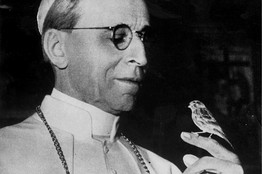
This month marks the 60th anniversary of the papal encyclical "Humani Generis," that laid out the Catholic Church's official relationship with Darwinian evolution. The pastoral letter, issued on Aug. 12, 1950 by Pope Pius XII, confirmed, in broad terms, that there is no intrinsic conflict between Christianity and the scientific theory of evolution. Considering that this was three years before the nature of DNA was even discovered, the pope's foresight in deciding to address the topic is remarkable.
Eugenio Pacelli, as Pius XII was known until his papacy, 1939-958, was the first pope to regard science and technology as subjects deserving their own encyclicals, or pastoral letters to Catholics world-wide.
For example, one of Pius's longest (and last) encyclicals, "Miranda Prorsus" ("Utterly Amazing," on Motion Pictures, Radio and Television), issued detailed guidelines on how Catholics in the entertainment industry should conduct themselves. In these days of downloadable pornography, and movies and music rife with sex and violence, the pope's enthusiasm for the positive social potential of entertainment, what he termed "food for the mind especially during the hours of rest and recreation," is touching.
In an ironic way the pope's hopeful attitude leaves one with a much stronger sense of dismay over how the industry has evolved—or devolved—than if he had simply issued a blanket condemnation of the media as a whole.
But it was another encyclical that earned Pius XII a chapter in the annals of the history of science. "Humani Generis" (Of the Human Race) laid out the Catholic Church's accommodation with Darwinian evolution—provided Christians believed the individual soul was not the product of purely material forces, but a direct creation by God.
Science, Evolution, and Ideology
Scientists are careful to put ideology to one side in their work – but not when it comes to books 'for the general reader'
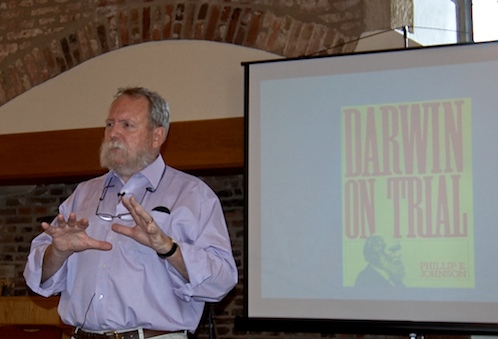
Biology has a long history with ideology. At times, the conflation of the two has led to substantial human suffering. A new collection of essays, published as Biology and Ideology: From Descartes to Dawkins, amply demonstrates the diversity of such mashups. Contributors examine matters from colonialism to eugenics.
Here, on Cif Belief, the boundaries between science and polemic blur pretty regularly, and the book has a broad lesson for our forum: whilst it is possible to disentangle past uses and abuses of biology it is more difficult to do so when it comes to instances in our own times.
Consider one paper, written by philosopher, Michael Ruse, who looks at the links between evolutionary science and the politics of progress. His account serves as a cautionary tale.
He notes that notions of progress, whilst common amongst pre-Darwinian evolutionists, disappeared from the literature once the science became established. This is partly because progress, as an idea, took a "heavy knock" in the Origin of Species. Natural selection relativised everything. Is a big beak an advance on a small one? Is a human an enhanced ape? The answer depends entirely upon context. Hence, although Darwin indulged in a little progressivism in his later Descent of Man, he had previously noted: "Never use the word higher or lower."
Mendelian genetics confirmed as much by insisting that the mutations which power natural selection are random. So the palaeontologist Jack Sepkoski could write: "I see intelligence as just one of a variety of adaptations among tetrapods for survival. Running fast in a herd whilst being as dumb as shit, I think, is a very good adaptation for survival." That his colourful turn of phrase implicitly questions progressivism, only demonstrates how hard it is to write about biology without ideological intent – a point to which we'll return.
Middle Ways on Evolution
Sixty years ago Pope Pius XII moved the the Catholic church to a compromise position on human evolution.

More and more these days it seems like evolution is turning into a litmus test with only two possible results. If you accept evolution, creationists consider you a heretic. If you question evolution, Darwinists denounce you as a moron. But history shows that a qualified acceptance of evolution was, from the moment Darwin published his Origin of Species, a default position for many who were open to the theory, even when they were deeply disturbed by it.
Sixty years ago the controversial pope Pius XII, for example, made an accommodation with evolution the official position of the Catholic Church, when he wrote in his encyclical Humani Generis, that the scientific investigation of the material origins of the human body was perfectly legitimate, provided Catholic theologians kept in mind that the soul was to be considered always the direct creation of God.
This is not a position that would win friends amongst creationists or materialists. But it was a step forward for the Catholic Church, as it had not been nearly so accommodating to theologians even a generation before Pius XII. In two noteworthy cases in the late 19th century, Father Rafaello Caverni in Italy, and Father Dalmace Leroy in France were forced to withdraw from publication thoughtful books they had written attempting to reconcile Christianity with evolution.
What's fascinating about the cases of both priests, is that their books were quite modest, and very conservative: both argued—as many theists do today—that all species, with the exception of the human race, could be considered the products of evolution, while reserving for humanity alone a special status as the direct creation of God. [You don't have to be religious to believe that humans are special; it has been the default position of Hollywood filmmakers since Kubrick produced
This was not good enough for critics in Rome, and after long deliberations and reviews by the Holy Office, which decided whether certain works should be placed on the Index of Forbidden Books, both men good naturedly submitted in writing retractions that today would be considered utterly humiliating for any scholar. History would prove kinder to them, however. Indeed, one of the reasons Pope Pius XII decided to address evolution formally in 1950 was to alleviate some of the embarrassment the Catholic Church felt over of its treatment of scholars like Caverni, Leroy and others.
20 New Ideas in Science
Today's most cutting-edge scientific thinking: from switching off ageing to finding dark matter.


Today’s most cutting-edge scientific thinking: from switching off ageing to "enhancing" our babies; understanding consciousness to finding dark matter. You read it here first.
Humans are still evolving
The modern world hasn't stayed evolution's hand. Comparisons of different genomes show that natural pressures are still doing their thing. The gene for digesting lactose, for example, is slowly spreading from European populations to the rest of humanity. A gene that appears to enhance fertility is also becoming more common across Europe. Disease is still a big driver of human evolution: people with particular genetic arrangements are more likely to survive malaria and HIV, for example. And almost all humans have lost the caspase 12 gene from their genomes, probably because those who have it are more susceptible to bacterial infections. It happens slowly, but we're still changing.
This is one of many universes
Physicists like to know why things are as they are. Which makes it frustrating that some facts about the universe appear inexplicable. There are certain constants of nature - the numbers that determine how strong forces such as gravity are - that seem to be "just so" for no good reason. That wouldn't be so bad if they weren't so exquisitely perfect for allowing life to develop in our universe. Naively speaking, it looks as if someone designed the universe. That doesn't seem like a satisfying explanation to most physicists, so they have come up with a better one: that there are many universes, all with different properties. It is impossible to move from one to another, so we can't test this idea, but it does take away the "specialness" of the conditions we find ourselves in. Of course the universe is perfect for us: if it were any different we wouldn't be here to observe it.
We might be able to turn off ageing
Can we flick a switch in our genome that will greatly extend our lifespan? Experiments on worms, mice and fruit flies indicate that stopping certain genes from functioning, or altering others so that they flood the body with particular combinations of chemicals, can dramatically slow the rate at which an organism ages. It can even be done by more low-tech means: changing the chemical environment of the body by altering the diet or by injecting certain hormones can slow ageing, too. It's an alluring avenue of research, but it is also controversial.
Plenty of biologists still say it's a mirage because we will never overcome the biological programme whereby cells die after a certain time, or indeed the rigours of wear and tear on the genome. Add that to the dangerous genetic copying errors that occur as cells divide and, for these naysayers, growing old remains an unavoidable future for humanity. Nevertheless, the consensus is that the fight against biological ageing has moved from impossible to enormously difficult, and that is exciting progress.
Keep It In Your Genes
You really do get by with a little help from your friends. Recent US research indicates that if you have lots of friends, you are likely to live much longer. The study tracked more than 300,000 people over seven years and concluded that having a good support network is as influential a factor in your long-term health as whether or not you're a smoker. The researchers involved are calling for doctors to add patients' social networks to the health-care checklist.
If your doctor asking about your friends seems unlikely (more unlikely, at least, than insurance companies pushing up premiums for loners), perhaps that's because this finding seems entirely unsurprising. Friends keep you happy, which helps keep you healthy. They also assist with practical issues, such as getting to a hospital check-up. But research into life expectancy can throw out surprises. Take its relation to teenage pregnancy, for example: people in low life-expectancy groups become parents earlier.
It has been known for a while that, in the face of deprivation, stress or direct threats, many animals embark on reproduction much quicker. It is now becoming clear that the animal we know as Homo sapiens is no different. Young teenagers' experiences of being threatened, getting into fights or being offered drugs provoke a biological reaction: they become parents much sooner. Teenage pregnancies aren't just another fact of life in a difficult upbringing. When biologists use controls for all the social factors, an early exposure to menace or mortality seems to be a biological trigger for reproduction. A brush with death makes you broody.
Perhaps it shouldn't really come as a surprise. If your primary goal is to live for ever by passing your genes on to the next generation, there is always a balance to be struck. You want to maximise your progeny's chances of survival by providing a good, stable upbringing. But you also don't want to die childless while waiting for the right conditions. Poverty brings low life expectancy, a low chance of future prosperity, an increased chance of debilitating illness and greater exposure to life-threatening crime. The genes' response? Get on with getting it on before it's too late.
Anyone hoping for a quick fix to teenage pregnancy would do well to step back and look at this bigger picture; the recent announcement that 28 per cent of all teenage girls who are eligible for free school meals have been pregnant at least once (and 7 per cent twice) makes perfect evolutionary sense.
The Man with Clues to Reality
This year's Templeton Prize winner is a champion of both science and religion. Spanish-born Francisco Ayala roundly dismisses creationism and intelligent design and says evolution can help religious believers understand evil.


By his own admission, Francisco J. Ayala has had "a very chequered career". After graduating in physics in his native Spain, he studied theology and became a priest, before moving to the United States, where he has dedicated the rest of his career to evolutionary genetics and molecular biology.
This varied intellectual path has, however, put the 76-year-old Ayala in a good position to explore the relationship between science and religion, which he believes provide complementary perspectives on our existence and are not in conflict with one another. It has also landed him this year’s Templeton Prize, an award given by the Templeton Foundation in the United States to an individual "who has made an exceptional contribution to affirming life’s spiritual dimension, whether through insight, discovery or practical works", and which is accompanied by a cheque for £1 million.
Born in Madrid in 1934, Ayala grew up under the dictatorship of General Franco. He was ordained as a Dominican priest in Salamanca in 1960 but realised that his true vocation lay in science. He remained a priest for about four years, agreeing with his superiors that he would go off and study genetics as long as he continued to obey his vows during this time. He travelled to New York, where he studied under celebrated biologist Theodosius Dobzhansky at Columbia University and then moved west to California in the early 1970s.
Among his many contributions to genetics and evolutionary biology, Ayala has pioneered ways of using variations in DNA sequences to reconstruct evolutionary history. He has also carried out much research on malaria and other tropical diseases, for example recently discovering that malaria was probably passed from chimpanzees to humans just around 5,000 years ago and that chimpanzees may serve as reservoirs for malarial parasites, leaving humans vulnerable to the disease even if a vaccine is developed.
Does Evolution Favor Religion?
David Sloan Wilson is a biologist who claims that the so-called selfish gene is a myth. What if we have evolved to do what's best not for ourselves, but for the groups we live in? The implications for religion, the ultimate social organism, are huge


I was at a conference just recently, where we told tales of vampire bats that share their blood, bacteria that work together, and monkeys that ease group tensions by making love. It set me thinking about the evolution of morality, for there is one story of it that’s often told, and it begins with a problem. Natural selection favors the best-adapted individual: it’s called survival of fittest. It explains why we feel fear or lust. But how can this ‘selfish’ account of natural selection explain moral emotions like altruism that might lead the individual to abandon their self-interest in favor of others, even to the point of self-sacrifice?
The problem is resolved by pointing out that it’s only the gene that is ‘selfish.’ That take allows for circumstances in which the survival of the individual may not best serve the transmission of the gene. For example, the interests of the gene may be better served if the individual is sacrificed for the sake of the group, when the group is composed of kin—other carriers of the gene. That’d explain why parents will surrender all for the benefit of their children. Alternatively, the gene may be best served if the individual is prepared to form cooperative relationships with others, on the basis that if I scratch your back, you might scratch mine.
Blessed Mistakes
Now, this story accounts for many instances of kin and reciprocal altruism in the natural world. However, it comes unstuck with humans. We look odd from an evolutionary perspective because we will sacrifice ourselves for individuals with whom we don’t share our genes, and when there’s no prospect of the favor being returned. Call it our Good Samaritan tendency.
Evolutionary Geneticist Ayala Wins Templeton 2010
Francisco Ayala, an evolutionary geneticist and former monk, has won the world's biggest prize for 'entrepreneurs of the spirit'

Francisco Ayala has been awarded the 2010 Templeton Prize. A distinguished evolutionary geneticist and molecular biologist, he is a former president of the American Association for the Advancement of Science and a holder of the American National Medal of Science. His work on parasites has opened up new approaches in the development of vaccines against malaria. The prize is noted for the size of its award: £1m. Ayala will donate the money to charity.
He has been chosen for his longstanding championing of the distinctiveness of science and religion. He was an expert witness in the 1981 court case that overturned the Arkansas law mandating the teaching of creationism alongside evolution. He is the principal author of the National Academy of Sciences publication, Science, Evolution, and Creationism, a refutation of creationism and intelligent design. "Darwin was right in all the respects that are most important to natural selection," Ayala remarked, when I spoke with him at a recent seminar in Cambridge.
His position on the relationship between science and religion is close to that of Stephen Jay Gould. They are non-overlapping magisteria. As Gould put it:
"The lack of conflict between science and religion arises from a lack of overlap between their respective domains of professional expertise – science in the empirical constitution of the universe, and religion in the search for proper ethical values and the spiritual meaning of our lives."
Evolution and Morality
Are we born selfish or altruistic?


Are we evolutionarily programmed to be selfish or to be cooperative? To care primarily for self, kin and survival or to sacrifice for the strength of survival of our "group?'' Can science be truly neutral in this discussion? Or are the findings of science fair game for political and social policy ammunition?
Such questions -- and contesting answers -- date to Charles Darwin, August Comte (who invented the term "altruism" in 1881) to Richard Dawkins (The Selfish Gene) and on up to contemporary critics of both, says historian Thomas Dixon, a professor at the University of London and author of The Invention of Altruism.
Dixon gave one of the concluding lectures at this weekend's seminars on the brain and morality at the Templeton-Cambridge Journalism Fellowships in Science & Religion. He also highlighted authors who look at cooperation through the lens of a social or political agenda and conclude, as Joan Roughgarden does in The Genial Gene, that "cooperation is every bit as natural and obvious as competition."
Darwin did indeed give credence to the ruthless competition model of nature dictating organisms to "multiply, vary, let the strongest live and the weakest die."
And yet, he also concluded in The Descent of Man, that love and sympathy and cooperation also exist in the natural world, like the way pelicans might provide fish for a blind pelicanin their flock?
"Communities with the greatest number of sympathetic members would flourish best and produce more offspring" and, Darwin wrote, in an outburst of Victorian moral emotionalism, "virtue will be triumphant."
Dawkins flips this in his work to say that the visitors of evolution are the selfish ones and that altruism must be taught. If we serve each other it's a "blessed misfiring" of genetics.
Art, Ethics Evolved in the Same Way, Time, Biologist Says

How do we know we evolved to be ethical when "morality doesn't leave any fossils? "
That question, from Martin Redfern of the BBC, was just one of many on the origins of ethics and morality at seminars this weekend. I've invited F&R; readers to join me here at the Templeton-Cambridge Journalism Fellowships in Science & Religion where the ideas are flying among scientists, theologians, philosophers and the reporters who cover them.
Evolutionary biologist Francisco Ayala, traced humanity's evolutionary development and linked the capacity for ethics to advanced intelligence, the development of language and the unique-to-humans concept of self-awareness.
"If I know I exist, I know that I am going to die," said Ayala, professor of biology and philosophy at University of California, Irvine, who then linked this to the rise of religion. Humans are the only ones who practice ceremonial burial of the dead, he said,
"We develop anxiety over our life ending so we try to look for answers beyond our life. This is likely why religion emerges in every society -- as a way to relieve this anxiety."
He thinks ethics -- which can also exist apart from religion in his view -- evolved at the same time as aesthetics, the awareness of beauty. Art and aesthetics, like human altruism, require value judgments and the ability to compare.
While Darwin Observed Evolution, Synthetic Biologists are Learning to Control It
This is the third in an occasional series of articles we will run in this year that scientists have dubbed "The Year of Darwin."

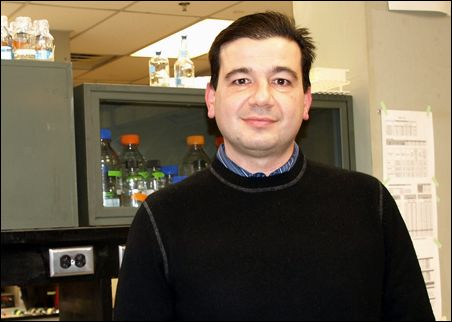
Even with his celebrated skill for making meticulous observations of nature, Charles Darwin never could have seen anything like the E. coli glowing fluorescent green in a laboratory at the University of Minnesota.
The natural forces of evolution Darwin described so famously 150 years ago did not craft these bacteria.
Laboratory workers did. They took the basic parts list for life — DNA's four defining chemicals — and created a suite of genes that aren't naturally present in E. coli. The synthetic genes transformed the bacteria into living microprocessors, capable of the logic exercises you find on a silicon chip.
Such are the products of an exciting and controversial scientific thrust called synthetic biology.
Biologists are poised to take over evolution, diverting species from their natural Darwinian courses and turning them in directions scientists want them to take.
Darwin observed evolution. Synthetic biologists are learning to control it — breaking down and reassembling life's basic parts as if they were so many Lego bricks on the floor on Christmas morning.
In the process, they are amplifying debate over one of the most profound questions humans face: Is the world ours to make and transform as we wish?
Ordering life by email
Instead of waiting for Darwinian evolution to produce useful mutations as it has for some 4 billion years, synthetic biologists
150 Years Later, 'Origin' is Both a Pillar of Science and a Still-Volatile Subject
This is the first in an occasional series of articles we will run in this year that scientists have dubbed "The Year of Darwin."
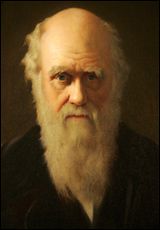
Here's professor Sehoya Cotner's "Five Cent Tour of Human Evolution" in summary: Fossils, DNA and other evidence add up to the unassailable conclusion that humans gradually emerged more than 100,000 years ago as part of the great ape family.
For many of the 200 students in Cotner's University of Minnesota biology class her "tour" was the first serious exposure to the subject, even though evolutionary theory is a foundation for biology and many other courses they should have prepared to study in college.
"They didn't allow evolution to be taught in my high school because of the controversial issues," student Brandi Ziegler said after the class.
It is 150 years ago today since Charles Darwin published "On the Origin of the Species," laying down a theory for understanding the intricacies of life on the planet. If Darwin could come back today and walk through laboratories and libraries in Minnesota alone, he surely would be amazed see the vast body of knowledge built upon that theory.
Still, evolution remains so culturally volatile that many high-school teachers shy away from it, leaving students with major gaps in their understanding of basic science, according to research by Cotner and professor Randy Moore, another U of M biologist who has written books about evolution.
Here are highlights from survey findings they reported in BioScience, a journal of the American Institute of Biological Sciences:
- Minnesota law requires that academic standards — including the theory of evolution — be taught in the state's public schools. Yet,
Who Are the Creationists?
The first scientific study of British creationist reasoning shows people too confused to be a movement
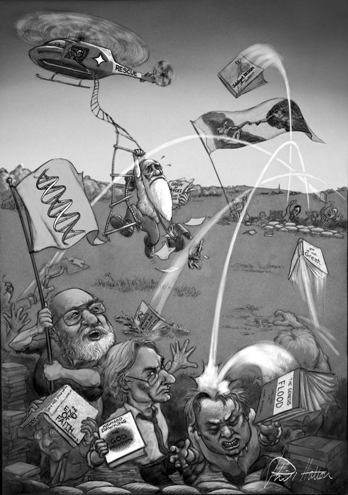
The admirable Theos project on Darwin concludes with the publication of a study on how British creationists think (pdf). To forestall the entirely predictable accusation that it's not science if Christians do it, this research was actually carried out on Theos's behalf by the ethnographic research firm ESRO. By interviewing 50 prominent anti-evolutionists, mostly Christians, but some Muslims and agnostics too, whose views ranged from intelligent design to young earth creationism, the researchers managed to get a picture of a movement whose most interesting characteristic is that it isn't one. In fact one of their interviewees was taught at Sussex by John Maynard Smith, an experience he describes as "a real privilege".
Interviewees did not seem to be united in either a geographical or a political sense. They did not necessarily belong to or attend any creationist groups or organisations and, where they did, they belonged to different ones. They did not keep contact with their counterparts in the US and they did not necessarily communicate with each other. There were vehement disagreements over theological matters and over the means by which evolution scepticism could be promoted. Intelligent design had not successfully created a paradigm through which all evolution sceptics might engage in the debate around evolution.
About half of their interviewees were full-on young earth creationists, believing in the literal truth of the Bible, and hence of a 6,000-year-old earth: but the interesting thing about this is that much of their propaganda was directed not against the evil Darwinians, but against the backslidden old-earth creationists, or, worse, ID-ers.
Although the interviewees were anonymous, one of these backsliders is described as the principal of a theological college. But it is important, I think, to notice that the reason for rejecting evolution, for those who put biblical authority first, is not that biology couldn't work that way (a later rationalisation) but that an evolutionary story is incompatible with the age of the earth.
Although both terms creep into the debate over evolution, being YEC [young earth] or OEC [old earth] does not in itself imply anything necessarily about beliefs regarding the truth of evolution; rather, they are positions on the age of the earth (as taught by the Bible) which have implications for beliefs about evolution
This is an important example of the way in which rejecting evolution leads inexorably to the rejection of the whole of modern science – history, ecology, and physics as well as biology.
Darwin in the World
Evolution and faith in the 21st century


Published 150 years ago, Charles Darwin's seminal work, On the Origin of Species, continues to cause debate between scientists and some people of religious faith for whom the idea that man evolved from more primitive animals remains controversial.
Bridget Kendall chairs a debate about evolution and faith from a conference at the famous Bibliotheca Alexandrina in Egypt.
She is joined by an audience of students and academics and a panel including: John Hedley Brooke from the Theology Department of Oxford University; Nidhal Guessoum, Professor of Physics and Astronomy at the American University of Sharjah in the United Arab Emirates; Salman Hameed, Professor of Integrated Science and Humanities at Hampshire College in Massachusetts; Eugenie Scott, Director of the US National Centre for Science Education in California; and Samy Zalat, Professor of Biodiversity at the University of the Suez Canal.
They discuss how Darwin’s ideas were received around the world in his own time, and how attitudes vary today, from the Christian fundamentalist heartland in the USA to faith schools in the Middle East. Will there always be conflict between evolution and religion? Do they apply to different, non-overlapping worlds? Or can science live in harmony with faith?
Related Links
Darwin Now
Bibliotheca Alexandrina
British Council Conference on Evolution and Society
- listen… [53 minutes, BBC iPlayer]
Learning from Creationism
The spread of creationism, and climate denialism is not the result of gullibility but of mistrust.
It's easy to suppose that the whole vast apparatus of modern creationism has taught us nothing at all. All those books, the endless arguments on usenet and then on the web, the museums, the theme parks, the teaching materials – all of it dedicated to teaching lies; none of it contributing so much as a moment's thought to the advance of knowledge.
But I think there is one important thing which all these millions of hours of labour has shown that could not have been learned any other way. It wasn't intentional. But creationists have proved that most scientists have a very naïve and inadequate idea of evidence. In particular, they believe that the justification for believing scientific claims is that they are reproducible and produce irrefutable evidence. The creationists have shown this is mistaken. Of course the experiment must be reproducible. Of course the results must be clear. But it's just as important that we take both these things on trust. When scientists report results we take them at their word. Without a belief that they are trustworthy, nothing they do compels belief. That is why fakery, when detected, must be so severely punished.
This was known before creationism was a problem. Richard Lewontin has written about the way in which even scientists cannot still less reproduce and judge, experiments outside their fields. But he's a sort of Marxist and easy to ignore. In any case, his assumption was
In Turkey, Fertile Ground for Creationism
U.S. critics of evolution help translate their ideas for a society already torn between Islam and secularism.

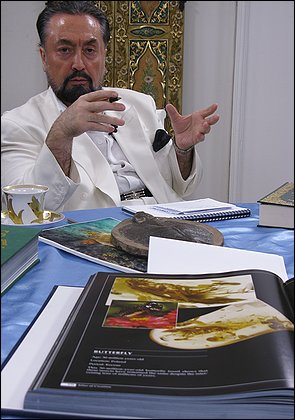
ISTANBUL -- Sema Ergezen teaches biology to Turkish students interested in teaching science themselves, and she has long struggled with her students' ignorance of, and sometimes hostility to, the notion of evolution.
But she was taken aback when several of her Marmara University students recently accused her of being an atheist, or worse, for teaching anything but the doctrine that God created the Earth and everything on it.
"They said I was a liar if I called myself a Muslim because I also accepted evolution," she said.
What especially disturbed -- and amused -- the veteran professor was that the arguments for creationism presented by some of the students came directly from the country where she was educated in the biological sciences years before -- the United States. Translated and adapted for a Muslim society, the purported proofs that Darwinism and evolution were wrong came directly from American proponents of Christian creationism and its less overtly religious offshoot, intelligent design.
Ergezen's experience has become increasingly common. While creationism and intelligent design appear to be in some retreat in the United States, they have blossomed within Muslim Turkey. With direct and indirect help from American foes of evolution, similarly-minded Turks have aggressively made the case that Charles Darwin's theory is scientifically wrong and is the underlying source of most of the world's conflicts because it excludes God from human affairs.
"Darwin is the worst Fascist there has ever been, and the worst racist history has ever witnessed," writes Harun Yahya, the most assertive and best-known critic of evolution in Turkey, and long a favorite of more conservative American creationists.
The evolution-creationism battle is playing out against a backdrop of a much larger conflict between the forces of secularism -- as represented by the Turkish military and many of the country's more educated citizens -- and forces, including the popular ruling party, that want to make religion more important in national affairs. The Islamic anti-evolution campaign is taking place in Turkey, and not Egypt or Saudi Arabia, because it is the Muslim nation where evolution has been taken most seriously. Like the Bible, the Koran says that God created the Earth and everything on it, and in many Muslim nations that ends the discussion.
But Turkey, which is officially secular, appears to be joining its Muslim neighbors on evolution. A recent survey, quoted in a 2008 article in the American journal Science, found that fewer than 25 percent of Turks accepted evolution as an explanation of how modern life
Sacrifice: Bringing Evolution and Religion Together?
Sarah Coakley is among those who argue that co-operation may be as fundamental in evolution as natural selection.

Sacrifice. It doesn't seem the most promising subject with which to commend Christian thought to a sceptical world. Surely compassion or wonder would play better, as experiences everyone has anyway. But sacrifice. It seems primitive, bloody, irrational. Part of religious history to overcome and leave behind.
In fact, there has been a revival of sacrifice amongst philosophers of religion in the 20th century. The man here is René Girard. His idea, roughly, is that our desires are mimetic – we desire what others desire – and that this leads to conflict, since we therefore desire the same things. This instils cycles of violence in human cultures, as desire provokes conflict provokes revenge. And the only way to break the cycles is to load the build up of violence onto a scapegoat, a party innocent of the original mimesis who acts as a sacrifice. Christ's death on the cross might be the supreme example.
But on Tuesday this week, Sarah Coakley, delivering her inaugural lecture as Norris-Hulse Professor of Divinity at the University of Cambridge – the one that covers philosophy of religion – contested Girard's interpretation of sacrifice as irrational (because of the mechanism upon which it's based), but commended sacrifice to us nonetheless – a commendation based upon evolutionary theory, no less.
Her argument stems from her collaboration with Martin Nowak, professor of biology and mathematics at Harvard University. He's been working on the possibility of a new principle in evolution, that of co-operation, without which, he's shown using game theory, "competitiveness dethrones itself" – which is to say that natural selection couldn't work. By co-operation he means something quite specific: foregoing of fitness advantage so that others may have it. His work resonates with that of other evolutionarists, notably Lynn Margulis, who's argued that multicellular life could never have evolved without symbiosis. The point is that this kind of co-operation is not just a supervenience on essentially selfish mechanisms, as advocated in the work of Richard Dawkins. Individual advantage cannot explain it, co-operationists say. If that's right, co-operation must be as fundamental in evolution as mutation and natural selection.
The Structure of Scientific Evolutions
Evolution's place in a created universe

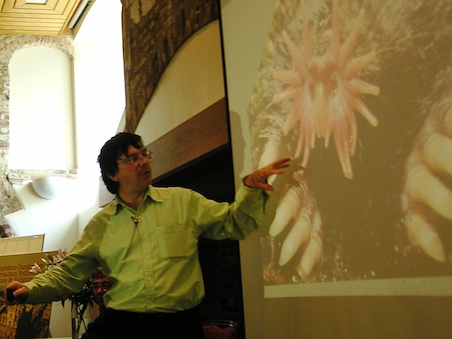
The quarrel between religion and evolution has taken an interesting turn. Instead of attacking religion, some Darwinists have embraced it as a product of human evolution. Now they're debating to what extent this evolution was biological. Evolution and biology are coming apart.
This is a tricky concept to grapple with in today's biologically dominated era of science. Let me try to explain where we are. Three years ago, while on a Templeton fellowship at the University of Cambridge, I heard one of those ideas that not only sticks in your head but starts to reorganize your thinking. The idea was convergence. The speaker was Simon Conway Morris, the Cambridge paleontologist and author of Life's Solution. Conway Morris affirmed evolution as a mechanical explanation of animal and human development. But he also argued that evolution takes place in an ordered world. Because similar features evolve repeatedly in different contexts, there must be something about the world that favors such features.
There's nothing inherently spooky or religious about this idea. We have a straightforward model of it in the well-known pattern of phase changes. At certain temperatures and pressures, this or that element will naturally change from solid to liquid to gas. The fact that such transitions can be explained mechanically doesn't erase the fact that the points at which they'll happen can be predicted independently. In that sense, they're caused not just by heating or cooling but by the pre-existing structure of the
The 'Scandal" of Charles Darwin, in Literature, Society
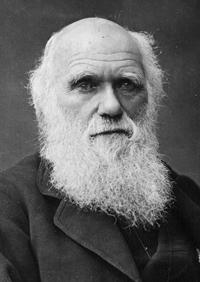
The findings were unnerving: We are not the favored creation of God. Species that have vanished forever are greater in number and possibly more important that those that live. Change may not be an uninterrupted progress toward perfection.
Small wonder that Charles Darwin was slow and frightened to finally publish his great work, The Origin of Species, and face "scandal" over his theories of "kinship, extinction and the great family," says Dame Gillian Beer, emeritus professor of English literature at Cambridge and author of Darwin's Plots: Evolutionary Narrative in Darwin, George Eliot, and Nineteenth Century Fiction.
Beer set Darwin's extraordinary and revolutionary work in a social and literary context in today's lecture at the Templeton-Cambridge program I'm attending this week in England.
She talked about how a man who felt a "backbone shiver" of pleasure with music and poetry when he was young lost this as an older man, troubled by the antipathy to his ideas. He still found pleasure of novels, particularly those with a happy ending. This fits a man obsessed with the questions of the novels of his time, all about descent, inheritance and family.
"He thinks about where is the human. What is the scale of the human?" Beer says. And "he was going to show that human beings had a very brief part of the history of the world."
Darwin would also redefine the "great family" so that "great" no longer meant aristocratic, educated, landed and wealthy but "great" as in large and wide and old, part of organisms past and present, "not a very privileged place."
Did Darwin Write a Blockbuster Novel?


Want your scientific discoveries to make the kind of impact that Darwin made? Write them up like pulp fiction.
I'm at a seminar on science and religion at Cambridge University. Gillian Beer, a distinguished professor of English Literature, has been arguing today that Darwin's voracious consumption of the Victorian novel, with all its adultery, racial and class politics and family scandals, was a big factor in the lasting success of the Origin Of Species.
Darwin was a great fan of fiction. He had his wife read to him from novels every afternoon. In his autobiography he stated that novels "have been for years a wonderful relief and pleasure to me, and I often bless all novelists." He loved a happy ending, and characters that he could root for - "and if a pretty woman all the better," he said.
Beer's analysis of the language of the Origin of Species leads her to believe that his use of metaphor and his instinct for storytelling earned the Origin a much wider audience than any scientific work would normally get. "He used things that were familiar to his readers," she said.
Even on a broad level, the Origin has the elements of the world's most successful narratives. The idea that there are only a handful of basic plots - overcoming the monster; rags to riches; the quest; voyage and return; comedy; tragedy; rebirth - is widely established in Hollywood.
Darwin's Bridge to God
Reaction of the Church to the Origin of Species has moved in the 150 years since its publication from proscription to an admission that it is more than a hypothesis. Catholic thinkers gathered to discuss how the theory fits with Catholic teaching.

Continuous and often strident opposition by religious believers to Darwin’s theory of evolution has marked the past century and a half. The heartland of this opposition has been the United States, where so-called "Creation science" was born and where "intelligent design", an attempt to demonstrate the need for a designer in nature, has taken hold. However, religious opposition to Charles Darwin’s ideas have in recent years become a feature in many other countries around the world. Yet some biologists argue just as stridently as the creationists that Darwinian evolution is all we need to explain man’s place in nature and that this scientific idea makes God redundant.
It was against this background that the Vatican hosted a conference in honour of Darwin at the Pontifical Gregorian University in Rome earlier this month entitled "Biological evolution: facts and theories". The aim of the meeting, according to the organisers, was to give scientists, philosophers and theologians the opportunity to discuss the progress and implications of evolutionary biology without, on the one hand, turning ideas about Creation into scientific theory or, on the other, reducing evolutionary thinking to scientific dogma.
Plotting such a course is a tricky business. As Fr Rafael Martínez of the Pontifical University of the Holy Cross in Rome told the conference, the Catholic Church has itself not always been entirely reasonable in its response to Darwin’s ideas. Martínez pointed out that although there was no Galileo-style condemnation in the case of evolution, the Church did place a number of books sympathetic to Darwin’s ideas on its Index of Prohibited Books. The Church’s position on evolution softened in the twentieth century, moving from a policy of no comment, through saying – in the 1950s – that it did not forbid research on the subject, to the statement by Pope John Paul II in 1996 that evolution is "more than a hypothesis".
Darwin’s theory of evolution – descent with modification through natural selection – is remarkably simple. "Descent with modification" refers to the gradual emergence of new species over time from changes to previously existing species. "Natural selection" is the process responsible for these changes. It means that over time the average fitness of creatures increases, leading to new species.
Islam's Evolutionary Legacy
As we celebrate Darwin, let's not forget the unsung champions of evolution from the Muslim world.
Last month, scientists from around the world partied into the small hours on the 200th anniversary of the birth of Darwin.
But as we celebrate the work of one of the most influential scientists ever, let's take a moment or two to remember others who contributed ideas in the history of evolutionary thought. Many came from Britain as well as other countries in Europe. Others came from further afield, and their writings are increasingly coming to light thanks to the painstaking work of historians of science, and historians of ideas.
One of them is an East African writer based in Baghdad in the 9th century called al-Jahiz. In a book describing the characteristics of animals, he remarked:
"Animals engage in a struggle for existence, and for resources, to avoid being eaten, and to breed." He added, "Environmental factors influence organisms to develop new characteristics to ensure survival, thus transforming them into new species. Animals that survive to breed can pass on their successful characteristics to their offspring."
Or there's Muhammad al-Nakhshabi, a scholar from 10th century central Asia. He wrote: "While man has sprung from sentient creatures [animals], these have sprung from vegetal beings [plants], and these in turn from combined substances; these from elementary qualities, and these [in turn] from celestial bodies."
In their excellent Darwin's Sacred Cause: Race, Slavery and the Quest for Human Origins, Adrian Desmond and James Moore describe
Darwin Lives On As Evolutionary Debate Continues

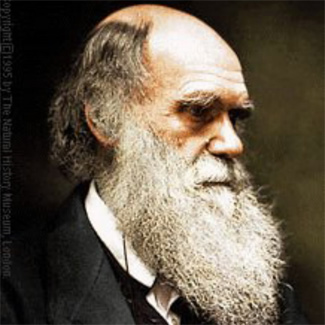
In the 5th century B.C., pre-Socratic Greek philosopher Empedocles developed a rather fanciful theory of the evolution of life. For the following thousand plus years, other philosophers and scientists offered their own evolutionary theories, and by the late 18th century, such ideas had become increasingly common.
In particular, members of Britain’s Lunar Society, including industrialist Josiah Wedgewood and especially physician Erasmus Darwin, promoted a theory of evolution informed by the Industrial Revolution.
But none of these thinkers managed to solve what 19th century astronomer John Herschel referred to as the "mystery of mysteries" — none could explain the mechanism by which evolution operates, by which new species come into being.
None, that is, until the arrival of Darwin’s and Wedgewood’s grandson, who was born shortly after both of his grandfathers died, and who would revolutionize science just a half century after their deaths.
Charles Robert Darwin was born in Shrewsbury, England on February 12, 1809. As the son of physician Robert, who had followed in the footsteps of his father Erasmus, Darwin was expected to pursue a career in medicine and was sent to the University of Edinburgh.
Darwin’s distaste for medicine was evident to him early on, but his education at Edinburgh did prove important as he met physician Robert Grant, who would introduce Darwin to marine biology, which became a lifelong passion.
Grant also introduced Darwin to the ideas of French evolutionist Jean Baptiste Lamarck, whose theory of the inheritance of acquired characteristics is now entirely discredited, but was accepted by Darwin until his death.
When Darwin informed his father of his disinterest in medicine, he was sent to Christ College, Cambridge in 1827, to read for a degree in divinity. While he had no more interest in becoming an Anglican clergyman than a doctor, Darwin did graduate near the top of his class in 1831.
But Darwin’s years in divinity school did prove to be undeniably important, for it was at Cambridge that he met the men who would
Five Mysteries of the Universe

Even today, there are scientific phenomena that defy explanation. If history is anything to go by, resolving these anomalies could lead to a great leap forward, so what are the greatest mysteries, and what scientific revolutions might they bring?
1 The missing universe
Everything in the universe is either mass or energy, but there's not enough of either. Scientists think 96% of the cosmos is missing. They have come up with names for the missing stuff - "dark energy" and "dark matter" - but that doesn't really tell us anything about them. And it's not as if they're not important: dark energy is continually creating new swaths of space and time, while dark matter appears to be holding all the galaxies together. No wonder cosmologists are searching for clues to their whereabouts.
2 Life
I know you think you're more than a sack of molecules, but why? Next time you see a tree, ask yourself why that is alive when your wooden dining table is not. The phenomenon we call life is something that biologists have almost given up trying to define - instead they're investigating ways to make different combinations of molecules come alive. Bizarrely, the best hope is similar in chemical terms to laundry detergent.
3 Death
Here's the flip side: in biology, things eventually die, but there's no good explanation for it. There are hints that switching genes on and off controls ageing, but if our theory is right, those switches shouldn't have survived natural selection. Then there's the argument that an accumulation of faults does us in. However, there are plenty of whales and turtles who seem to age ridiculously slowly - if at all. Of course, if we can work out why, that could be great news for future humans (if not for the planet).
4 Sex
Charles Darwin might have fathered 10 children, but he couldn't understand why almost everything in biology uses sexual reproduction rather than asexual cloning - sex is a highly inefficient way to reproduce. We still don't know the answer. The suggestion that sex's gene shuffling makes us more able to deal with changing environments seems plausible, but the evidence is scarce. At the moment, sex only seems to exist to give males some role in life.
5 Free will
If you want to keep your sanity, look away now. Neuroscientists are almost convinced that free will is an illusion. Their experiments show that our brains allow us to think we are controlling our bodies, but our movements begin before we make a conscious decision to move. Some researchers have already been approached to testify in court that the defendant is not to blame for anything they did. A scary legal future awaits.
Hitting a Brick Wall
Scientists forsake science when they use Darwin for ideological ends.
Religion is something left over from the infancy of our
intelligence, it will fade away as we adopt reason and
science as our guidelines.
- Bertrand Russell
In the Creation-Evolution Struggle, historian and philosopher of biology Michael Ruse writes, "in both evolution and creation, we have rival religious responses to a crisis of faith - rival judgments about the meaning of life [and] rival sets of moral dictates . . . ."
This is a startling statement, for several reasons. First, while we often hear creationists equate Darwinism with religion, Ruse, an agnostic, has spent much of his career defending evolutionary theory against creationist attacks.
Second, as we discussed in Part II, science is a method for understanding, explaining and controlling the natural world. Nowhere does this method provide us with the basis for making moral judgments or discerning the meaning of life. In other words, science is a descriptive, rather than prescriptive, enterprise - it concerns itself with what is the case, not what ought to be the case, or how we ought to behave.
For example, the science of evolutionary biology describes the world by telling us that all living things are descended with modification from a common ancestor, and that this produces a branching tree-like pattern of life. This tells us nothing about how to live or about the meaning of life.
Those matters are the province of religion and ethics, which are at least partly prescriptive disciplines. Yet if evolution does concern
Religion in Disguise
Intelligent design stumbles by revealing itself as religious theory.

Given the often amicable relationship between science and religion throughout the history of Islam and Christianity, the current hostilities, centred around creationism and evolution, seem something of a historical anomaly. And many commentators suggest that they are also a geographical anomaly, in that the promotion of creationism and intelligent design is restricted to Islamic countries and the United States.
But the latter suggestion is not quite true. While creationism and ID enjoy more "official" support in
Islamic countries than anywhere else, and while the U.S. has been the epicentre of the creationism-evolution wars, battles have also been fought in many European countries, Australia and Canada.
Witness the 2007 Ontario provincial election, when Progressive Conservative candidate John Tory, in an
effort to bring parochial schools within the purview of public education, echoed the American sentiment
that evolution is just a theory, and hence advised that schools should teach "that there are other theories that people have out there that are part of some Christian beliefs."
Or witness the 2006 controversy in Quebec, after the Ministry of Education, knowing some independent schools were teaching creationism, ordered the schools to teach the theory of evolution or close their doors. Suffice it to say, then, that the creationist movement has been highly successful in its efforts to influence education in Canada. And this is all the more astonishing given that the creationist movement was itself created only about a century ago.
Many people believe that young Earth creationism -- the dominant form of creationism, which aintains that God created the world, in roughly its present form, in six literal days some 6,000 years ago -- was widely accepted until the advent of modern science.
Yet the young Earth creationist movement is of a much more recent vintage. Most early Christian theologians accepted that parts of the Bible, including the creation story in Genesis I, were meant to be read allegorically, rather than literally. For example, in the fifth century, St. Augustine argued against a literal six-day creation in The Literal Meaning of Genesis. Augustine also displayed a wonderfully cientific mindset, remarking that we should be willing to change our minds in light of new information, and should be wary of reflexively interpreting the Bible literally, for it could discredit the faith.
No Intelligence Allowed in Stein's Film
Although you're probably not aware of it, scientists, lobby groups, the media and the courts are all united in a massive conspiracy to destroy your freedom. But have no fear, freedom fighter Ben Stein is here.
Although you're probably not aware of it, scientists, lobby groups, the media and the courts are all united in a massive conspiracy to destroy your freedom. But have no fear, freedom fighter Ben Stein is here.
That, in effect, is the thesis of Expelled: No Intelligence Allowed, the new anti-science "documentary" which opens across Canada on June 27, was produced by Vancouver's Premise Media, and stars Stein, the lawyer, actor, game show host and speechwriter for former U.S. president Richard Nixon.
The subtitle of the film is wholly appropriate as there is precious little intelligence displayed in its more than 90 minutes. But the subtitle's reference to the content of the film was unwitting -- it was meant to refer to a giant conspiracy to banish intelligent design theory from the halls of academe and the culture as a whole.
Now, you might ask, what exactly is intelligent design? But don't ask the producers of the film, since they don't even bother to define it. Don't ask Stein, either: I did, but all I got from him was a suggestion that the meaning of the term comes through in the film.
Since the producers evidently saw no need to define what their movie is about, allow me: Though proponents deny it, ID is the latest form of creationism, as it states that the apparent design in nature reveals that there must have been a designer. While proponents insist that ID has nothing to do with religion, they inevitably conclude that the designer is none other than the Judeo-Christian God.
ID is therefore a religious theory, rather than a scientific one. Scientific theories must yield testable hypotheses -- that is, they must make predictions and we must be able to test whether those predictions come true. But since we never know what God will do next,
Why Fluff-Over-Substance Makes Perfect Evolutionary Sense
Scandal A: A prominent politician gets caught sleeping with a campaign aide and plunges himself into an ugly paternity dispute -- all while his cancer-stricken wife is fighting for her life.
Scandal B: A prominent politician's signature health-care plan turns out to have been put together badly, and he is forced to confess that the plan will cost taxpayers billions more than expected.
It's a no-brainer which scandal is likely to catch -- and keep -- our attention. The interesting question as the presidential election heads into the homestretch is why we care more about some stories that do not affect us directly, even as we tune out other stories that do.
It isn't just about sex. John F. Kerry was damaged by accusations about his military service in Vietnam; George W. Bush fended off endless accusations that he dodged military service using family connections -- events that allegedly occurred more than three decades earlier. Rumor mills on the Internet today insinuate that John McCain once admitted to being a war criminal (he did not) and that Barack Obama is a Muslim (he is not).
The question is not which scandals are true but why certain story lines hook our interest. Why are we more likely to discuss a gossipy rumor at a party than a policy error that can actually make a material difference to our own lives?
One explanation is that cultural mores attune us to certain stories -- we live in an era where gossipy scandals rule. To test this, psychologist Hank Davis at the University of Guelph in Ontario examined hundreds of sensational stories on the front pages of newspapers in eight countries over a 300-year period, from 1701 to 2001.
Remarkably, he concluded that the themes of sensational news were identical not only across the centuries but also in diverse geographic locales -- from the United States to Bangladesh, from Canada to Mauritius. The stories that editors put on the front pages of newspapers -- presumably stories that interested readers -- included headlines such as "Crocodiles Tear Apart Thai Suicide Woman."
The stories were sometimes about important things and sometimes not, but they nearly always involved the kind of themes that people who are part of small groups like to know about one another: lying and cheating, altruism and heroism, loyalty and disloyalty.
Not so Highly Evolved
Richard Dawkins' TV show on Darwin ignores compelling new science such as evolutionary convergence: it's a chance missed.
The 2009 Darwin celebrations are officially under way, now that we are halfway through Richard Dawkins' flagship TV series, The Genius of Charles Darwin. But I can't help but feel they have not begun well. Dawkins' exploration of the science seems to be driven mostly by his desire to score atheistic points: this is not evolution as survival of the fittest but as zero-sum game.
It is a wasted opportunity on at least two accounts. First, making much of creationism and intelligent design only feeds them the oxygen of publicity. Most Christians find accommodation with evolution, and welcome it. "Darwinism appeared, and, under the guise of a foe, did the work of a friend," wrote Aubrey Moore, the late-Victorian Anglo-Catholic theologian. Why not celebrate that? Wouldn't it be a better strategy than giving creationism prime time?
It would leave more room for the science too. Which leads to the second point. The science of evolution is becoming much more interesting than a black and white presentation of it allows. Moreover, for believers, it is starting to look far less bleak than the phrase "survival of the fittest" implies.
Such directions are explored in a new collection of essays by leading evolutionists, philosophers and theologians in a book, entitled The Deep Structure of Biology. The central issue under discussion in this case is that of evolutionary convergence. The editor of the book is also the great champion of convergence, namely the Cambridge paleontologist Simon Conway Morris.
The work of Conway Morris, and now many others, is showing that evolution keeps coming up with the same solutions to natural problems. One of the better-known examples is that sabre-toothed cats. They evolved on at least three different occasions along independent Darwinian paths. And yet they look almost exactly the same. Dozens of examples of convergence have now been documented across a wide variety of biological phenomena, from animal and plant physiology to molecular biology.
The New Theology
Reconciling the biblical God with Darwin's theories would challenge even an omnipotent being. But a growing number of thinkers and scientists are altering their concept of the deity to make room for evolution.


More than 350 years after the inquisition hounded Galileo over charges of heresy, physicist Howard Van Till, of Calvin College in Michigan, confronted a little inquisition of his own. Van Till roused a small but fervent pack of enemies at the conservative college with his book, "The Fourth Day," in which he argued that the stories of the Bible and science’s account of evolution could both be true.
His critics on the school’s board of trustees had no interest in reconciling the religious account of creation with a naturalist explanation of how life and the universe have evolved over the ages. For years after the book’s release in 1986, Van Till reported to a monthly interrogation where he struggled to reassure college officials that his scientific teachings fit within their creed. Van Till’s career survived the ordeal, but his Calvinist faith did not. Over the next two decades, he became the heretic his critics had suspected.
Maybe the inquisitors were right to see contradictions between his science and their religion, he thought. Their beliefs demanded a God of absolute power who intervened constantly in the history of life and in human affairs. But Van Till found that picture increasingly at odds with his conviction that everything from stars to starfish has evolved according to natural laws. The college inquiry, he says now, "shook me awake."
He could have dropped all faith in God, in the long tradition of scientific atheists, whose most recent champion is British biologist Richard Dawkins, author of "The God Delusion."
Creation Museum Promotes the Bible over Evolution
Protesters outside the Creation Museum criticized it for trying to replace science with fiction.

The $27 million Creation Museum opened its doors in northern Kentucky on Monday. Hundreds of people came to the opening of the museum, which promotes the Biblical story of creation over evolutionary science.
Protesters outside the museum criticized it for trying to replace science with fiction.
Twenty-five years ago, Ken Ham says, he felt a calling to build a museum to promote creationism.
A quarter-century and $27 million later, The Creation Museum has opened in Petersburg, Ky., just outside Cincinnati.
The displays offer the creationists' view of how the world came to be, which differs sharply from the teachings of science.
Ham, a native Australian, breaks down the differences for Steve Inskeep:
"There is a conflict if you try to add evolution to the Bible and take Genesis as literal history," he says. "For instance, the Bible teaches man was made from dust in [the book of] Genesis … whereas evolution would teach that man came from some ape-like ancestor.
"I know there are many Christians who say they believe in evolution [over] millions of years," he says. "I would say they're being inconsistent in their approach to scripture. A literal Genesis is actually the foundational history for the rest of the Bible for all doctrine.
Ham's view explains why visitors enter to see two animatronic baby dinosaurs alongside two children.
"When you have dinosaurs and people together, that makes a statement concerning one's belief about the age of the Earth and evolution," he says. "Obviously it flies in the face of what secular evolutionists will teach."
Ham says the museum – which drew protesters on Monday – does try to cover both sides of the debate.
"We actually do give both sides as people walk in," he says, explaining that a fossil exhibit has "a creation paleontologist" and "an evolutionary paleontologist" offering different interpretations of the same fossil.
He rejects the idea that science has a lock on empirical evidence.
listen now or download All Things Considered
- listen… []
Evolution: Playing Politics With Fact

I’m curious: Is there anybody on the stage that does not… believe in evolution?
That was the question put to the 10 GOP presidential hopefuls during a May 3 Republican presidential debate on MSNBC.
Sen. John McCain (R., Ariz.) already had said he did.
But when the rest were asked the same question, three hands went up: those of Sen. Sam Brownback of Kansas, Rep. Tom Tancredo of Colorado, and former Arkansas Gov. Mike Huckabee.
Ah, the flood of facile jokes!:
Those Luddite Republicans!
They don’t believe in evolution because, in their case, it didn’t happen!
Et cetera. Hardy har har.
Three candidates do not a party make. But it was a telling moment for those wondering where the GOP is headed.
Creationist Museum Challenges Evolution
For some a battle between science and religion is being fought for the soul of America. The Creationists argue God created the world in six days and want their beliefs given equal status to evolutionary science.
Petersburg, Kentucky, is in the middle of North America. It is supposedly within a day’s drive of two-thirds of the US population.
For the rest, it is just 10 minutes from Cincinnati International Airport. That is why it was picked as the site for a new museum, due to open in a couple of months.
We enter the landscaped grounds through gates flanked by wrought iron stegosaurs.
The lobby is modelled on a cliff in the Grand Canyon. But this is no ordinary museum of science and geology.
It is the dream of Ken Ham, president of Answers in Genesis, a Christian ministry that promotes the idea that the Biblical book of Genesis should be taken literally in describing the creation of the world, life and humans as carried out by God over a six-day period a few thousand years ago.
We get as far as the museum bookshop—already well-stocked with creationist titles—but no further.
Officials tell us that state regulations forbid it. It is still under construction and closed to visitors.
Is this, I wonder, because I am accompanied by Eugenie Scott, director of the National Centre for Science Education and a polite but determined campaigner against attempts to teach creationism alongside evolution in American school science classes.Sharp teeth
So, it is round the back to the offices, to receive Ken Ham’s crushingly sincere handshake.
He came to the US from Australia 20 years ago, founded Answers in Genesis and never left.
He lectures or broadcasts almost daily and clearly has the charisma to raise $27m for this ambitious museum.
He is also not afraid to show us what is inside, and turns on the animatronic dinosaurs.
On a rocky ledge, there is a pair of small theropods—young T. rex individuals, we’re told. And near to them ("hold onto your hat," says Ken, anticipating our disbelief) there are two human children playing by a stream.
Most geologists would say humans and dinosaurs were separated by more than 60 million years. And those dinosaurs have very sharp teeth!
"So do bears," says Ken, "but they eat nuts and berries! Remember, before the sin of Adam, the world was perfect. All creatures were vegetarian." One of the dinosaurs lets out a rather contradictory roar.
French Scientists Rebut U.S., Muslim Creationism

With creationism now coming in Christian and Muslim versions, scientists, teachers and theologians in France are debating ways to counteract what they see as growing religious attacks on science.
Bible-based criticism of evolution, once limited to Protestant fundamentalists in the United States, has become an issue in France now that Pope Benedict and some leading Catholic theologians have criticized the neo-Darwinist view of creation.
An Islamist publisher in Turkey mass-mailed a lavishly illustrated Muslim creationist book to schools across France recently, prompting the Education Ministry to proscribe the volume and question the way the story of life is taught here.
The Bible and the Koran say God directly created the world and everything in it. In Christianity, fundamentalists believe this literally but the largest denomination, Catholicism, and most mainline Protestant churches read it more symbolically.
This literalism led Christian fundamentalists to reject the theory of evolution elaborated in the 19th century by Charles Darwin, the foundation stone of modern biology. Muslim scholars also dispute evolution but have not made this a major issue.
"There is a growing distrust of science in public opinion, especially among the young, and that worries us," said Philippe Deterre, a research biologist and Catholic priest who organized a colloquium on creationism for scientists at the weekend.
"There are many issues that go beyond strictly scientific or strictly theological explanations," he said at the colloquium in this university
Heart and Soul
In the Beginning

In scientific circles over the last 150 years, Charles Darwin‘s theory of evolution by natural selection has become the accepted explanation for how we and all other living things evolved from primitive, single-celled ancestors. Most biologists in most respected universities support that explanation and most agree that that process has taken hundreds of millions of years. Geologists now have evidence that our planet‘s history dates back about 4.6 billion years and cosmologists will tell you that our universe came into being through a process known as the Big Bang more than 13 billion years ago.
In spite of that, many people are guided by a different set of beliefs, based on scripture. In the United States the incidence of such beliefs is particularly high. In a recent survey, more than 40% of Americans said they thought that humans and other creatures had been created in their present forms and have not evolved. Of those who did accept evolution, a third thought that it was guided by some supreme being.
In two editions of Heart and Soul, the BBC World Service explores the controversy in the United States between creation and evolution and investigates a spectrum of beliefs.
To gain insights into the minds of the personalities involved, the BBC gave microphones to two of the key players from very different
The Flying Spaghetti Monster
Why are we here on earth? To Richard Dawkins, that's a remarkably stupid question. In a heated interview, the famous biologist insists that religion is evil and God might as well be a children's fantasy.


In the roiling debate between science and religion, it would be hard to exaggerate the enormous influence of Richard Dawkins. The British scientist is religion's chief prosecutor–"Darwin's rottweiler," as one magazine called him–and quite likely the world's most famous atheist. Speaking to the American Humanist Association, Dawkins once said, "I think a case can be made that faith is one of the world's great evils, comparable to the smallpox virus but harder to eradicate."
Not surprisingly, these kinds of comments have made Dawkins a lightning rod in the debate over evolution. While he's a hero to those who can't stomach superstition or irrationality, his efforts to link Darwinism to atheism have upset the scientists and philosophers, like Francis Collins and Michael Ruse, who are trying to bridge the gap between science and religion. Yet, surprisingly, some intelligent design advocates have actually welcomed Dawkins' attacks. William Dembski, for instance, says his inflammatory rhetoric helps the I.D. cause by making evolution sound un-Christian.
Dawkins' outspoken atheism is a relatively recent turn in his public career. He first made his name 30 years ago with his groundbreaking book The Selfish Gene, which reshaped the field of evolutionary biology by arguing that evolution played out at the level of the gene itself, not the individual animal. Dawkins now holds a chair in the Public Understanding of Science at Oxford University. Thanks to his tremendous talent for clear and graceful writing, he's done more to popularize evolutionary biology than any other scientist, with the possible exception of Stephen Jay Gould. Dawkins has a gift for explaining science through brilliant metaphors. Phrases like "the selfish gene" and "the blind watchmaker" didn't only crystallize certain scientific ideas; they entered the English vernacular. And his concept of "memes"–ideas themselves evolving like genes–spawned a new way of thinking about cultural evolution.
The Magnificence of How

In the 1970s, when the big-bang model for the origins of the universe at last seemed firmly established, Christian, Jewish, and even some Muslim preachers and exegetes took heart. Hadn't modern cosmology at long last proved what scripture always claimed? The universe emerged in a single indefinable instant. Creation out of nothing stood confirmed. Genesis had been vindicated.
The troublesome fact that big bang cosmology offers a model of how the cosmos came into being from a dimensionless point of infinite density but says nothing about what—or who—precipitated that primordial explosion (whose effects still determine our world, some 15 billion years later), hardly fazed these eager explicators. But the question nags. How far are we entitled to draw metaphysical inferences from scientific models?
Believers aren't alone in shoring up doctrine with data. Skeptics, including many scientists, do it routinely. The evolutionary biologist Richard Dawkins draws on Darwin to promote an atheistic agenda of well-nigh evangelical intensity, and he's hardly an isolated instance. Yet even the most stubborn doubter can occasionally be touched by puzzlement. The great English astronomer Fred Hoyle, a convinced atheist, was shaken when his researches into the way elements are formed in the hot hearts of stars showed that the nucleus of carbon possessed unique qualities that guaranteed its abundance, as though this fundamental component of life had been provided for—virtually designed into—the cosmic crucible. Hoyle grumbled about someone "monkeying with" the cosmos, which he now suspected was "a put-up job," and this rattled his atheism.
The anecdote comes from a remarkable new book by a Harvard astronomer and historian of science, Owen Gingerich, titled God's Universe (Harvard University Press, 144 pages, $16.95). Based on his William Belden Noble Lectures, delivered in 2005, Mr. Gingerich's work is a survey of the conflicts—and confluences—between hard science and deep faith; along the way he provides a brief but magisterial history of science that is as astute as it is original. He's a superb writer too, handling scientific and theological complexities with equal aplomb but enlivening his account throughout with poetry, dramatic anecdote, and snippets of autobiography.
Pope's Debate Group to Publish Evolution Talks
Pope Benedict and his former doctoral students plan to publish the proceedings of their weekend seminar on evolution to promote a dialogue between faith and science on the origins of life, participants said.
The minutes, to be issued later this year, will show how Catholic theologians see no contradiction between their belief in divine creation and the scientific theory of evolution, they said after the annual closed-door meeting ended on Sunday.
The theory of evolution has long been controversial in the United States, where conservative Christians oppose teaching it in public schools and promote rival views such as "intelligent design" that scientists reject as religion in disguise.
Benedict and some aides have joined the debate in the past year, arguing for evolution as a scientific theory but against "evolutionism"—which he calls a "fundamental philosophy … intended to explain the whole of reality" without God.
"He said this meeting could be an impulse to revive the discussion between theologians and evolutionists," said Father Stephan Horn, who organizes the sessions for top students the then Professor Joseph Ratzinger mentored in the 1960s and 1970s.
"He’s been concerned for a long time, and especially now that he is pope, about fostering a discussion between faith and reason," Horn said by telephone from Rome.
"He probably believes there is not enough public discussion about this, so that’s why he wants to revive it."
Philosophy, Not Science
Vienna Cardinal Christoph Schönborn, the papal associate most active in presenting the Catholic view of evolution in public, said the proceedings could be published in November.
Pope and Former Students Ponder Evolution, Not “ID”
Pope Benedict and his former doctoral students spent a weekend pondering evolution without discussing controversies over intelligent design and creationism raging in the United States, a participant said on Sunday.
The three-day closed-door meeting at the papal summer residence of Castel Gandolfo outside Rome ended as planned without drawing any conclusions but the group plans to publish its discussion papers, said Father Joseph Fessio S.J.
Media speculation had said the debate might shift Vatican policy to embrace "intelligent design," which claims to prove scientifically that life could not have simply evolved, or even the "creationist" view that God created the world in six days.
Pope to Debate Evolution with Former Students
Pope Benedict gathers some of his former theology students on Friday for a private weekend debate on evolution and religion, an issue conservative Christians have turned into a political cause in the United States.
Benedict, who taught theology at four German universities before rising in the Catholic Church hierarchy, has pondered weighty ideas with his former Ph.D students at annual meetings since the late 1970s without any media fuss.
But his election as pope last year and controversies over teaching evolution in the United States have aroused lively interest in this year’s reunion on September 1–3 at the papal summer residence of Castel Gondolfo outside Rome.
And the Evolutionary Beat Goes On . . .
Stephen Jay Gould would have been pleased.

Stephen Jay Gould would have been pleased.
No, not about his mug shot at the endpoint of evolution in the illustration above, but about the growing evidence that evolution is not just real but is actually happening to human beings right now.
"From 1970 to 2000, there was a widespread view that although natural selection is very important, it is relatively rare," said Jonathan Pritchard, a geneticist at the University of Chicago. "That view was driven largely because we did not have data to identify the signals of natural selection. . . . In the last five years or so, there has been a tremendous growth in our understanding of how much selection there is."
That insight has only deepened as scientists have gained the ability to read the entire human genome, the chain of "letters" that spell out humanity's genetic identity.
"Signals of natural selection are incredibly widespread across the human genome," Pritchard said. "Everywhere we look, there appears to be very widespread signals of natural selection in many genes and many processes."
Pritchard helped write a recent paper that identified some of those changes. The paper was published in the public access journal PLoS Biology.
The research offers a fascinating snapshot into how the human genome has continued to change as humans adapted to new circumstances over the past 10,000 years. As people went from hunter-gatherers to agricultural societies, for instance, there is evidence of genetic adaptations to new diseases and diets.
Europeans seem to be adapting to the increased availability of dairy products, with genetic changes that allow the enzyme lactase, which breaks down lactose in milk, to be available throughout life, not just in infancy. Similarly, East Asians show genetic changes that affect the metabolism of the sugar sucrose, while the Yoruba people in sub-Saharan Africa show genetic changes that alter how they metabolize the sugar mannose.
Where starvation was once widespread in humans' evolutionary history, making it genetically advantageous to conserve calories as much as possible, the abundance of food in many countries today has led to the opposite problem -- risk factors and diseases related to metabolic overload, including obesity and diabetes -- suggesting these could be areas in which natural selection may currently be active, as genetic variations that help protect against such disorders gain selective advantage.
The Bump of Reverence

It's almost impossible for us to recapture the pre-Darwinian notion of a species or an individual creature as having issued in its final configuration directly from the hand of its maker. We can't escape an awareness of the countless mutations and adaptations that every being, including ourselves, has undergone in the long process of evolution. Poets attempt to recover this lost sense of essence. When Rilke writes about a flamingo, he sees it "under the aegis of eternity." It would have been interesting and startlingly original had he somehow glimpsed, and been able to convey, the shadowy precursors—all those vanished proto-flamingos—that went to form his transcendental waterfowl, but this would have destroyed the Platonic fiction on which his vision depended.
As a young man, Charles Darwin himself was an avid reader of poetry; he "took intense delight," he tells us, in Shakespeare but loved Milton and Shelley, Byron and Coleridge, as well. In his later years he lost this taste and found poetry intolerable, preferring the popular novels his wife read aloud to him at stated intervals over each working day. His growing indifference to poetry, as well as to music, puzzled and disturbed Darwin; he saw it as a possible symptom of mental decline.
Darwin recounts this change in the account of his life and career that he wrote at the request of his family over a five-year period from 1876 to 1881, a year before his death. Like much else in The Autobiography of Charles Darwin (Totem Books, 154 pages, $15), it leaves a faint sense of puzzlement. All his life Darwin suffered from a mysterious illness, involving severe headaches, prolonged bouts of vomiting, and enervating weakness, that disabled him for months at a time. He has been retrospectively diagnosed as suffering from everything from Chagas disease, picked up during his five years aboard the Beagle, to neurotic hypochondria, caused by anxiety over the reception of his theories. But sickness, though it slowed him down, never deflected the stubborn progress of his research or writing, nor did it impair the singular vigor of his prose. The cause must lie elsewhere.
Why the Intelligent Design Lobby Thanks God for Richard Dawkins
Anti-religious Darwinists are promulgating a false dichotomy between faith and science that gives succour to creationists.

On Wednesday evening, at a debate in Oxford, Richard Dawkins will be gathering the plaudits for his long and productive intellectual career. It is the 30th anniversary of his hugely influential book The Selfish Gene. A festschrift, How a Scientist Changed the Way We Think, has been published this month, with contributions from stars such as Philip Pullman.
A week ago it was the turn of the US philosopher Daniel Dennett, second only to Dawkins in the global ranking of contemporary Darwinians, to be similarly feted at a series of lectures and debates across the UK launching his book on religion, Breaking the Spell. The two make quite a team, each lavishing the other with generous praise as the philosopher Dennett brings to bear his discipline on the scientific findings of Dawkins.
The curious thing is that among those celebrating the prominence of these two Darwinians on both sides of the Atlantic is an unexpected constituency—the American creationist/intelligent-design lobby. Huh? Dawkins, in particular, has become their top pin-up.
How so? William Dembski (one of the leading lights of the US intelligent-design lobby) put it like this in an email to Dawkins: "I know that you personally don't believe in God, but I want to thank you for being such a wonderful foil for theism and for intelligent design more generally. In fact, I regularly tell my colleagues that you and your work are one of God's greatest gifts to the intelligent-design
Religious Belief Itself Is an Adaptation

For a man who's obsessed with tiny critters, Edward O. Wilson has a strange knack for stirring up controversy about life's biggest questions. The Harvard biologist is a renowned expert on insects, co-author of the Pulitzer Prize-winning book The Ants. But it was his seminal 1975 book Sociobiology, which laid the groundwork for the new field of evolutionary psychology, that made Wilson a scientific luminary–and a major intellectual force in America. That book, along with its Pulitzer Prize-winning sequel, On Human Nature, argued that many human behaviors–including aggression, altruism and hypocrisy–are shaped by evolution. Wilson's tilt toward nature in the age-old nature/nurture debate may have put him on the map, but it also made plenty of enemies. Fellow Harvard biologists Stephen Jay Gould and Richard Lewontin denounced sociobiology, saying it provided a genetic justification for racism and Nazi ideology. Wilson's classes were picketed. In one famous incident, demonstrators at a scientific meeting stormed the stage where he was speaking and dumped a pitcher of water over his head, chanting, "Wilson, you're all wet!"
Over the years, sociobiology–once so controversial–became a widely accepted branch of science. Ultimately, Wilson won the National Medal of Science for his scholarship. And his own popularity soared when he emerged as a champion of biodiversity and a passionate advocate for endangered species. His 1992 book The Diversity of Life became a bestseller. But he stirred up more trouble in the late '90s with another book, Consilience. This was his attempt to outline a unified theory of knowledge, which had the effect of elevating science at the expense of religion and the arts. In his view, knowledge of the world ultimately comes down to chemistry, biology and–above all–physics; people are just extremely complicated machines. Wendell Berry, among other critics, railed against Wilson's scientific reductionism, calling it a "modern superstition."
Interview with Judge John Jones, the Judge at Dover
On February 14, Judge John E. Jones 3d addressed a crowd at the Lutheran Theological Seminary. Jones presided over the Dover "intelligent design" trial, eventually ruling that the Dover School Board could not order teachers to read a statement referring to intelligent design in classes discussing evolution. During his address, Jones, a Lutheran, said he diverged from those who insisted that either the Bible or the U.S. Constitution should be read literally. He spoke of the excitement and pride with which he conducted the trial: "Most federal judges will tell you they assume their positions to decide important cases." Before his talk, Jones spoke with The Inquirer about when he first heard of intelligent design, and what it was like to be a part of judicial history.
- The Inquirer
- Some have said your ruling wasn’t about church and state but about whether intelligent design is science.
-
- Judge John E. Jones
- I think that the ruling followed precedent, both the Lemon test [a three-part test, based on Supreme Court rulings, of whether a government action violates the separation of church and state] and the establishment test [from the First Amendment of the Constitution, which forbids Congress from making any law "establishing religion"], and I’m reluctant to characterize what that "means." The controversial part of the ruling was whether intelligent design is in fact science. Lost in the post-decision debate was that both sides, plaintiffs and defense, asked me to rule on that issue. Clearly, that was resolved based on the scientific evidence presented at the trial. That portion of the opinion
Don't Preach to Scientists in Evolution Row: Küng
Hans Küng is not a man afraid of challenging authority. The liberal Swiss priest has confronted the Vatican so often that he was barred from teaching Catholic theology in 1979 and was long a "persona non grata" in Rome.
He also has clear ideas about where theologians should not tread. The row about evolution and intelligent design, a major issue in the United States, is a case where he says believers should not claim to know more science than the scientists.As a man of faith, Küng sees God reflected in creation, but says this does not mean the Almighty tinkers with the laws of nature or creates life forms so complex they could not have evolved.
Supporters of the intelligent design theory, which they say offers scientific proof a higher power designed life on Earth, suffered a setback in December when a Pennsylvania court ruled they could not teach their views as science in public schools.
"There’s no use casting doubt on (scientific) results with some little problems, as the intelligent design people or the creationists do," Küng told Reuters in a telephone interview from his office at Tuebingen University in Germany.
"What’s there is there. A theologian should not cast doubt on a scientific consensus, but see how he can deal with it."
This debate has been dominated mostly by evangelical Protestants. Conservative Catholics such as Pope Benedict and Vienna Cardinal Christoph Schoenborn have joined in but not openly embraced intelligent design.
Post Magazine: Darwin v. God
Religious critics of evolution may be wrong about its flaws. But are they right that it threatens belief in a loving God?

Shankar Vedantam, whose article about Darwin’s theory and the competing theory of intelligent design appeared in Sunday’s Washington Post Magazine, was online Monday, Feb. 6, to field questions and comments.
Shankar Vedantam writes about science and human behavior for The Washington Post.
-
Shankar Vedantam
Welcome. Thank you for stopping by this online chat about my Sunday magazine cover story yesterday about the roots of the conflict between evolution and intelligent design.
We already have an extraordinary number of insightful and thought-provoking comments. I hope to respond to many, but will also post several with little or no response, simply because they are great for the conversation. If you see me responding to questions with other questions, that is because I myself have far more questions than answers!
A word about what this story is NOT about. It is not a story that weighs the evidence for and against intelligent design or evolution. Numerous other articles, in the Post and elsewhere, have discussed that important issue. This story was about the implications of evolution, especially as they pertain to morality and religious faith—Christianity in particular. What I want to focus on today is summed up by the headline of the story:
Religious critics of evolution are wrong about its flaws. But are they right that it threatens belief in a loving God?
Should anyone wish to contact me directly after the chat, you can email me at @washpost.com—I will try to respond to as many people as I can.
-
Alexandria, Virginia
Great article. As a discussion provoker, the article seemed to show both sides of this debate pretty clearly.
-
It seems Professor Crocker has a clear agenda. What justifies her teaching a religious theory in Biology 101?
(Aside from personal beliefs, if I signed up for a Biology 101 course, I would expect to be taught/learn what constitutes "Biology 101", not the intricacies of an origin of life theory—without understanding the science, students will not be able to competently form their own understanding)
-
Prof Crocker’s claims "There really is not a lot of evidence for evolution," then goes on to explain/teach the fundamentals of micro-evolution. Isn’t this contradictory in and of itself?
-
You mention Dr. Behe’s book—Darwin’s Black Box. Note that it was published in the late 1980’s. Having recently finished it, while he makes a convincing argument based on his assumptions, some of his non-evolutionary assumptions are off base and have since been partially explained in evolutionary terminology (note http://www.talkdesign.org/faqs/icdmyst/ICDmyst.html).
Without at least debating these issues in the open, people may be confined to their particular societal circle and unwittingly led to misunderstandings.
-
Eden and Evolution
Religious critics of evolution are wrong about its flaws. But are they right that it threatens belief in a loving God?

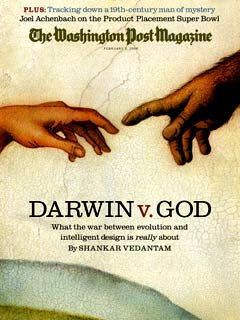
Ricky Nguyen and Mariama Lowe never really believed in evolution to begin with. But as they took their seats in Room CC-121 at Northern Virginia Community College on November 2, they fully expected to hear what students usually hear in any Biology 101 class: that Charles Darwin's theory of evolution was true.
As professor Caroline Crocker took the lectern, Nguyen sat in the back of the class of 60 students, Lowe in the front. Crocker, who wore a light brown sweater and slacks, flashed a slide showing a cartoon of a cheerful monkey eating a banana. An arrow led from the monkey to a photograph of an exceptionally unattractive man sitting in his underwear on a couch. Above the arrow was a question mark.
"There really is not a lot of evidence for evolution," says biology professor Caroline Crocker, who supports the theory of intelligent design.
Crocker was about to establish a small beachhead for an insurgency that ultimately aims to topple Darwin's view that humans and apes are distant cousins. The lecture she was to deliver had caused her to lose a job at a previous university, she told me earlier, and she was taking a risk by delivering it again. As a nontenured professor, she had little institutional protection. But this highly trained biologist wanted students to know what she herself deeply believed: that the scientific establishment was perpetrating fraud, hunting down critics of evolution to ruin them and disguising an atheistic view of life in the garb of science.
It took a while for Nguyen, Lowe and the other students to realize what they were hearing. Some took notes; others doodled distractedly. Crocker brought up a new slide. She told the students there were two kinds of evolution: microevolution and macroevolution. Microevolution is easily seen in any microbiology lab. Grow bacteria in a petri dish; destroy half with penicillin; and allow the remainder to repopulate the dish. The new generation of bacteria, descendants of survivors, will better withstand the drug the next time. That's because they are likely to have the chance mutations that allow some bacteria to defend themselves against penicillin. Over multiple cycles, increasingly resistant strains can become impervious to the drug, and the mutations
Intelligent Design: The Vatican Weighs In
What if God spoke, and said: "What's this intelligent design stuff? That ain't science!"?
Would ID proponents keep on talking? "Well, not if you redefine science"… "There's too many holes in the theory of evolution"… "Life is too complex for it to be the product of random mutation"… "This is academic censorship!!! "
Rather than hurling down serpents, frogs, and thunderbolts, The Divinity might clear the throat and politely restate: "Sorry, one more time: Intelligent design is not science. "
This week, it wasn't God talking, exactly—but, by some lights, it came pretty close. On Tuesday, the Vatican newspaper L'Osservatore Romano published an article, by University of Bologna evolutionary biologist Fiorenzo Facchini, which said a Pennsylvania judge was right to nix the Dover school board's attempt to order teachers to read an ID-related statement to students.
In agreement with Judge John E. Jones 3d, Facchini wrote that "intelligent design does not belong to science and there is no justification for the pretext that it be taught as a scientific theory alongside the Darwinian explanation. "While the paper is not an official Catholic Church voicebox, anything that gets printed must pass close scrutiny to jibe with Vatican thought. Hilariously, the Discovery Institute, a flimsy cover for neocreationist advocates, and one of the failed powerhouses behind the
Intelligent Design Hits Snag in California Schools

The opening salvo in the next battle over intelligent design has been fired. Coming off a major legal victory in Pennsylvania last month, opponents of intelligent design are seeking to replicate that win in California. Last month, a federal judge in Harrisburg, Pa., ruled that intelligent design cannot be taught in public school science class as an alternative to evolutionary theory. Intelligent design posits that life is too complex to have evolved through random mutation, but must have been guided by an "intelligence."
On Tuesday, opponents of intelligent design took the battle from science class to philosophy class. Eleven parents sued the El Tejon Unified School District in California for offering an elective course about the origin of life. The four-week elective course, called "Philosophy of Design," is being offered at Frazier Mountain High School in Lebec, a rural town north of Los Angeles.
Even before the opening class last week, the course was drawing ire from parents and science teachers alike. One concern was the course description, which said the class would look at scientific, biological and biblical ideas that "suggest that Darwin's philosophy is not rock solid."
"It's a way to sneak religion into public schools," said Barry Lynn, executive director of Americans United for Separation of Church and State, which is representing the 11 parents. "It's very clever, but it's unpersuasive."
No one from the El Tejon school district was available for comment Tuesday. But supporters of intelligent design said that the California lawsuit is disingenuous. Casey Luskin, an attorney at the Discovery Institute, a group that promotes intelligent design, notes that all along critics of the idea have argued that while intelligent design is not science and therefore should not be taught in science class, it is a valid topic in other courses.
listen now or download Morning Edition [2 min 32 sec]
- listen… [link to story at www.npr.org]
Catholics and Evolution: Interview with Cardinal Christoph Schönborn
Are Christian values compatible with Darwinism? A Catholic leader sets out his views on evolution and intelligent design.


Cardinal Christoph Schönborn of Vienna touched off a storm in July 2005 with an op-ed page article in the New York Times questioning Charles Darwin’s theory of evolution and appearing to endorse the concept of intelligent design—the theory that life forms are too complex to have been the product of random mutation. Scientists accused the 60-year-old cardinal, who has often been named as a possible future pope, of trying to steer Catholic teaching away from its cautiously positive view of evolution and toward what they said was the pseudo-science of intelligent design.
In a recent interview with Beliefnet in the Austrian capital, Schönborn set out his sometimes misunderstood views, clearly distinguishing between evolution and what he calls "evolutionism." He explained that while he believes that God is the intelligent designer of the universe, his position on evolution springs from a philosophical rather than a scientific standpoint. His main concern, he said, was not to denigrate evolution as a natural process but to criticize atheistic materialism [the idea that only matter, not spirit, exists] as the dominant philosophy of today’s secular societies.
Framing the question this way, this close associate of Pope Benedict XVI echoed views that the new pontiff has expressed about the dangers of relativism. Saying he was not qualified to comment on American legal issues, Schönborn declined to comment on the recent Pennsylvania case in which U.S. District Judge John Jones ruled that intelligent design is not science and cannot be taught in public-school biology classrooms. The following is an English translation of Schönborn’s remarks in German:
- Tom Heneghan
-
What are your objections to the theory of evolution?
-
- Cardinal Christoph Schönborn
-
Evolution is a scientific theory. What I call evolutionism is an ideological view that says evolution can explain everything in the whole development of the cosmos, from the Big Bang to Beethoven’s Ninth Symphony. I consider that an ideology. It’s not good for science if it becomes ideological, because it leaves it own field and enters the area of philosophy, of world views, maybe of religion.
- Tom Heneghan
-
This is not primarily a religious question, but one of reason. Can one reasonably say the origin of man and of life can be explained only by material causes? Can matter create intelligence? This question cannot be answered scientifically, because the scientific method cannot grasp it. Here we can only argue philosophically, metaphysically, or religiously.
Reason can recognize that matter cannot organize itself. That it at least needs information, and information is an expression of intelligence. How do you see Darwin?
Catholics Confront Faith and Evolution
While debate rages in this country over teaching science and so-called "intelligent design," the Roman Catholic Church is in the midst of a renewed discussion over the compatibility of evolution and faith.
- listen… [link to story at www.npr.org]
Intelligent Design Proponents Set Back by Dover Case
A federal judge Tuesday prohibited mentions of intelligent design in Dover, Pa., public school biology classes. The case was closely watched by school districts around the country, and the decision is likely to put a damper on other such efforts.
- listen… [link to story at www.npr.org]
Intelligent Design Ruling Dashed in Dover
The long-awaited ruling on the Dover "intelligent design" trial came yesterday, and the results were bad for ID—and good for democracy. They were good for those who read the Bible, those who read Darwin, and those who never read anything. This was a triumph for the Constitution, so it is one we all can share.
U.S. District Judge John E. Jones 3d ruled that the Dover Area School Board may not order teachers to read a statement about intelligent design in school biology classes on evolution. ID is a theory that questions Charles Darwin's account of evolution and posits that an "intelligent designer" must have directed the development of life forms on Earth.
The backbreaker was the judge's ruling, amply backed up by trial testimony, that ID is simply not science. Jones pointed out that a main pro-ID scientist, Lehigh biochemist Michael Behe, had hinged his argument on belief in God. Since no other scientific proposition rests on belief in a deity, "Professor Behe's assertion constitutes substantial evidence that in his view... ID is a religious and not a scientific proposition." Oops!
The judge ruled that, since ID is religious rather than scientific, the Dover school board violated the First Amendment's ban on government favoritism toward any particular religious belief in its ID vote last year. (Almost all who voted for ID either have left the boardDecision Expected in Intelligent Design Case
A federal judge in Pennsylvania is expected to rule in a case about whether ninth-grade biology students in Dover, Pa., could hear intelligent design mentioned in the classroom. At issue is whether public schools can teach alternatives to evolution.
- listen… [link to story at www.npr.org]
Pennsylvania Judge Bars Intelligent Design in Science Classes

A federal judge strikes down a policy in the Dover, Pa., schools that required biology students to hear a statement supporting alternatives to evolution. The ruling is a major blow to backers of intelligent design in public schools. They say life is too complex to have evolved entirely through natural means. But in strong language, the judge said the school board's policy was a thinly veiled attempt to force religion into the teaching of science -- and therefore unconstitutional.
A federal judge strikes down a policy in the Dover, Pa., schools that required biology students to hear a statement supporting alternatives to evolution. The ruling is a major blow to backers of intelligent design in public schools. They say life is too complex to have evolved entirely through natural means. But in strong language, the judge said the school board's policy was a thinly veiled attempt to force religion into the teaching of science -- and therefore unconstitutional.
A major defeat today for efforts to teach intelligent design in the public schools. A federal judge struck down a policy in the Dover, Pennsylvania, schools that required biology students to hear a statement supporting alternatives to evolution. Backers of intelligent design say life is too complex to have evolved entirely through natural means. But in strong language, the judge said the school board's policy was a thinly veiled attempt to force religion into the teaching of science and, therefore, unconstitutional. We'll have more analysis of the opinion in a few minutes. First, NPR's Barbara Bradley Hagerty reports on the ruling.
listen now or download All Things Considered
- listen… [link to story at www.npr.org]
Teaching Evolution: A State-by-State Debate

School boards and legislatures across the country are continuing to debate how to teach students about the origins of life on Earth. Policymakers in at least 16 states are currently examining the controversy.
In some states, advocates of "intelligent design" — the theory that an intelligent force had a role to play in the creation of the universe — are pushing for the concept to be taught side-by-side with evolution. In other states, schools are incorporating the idea that evolution is "theory, not fact." Below, a look at how the debate is playing out in several states:
Alabama: Biology textbooks in Alabama have included a disclaimer describing evolution as a "controversial theory" since 1996. The Board of Education adopted a softer disclaimer when they revised science guidelines in 2004, describing evolution as one of several scientific theories. But on Nov.10, 2005, the board voted to continue requiring the original disclaimer language.
Arkansas: After a long battle with the American Civil Liberties Union, the School Board In Beebe, Ark., voted in July 2005 to remove stickers placed in high school textbooks that question the theory of evolution. The sticker says that evolution alone is "not adequate to explain the origins of life." School officials had been awaiting an appeals court decision on a similar case in Georgia before taking action, but reportedly were concerned about lengthy and costly litigation.
Georgia: In 2002, biology textbooks in Cobb County, Ga., were labeled with a disclaimer stating that evolution is "a theory, not a fact." The label also said "this material should be approached with an open mind, studied carefully, and critically considered." A federal judge declared the sticker unconstitutional in January 2005, but the county school board appealed the decision. The 11th District Court of Appeals will hear the case in mid-December.
- listen… []
Intelligent Design Has Not Surfaced in the British Press
At a journalism seminar, a BBC producer was ‘struck by the concern about intelligent design amongst our transatlantic colleagues.’

I’ve been asking a few friends who are neither journalists nor scientists— nor, for that matter, Americans— what they understand by the term "intelligent design." "Isn’t that the slogan of that German car company?," one said, in a remark typical of what I often hear. In Europe, intelligent design is nowhere near the big issue that it is in North America. Serious newspapers have been giving brief coverage to the Dover, Pennsylvania court case on their inner pages, but in the popular press and on television there is not a mention made.
It’s interesting to reflect on why that might be. After all, according to the U.S. Constitution, church and state are separate whereas over here, the queen is both head of state and head of the Church of England. And many schools are church schools with religious education a small but significant part of their curriculum, and a brief act of worship is an almost daily event. But it is hard to find anyone here who thinks that intelligent design is serious science or that it should be taught as such in schools, or at least who is prepared to say so in public. The Church of England, for the most part, seems to be on the side of the biologists, and even the Catholic Church has gone on record as saying that evolution is more than just a theory.
Intelligent Design in American Classrooms
Steve Inskeep discusses the current state of intelligent design in American classrooms with Barbara Bradley Hagerty and with Greg Allen, who covered the intelligent design movement in Kansas.
- listen… [link to story at www.npr.org]
Intelligent Design and Academic Freedom
After publishing an article backing intelligent design, a scientist is targeted for retaliation. Intelligent design—the idea that life is too complex to have evolved through Darwinian evolution—is stirring up controversy not only in high school classrooms but also at universities and scientific research centers. Richard Sternberg, a staff scientist at the National Institutes of Health, is puzzled to find himself in the middle of a broader clash between religion and science—in popular culture, academia and politics.
Sternberg was the editor of an obscure scientific journal loosely affiliated with the Smithsonian Institution, where he is also a research associate. Last year, he published in the journal a peer-reviewed article by Stephen Meyer, a proponent of intelligent design, an idea which Sternberg himself believes is fatally flawed.
"Why publish it?" Sternberg says. "Because evolutionary biologists are thinking about this. So I thought that by putting this on the table, there could be some reasoned discourse. That's what I thought, and I was dead wrong."
At first he heard rumblings of discontent but thought it would blow over. Sternberg says his colleagues and supervisors at the Smithsonian were furious. He says — and an independent report backs him up — that colleagues accused him of fraud, saying they did not believe the Meyer article was really peer reviewed. It was.
Eventually, Sternberg filed a complaint with the U.S. Office of Special Counsel, which protects federal employees from reprisals. The office launched an investigation. Ultimately, it could not take action, because Sternberg is not an employee of the Smithsonian.
But Sternberg says before closing the case, the special counsel, James McVay, called him with an update. "As he related to me, 'the Smithsonian Institution's reaction to your publishing the Meyer article was far worse than you imagined,'" Sternberg says.
McVay declined an interview. But in a letter to Sternberg, he wrote that officials at the Smithsonian worked with the National Center for Science Education — a group that opposes intelligent design — and outlined "a strategy to have you investigated and discredited." Retaliation came in many forms, the letter said. They took away his master key and access to research materials. They spread rumors that Sternberg was not really a scientist. He has two Ph.D.'s in biology — from Binghamton University and Florida International University. In short, McVay found a hostile work environment based on religious and political discrimination.
listen now or download All Things Considered
- listen… [link to story at www.npr.org]
Intelligent Design Flunking Science
For the last few weeks, the ID folks have been having their say in the Dover, Pa., "intelligent design" trial. U.S. District Judge John E. Jones 3d may rule as early as mid-month.
At issue is whether the Dover school board can order teachers to read a statement about "intelligent design" (ID) before they teach ninth-grade biology classes on evolution. ID argues that life's complexity did not arise by chance (as in Charles Darwin's view) but rather is the work of a knowing, planning designer.
Judge Jones should rule against the Dover board. ID deserves passing mention - sidebars in textbooks, perhaps, and some class discussion - but not mandated inclusion in science classes. Why? Because as science, ID just doesn't cut it.
Here is the pro-ID strategy, and why it just doesn't hold up:
-
Poke holes in Darwin's theory of evolution.
The ID side talks of "gaps" in the evolutionary record - but such claims have been decisively disproven. They say evolution can't account for the origins of life. True - but then, it doesn't claim
Intelligent-Design Trial
God, Science, and Politics
It's hard to overstress the importance of the "intelligent design" trial going on now in Dover, Pa. Science is watching. So are teachers, judges, students, believers, lawyers and political leaders all over the world.
The result of Kitzmiller et al. v. Dover Area School District et al. could change how science is taught in schools throughout the land.
In October 2004, the board of the Dover Area School District voted 6-3 to reword the ninth-grade biology curriculum. Before beginning to teach evolution, science teachers must now read students a four-paragraph statement on a theory called "intelligent design" or ID.
Questioning Charles Darwin's theory of evolution, ID asserts that the complexity of living things could not have come about by random mutation, as in the Darwinian view. There must be an intelligence behind the design of the universe - a designer. Eleven parents have sued in federal court, claiming the board's decision amounts to teaching public school students a particular religious viewpoint and thus violates the constitutional separation of church and state. ID proponents say their theory isn't religious because it does not mention God. Now Judge John E. Jones 3d must decide who's right.
The Whole World, from Whose Hands?
The battle between secular defenders of evolution and those who believe in a divine Creator is more than a century old, yet there’s no lessening in its emotional and intellectual intensity. The latest wrinkle is intelligent design, a boundary-crossing belief that is the focus of a federal court trial on whether it should be taught in schools. A new USA TODAY/CNN/Gallup Poll sheds light on where Americans stand (53% of respondents say the Bible had it right). And USA TODAY religion writer Cathy Lynn Grossman and science reporter Dan Vergano look at the opposing sides to learn why each believes it cannot be wrong.
Creationists: "If you don’t have God at the beginning…"
Cut to the chase: It’s about God.
In the war of worldviews, He cannot lose.
As famed orator William Jennings Bryan wrote in 1925, "God may be a matter of indifference to the evolutionists, and a life beyond may have no charm for them, but the mass of mankind will continue to worship their creator and continue to find comfort in the promise of their Savior that he has gone to prepare a place for them."
Marvin Olasky puts it more bluntly: "If you don’t have God at the beginning, you don’t have God at the end and you don’t have God in
For the Anti-Evolutionists, Hope in High Places
Ideas and Trends

Except for the robes and the fact that each is addressed as "His Holiness," it would be hard to find much in common between Pope Benedict XVI and Tenzin Gyatso, the 14th Dalai Lama. Yet both have recently expressed an unhappiness with evolutionary science that would be a comfort to the Pennsylvania school board now in a court fight over its requirement that the hypothesis of a creator be part of the science curriculum.
It's not just fundamentalist Protestants who have difficulty with the idea that life arose entirely from material causes. Look East or West and you can detect the rumblings from an irreconcilable divide between science and religion, with one committed to a universe of matter and energy and the other to the existence of something extra, a spiritual realm.
Sometimes compared to the Scopes "monkey trial" of 1925, Kitzmiller et al. v. Dover Area School District opened last week in Federal District Court in Harrisburg with scientists making the usual arguments against intelligent design - which holds that the complexity of biological organisms is evidence of a creator.
Opponents say they doubt that the theory's supporters, like the Discovery Institute in Seattle, are talking about a smart gas cloud or a 10th-dimensional teenager simulating the universe on his Xbox. The American Civil Liberties Union, which filed suit against the Dover district, considers intelligent design a Trojan horse to introduce religion into public schools.
This time the anti-evolutionists won't be relying on the fundamentalist oratory moviegoers heard from the Fredric March character in "Inherit the Wind." Instead, the arguments may not sound so different from what one would hear if either the pope or the Dalai Lama were called to the stand. Neither of these men believes that a religious text, whether the Bible or the Diamond Sutra, should be given a strictly literal reading. Yet they share with evangelicals an aversion to the notion that life emerged blindly, without supernatural guidance. Particularly offensive to them is the theory, part of the biological mainstream, that the engine of evolution is random
Decoding the Chimp's DNA
More about Our 'Next of Kin'
In 2001, scientists announced they'd mapped the human genome—the string of genetic instructions woven into our DNA. That map has led scientists to buried treasures of understanding.
Now the same thing has happened for the chimp genome. The Chimpanzee Sequencing and Analysis Consortium, a huge international scientist cooperative, announced the sequence in the Sept. 1 issue of Nature. So we're about to know our closest cousins better.
The common chimpanzee (Pan troglodytes) is our closest living evolutionary relative. Both Pan and Homo (our genus) are branches from a common ancestor, from which the two lines went different ways about 6 to 8 million years ago. Chimps have changed since then—and so have we, in spectacular fashion. The chimp genome now gives us a point of comparison. It's close: And ourselves. This new map may help us answer one of the biggest of all questions: What makes us human?
Help us answer, mind you—not answer everything. Keep that in mind.
Intelligent Design
Teach it as a belief, but not as science
On Monday, in a round-table discussion with journalists from five Texas newspapers, President Bush said he thought intelligent design should be taught to students alongside evolution.
"Intelligent design" is the belief that the universe and the Earth show evidence of a thinking, purposeful plan. That belief is thousands and thousands of years old; the phrase is of fairly recent coinage.
President Bush made his remarks in the broadest, blandest terms: "I think that part of education is to expose people to different schools of thought."
That's the line you're hearing from many politicians: "I think students should learn all sides of an issue," etc. Sounds reasonable, right? No nice person could possibly take exception, right? Ah, but many do. They're afraid intelligent design - especially when it gets capitalized, as in Intelligent Design - is just "warmed-over creationism," anti-scientific Christian fundamentalism looking for a back-door into classrooms. In school districts throughout the land - in Dover, Pa., in Kansas, in Michigan, and elsewhere - debate rages over whether these ideas have any place in the way we teach our children science.
Echoes of Scopes Trial in Maryland
The teaching of evolution fuels a dispute over modern approaches to the topic in Cecil County, Md., The case comes as historians note the 80th anniversary of the Scopes Monkey Trial in Dayton, Tenn.
- listen… [link to story at www.npr.org]
An Astronomer's View of Christianity and Science
Owen Gingerich, a professor of astronomy at Harvard University and senior astronomer at the Smithsonian Astrophysical Observatory, discusses the role of evolution and the creationist movement called Intelligent Design. Gingerich, a Christian, says he has a problem with Intelligent Design taught as an alternative to evolution.
- listen… [link to story at www.npr.org]