

 About the Fellowship
Before & After 9-11
Defining the 'All-American Muslim'
The story of Islam in America today is a story of rapid assimilation and even secularization.

Earlier this month, the TLC network announced that it will cancel the reality show "All-American Muslim" due to low ratings. Critics had complained that the show whitewashed the problem of Islamic radicalism in the U.S. by not portraying Muslim extremists, which led major sponsors such as the retailer Lowe's to drop their support.
But the show's producers were closer to portraying reality than critics asserted. The story of Islam in America today is a story of rapid assimilation and even secularization, not growing radicalism.
Jihad Turk, director of religious studies at LA's Islamic Center of Southern California, says that of the roughly 750,000 Muslims living in Southern California, just 30,000, or about 4%, regularly attend Friday prayer. And when I interview members of the center's offshoot, the Muslim Establishing Communities of America (MECA), whose target demographic is unaffiliated young adults, they say there are few Muslim institutions where they feel comfortable.
Younger Muslims say they don't like the gender segregation at prayers and the imams imported from other countries who repeat the same Friday sermons, known as Khutbahs, week after week. (There are only so many times I want to hear the hadith about how smiling is a kind of charity, one woman told me.) They question the religious education they received growing up, where they learned enough Arabic to recite prayers or Koranic verses but not enough to understand what they were saying. Many say they have disaffected friends who have fallen away from the faith.
Mosque attendance is not the only measure of religious observance, but Muslims are experiencing other signs of secularization as well. They are intermarrying at rates comparable to those of other religious groups in America. The Pew Forum on Religion and Public Life estimates that about one in five Muslims is wedded to someone of another faith.
Gaddafi's Secret Missionaries


(Reuters) - On a tidy campus in his capital of Tripoli, dictator Muammar Gaddafi sponsored one of the world's leading Muslim missionary networks. It was the smiling face of his Libyan regime, and the world smiled back.
The World Islamic Call Society (WICS) sent staffers out to build mosques and provide humanitarian relief. It gave poor students a free university education, in religion, finance and computer science. Its missionaries traversed Africa preaching a moderate, Sufi-tinged version of Islam as an alternative to the strict Wahhabism that Saudi Arabia was spreading.
The Society won approval in high places. The Vatican counted it among its partners in Christian-Muslim dialogue and both Pope John Paul and Pope Benedict received its secretary general. Archbishop of Canterbury Rowan Williams, spiritual head of the world's Anglicans, visited the campus in 2009 to deliver a lecture. The following year, the U.S. State Department noted approvingly how the Society had helped Filipino Christian migrant workers start a church in Libya.
But the Society had a darker side that occasionally flashed into view. In Africa, rumors abounded for years of Society staffers paying off local politicians or supporting insurgent groups. In 2004, an American Muslim leader was convicted of a plot to assassinate the Saudi crown prince, financed in part by the Society. In 2011, Canada stripped the local Society office of its charity status after it found the director had diverted Society money to a radical group that had attempted a coup in Trinidad and Tobago in 1990 and was linked to a plot to bomb New York's Kennedy Airport in 2007.
Now, with the Gaddafi regime gone, it is possible to piece together a fuller picture of this two-faced group. Interviews with three dozen current and former Society staff and Libyan officials, religious leaders and exiles, as well as analysis of its relations with the West, show how this arm of the Gaddafi regime was able to sustain a decades-long double game.
Yet Libya's new leaders, the same ones who fought bitterly to overthrow Gaddafi and dismantle his 42-year dictatorship, are unanimous in wanting to preserve the WICS. They say they can disentangle its religious work from the dirty tricks it played and retain the Society as a legitimate religious charity - and an instrument of soft power for oil-rich Libya.
A committee led by a leading anti-Gaddafi Islamic scholar, Sheikh Al Dokali Mohammed Al Alem, is now investigating the Society's activities. Their report may take months to appear, but a Reuters investigation has found Libyan officials in Tripoli now say openly what under Gaddafi was taboo - that the religious Society was allied to a huge shadow network, especially in Africa.
"There are still some loose ends in the Islamic Call Society in Africa," said Noman Benotman, a former member of an al-Qaeda-linked Libyan Islamist group who now works on deradicalization of jihadists at the Quilliam Foundation in London.
"They still have a lot of money going around through these channels that used to belong to the Islamic Call Society," he said. "Huge amounts of money are involved. I think we're talking about one to two billion dollars."
Book Notes: Islam's Quantum Question

There have been several books published recently touting the historical contributions of Islamic scholars to the early history of science (in the Middle Ages), but fewer assessing the relationship between Muslim tradition and the challenges that modern science presents to it today.
Nidhal Guessoum, an astronomer at the American University of Sharjah, takes on this daunting task with his engaging book, Islam’s Quantum Question: Reconciling Muslim Tradition and Modern Science.
American readers familiar with the seemingly interminable "debates" between creationists and biologists on evolution, will not be surprised to find that many Muslims, depending on their background, also reject Darwin.
But as Guessoum reveals, Islamic attitudes to science are more complex (and also more frustrating), depending on the subject. I was surprised, for example, to read that the Iranian mullahs had no problem approving embryonic stem cell research. But it turns out Muslim tradition has always been fairly liberal in its interpretation about the point at which a fetus can be considered fully human.
On the other hand, as Guessoum attests from his own experience, getting officials from any two Muslim countries to agree about the role modern astronomy should play in the correct determination of the new moon, for prayer purposes, can be a daunting task.
Just over four hundred pages, Islam’s Quantum Question is organized into three sections. The first reviews Islam, the Qur’an and its attitude toward science, both historically and in the present.
Well aware of his audience, Guessoum’s chapters in this first section include several brief bios of historic and recent Islamic philosophers and scientists and their views on how Muslim societies should regard pure science and the applications of technology. The gamut runs from the urgent call to embrace modern science–to warnings that a truly Islamic science needs to avoid the presuppositions of the Western tradition.
The second section discusses modern debates on evolution, cosmology and teleology–and how Muslim intellectuals have responded to these issues. It’s startling, for example, to read about the highly regarded Pakistani philosopher and poet, Muhammad Iqbal, a devoutly religious mystic, who dismissed two classic Western arguments for the existence of God–as a complete waste of time.
Catholics and Muslims Pursue Dialogue Amid Mideast Tension

Only five years ago, critical remarks by Pope Benedict about Islam sparked off violent protests in several Muslim countries. Never very good, relations between the world’s two largest religions sank to new lows in modern times.
This week, while protesters in the Arab world were demanding democracy and civil rights, Catholics and Muslims met along the Jordan River for frank and friendly talks about their differences and how to get beyond their misunderstandings.
The Catholic-Muslim Forum, which grew out of the tensions following Benedict’s speech in the German city of Regensburg, was overshadowed by events in Egypt, Yemen and Syria. The lack of any dramatic news here reflected the progress the two sides have made since 2006.
"We have passed from formal dialogue to a dialogue between friends," Cardinal Jean-Louis Tauran, head of the Vatican’s department for interfaith dialogue, said at the conference held near the Jordan River site believed to be where Jesus was baptised. "We realised that we have a common heritage,"
Recalling the strains that prompted Muslims to suggest a dialogue in 2007, Jordan’s Prince Ghazi bin Muhammad bin Talal said: "Since then, despite some misunderstandings, I dare say the general Muslim-Catholic ambiance has ameliorated considerably."
The 24 Catholic and 24 Muslim religious leaders, scholars and educators meeting here debated how each religion uses reason to strengthen insight into its beliefs. Roman Catholicism has long argued that faith without reason can breed superstition while nihilism can emerge from reason without faith.
POPE'S ILL-FATED SPEECH
This was the core message of Benedict’s Regensburg speech, but it was drowned out when he quoted a 14th century Byzantine emperor describing Islam as violent and irrational. Radical Islamists responded with violent protests.
The Importance of Understanding Religion in a Post-9/11 World


It’s hard to remember now, but in the days immediately following the attacks of 9/11, a spirit of religious unity reigned. Shocked political foes gathered together at the Washington National Cathedral for a prayer service that included a Muslim imam who read verses from the Koran. Just a few days later, George W. Bush quoted from the Koran himself at the Islamic Center in Washington, and told the country that "Islam is peace."
It didn’t take long, however, for the tender feelings of togetherness and tolerance to be replaced by division and hostility. Some thought leaders and policymakers embraced Samuel Huntington’s idea that the West was engaged in a "clash of civilizations" with Islam. Meanwhile, neo-atheists led by Sam Harris and Christopher Hitchens put forward their own theory of a world split between civilized secularists and dangerous religionists. Secular academics and other thinkers have predicted and hoped for decades that as societies become more advanced, religion and its institutions would become less relevant. To them, 9/11 was further proof that religion is incompatible with modernity.
But while the last 10 years have inspired many difficult discussions about the relationship between religious communities and democratic societies, they have also proven that the decline of religion is not inevitable in modern society. Trust in religious institutions and leaders has fallen, as it has for secular institutions as well. But Americans continue to value religion–85% consistently tell Pew pollsters that religion is an important part of their lives. And the relocation of religious immigrants to the U.S. and parts of Europe has insured that the West is by no means a civilization in which religion is invisible. We read most often about the conflicts that occur in our modern communities over religion: the banning of hijab in France, fights over plans for an Islamic center in lower Manhattan, debates over the teaching of evolution in public schools. But in our focus on these conflicts, we too often miss something fascinating that is going on. Ancient religious traditions are not fading away in the face of modernity. They are adapting–and forcing modern societies to adapt to them as well. High school football players in Dearborn, Michigan, schedule midnight practices during Ramadan. Conservative Christians study political theory and snag competitive internships in Washington. Christian Scientists lobby Congress and win provisions to cover their practitioners in health reform.
And the wishful thinking of the neo-atheists ignores the fact that a little religion often does a lot of good. The British psychiatrist Russell Razzaque, a Muslim, has studied jihadists and discovered that many came from families that were not terribly religious. Their lack of familiarity with the Koran and Muslim teachings left them vulnerable to the distorted version of Islam that radicalists preached. By contrast, those potential recruits like Razzaque who grew up in religious homes knew enough about the Koran to recognize that something was off about the jihadist message.
Feriha Peracha on Rescuing Taliban Child Soldiers

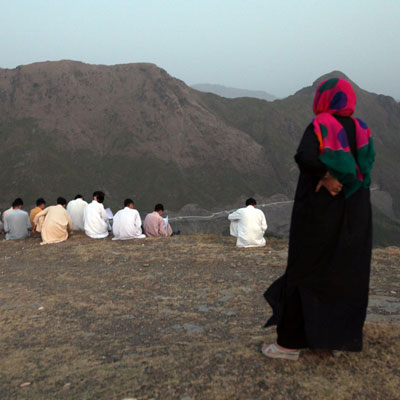
Pakistani psychologist Feriha Peracha directs an experimental school designed to de-radicalize Taliban boy soldiers. She says many of her young students were forcibly recruited to the Taliban and trained to wear suicide vests. Now, they're ready to go home again.
listen now or download To the Best of our Knowledge
Why 9/11 Was Good for Religion

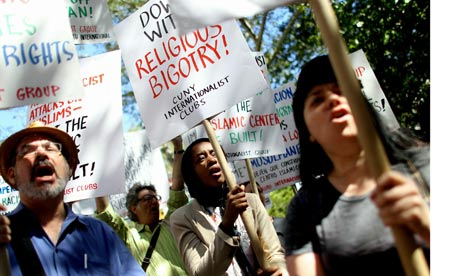
9/11 strengthened fundamentalism in every global faith – and in atheism too. But it has also led to backlashes against these doctrines wherever they have appeared. In Islam there have been positive developments. The attacks were repeatedly and clearly condemned by Muslim leaders all over the world. After Pope Benedict XVI's controversial Regensburg speech, the most notable response was the decision of 137 Muslim scholars to sign a declaration outlining what common values they shared with Christians.
This "common word" declaration is an example of "hard tolerance" – the increasing practice of making theological differences distinct and then talking about them, rather than trying to conceal them in a syrup of platitudes about love and mysticism. The aim is for priests, imams and rabbis to enter imaginatively into each other's ideologies, rather than simply agreeing.
At the same time, the heretical understanding of jihad as the sixth pillar of Islam, which originated in Egyptian circles in the 1980s, spread across south-east Asia. Children in the disputed areas of Pakistan are taught by the Taliban that jihad can compensate for other flaws in a Muslim's life.
Among Christians, too, there has been a growth of understanding and interest in Islam, and a simultaneous increase in its demonisation, which this year culminated in Anders Breivik's terrorist attacks in Norway. The mass killer was clearly influenced by a post-9/11 theology that sees Christian Europe under attack from Muslim immigration. Variants of this idea animate political parties in many European countries: the Netherlands, Belgium, France, Denmark, Sweden, Norway and Italy. For them, Europe's Christian identity has become a sacred value.
The same polarised reactions can be seen in secular ideologies. The new atheist movement was started by a group of writers who perceived Islam as an existential threat. "We are at war with Islam," argued one of its leaders, Sam Harris, who also called for the waterboarding of al-Qaida members. Meanwhile The God Delusion author, Richard Dawkins, refers to Islam as the most evil religion in the world. The publication of anti-Muhammad cartoons in the Danish newspaper Jyllands-Posten in 2005, and the furore surrounding it, demonstrated the deliberate use of blasphemy as a weapon in cultural wars.
At the same time, secular governments across Europe have made increasing efforts to understand and accommodate religious sensibilities. As welfare states come to seem increasingly expensive, many have turned more and more towards religion to deliver social services. Whatever happens, it appears the idea that religion is doomed and disappearing was buried in the rubble of the twin towers. "9/11 was good for business" says Scott Appleby, professor of history at Notre Dame University. "For many people, we told people that religion is really important and that the secularisation theory, which had been very fashionable, was wrong."
Defusing Radical Faith
CAMBRIDGE, England (Reuters) - When Henry Kissinger published "Diplomacy," his study of international relations, in 1994, it had no index entries for Islam or religion.
Ten years later, another secretary of state, Madeleine Albright, wrote her own study on world affairs: "The Mighty and the Almighty: Reflections on America, God and World Affairs." Almost half the book dealt with Muslims and Islam.
The contrast between the two books highlights the way the world changed after 19 Muslims flew hijacked planes into the World Trade Center, the Pentagon and a Pennsylvania field on September 11, 2001.
The attacks brought religion back into public affairs for many western countries where faith had largely faded into the private sphere.
"9/11 showed religion can no longer be ignored," Scott Appleby, a historian at the University of Notre Dame, Indiana, told a seminar on religion after September 11 at Cambridge University.
"It is a critical element in many national systems and in radical and extremist movements, but also in movements oriented to human rights, peace-building and civil society," he said.
Since that day, governments and researchers in North America and Europe have turned to sociology, psychology, anthropology and other disciplines trying to understand religiously motivated violence and work out how to prevent it.
"SECULAR MYOPIA"
The results are mixed. Religion's exact role in radicalism is unclear. Psychology and group dynamics may drive extremists more than faith. The Arab Spring could become a democratic option that trumps the jihadist ideology of al Qaeda.
For decades before September 11, policymakers and analysts in western countries exhibited what Appleby called a "secular myopia" about religion in politics. Since faith was supposed to be private, they mostly left it out of their analyses. This happened despite the fact that ultra-conservative religious movements had appeared in many world faiths in those years and were often reflected in political action.
Clergy Insulted by Speaking Ban on 9/11
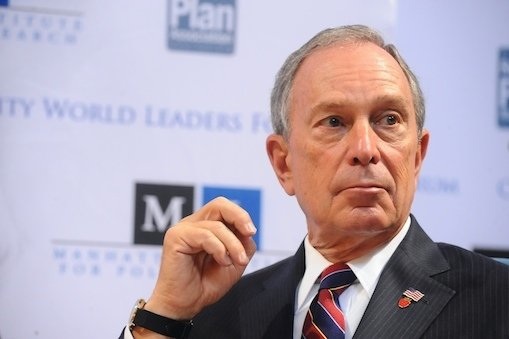
Mayor Michael Bloomberg is banning clergy-led prayer at events marking the 10th anniversary of the 9/11 attacks. The mayor's office says he wants to avoid disagreements. Some religious groups call the ban a sign of prejudice against religion.

DAVID GREENE, host:
When people gather in New York City Sunday to remember the September 11th attacks, members of the clergy will have no official role. That was the decision by Mayor Michael Bloomberg.
NPR's Barbara Bradley Hagerty has a look at the reaction.
BARBARA BRADLEY HAGERTY: Each year for the past decade, the main ceremony has involved reading the names of victims, allowing moments of silence, but never opening the podium to clergy.
Julie Wood, a spokeswoman for the mayor, says it's the way family members want it.
Ms. JULIE WOOD (Spokeswoman, Mayor Michael Bloomberg): It's been widely supported in the past 10 years. And, you know, rather than have disagreements over which religious leaders participate, we wanted to keep the focus of the commemoration ceremony on the family members of those who died on 9/11.
Dr. RICHARD LAND (Southern Baptist Convention): As more and more people find out about this, they're incredulous.
HAGERTY: Richard Land of the Southern Baptist Convention says ground zero is a sacred place, and barring clergy from an official role is an insult.
Dr. LAND: It's clear that there are attempts by some to marginalize religious expression and religious faith.
listen now or download Morning Edition
Progressive Christians Join Controversy over Excluding Clergy at 9/11 Event


(CNN) - A handful of progressive Christian leaders are joining the mostly conservative chorus of religious leaders who are criticizing New York Mayor Michael Bloomberg for excluding clergy from this weekend’s 9/11 commemoration event at ground zero. But there’s a twist.
In addition to criticizing Bloomberg, progressive religious leaders are also taking aim at prominent conservatives who’ve blasted Bloomberg in recent days, alleging that those critics are stoking division at a time that calls for national unity. The group is planning a press conference near ground zero on Friday to stress that "religion should not be excluded from 9/11 remembrances" but to also "urge unity, not division, on 9/11," according to a Tuesday press release.
The Friday press conference, which will overlook ground zero, will feature Jim Wallis, who leads the evangelical social justice group Sojourners; the Rev. Floyd Flake, a prominent New York pastor and former Democratic congressman; and Geoff Tunnicliffe, who heads the World Evangelical Alliance.
"Mayor Bloomberg made an understandable but regrettable decision," said Tim King, communications director for Sojourners, an evangelical Christian social justice group that is helping to plan the press conference. "Religion, and religious leaders, have caused a lot of unnecessary conflict and controversy," King wrote in an e-mail message. "But avoiding religion entirely does not get to the root of the problem."
Libya Stresses Forgiveness, Reconciliation and Rebuilding
Muslim theologian runs stabilisation team

(Reuters) - When the officials guiding Libya's post-Gaddafi transition list their most urgent tasks, they talk about supplying water, paying salaries or exporting oil, and then add something quite different -- fostering reconciliation.
The focus on forgiveness might have seemed out of place at meetings in Paris on Thursday and Friday where world leaders and Libya's new administration discussed problems of democracy, investment and the unblocking of Libyan funds held abroad. But the example of Iraq, which plunged into chaos and bloody strife after the United States-led invasion in 2003, convinced the Libyans planning the transition from dictatorship and war that the country's needs were more than just material. "You cannot build a country if you don't have reconciliation and forgiveness," said Aref Ali Nayed, head of the stabilization team of the National Transitional Council (NTC).
"Reconciliation has been a consistent message from our president and prime minister on, down to our religious leaders and local councils," he told Reuters in an interview.
The stabilization team, about 70 Libyans led by Nayed from Dubai, was so versed in the mistakes following the overthrow of Saddam Hussein that they made sure they didn't repeat one of the more shocking -- the looting of Baghdad's main museum. "I'm happy to report that no museum was looted in Tripoli," said Nayed, stressing the country's cultural heritage had to be protected. "The banks were also safeguarded early on."
WRONG ROAD TO TAKE
In contrast to Iraq, where the U.S. decision to sack all members of Saddam's military and Baath party helped drive men into an armed insurgency, Tripoli will keep almost all Gaddafi-era officials in their posts to ensure continuity. "Destruction and disbandment is the wrong road to take," said Nayed. "It's better to take a conservative approach, even if it's not perfect, and build on it slowly."
The focus on reconciliation comes naturally to Nayed who, apart from being the head of an information technology company and the new NTC ambassador to the United Arab Emirates, is an Islamic theologian active in interfaith dialogues.
How Religion Can Inoculate Against Radicalism
The lesson of my retreat from a London university's Islamic Society

In the fall of 1989, I arrived as a student at the Royal London Hospital medical college, part of the University of London. I was one of only a handful of Muslim students in my year and, for us, the entire social scene felt alien. It all seemed based around dancing, alcohol and socializing with the opposite sex. We were left in a vacuum that the school's Islamic Society quickly offered to fill. Its members were comradely, welcoming and—crucially—had great food.
They knew we were lost and early on they started to explain how the alienation we felt was something we should cherish rather than try to overcome. The reason they gave was that we were better than the "kufar"—infidels—outside of our gathering. It was at this point that the tone of the Islamic Society's meetings started to change. Our duties to our religion started to merge with a series of geopolitical aims involving the establishment of a global Islamic state and the overthrow of the capitalist/Zionist system.
I soon dropped out of the Islamic Society and widened my social circle to include non-Muslims. But several of my friends had become intoxicated by the whole thing, even dropping out of the university because of it. At first I didn't give this much more thought—until 9/11, that is.
Then, as a practicing psychiatrist, I started to read articles about how radicalization occurs, especially around adolescence and through universities, where ideas like the need to create a global Islamic state—a new Caliphate—were being spoon-fed to vulnerable youngsters. This is what happened in Hamburg when the perpetrators of 9/11 were students there.
Why did I leave the Islamic Society while others stayed—and even, in some cases, wound up in Pakistan networking with fellow Islamists? What was the difference between us? The answer may be found somewhere in our earlier lives.
Those men who were the most opposed to the perverted messages being peddled by the Islamic Society were those who had been brought up by religious parents. One friend, who had been steeped in mainstream Islam as a child, used to tell me that the doctrine being preached at the Islamic Society was, in his view, so aberrant that it risked becoming toxic. He firmly believed that MI5 (British domestic intelligence) ought to be keeping an eye on these guys, and that was 10 years before 9/11. Those who had no exposure to Islam prior to the encounter with extremist recruiters seemed more likely to follow them.
After Sept. 11, 'Religion Can No Longer Be Ignored'

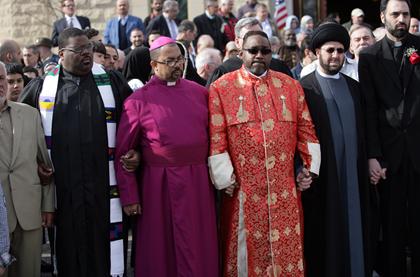
"Religion, at last, can no longer be ignored."
That was one of five "unintended, unforeseen" consequences of 9/11, according to historian R. Scott Appleby of University of Notre Dame.
Reporting on the spiritual impact of 9/11 has given me the chance to talk longer with Appleby and with theologian and psychologist Fraser Watts who raises the provocative idea that religion can be "healthy or unhealthy."
Both spoke this weekend at the Templeton-Cambridge seminars on Science and Religion sponsored by the Templeton Foundation (check tweets for more seminar insights at #TCJF).
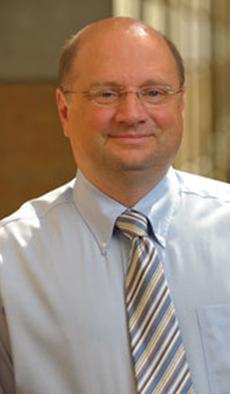
Appleby, who co-chaired the Chicago Council on Global Affairs and Task Force on Religion and the Making of U.S. Foreign Policy, also directs "Contending Modernities," a program examining the interaction of Catholic, Muslim and secular forces in modern world.
His five points began with the tidal shift in views on religion in academia and politics. Following World War II the dominant view was that religion would inevitably give way to secularism, become privatized and be increasingly irrelevant in the public square. That "secular myopia" vanished "when 9/11 made it palpably clear that religion does matter in all these realms."
- Religion is now being treated with more depth and sophistication -- by media, government and academia. There's new recognition that believers are "not all pathological or irrational or crazy. We see more nuance now. And we see that people are making a conscious and reasoned choices to hold on to faith.
- "Islam has been put in the spotlight" with consequences to the good, such as the Common Word document by Muslim scholars addressed to the Catholic Church, and to the bad, such as the "new McCarthyism" of fear and anger toward Muslims. Appleby cites new initiatives around the world in serious interfaith, interreligious dialogue and collaboration.
- There's a new interest in examining the structural and substantive ways that "healthy" religion is working in the world for promoting peace and social justice and defeating poverty and disease. The world's challenges have to be met collectively and cannot be resolved with the faith communities.
9/11 Traced New Spiritual Lines
The terrorist attacks on Sept. 11, 2001, delivered an unfathomable religious jolt. Thousands were killed in a cruel, distorted vision of Islam, a religion that teaches peace. And for millions of Americans, the immediate response was to drop to their knees in prayer.
Sanctuaries filled for memorial services. Cardinal Edward Egan of New York remembers crowds overflowing St. Patrick's Cathedral.
A decade later, the soulful response seems fleeting. Statistically, the rush to the pews was a mere blip in a long-standing trend away from traditional religious practice, according to tracking studies by The Barna Group, a Christian research company. What's lingering is the spiritual impact revealed when 9/11 stories are recounted through individual recollections of faith reborn, revitalized or reshaped.
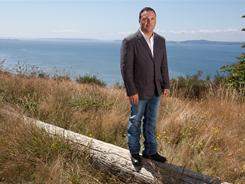
This is how people speak of an internal resetting of the compass, of journeys down pathways once unfamiliar, even unimagined. Pastor Mark Driscoll, who was 30 and just building his Seattle church a decade ago, says he discovered he was more fragile, more dependent on God, and more urgent about launching new churches than he'd known.
"Life is filled with opportunities to do good. We don't know how many we have, so you want to be there to invest, love and not take any day for granted," he says. His Mars Hill Church is now a multisite mega-church and he is a co-founder of Acts 29, a network that has launched 400 new congregations here and abroad.
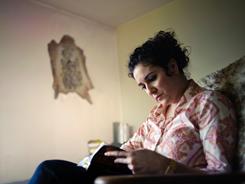
Fatemeh Fakhraie, then a college freshman in Utah, was "just a white girl with a funny name" when the 9/11 attacks "found my identity for me before I was ready to find it for myself."
Within a few years, the U.S.-born daughter of Iranian parents began practicing Islam with fresh commitment. She founded and edits a website, Muslimah Media Watch, where 16 feminists of faith critique coverage of their issues in world culture. This month, as she says her prayers during Ramadan, Fakhraie, based in a Portland, Ore., suburb, observes, "Sept. 11 was 10 years ago and the media are still trying to explain Islam."
Others found themselves trying to explain Judaism and Christianity.
Insight: Arab Spring Raises Hopes of Rebirth for Mideast Science

CAMBRIDGE, England (Reuters) - Egyptian chemist Ahmed Zewail first proposed building a $2 billion science and technology institute in Cairo 12 years ago, just after he won a Nobel Prize. Then-President Hosni Mubarak promptly approved the plan and awarded Zewail the Order of the Nile, Egypt's highest honor. Within months, the cornerstone was laid in a southern Cairo suburb for a "science city" due to open in five years.
But while Zewail, who has taught at Caltech in California since 1976, went on to collect more awards and honorary doctorates abroad, his pet project got mired in a jungle of bureaucracy and corruption.
His growing popularity in Egypt, where he was touted as a possible presidential candidate after mass protests brought down Mubarak this year, seemed to threaten the officials overseeing the institute, so they blocked it every way they could. "We didn't get anywhere," Zewail told Reuters back in February.
But with revolution now sweeping the Middle East, Egypt's ruling military council and interim civilian government gave the project the green light in June. Supporters hail the decision as a positive step toward a new, more modern Middle East.
"Some people in the old regime were not happy with the limelight focused on Dr Zewail," said Mohammed Ahmed Ghoneim, a professor of urology at Egypt's University of Mansoura and a member of the board of trustees. But now, he noted with satisfaction, "the decision makers have changed."
The project is a "locomotive that will pull the train of scientific research in this country," he said.
The poor state of science in the Middle East, especially in Arab countries, has been widely documented. Only about 0.2 percent of gross domestic product in the region is spent on scientific research, compared to 1.2 percent worldwide. Hardly any Arab universities make it into lists of the world's 500 top universities.
But Arab scientists say the first steps toward change have been taken. A recent Thomson Reuters Global Research Report showed countries in the Arab Middle East, Turkey and Iran more than doubled their output of scientific research papers between the years 2000 and 2009. The progress admittedly started from a low base, rising from less than 2% of world scientific research output to more than 4% at the end of the decade, but the curve is definitely pointing upwards. "The region is taking a growing fraction of an expanding pool," the report said.
"The Arab-Muslim world has improved greatly, even if the universities are still pretty mediocre by and large," said Nidhal Guessoum, an Algerian astrophysicist who teaches at the American University of Sharjah in the United Arab Emirates. "The educational system in primary and secondary schools is still lagging behind world standards, but relative to what it was 30-50 years ago, there is clearly a huge improvement."
Call for Increased Dialogue between Journalists and Scientists

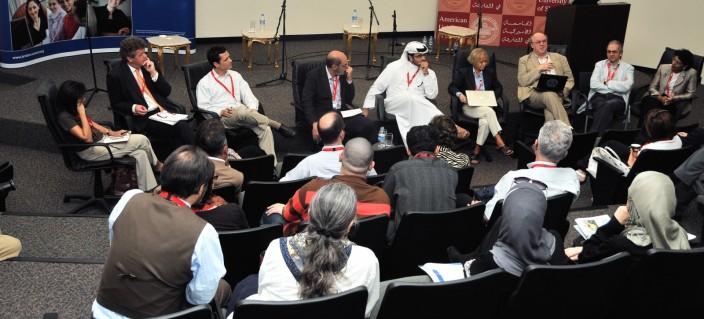
A panel consisting of high-profile international and local members of the media called for increased dialogue between journalists and the science community at the closing session of the Middle East’s first "Belief in Dialogue: Science, Culture and Modernity" conference, organized by the British Council in conjunction with American University of Sharjah (AUS) and held under the patronage of His Highness Sheikh Dr. Sultan Bin Mohammad Al Qassimi, Supreme Council Member, Ruler of Sharjah and Founder and President of AUS.
The closing media panel session chaired by Julia-Vitullo Martin, Co-Director of the Templeton-Cambridge Journalism Fellowships in Science and Religion, engaged participants in a lively debate about the opportunities available in covering science, culture, and modernity as well some of the barriers. Participants included Francis Matthew - Editor-At-Large of Gulf News; Nabil Khatib - Editor-in-Chief of Al-Arabiya News Channel; Mishaal Al-Gergawi, blogger and social commentator; Martin Redfern - BBC World Service; John Siniff-USA Today; Andrew Brown - The Guardian; Ehsan Masood- Editor, Research Fortnight; Dr. Qanta Ahmed- Author, Associate Professor, State University of New York and Contributor to the Huffington Post; and Abeer Al-Najjar-Assistant Professor, American University of Sharjah.
The panel session, which was open to the public, was attended by members of the local media and university students. The need for more diversity in the region’s media including the recruitment of reporters dedicated to covering science, culture and religion was at the forefront of the discussion. The panel criticized the region’s lack of specialized journalists, saying more needed to be done to tackle complex and often sensitive issues of science, religion and culture. Members of the audience suggested that local editors commit to appointing niche reporters who could simplify complex issues and generate reader interest in subjects which are challenging and sometimes controversial.
Fern Elsdon-Baker, Director of the British Council’s Belief in Dialogue program, commented on the closing panel session, "It's clear from this discussion that our cultural understanding of science is highly dependent on how the media communicates it. Greater resources and training must be committed by the media and researchers in this field, as global links and better dialogue will partly depend on our appreciation of scientific development and the possible changes that can come from it."
On the sidelines of the closing session, Nidhal Guessoum, Professor of Physics, AUS, urged the local media to report on developments in the field of science, saying, "We are seeing fewer students interested in pursuing careers in science and research as those types of jobs are typically perceived as not glamorous or financially lucrative enough. The majority of students I speak to cannot name even one Arab scientist yet they can confidently list a number of Arab entertainers, entrepreneurs and athletes."
The World Debate: Islam v Science
Belief and Modernity--Science and Culture in Islam

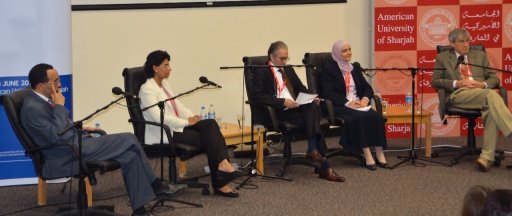
Political change is sweeping through the Islamic world, with many countries questioning their traditions and looking for a new style of democracy. But just what is the relationship between science and belief in the region? A thousand years ago the Middle East was the main repository for ancient scientific knowledge, which was not only preserved but nurtured and developed, laying the foundations of fields such as mathematics, astronomy and medicine as well as philosophy. But today, not one of the world's top 400 universities is in a Muslim country. So what went wrong and can it now begin to change? Can a culture of religious belief foster the questioning approach essential for scientific breakthroughs and the building of a science-based economy?
Writer and science editor Ehsan Masood chairs a discussion before an audience at the American University of Sharjah in the United Arab Emirates. On his panel are Nidhal Guessoum, Professor of physics and astronomy at the American University of Sharjah; Rana Dajani, assistant professor of molecular biology at the Hashemite University, Amman, Jordan; writer and physicist Paul Davies who directs Beyond, the Center for Fundamental Concepts in Science at Arizona State University; and Qanta Ahmed, medical doctor and writer based in New York who has worked as a physician in Saudi Arabia. Also contributing are distinguished guests and students from the audience.
The conference Belief in Dialogue: Science, Culture and Modernity was jointly organised by the British Council, in partnership with the American University of Sharjah and in association with the International Society for Science and Religion (ISSR). The conference forms part of the British Council's global Belief in Dialogue program
Producer: Martin Redfern
listen now or download Last broadcast on Sunday, 14:05 on BBC World Service.
Just What is an Islamic Reformer?

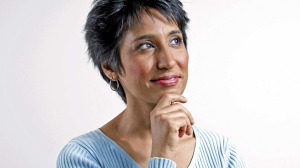
Irshad Manji has rankled Muslims since The Trouble with Islam. Published in 2004, early in the post-9/11 era, her book was a sexy shtick: Islam needs reform, not Muslims. Manji was quickly accorded, and later claimed, the laurels of "Muslim Reformer," though close scrutiny fails to reveal any trace of such "reforms." Allah, Liberty & Love only confirms this view.
Manji can don the mantle of reformer precisely because Muslims are beset by faith illiteracy, enabling the spread of frankly un-Islamic values. Meanwhile, non-Muslims remain perpetually naive about authentic Islamic philosophy as they look toward unschooled, faith-illiterate diaspora Muslims for interpretations of Islam. This bilateral ignorance works very much to the advantage of both contemporary radical Islamists and savage Islamophobes.
Manji’s poised banter, however, can do as much damage as the ravings of a bearded fanatic, even while they speak to completely opposite values. That’s because she inexplicably lambastes "moderate" Muslims, condemning them just as vehemently as a neo-orthodox cleric (a Diaspora Muslim who hides between ritualistic Islam for purposes of political identity) might do.
The liberal Muslim reformer and neo-orthodox cleric share one critical, empowering thing: a malleable audience. Without context, or engagement with either Islam or the Muslim world in their highly complex, furious heterogeneity, it’s just as easy to influence the insular naivety of a Western audience as it is to influence blank-slated minds bobbing back and forth in a madrassa, be it in Manchester or Mecca. Manji succeeds precisely because of such naiveté.
Allah, Liberty & Love is disheartening. Its scholarship is cut-and-paste. Throughout, Manji leans heavily on e-mail and Facebook correspondence with her followers, reproducing dozens of such interchanges (self-congratulatory ripostes intact) to stultifying effect. A cacophony of repetitive electronic dialogues (reproduced verbatim in the vernacular SMS text that increasingly passes for English) reveal an animated but uninformed following of Muslims who seek answers from Manji, yet lack access to serious scholars. This is little more satisfying than stumbling over a Facebook forum.
Mideast Christians Struggle to Hope in Arab Spring

(Reuters) - Middle East Christians are struggling to keep hope alive with Arab Spring democracy movements promising more political freedom but threatening religious strife that could decimate their dwindling ranks. Scenes of Egyptian Muslims and Christians protesting side by side in Cairo's Tahrir Square five months ago marked the high point of the euphoric phase when a new era seemed possible for religious minorities chafing under Islamic majority rule.
Since then, violent attacks on churches by Salafists -- a radical Islamist movement once held in check by the region's now weakened or toppled authoritarian regimes -- have convinced Christians their lot has not really improved and could get worse. "If things don't change for the better, we'll return to what was before, maybe even worse," Coptic Catholic Patriarch of Alexandria Antonios Naguib said at a conference this week in Venice on the Arab Spring and Christian-Muslim relations. "But we hope that will not come about," he told Reuters.
The Chaldean bishop of Aleppo, Antoine Audo, feared the three-month uprising against Syrian President Bashar al-Assad spelled a bleak future for the 850,000 Christians there. "If there is a change of regime," he said, "it's the end of Christianity in Syria. I saw what happened in Iraq."
The uncomfortable reality for the Middle East's Christians, whose communities date back to the first centuries of the faith, is that the authoritarian regimes challenged by the Arab Spring often protected them against any Muslim hostility.
DEPENDENT ON DICTATORS
Apart from Lebanon, where they make up about one-third of the population and wield political power, Christians are a small and vulnerable minority in Arab countries. The next largest group, in Egypt, comprises about 10 percent of the population while Christians in other countries are less than 5 percent of the overall total.
Under Saddam Hussein, about 1.5 million Christians lived safely in Iraq. Since the U.S.-led invasion in 2003, so many have fled from Islamist militant attacks that their ranks have shrunk to half that size, out of a population of 30 million. Arab dictators led secular regimes not to help minorities but to defend themselves against potential Islamist rivals. Christians had no choice but to depend on their favour.
Does Islam Stand Against Science?

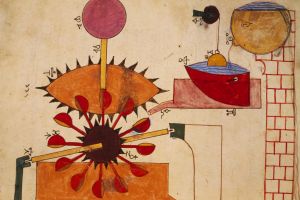
We may think the charged relationship between science and religion is mainly a problem for Christian fundamentalists, but modern science is also under fire in the Muslim world. Islamic creationist movements are gaining momentum, and growing numbers of Muslims now look to the Quran itself for revelations about science.
Science in Muslim societies already lags far behind the scientific achievements of the West, but what adds a fair amount of contemporary angst is that Islamic civilization was once the unrivaled center of science and philosophy. What's more, Islam's "golden age" flourished while Europe was mired in the Dark Ages. This history raises a troubling question: What caused the decline of science in the Muslim world?
Now, a small but emerging group of scholars is taking a new look at the relationship between Islam and science. Many have personal roots in Muslim or Arab cultures. While some are observant Muslims and others are nonbelievers, they share a commitment to speak out—in books, blogs, and public lectures—in defense of science. If they have a common message, it's the conviction that there's no inherent conflict between Islam and science.
Last month, nearly a dozen scholars gathered at a symposium on Islam and science at the University of Cambridge, sponsored by the Templeton-Cambridge Journalism Programme in Science & Religion. They discussed a wide range of topics: the science-religion dialogue in the Muslim world, the golden age of Islam, comparisons between Islamic and Christian theology, and current threats to science. The Muslim scholars there also spoke of a personal responsibility to foster a culture of science.
One was Rana Dajani, a molecular biologist at Hashemite University, in Jordan. She received her undergraduate and master's degrees in Jordan, then took time off to raise four children before going to the University of Iowa on a Fulbright grant to earn her Ph.D. Now back in Jordan, she is an outspoken advocate of evolution and modern science. She has also set up a network for mentoring women, and she recently started a read-aloud program for young children at mosques around Jordan.
As if that weren't enough, Dajani helped organize a committee to study the ethics of stem-cell research, bringing together Jordanian scientists, physicians, and Islamic scholars. (The traditional Muslim belief is that the spirit does not enter the body until 40 days after conception, which means many human embryonic stem cells can be harvested for research.) "Being a Muslim, living in a Muslim world, Islam plays a big role in our everyday lives," she says. "We need to understand the relationship between Islam and science in order to live in harmony without any contradictions."
For these scholars, the relationship between science and Islam is not a dry, academic subject. Many of the hottest topics in science—from the origins of the universe and the evolution of humans to the mind/brain problem—challenge traditional Muslims beliefs about the world.
"Remember, these are human issues," says Nidhal Guessoum, an Algerian-born astrophysicist at the American University of Sharjah, in the United Arab Emirates, who was also at the Cambridge symposium. "It's not an experiment in the lab. I'm talking about my students, my family members, the media discourse that I hear every day on TV, the sermons I hear in the mosque every Friday."
With his blend of charisma and keen sense of how to navigate the tricky terrain between modern science and Muslim faith, Guessoum is emerging as one of the key figures in public debates about Islam and science. He has a new book, Islam's Quantum Question: Reconciling Muslim Tradition and Modern Science (I.B. Tauris), and this month his university will host an international conference called "Belief in Dialogue: Science, Culture and Modernity."
Social Cohesion Needs Religious Boundaries
The new Prevent strategy shows an old pattern of social organisation is emerging in a new form, around new doctrines.

This is often said to be a country that has outgrown established religion. Yet the two big academic stories of the day show that the problems of social coherence persist that the Church of England was established to solve; and the secularists have no newer or better ideas how to deal with them.
Look at the Prevent agenda first. The government's position here is that certain religious or theological beliefs are incompatible with the values on which this country depends; and this is true even if they are compatible with the law. No one suggests that Hizb ut-Tahrir is currently illegal. Few people suggest it should actually be banned. But its beliefs are subversive of the common decencies of society. Islamists, the government now argues, should not be given positions of authority nor government money. This is pretty much the position that Catholics were in 400 years ago: in fact James I's speech after the gunpowder plot was discovered is eerily reminiscent of the Bush/Blair rhetoric after 9/11: "Though religion had engaged the conspirators in so criminal an attempt, yet ought we not to involve all the Roman Catholics in the same guilt, or suppose them equally disposed to commit such enormous barbarities."
Or, as we would now say, he condemned extremist Catholics, but was careful to distinguish them from moderates. Considering that the gunpowder plot was an attempt at hugely destructive suicide terrorism, this was a remarkably magnanimous position. But it does show the way in which the established churches of England and Scotland were political and moral constructions necessary for these nations to emerge and function. Laws are simply not enough. Nations need common values and perhaps more than that, common symbols of the sacred. The whole point about a symbol is that it is irrational: people are loyal to it without calculation, and this unreasoned quality is exactly what makes them trustworthy.
What's more, symbols, unlike values, can be unequivocally rejected, providing a marker of who is in and who out. Everyone is in favour of motherhood, which is a value, but to venerate the mother of Jesus, who is a symbol, is a profoundly divisive act, and has sometimes come close to treason. It was certainly enough to exclude you from university in England for nearly 300 years.
EU Assures It Backs Religious Freedom in Mideast

Reuters) - European Union leaders assured senior religious figures on Monday they would defend the freedom of belief in the Middle East as part of their support for the spread of democracy in the Arab world. European Commission President Jose Barroso told 20 Christian, Muslim, Jewish and Buddhist leaders at an annual consultation in Brussels that the EU aimed to promote democracy and human rights.
Several of the Christian representatives present expressed concern about religious freedom in the mostly Muslim Arab world, which has seen more freedom of speech in recent months but also more violent attacks on Christian minorities in some countries.
Barroso said the changes in the Arab world were "of historic proportions" and compared the challenge of anchoring democracy there to the task the EU found in post-communist Europe. "I strongly believe these challenges cannot be met without the active contribution of the religious communities," Barroso told the meeting. Democratic rights included freedom of religion and belief, he stressed.
European Council President Herman Van Rompuy said "there is no contradiction between Islam and democracy. This period of openness must be maintained after the revolutions and religious and other minorities must be respected."
CHRISTIAN CONCERNS
Rotterdam Bishop Adrianus van Luyn, head of the COMECE commission of Roman Catholic bishops conferences in the EU, said the progress and stability the EU sought in the Arab world would depend on an improved relationship between religions there. "This requires freedom for all faiths, an end to the discrimination of smaller religious communities and the participation of moderate forces in the construction of society," he said.
In recent months, Arab Christians and Muslims have both prayed together and clashed, he said. "Religious differences have often been manipulated or even whipped up on purpose," he said. "The role of the different regimes in this is unclear."
Harun Yahya's Muslim Creationists Tour France Denouncing Darwin

France’s staunchly secularist educational establishment was shocked four years ago when schools around the country suddenly began receiving free copies of a richly illustrated Muslim creationist book entitled the "Atlas of Creation." The book by Istanbul preacher and publisher Harun Yahya had come out in Turkey the year earlier. After the French Education Ministry warned teachers not to use it and held a seminar on how to deal with creationist pupils, the issue dropped out of the public discussion. But the Harun Yahya group has been spreading its view in France and is now holding a series of conferences on them. Here is my feature after visiting one of the first meetings in the current series:
Muslim creationists tour France denouncing Darwin
AUBERVILLIERS, France (Reuters) – Four years after they first frightened France, Muslim creationists are back touring the country preaching against evolution and claiming the Koran predicted many modern scientific discoveries. Followers of Harun Yahya, a well-financed Turkish publisher of popular Islamic books, held four conferences at Muslim centers in the Paris area at the weekend with more scheduled in six other cities.
At a Muslim junior high school in this north Paris suburb, about 100 pupils — boys seated on the right, girls on the left — listened as two Turks from Harun Yahya’s headquarters in Istanbul denounced evolution as a theory Muslims should shun. "We didn’t descend from the apes," lecturer Ali Sadun told the giggling youngsters. Charles Darwin’s theory of evolution, he said, was "the scientific basis to defend atheism."
How Will the Arab Spring Affect Religion and Science?

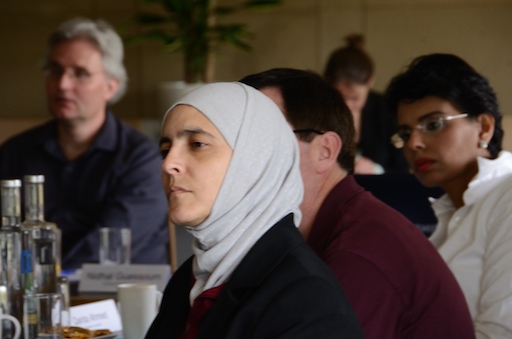
In last week’s news, no doubt the biggest Islam-related story spun off the killing of Osama bin Laden, and how it would affect Islamic radicals for whom he was a leader. But a sadder conversation with broader implications was taking place over candlelight in an elegant dining room one evening in Cambridge, England.
It was the concluding event of a weeklong seminar for religion and science journalists who had come to England to hear from Muslim scientists about the most pressing science issues across their enormous, diverse faith communities. And it was grim.
There was the soft-spoken Jordanian molecular biologist and professor who said over dinner Saturday night that the lack of freedoms in many parts of the Muslim world had resulted in students unfamiliar with basic critical thinking needed to produce real science. Students in her classes don’t question, she said. The Pakistani-British sleep specialist who worked for years in Saudi Arabia and said a culture without freedom of thought had left scientists in many parts of the Muslim world in "an intellectual vacuum."
To whatever degree the handful of speakers at the seminar – which also included an Algerian astrophysicist and a French cosmologist, among others – represent at least a chunk of thought among Muslim scientists working outside the West, the future feels uncertain.
Part of the issue is one of language. There’s obviously no such thing as "the Muslim world," or "Islamic science." But there is certainly a lot of discussion about how recent revolutions across North Africa and the Middle East might affect the advance of science, which was for centuries the pride of the Muslim world.
Rana Dajani, who launched a program to open dozens of public reading spaces for youth in Jordan because she said the country lacks a culture of reading for pleasure, said she is hopeful that loosening of government control will automatically lead to a improved climate for scientists. Less corruption, cronyism, the building of a meritocracy.
And how a rise in science could affect practice and understanding of Islam?
Osama's Islam-Violence Link Weighs Heavy on Muslims

PARIS (Reuters) - Osama bin Laden's radical Islamism has had a devastating impact on Muslims around the world by linking their faith with violence and using religious texts to justify mass killings.
His "jihadist" strategy has claimed the lives of many thousands of Muslims in Iraq, Pakistan and Afghanistan, as well as in the United States, Europe and Africa.
It has also tarred Muslims with suspicion and helped feed prejudice against them. Especially in the West, many Muslims felt pressured to denounce a man they never identified with.
"The link he made between violence and Islam made people think this was a religion of terrorists," said Dalil Boubakeur, rector of the Grand Mosque of Paris.
"In Western countries, we've had to show on a daily basis that Islam is not violent and Osama bin Laden does not represent Muslims," he said. France is home to Europe's largest Muslim minority of about five million people.
Muslim leaders have issued many denunciations of the radical Islamist violence championed by bin Laden. Mainstream scholars have drawn up declarations and fatwas to counter his arguments with opposing views from the Koran. While these may have influenced some undecided Muslims, they had little apparent success in shaking a view that bin Laden represented an important current within Islam.
ARAB REVOLTS HELP CHANGE IMAGE
The recent wave of pro-democracy uprisings in the Arab world has gone some way to weakening the perceived link between Islam and violence. The world's media have shown pictures of young Muslims campaigning for civil rights without resorting to religious violence.
"In public and private discussion on the main issues facing the Muslim world, violence through radical religious means used to be quite prominent," said H.A. Hellyer, a fellow at Warwick University in Britain. "That has disappeared in recent months."
Tunisia, Libya, and Freedom
Tunisian willingness to house fleeing Libyans reminds us that caring for others is really a human, not a technical, act.
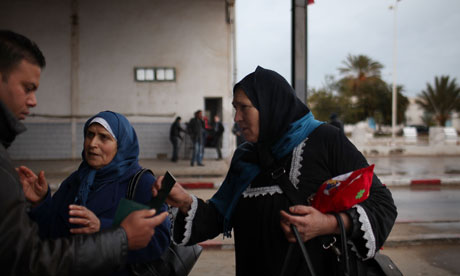
Many tens of thousands of refugees have now fled Libya and crossed to the relative safety of Tunisia. Their stories will, no doubt, be ones of terror and horror. And yet, there are tales of deep humanity too in their flight. A UNHCR spokesperson, Andrej Mahecic, has reported that fewer than one in ten of the Libyan arrivals are staying in refugee camps. Instead, the vast majority of those fleeing have been welcomed by Tunisian communities. The homeless Libyans are being hosted by locals, at the locals' expense and with great generosity, given the Tunisians' own resources are not great.
It's a moving tale, especially given the worries rattling around rich Europe about the migration implications of the Arab uprisings, given our own habits of locking up immigrants behind bars. Of course, the situation in Libya is an emergency. And there are deep bonds between these peoples, founded upon a common religion. But the story prompts thoughts about the nature of altruism and what happens when caring for others comes to be seen as primarily a technical, rather than a human, problem.
There is a lot of discussion about altruism today, driven in large part by the trouble it causes evolutionary theory. In the dog-eat-dog world of crude Darwinism, why should it be that some species collaborate, even to the point of self-sacrifice? In fact, Martin Nowak, author of SuperCooperators, argues that co-operation is quite as central to evolution as competition. You only need do the maths, he explains, the cost-benefit analysis. Working together in groups works. Only, that's not the whole story, he continues.
The problem with a cost-benefit analysis approach is that it reduces altruism. Instead of being about selflessness, it becomes a new form of selfishness. I'll scratch your back if you scratch mine. Maybe not today. Maybe not tomorrow. But I'll remember what I did for you, and hold you forever in my debt.
Transfer that into the moral discourse that shapes a culture, and you find yourself with a world in which virtues such as trust, courage, loyalty and sympathy struggle to thrive. Instead of honour, we write contracts. Instead of bonds of friendship, we work out our relationship to one another in the courts.
Nowak recognises that the maths can provide only half the story, and it misses out the most important part too, namely the role played by intention. What are the values that underpin co-operation? What are the beliefs that allow it to flourish? This is the vital discussion, he asserts, and one that must include politicians and philosophers, artists and theologians, alongside the scientists.
In Our Silence, Muslim Americans Essentially Collaborate with the Islamists
Claims of 'McCarthyism' in the wake of the Peter King hearings threaten to suffocate a vital discourse on Islamism just when we need it most. Even as cries of 'Islamophobia' seek to smother debate, Muslim Americans must speak up, and out loud.

Decapitation has a way of clearing one’s head. My invitation to a beheading came from former Israeli officer and counter-terrorism expert Richard Horowitz, who thought that if I watched a video of one in the security of his library, I would understand what he already knew: just how ferociously we in the West are hated. In the video, a Muslim boy beheads a man. The murderer is 10.
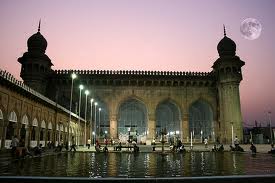
I am a woman who practices medicine and Islam. Islam took me to Mecca and Hajj. Medicine took me to Riyadh and London. Each capital hosts communities espousing Islamist neo-orthodoxy. Both spawn violent jihadist ideologies. Listening to counter-terrorism experts and examining the ugly underbelly of contemporary radical Islamism has taught me what Muslims in Mecca, Riyadh, or London could not: the difference between Islam and Islamism.
Rep. Peter King (R) of New York’s Senate hearings seek answers to these and other questions, while attacks of "Islamophobia" and "McCarthyism" threaten to suffocate this vital discourse. As a Muslim, watching Islamists at work lends me rare perspective. Mr. King’s hearings offer the public this same perspective, just when it is needed most.
Suicide bombers should be called homicide bombers
Islamist terrorism places martyrdom at its center, distorting Islam into a false faith valuing death above life. Islam reviles suicide, yet suicide operations are now synonymous with Islamist terror. This is deliberate.
Suicide distracts. Suicide enthralls. Our terror terminology appears transfixed by these suicide bombers’ singular pursuit of self-destruction, seemingly overlooking the murder these martyrdom operatives commit. Dr. Joan Kirschenbaum Cohn, assistant professor of Medicine and Community Medicine at Mount Sinai Medical Center, observes these martyrs are better termed homicide bombers. Somehow this phrase never caught on.
These "martyrs" seek only to divide: the living from the dead; those who believe in death from those who believe in life; those who choose nihilism over those who guard pluralism. Islamist elements, not Senate hearings, have created the same divides here in America. These divides are not the work of Americans marginalizing Muslims. These divides are the work of Muslims marginalizing Muslims. We have polarized ourselves.
Shame is uncomfortable
The duplicity of the Islamist operative horrifies most. A fellow passenger on a plane, a major within our ranks, a mediocre MBA at the office, always a fellow "Muslim," the Islamist moves among us. But for Muslims, our discomfort descends deeper. Islamist operatives claim to be the unequivocal, ultimate Muslim, shaming those who refuse to join their cause as not "real Muslims." Such shame is uncomfortable, since being a good Muslim means being part of a global brotherhood. If we separate, we reveal the fissures among us. Instead, sheltering ourselves from this distress, we falter and choose denial.
Asking 'Islam's Quantum Question'
Can science and Islam be reconciled? A conversation with Nidhal Guessoum.

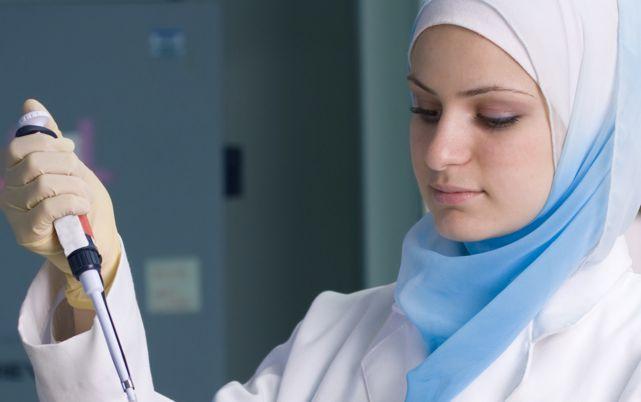
Revolution is in the air throughout the Arab Muslim world. For some Muslims, hope for political change entails hope for cultural change. And for Algeria-born astrophysicist Nidhal Guessoum, a professor of physics at the American University of Sharjah, the "Arab 1848," as some have called it, opens up the possibility that the Arab Muslim world can join the global scientific mainstream. His new book, Islam’s Quantum Question: Reconciling Muslim Tradition and Modern Science, explores the history of scientific thought in Islam, examines where Muslim intellectual culture went wrong, and offers a constructive way forward for science and religion among 1.6 billion of the world’s people. Guessoum recently spoke to BQO.
The United Nations has issued several Arab Human Development Reports over the past decade. They point out how much the Arab world lags in democracy, civil liberties, education, and economic progress. The UN documents are particularly hard on Arab societies for their "stagnation" in scientific research, pointing out, for example, that the number of scientists and engineers working in research and development in Arab countries is roughly one-third of the global average. Do you think that the recent and ongoing revolutions across the Arab world will be good for science?
All sectors of activity in the Arab society have suffered during these decades of autocratic rule, from politics and economics to culture, science, and human rights. In my view, that stagnation and continuous falling behind was due to three factors: dictatorship (denial of basic freedoms), corruption (financial and moral), and nepotism and cronyism.
The mediocrity of the Arab world’s performance in academic and scientific fields is well documented in various reports, some of which you have mentioned. To give just a few examples: out of 1,000 or so universities in the Arab world, only two or three are in world’s top 500 — and they are ranked between 400 and 500; while the Arab world’s population makes up about five percent of the world’s and its financial resources are much larger than that, only 1.1 percent of the world’s scientific production comes out of the Arab region; the number of frequently cited scientific papers is 43 per million people in the USA, 80 in Switzerland, and 38 in Israel; it is 0.02 in Egypt, 0.07 in Saudi Arabia, 0.01 in Algeria, and 0.53 in Kuwait.
One of the reasons for the mediocre state of research in the region is the very low budget allocated for science: the fraction of the GDP spent on scientific research is 0.2 percent on average in the Arab world (0.05 percent in Saudi Arabia), compared to a world average of 1.2 percent.
A Hearing To Ask: Are Muslims Being Radicalized?
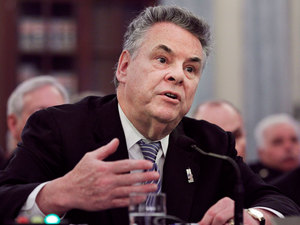
SSome call the hearing a witch hunt. Others say it's a reality check.
House Homeland Security Committee Chairman Rep. Peter King, a Long Island Republican, believes the hearing he has scheduled for Thursday morning is a valuable investigation into the "radicalization" of many U.S. Muslims. The hearing, entitled "The Extent of Radicalization in the American Muslim Community and that Community's Response," will help lawmakers better understand the threats posed by radicals who live in the United States — and are tolerated by their fellow Muslims, he says.
"We are under siege by Muslim terrorists, and yet there are Muslim leaders in this country who do not cooperate with law enforcement," King told Fox News. "We have the reality that al-Qaida is trying to recruit Muslim Americans, and yet we have people in the Muslim community who refuse to face up to this." King says it's necessary to investigate homegrown terrorism.
But Corey Saylor, at the Council on American Islamic Relations, says that might be a valid topic — except that he believes King has an agenda.
Stacking The Deck Against Muslims?
"He's said things like, 'There are too many mosques in America.' He's alleged that 80 percent of American Muslim leadership is extremist, yet never produced a single bit of evidence to back that up," Saylor says. "So that's the kind of thing that leads you to the Salem witch trials, the Inquisition, and frankly, McCarthyistic hearings." Saylor fears King is stacking the deck against Muslims by calling witnesses who do not represent most Muslims in this country. He points to the primary witness, M. Zudhi Jasser, a doctor in Phoenix who founded what Saylor says is an obscure group called American Islamic Forum for Democracy.
For his part, Jasser says, it's clear that many Muslims have been radicalized: There have been 60 terrorism plots in the past two years. "Just look at the arrests — from Portland to Baltimore to the Times Square bomber, and on and on, there have been more and more arrests," he says. "So this is not just a pie-in-the-sky discussion. This is a reality that we have to deal with."
Jasser, who says his group has about 2,000 members, says America needs to understand the root cause of this violence. He describes this root cause as a "political movement of Islamism that has as a goal to create Islamic states, that want to put into place Shariah law, that give women third-class status, that give other faiths secondary status, that give moderate Muslims or critics of imams no voice."
listen now or download Listen to the Story: All Things Considered
Twitter and Other Services Create Cracks in Gadhafi's Media Fortress


The popular uprising in Libya is two struggles in one. First is the flesh-and-blood battle fought at horrific cost on the streets of Tripoli and throughout the North African nation.
The second, just as grim and no less dramatic, is the battle between Libyans and the government of Moammar Gadhafi over access to media and information.
For almost 42 years, Gadhafi has proved a genius in "erecting a seemingly impenetrable fortress, a very complex architecture to assure complete loyalty and unanimity in all messages having to do with Libya," according to Adel Iskandar of the Center for Contemporary Arab Studies at Georgetown University.
The assault on that fortress has been joined by the "Libyan diaspora" - expats as well as family and friends of those struggling back home. In little more than a week, the international Libyan community has pulled together into a focused, urgent media world unto itself. The diaspora workers funnel text messages, photographs, and e-mail between Libya and the outside world, to support and guide the struggle back home.
Dina Duella, a freelance media professional in Irvine, Calif., is part of that sudden, vast network, relaying political and family news via Twitter, Facebook, and the good ol' telephone. And she's tired. "I haven't slept since last week," she said Thursday by phone, "and I know lots of others in the same situation. It's tense, conflicting, chaotic."
"It's an incredibly vibrant, indispensable community," said Iskandar, "literally blossoming all of a sudden, overcoming a very steep learning curve, and becoming radicalized, all in one week. It became a cyberactivist community with remarkable speed." Libya is not much like its neighbor to the east, Egypt.
"You can't use the Egypt model in Libya," said Duella, "because it would never work." Only six million people live in Libya, compared with Egypt's 80 million-plus. Egypt's Hosni Mubarak may have been an autocrat, but he seems mild next to Gadhafi and his iron choke hold since 1969 on society, the economy, and information. Gadhafi has always banned the sale of foreign newspapers. There is next to no tourism and no privately held TV or radio.
"Compared to other parts of the Arab world," Iskandar said, "there is less use of Internet, less use of Twitter and Facebook, partly out of fear, partly because there just isn't the access." He estimated there were 320,000 regular Internet users there, scant next to the 16 million in Egypt.
Libyan Islamic Scholars Issue Fatwa for Muslims to Rebel

A coalition of Libyan Islamic leaders has issued a fatwa telling all Muslims it is their duty to rebel against the Libyan leadership. The group also demanded the release of fellow Islamic scholar Sadiq al-Ghriani, who was arrested after criticising the government, and "all imprisoned demonstrators, including many of our young students."
Calling itself the Network of Free Ulema of Libya, the group of over 50 Muslim scholars said the government and its supporters "have demonstrated total arrogant impunity and continued, and even intensified, their bloody crimes against humanity."
Open dissent by established Muslim clerics is rare in North Africa, but the crackdown on protesters rallied the scholars to form the previously unknown Network of Free Ulema. Their first statement issued on Saturday denounced the government for firing on demonstrators who were demanding "their divinely endowned and internationally recognised human rights" and stressed the killing of innocent people was "forbidden by our Creator."
France Plans Nation-Wide Islam and Secularism Debate

France’s governing party plans to launch a national debate on the role of Islam and respect for French secularism among Muslims here, two issues emerging as major themes for the presidential election due next year. Jean-François Copé, secretary general of President Nicolas Sarkozy’s UMP party, said the debate would examine issues such as the financing and building of mosques, the contents of Friday sermons and the education of the imams delivering them.
The announcement, coming after a meeting of UMP legislators with Sarkozy on Wednesday, follows the president’s declaration last week that multiculturalism had failed in France. German Chancellor Angela Merkel and British Prime Minister David Cameron have made similar statements in recent months that were also seen as aimed at Muslim minorities there. France’s five-million strong Muslim minority is Europe’s largest.
Copé said the debate, due to start in early April, would ask "how to organise religious practice so that it is compatible in our country with the rules of our secular republic."
UMP parliamentarians said Sarkozy told them they had to lead this debate to ensure it stays under control. The far-right National Front, reinvigorated with its new leader Marine Le Pen, has recently begun a campaign criticising Muslims here.
"Our party, and then parliament, must take on this subject," they quoted Sarkozy as saying. "I don’t want prayers in the streets, or calls to prayer. We had a debate on the burqa and that was a good thing. We need to agree in principle about the place of religion in 2011."
France has sought to keep religion out of the public sphere since it officially separated the Catholic Church and the state in 1905. The growth of a Muslim minority in recent decades has posed new challenges that lead to sometimes heated debates. The government banned headscarves in state schools in 2004 and outlawed full face veils in public last year. But there are no rules about halal meals in schools, for example, or whether Muslims can pray in the streets outside an overcrowded mosque.
In Egypt's Secret Military Lies a Cautionary Tale

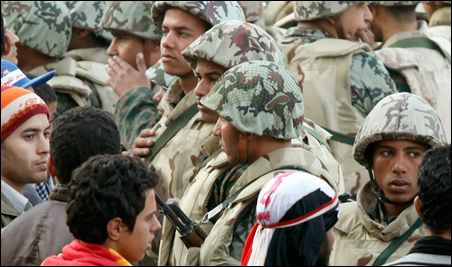
By kicking aside its president, dissolving its parliament and suspending its constitution, Egypt has wiped clean the slate of its government.
Maybe. There is a different slate in this potentially pivotal Arab nation — written largely in invisible chalk. Experts know just enough to read in it a cautionary tale. The military authorities who have taken control of Egypt have operated largely in secret to build their own empire of money and power.
"You have this huge beast of a thing in all sectors of Egypt's economic activity," said Robert Springborg, a Minnesota native whose extensive experience in the Middle East includes working as director of the American Research Center in Egypt. Currently he is a professor in the Department of National Security Affairs at the Naval Postgraduate School in Monterey, Calif.
And Egypt is taking a long-shot gamble by trusting that commanders of such immense power and wealth eventually will relinquish meaningful control to civilians, say Springborg and other experts. Even the Egyptian people do not know the full extent of the economic and political force their military leaders have amassed. No one does outside elite circles in Egypt because that force has been assembled over decades behind the veils of political expediency and national security.
Origins of a secret empire
The origins of this secret military economy go back before Egypt's now-deposed President Hosni Mubarak began his authoritarian rule some 30 years ago.
After World War II, Egypt asserted itself in the global expansion of military-industrial enterprise. It became the leading Arab manufacturer of aircraft and weapons. It set up a series of state-owned enterprises under the control of an Armament Authority commanded by a major general, according to Global Security.org. Its customers included the United States, European nations and neighboring Arab states.
Because Egypt considered the value of its military exports confidential, it omitted this information from its published trade statistics. It outlawed news coverage of the military enterprises. And it defied efforts by global financial institutions like the World Bank to lift the curtain of secrecy and bring the military-run factories into the private sector where they would be more visible and accountable. You have to go back to the 1980s to find estimates on the exports from this hidden industry. And those estimates range from $70 million a year in 1980s dollars to $1 billion.
Concern about Islamists Masks Wide Differences Among Them

PARIS, Feb 4 (Reuters) - Politicians and pundits wondering if Islamists will soon take power in Egypt or Tunisia might usefully ask first what the term "Islamist" means and what the Muslim leaders it describes say they want to do.
"Islamist" denotes an ideology that uses Islam to promote political goals. But it is so broad a term that it can apply both to Shi'ite Iran's anti-Western theocracy and to pro-business Sunnis trying to get Turkey into the European Union.
While the politically charged word can evoke violent action, such as that of Osama bin Laden's al Qaeda, many Islamists say they abhor the use of force and want to work within the law.
"We have to distinguish between different combinations of Islam and politics," said Mustafa Akyol, a columnist in Istanbul for Hurriyet Daily News. "A party can take its values and inspiration from Islam but still accept a secular state."
Noah Feldman, a Harvard University expert on Islamic law, said taking part in democratic politics can change Islamist parties, citing the AK Party in Turkey that came to power in 2002 after scrapping its ideal of creating an Islamic state.
"Once in power, you can no longer rely on slogans or ideology for votes, you actually have to deliver things," he said. "They've done an extraordinary job of that."
Egypt's Muslim Brotherhood and the Islamist Ennahda ("Renaissance") party in Tunisia have so far not been able to operate in open political systems, so their professed commitment to democracy has not yet been tested in daily practice.
Their programmes reflect a more moderate approach, however, than those of Lebanon's Hezbollah, the Palestinian Hamas or Iran.
Factbox: Egyptians Want More Islam in Politics
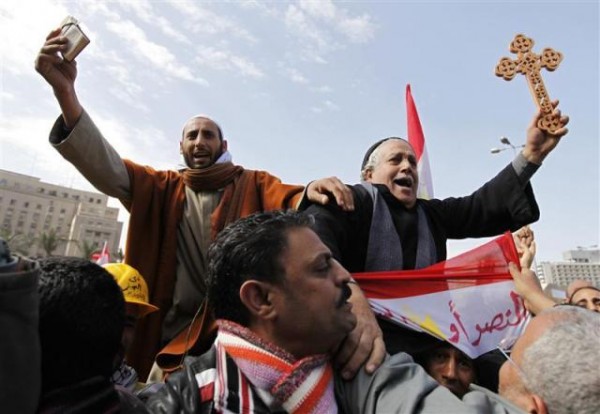
PARIS (Reuters) - Egyptians want Islam to play a large role in politics, reject radical Islamists and think democracy is the best political system, according to poll data collected in Muslim countries last year.
The data, published by the U.S.-based Pew Research Center in December, gives an idea of Egyptian public opinion before the current protests there broke out.
Collected in April and May of last year for Pew's Global Attitudes Project, the report described Muslim attitudes about religion in politics in seven countries -- Egypt, Indonesia, Jordan, Lebanon, Nigeria, Pakistan and Turkey.
A sample group of 1,000 was surveyed in face-to-face interviews. Here are the data for Egyptian responses:
ON ISLAM IN POLITICS
-- Is it good that Islam plays a large role in politics? 95 percent said "yes" and 2 percent "bad."
-- Is Islam's influence in politics positive or negative? 85 percent said "positive," 2 percent said "negative."
-- How much of a role does Islam play in Egyptian politics now? 48 percent said "large" and 49 percent said "small."
-- Is there a struggle between groups that want to modernize Egypt and Islamic fundamentalists? 31 percent said "yes." Of them, 27 percent described themselves as modernizers and 59 percent called themselves fundamentalists.
ON ISLAMIST EXTREMISM
-- Are suicide bombings justified? 46 percent said "never," 34 percent "rarely," 12 percent "sometimes" and 8 percent "often." (NOTE: Support for suicide bombing has dropped since 2006, when 28 percent said they were justified sometimes or often.)
-- Are you concerned about Islamist extremism in the world? 70 percent said they were "very concerned" or "concerned."
-- Are you concerned about Islamist extremism in Egypt? 61 percent said they were "very concerned" or "concerned."
ON FOREIGN ISLAMIST MOVEMENTS
-- What do you think of Hamas? 49 percent were favorable.
-- What do you think of Hezbollah? 30 percent were favorable.
-- What do you think of al Qaeda? 20 percent were favorable.
-- Do you have confidence in Osama bin Laden? 19 percent said "some" or "a lot," 73 percent said "not much" or "none." (NOTE: Confidence in bin Laden has fallen from 27 percent in 2006).
Egypt, 'Ummah Duniyah', Roars
Hear Me Muslim Arabs, We Are All Qahirene!


In the years that I lived in Riyadh, my devoted driver was an Egyptian from Cairo. Like me, he was a guest worker in the Kingdom. A Coptic Christian, Zachariah was the first to tell me Egypt is known affectionately in Arabic as Ummah Duniyah -- Mother of the World -- a testament to Egypt's extraordinarily rich and ancient history. Zachariah's gallant chivalry and quiet reticence and his articulate, softly enunciated Arabic were an oasis from the harsh realities of a single British woman in late nineties Riyadh.
In many ways, Zachariah's humble grace and kindness captured the famed gentility of Egypt's working classes, a softness which often irks Egypt's contemptuous Arab neighbors. Today the neighbors have forgotten their contempt, and supplanted by awe, they watch tumultuous scenes unfold in Cairo, quivering in their foolish Dior and Dunhill.
The Qahirene (as Cairo dwellers are known in Arabic) and their fellow citizens have ensnared the world's attention. Protesters bubble with superheated frustration threatening to sputter over the crucible's edge and spark unrest throughout the Arab Muslim world. The scenes so enthralling us are an autocrats' worst nightmare manifest. See them scurry to seek consolation with the surprisingly feckless Western diplomats abruptly surprised. No war games prepared them for the arrival of this untamed monster. The powder keg of public outrage is finally lit, and, sweeping across a long suffering, disabused Muslim Arab world, hundreds of millions of Muslims are completely captivated by images from a quarter of their fellow Arab humanity.
Egyptian protesters and commentators alike underline this is not a Muslim revolt, this is an Egyptian revolt -- pleasant semantics which will bear little relevance short months from now. The colossal Muslim majority of Egypt's population ensures that the actions of Egyptians will reverberate through the rest of the wider Muslim world in unimaginable impact.
The climate inside Egypt is volatile. Vandalism, lawlessness and looting have already begun, community vigilantes and a military, as yet loyal to the proletariat, struggling to maintain a cagey security. The great Egyptian Museum of Cairo has already been raided, resulting in the decapitation of two ancient mummies, symbolic as Egypt disarticulates Mubarak from his Promethean grip on power. Decapitating dictators from power has profound, game-changing outcomes. Like all executions, bloodbaths, literal and figurative, will surely follow.
Behind the Turmoil in Egypt
Angry young people who expected more
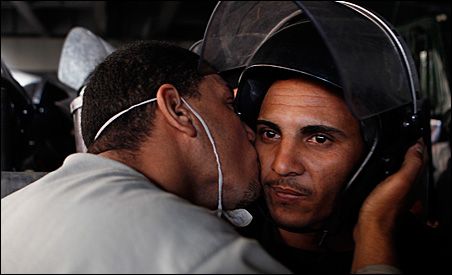
The man who served my first cup of steaming mint tea in Cairo hadn't wanted to be waiting tables and setting up hookahs at age 26. He'd gone to a technical school, planning to land a construction job that would pay enough to get married and support his household while also helping his mother, a widow. Instead, he had drained his family's savings and lost hope of ever earning enough to support a wife and children.
You find similar stories everywhere in the Arab countries. The faces of the Arab protestors on television over the weekend are the faces of frustrated young people I saw a few years ago stuck in menial work throughout the region — leading donkeys through crowded markets, balancing trays piled with bread on their heads and peddling newspapers from sidewalk stands. They were working, but just barely. And they were consumed by resentment.
The rage exploding on the streets of Egypt, Yemen and other Arab countries has been boiling under the surface for a long time.
The leaders of those countries should have seen it coming. Professor Ragui Assaad is one of many experts who have warned for years that young Arabs were frustrated to an explosive point. "What is fueling all of this anger is the dashed expectations of the young people who are a larger and larger portion of the population of the region," said Assaad, an economist at the University of Minnesota's Humphrey Institute.
Assaad spent two recent years in Cairo working to document rising frustration among youth across the Arab world. Some of his findings are reported in the book "Generation in Waiting: the unfulfilled promise of young people in the Middle East." [PDF] His reports also can be found on the website of the Middle East Youth Initiative, a project of the Brookings Institution and the Dubai School of Government.
Youth bulge
Here's the root of the problem, as Assaad explained it to me: The Arab world had its own version of a baby boom starting some 25 years ago. It gave rise to the largest generation in the history of the region, more than 100 million young people. As a result, the median age is 24 in Egypt and 18 in Yemen compared with 37 in the United States and 44 in Germany, according to the CIA World Factbook. The Arab countries weren't nimble enough to expand their school systems, health clinics and other facilities to meet the needs of this youth bulge. So masses of these kids overcrowded the available schools and got diplomas without real educations and skills that could help land jobs.
Number of U.S. Muslims to Double
Muslims will be more than one-quarter of the earth's population by 2030, according to a new study.

Muslims will be more than one-quarter of the Earth's population by 2030, according to a study released today.
The number of U.S. Muslims will more than double, so you are as likely to know a Muslim here in 20 years as you are to know someone Jewish or Episcopalian today.
Those are among key findings in The Future of the Global Muslim Population, the first comprehensive examination of Muslims, whose numbers have been growing at a faster rate than all other groups combined.
"We're not surprised. Our mosques and schools are already overflowing," says Imam Johari Abdul-Malik, outreach director of a mosque in Falls Church, Va.
The Pew Forum on Religion & Public Life analyzed statistics from United Nations data and census material from more than 200 countries and studies by 50 international demographers.
If immigration patterns and Muslims' comparatively higher birth rates continue, Pew projects:
- U.S. Muslims will go from a tiny minority now, less than 1% of the nation, to 1.7%. That's a jump from 2.6 million people in 2010 to 6.2 million.
- Muslim immigration to the USA and Muslims' share of all new legal permanent residents will continue to rise. Most of the immigrants will arrive from South Asia, the Middle East and Africa.
- Though 64.5% of U.S. Muslims today were born abroad, that percentage will fall to 55% as the number of native-born Muslims rises.
- Worldwide, Muslims will climb from 23.4% to 26.4% of the population, going from 1.6 billion people in 2010 to 2.2 billion in 2030, concentrated in Muslim-majority countries.
Will Pew Muslim Birth-Rate Study Finally Silence the “Eurabia” Claim?

One of the most wrong-headed arguments in the debate about Muslims in Europe is the shrillEurabia claim that high birth rates and immigration will make Muslims the majority on the continent within a few decades. Based on sleight-of-hand statistics, this scaremongering (as The Economist called it back in 2006) paints a picture of a triumphant Islam dominating a Europe that has lost its Christian roots and is blind to its looming cultural demise.
The Egyptian-born British writer Bat Ye’or popularised the term with her 2005 book "Eurabia: The Euro-Arab Axis" and this argument has become the background music to much exaggerated talk about Muslims in Europe. Some examples from recent weeks can be found here, here and here.
A good example is the video Muslim Demographics, an anonymous diatribe on YouTube that has racked up 12,680,220 views since being posted in March 2009. Among its many dramatic but unsupported claims are that France would become an "Islamic republic" by 2048 since the average French woman had 1.8 children while French Muslim women had 8.1 children — a wildly exaggerated number that it made no serious effort to document. It also predicted that Germany would turn into a "Muslim state" by 2050 and that "in only 15 years" the Dutch population would be half Muslim. "Some studies show that, at Islam’s current rate of growth, in five to seven years, it will be the dominant religion of the world," the video declares as it urges viewers to "share the Gospel message in a changing world."
Muslim Seminary Ends Talks With Vatican Over Pope's Comments

VATICAN CITY (RNS) The most prestigious religious university in the Sunni Muslim world has suspended dialogue with the Vatican to protest statements by Pope Benedict XVI denouncing violence against Christians in Egypt.
The move, on Thursday (Jan. 20), came only nine days after Egypt recalled its ambassador to the Vatican for the same reason.
Sheikh Ahmed El-Tayeb, the grand imam of Cairo's Al-Azhar University, and members of the university's Islamic Research Center made the decision at an "emergency meeting" on Thursday, according to a statement released by the center.
"Pope Benedict's repeated criticism of Islam and his unjustified claim that Copts are persecuted in Egypt and the Middle East were behind the suspension decision," said the statement, as translated on the website of the Dubai-based Gulf News.
On Jan. 2, Benedict denounced the "vile and murderous" New Year's Day killing of at least 21 people by a car bomb outside a Christian Coptic church in Alexandria, Egypt.
Al-Azhar's El-Tayeb had immediately criticized the pope's statement as "unacceptable interference in Egypt's affairs."
"I disagree with the pope's view," El-Tayeb said at the time, "and I ask why did the pope not call for the protection of Muslims when they were subjected to killings in Iraq?"
Benedict mentioned the attack again, along with other killings of Christians in the Middle East, during an address to foreign ambassadors at the Vatican on Jan. 10, when he called on "governments of the region to adopt ... effective measures for the protection of religious
minorities."
The day after Benedict's speech to the diplomats, the government of Egypt recalled its ambassador to the Vatican to protest what a spokesman called the pope's "unacceptable interference in (Egypt's) internal affairs."
Fulfilling Our Duty as Muslim-Americans
There's no reason we should object to Congress investigating Islamist radicalism.
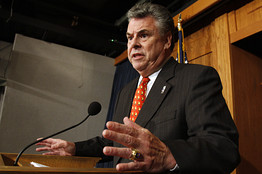
When New York Rep. Peter King, the new chairman of the House Committee on Homeland Security, called for congressional hearings on radical Islam in America this fall, the reaction from the official Muslim community was swift. Ibrahim Hooper, president of the Council on American- Islamic Relations, said he feared the hearings would become an "anti-Muslim witch hunt." Abed A. Ayoub of the American-Arab Anti-Discrimination Committee asserted that Mr. King's proposal had "bigoted intentions."
While Mr. King has a reputation for adopting polarizing positions—particularly when it comes to immigration—his hearings deserve serious consideration. "There has to be an honest discussion of the role of the Muslim community—what they are doing, what they're not doing," he explained to the New York Observer in a Nov. 30 article. "I talk to law enforcement people across the country; they will tell me. . . . They don't feel any sense of cooperation."
These concerns are reasonable. Histrionic objections to them only deter Muslims from fulfilling a fundamental Islamic obligation: Meeting our duty to the society in which we live.
According to Islamic law, Muslims are obligated to three entities: the self, God and society. This last has been overlooked too often by Muslims and their adopted societies.
Similar to the Christian obligation to "render unto Caesar what is Caesar's," the Quran and the derived corpus of Islamic jurisprudence support Muslims' engagement with those to whom power is entrusted. Chapter 4, verse 59 of the Quran reads: "Verily, Allah commands you to give over the trusts to those entitled to them, and that, when you judge between men, you judge with justice."
That patriotic majority has a duty not only to follow the laws of the United States, but to make sure that their fellow Muslims do the same. Islam calls this duty "commanding the right and forbidding the wrong." It is an obligation that is sourced widely in Islamic scripture, beginning with the Quran. The scriptures even underline that this duty is shared by both men and women.
In one verse, Muslims are instructed: "Let there be one community of you, calling good and commanding right and forbidding wrong" (3:110). Another instructs: "Believers, the men and the women, are friends of one another; they command right, and forbid wrong" (9:71). Impartiality is critical to fulfilling this duty. As it is written: "And let not the hatred of others to you make you swerve to wrong and depart from justice" (5:8).
The holy texts of Islam emphasize that one's greatest allegiance should be to justice—superseding family and co-religionist ties. "Be strict in observing justice, and be witness for Allah, even though it be against yourselves or against your parents or kindred," the Quran says in chapter 4, verse 36.
Of Madness and Muslim Martyrdom
The Ideal Age of Indoctrination
New Year's Day, New York -- This week's news reports out of Egypt of a suicide bombing targeting Alexandria's Coptic Christians in a New Years Eve mass are a sobering start to the New Year. At the present time seventeen are reported to have been killed and many more injured. The prevalence of suicide martyrdom operations has now become so commonplace that as a viewership we are badly inured to them. Its worth remembering that the ideology supporting these fanatical attacks may begin long before the bomber reaches adulthood.
Last spring I received a letter from a Saudi father in Jeddah. His twelve-year old daughter had returned home from school that day, casually mentioning that her Saudi teacher had endorsed suicide attacks as permissible in Islam. The matter had been discussed in the context of Palestine. He writes:
"... my daughter was confused another topic which totally contradicts what I say to her on how its nice to have friends from all over the world regardless of their religion or ethnicity. Her teacher, originally from Palestine, was talking to her class on how becoming martyrs on the road to freeing Palestine from infidels is the highest and most noble thing -Islamism is spoon fed to our kids. I used to think to be a good parent all one had to do was ensure one's child gets a good education. Now I realize to be a good parent these days I have to protect my child from education!"
He added a link to a video, which had been circulating at the time. It was a highly produced, glossy arrangement featuring a handsome Arab male lead and a young singing companion. The melody was very catchy, and bore repeated viewing very well. The child's angelic voice was sweet and pure, an excellent contrast to the Arab male's heartening and sexy baritone. Dressed head to foot in black, with a dash of designer stubble, he was a no less than a Lebanese Ricky Martin.
I followed the song in translation. The verses were about dying for Palestine, wanting to become bride to the beloved Palestinian soil and looking forward to martyrdom. The pretty five-year-old child was enunciating every word perfectly, in a highly produced, moving hymn to martyrdom.
The Search for Muslim Identity
All Muslims are called to defend the societies they live in, not attack them


In an east London hospital I examine the 17-year-old, his emaciated pigeon chest rising with each mechanical breath. Finely etched, his sleeping features remind me of Saudi camel sellers, who were once my patients. Wisps of hair peep through an unbuttoned thobe (an ankle-length robe), betraying a still-lingering puberty. An untrimmed beard and skullcap are final clues that my patient is an Arab Muslim.
His x-rays show a ferocious pneumonia. I wash my hands and go in search of family, expecting to see other Arabs. Instead, I encounter four robust Pakistani women. As a Muslim of British-Pakistani heritage and a physician, I am amazed at the extent of his racial transition. He has fooled me entirely.
Many British Muslims, like my patient, fervently erase their ethnicity with ritualistic religiosity, choosing distinction from their parents in a desperate search of politicised Muslim identity, with little understanding of Islam or politics. Raised in a virtual Ummah (community of believers) made vivid through satellite TV and YouTube, these young Muslims seek to relate to a Palestinian "neighbour" they will never know, in preference to the Londoner living next door.
Many first- and second-generation British Muslims shun their ethnic heritage and cultural frameworks in favour of a perverse, exaggerated, narcissistic compassion for worlds of which they will never be part. One explanation for this is what psychologists describe as terror management theory. Dr José Liht and his team at the University of Cambridge develop British Islamist de-radicalisation programmes. Earlier this year Dr Liht explained terror management theory to me and its role in radicalisation.
Foreknowledge of death is unique to humans and must exist in parallel to a fundamental drive to survive. The resulting tension becomes overwhelming. In response, vulnerable people trade individual identities for group identity, which enables them to escape the boundaries of their mortal selves. Becoming part of a group assuages the individual's internal conflicts and simplifies the "other" against which one seeks real or imagined refuge. Muslims, who feel disengaged from surrounding British society as well as their parents' heritage (whether for valid and/or imagined reasons), are particularly vulnerable at the moment. Wearing Arab clothing, assuming manufactured Islamic identities, is externally emblematic of this dissolution. Accepting terrorist operations, including suicide bombings, may follow as the group identity is built on this distorted shared world-view.
Adventures of an Accidental Zionist
Encounters with the anxiety of Jewish extinction
On a domestic flight earlier this year, I found myself next to a sleek woman and her wide-eyed toddler. The stylish mother tended to her daughter. Industrial zippers on leather sleeves clinked softly against her slim, bangled wrists as she held a juice box for the thirsty child. Discretely, the mother quenched her own anxiety with a Xanax.
She talked to me, distracting herself from imminent take-off. A former television executive until recently, she had worked in a leadership role for a national network. Like many women in the workforce, when it came time to start her family she relinquished her profession to focus her energies on the animated bundle that now sat between us. A devoted mother, she had brought a selection of activities for the blue-eyed baby who was already busily engaged. Unlike her mother, the child was still innocent of fear. The mother talked rapidly, unable to conceal her building anxiety.
"Right now I am paying dues to three Temples in Manhattan. We just cannot decide which one is best for our family. For us to give her the right religious education, we have to be members of the community for some time. I know its crazy, but we hope to be able to settle on one soon. They just get so expensive!"
She expanded on Hebrew schools and congregations. Being neither a mother, nor Jewish, I tried hard to follow. In time, she leaned forward to retrieve a fallen toy, though the child did not demand it. By now we were long airborne, when she said, almost as an aside,
"Sometimes, I wish my daughter wasn't Jewish..." She sighed, deeply, gazing at her child.
"What do you mean?" I asked, genuinely shocked. "You are Jewish, aren't you?" She waved away my confusion, nodding in affirmation.
"I wish she wasn't Jewish because I fear for her. If my daughter wasn't Jewish, she wouldn't have to face the possibility of hardship, or who knows what else...I don't know what my child will face in her future because she is Jewish" explaining she didn't ever worry about these things until after she had become a mother. She trailed off into a private silence, locked in fractured, frightening thought.
We both watched the child. Fat, dimpled hands grasped toy blocks well beyond the span of a tiny, determined grip. Every moment, it seemed the block might fall, yet somehow it did not. In the unspoken future her mother envisioned, Judaism too might slip away just as abruptly, and finally, from humanity's futile, infant clasp.
Months later, at the University of Cambridge, I found myself ensnared in discussions with a visiting professor from Bar Ilan University, Israel. Dr. Noah Efron was speaking about Science and Judaism for the Templeton-Cambridge Journalism Fellowship.
Merkel to Germans on Islamism: Stand up for Christian Values

(Reuters) - Chancellor Angela Merkel urged Germans debating Muslim integration to stand up more for Christian values, saying Monday the country suffered not from "too much Islam" but "too little Christianity." Addressing her Christian Democratic Union (CDU) party, she said she took the current public debate in Germany on Islam and immigration very seriously. As part of this debate, she said last month that multiculturalism there had utterly failed.
Some of her conservative allies have gone further, calling for an end to immigration from "foreign cultures" -- a reference to Muslim countries like Turkey -- and more pressure on immigrants to integrate into German society.
Merkel told the CDU annual conference in Karlsruhe that the debate about immigration "especially by those of the Muslim faith" was an opportunity for the ruling party to stand up confidently for its convictions. "We don't have too much Islam, we have too little Christianity. We have too few discussions about the Christian view of mankind," she said to applause from the hall.
Germany needs more public discussion "about the values that guide us (and) about our Judeo-Christian tradition," she said. "We have to stress this again with confidence, then we will also be able to bring about cohesion in our society." References to the CDU's Christian roots and "Christian view of mankind" are standard in party convention speeches, but the phrases have become more frequent in recent months as Germany has been gripped by a heated debate over Islam and immigration.
DEFINING CULTURAL IDENTITY
The debate began last summer when former Bundesbank board member Thilo Sarrazin published a bestselling book arguing that Muslim immigrants were simple-minded welfare spongers who threatened the country's economy and its long-term future. President Christian Wulff, a Christian Democrat, fueled the controversy last month by saying Islam "belongs to Germany" because of the four million Muslims who now live there.
Merkel has sharpened her rhetoric on immigration in recent weeks while avoiding the toughest tones coming from the CDU's Bavarian sister party, the Christian Social Union (CSU). But her party looks set to pass a resolution Tuesday stressing that German culture has Judeo-Christian roots, an idea that critics say aims to marginalize Islam.
Vatican Focuses on Troubles in Middle East
VATICAN CITY (RNS) As descendants of the original Christians, Catholics in the Middle East occupy a uniquely prestigious position in their church -- and also one of the most imperiled.
For the next two weeks (through Oct. 24), the region's dwindling Christian population will be the focus of rare international attention, as 185 Catholic bishops meet at the Vatican to discuss the special challenges they face.
"In those countries, unfortunately marked by profound divisions and lacerated by years-long conflicts, the church is called to be a sign and instrument of unity and reconciliation," said Pope Benedict XVI on Sunday (Oct. 10), opening a special two-week session of the Synod of
Bishops.
Benedict chose a word -- "arduous" -- that applies both to the church's presence in the region, and the problems that will be considered by the synod.
Participants, representing 5.7 million Catholics from 16 Middle Eastern countries, will focus on a number of issues, including a lack of religious freedom in Muslim countries, the danger of Islamic fundamentalism, the region's shrinking Christian population and the ongoing Israeli-Palestinian conflict.
"Christians sense an uneasiness at being considered noncitizens, despite the fact that they have called these countries 'home' long before Islam," said Patriarch Antonios Naguib of Egypt's Coptic Catholic Church, on Monday (Oct. 11).
The Coptic Catholic Church is one of 22 "Eastern Catholic" churches in union with Rome, whose combined membership comprises most Catholics in the Middle East. Eastern Rite representatives make up three-quarters of the bishops at the synod.
"Christians deserve full recognition," Naguib said, "passing from being merely tolerated to a just and equal status which is based on common citizenship, religious freedom and human rights."
Many Muslim-majority countries legally prohibit conversion from Islam. In Saudi Arabia, whose 1.25 million Catholics represent the region's second-largest Catholic population, private worship by non-Muslims is prohibited, and Catholic priests have been arrested for
celebrating Mass.
Collateral Damage
The Hidden Costs of the Ariel Boycott
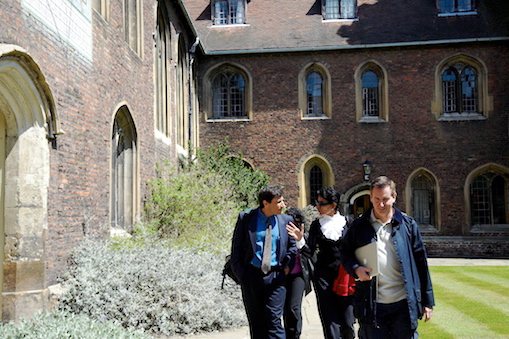
This summer as a Templeton-Cambridge Fellow in Journalism I was engaged in multidisciplinary seminars focusing on science and religion moderated by speakers from all over the world, of every religious persuasion. One of the most memorable speakers this year was Noah Efron, of Bar Ilan University in Tel Aviv who came to speak to us about Science and Judaism. Learning from him was a luxury and sadly one which is increasingly challenged: more and more institutions would like to bar academics like Noah from pursuits like this fellowship because of his Israeli nationality and affiliation. Noah himself wrote about the issues of cultural boycott eloquently in Ha'aretz recently.
In an increasingly polarized world, anti-Israeli boycott as a means to influence political climate is urged more and more often. The cultural boycott of Ariel seeks to penalize spaces which should remain sacrosanct, and devoid of political positioning. Prime Minister Netanyahu recognizes these risks well:
"The State of Israel is under an attack of delegitimization by elements in the international community. This attack includes attempts to enact economic, academic and cultural boycotts. The last thing we need at this time is to be under such an attack - I mean this attempt at a boycott - from within."
Cultural and academic boycotts carry their own special devastation taking causalities on all sides of ideological divides. As a Muslim physician enriched by American Jewish and Israeli colleagues I feel especially strongly that channels of collaboration and engagement must always remain open. Such dialogue is especially important at times of heightened tension.
Yet I only became aware of mounting calls to boycott Israel within my field recently. A fellow Muslim colleague wanted to know my thoughts on a very strongly worded call (published in The Lancet) for the medical academe to cease all interactions with Israeli investigators and Israeli projects.
The Ground Zero Synagogue
Should Jews build a synagogue near a site of Jewish terrorism?


Imagine a place where Muslims were the victims, not the perpetrators, of the worst terrorist massacre in recent memory. Imagine, for example, that the killer was Jewish and that in the wake of his attack, on the very ground from which he had plotted it, Jews built a synagogue. How would today's opponents of the "Ground Zero mosque" react? Would they condemn, with equal vigor, the "Ground Zero synagogue"?
We already know the answer, because the place I'm talking about isn't imaginary. It's Hebron, a city in the West Bank. The reason you haven't heard about its new synagogue is that there has been no outcry. Apparently, the rule about keeping houses of worship at a respectful distance from scenes of terrorism is for Muslims only.
Hebron lies south of Jerusalem in the middle of Palestinian territory. Its holiest ground is the Cave of the Patriarchs, believed to be the burial site of Abraham, Isaac, and Jacob. In 1929, Muslims slaughtered 67 Jews in Hebron. Just a month ago, they murdered four more. But the city's worst terrorist attack in recent years took place in 1994, when Baruch Goldstein, a Jewish settler, went to the Cave of the Patriarchs, gunned down 29 Muslims who were praying there, and wounded more than 100 others.
Every sane Israeli has condemned Goldstein. But many settlers still admire him. They claim he was standing up for Jews, just as 9/11 apologists claim the hijackers were standing up for Muslims. A few months ago, some Jews in east Jerusalem were caught on video praising him. "Dr. Goldstein, we all love you," they sang. "He aimed at terrorists' heads, squeezed the trigger hard, and shot bullets, and shot, and shot."
Kiryat Arba, the settlement from which Goldstein set out on that terrible day, lies about 1,500 feet from the scene of the massacre. That's about twice the distance from Ground Zero to the site of the proposed Islamic community center in Manhattan. But unlike the community center, which is avowedly ecumenical with a memorial to the victims of 9/11, Kiryat Arba erected a monument to Goldstein. Every year, settlers assemble at his grave to thank him for smiting "the enemies of the Jews."
Discovering Muslims, Christians of All Kinds
'This book really began around the kitchen table at the rectory with crock-pot stew."
Eliza Griswold - with a poet's eye for the telling, homely image - is tracing the genesis of her new book, The Tenth Parallel: Dispatches From the Fault Line Between Christianity and Islam. She reads Tuesday night at 7:30 at the Central Library of the Free Library of Philadelphia. It's free.
Tenth Parallel pulls together a decade of research traveling the Muslim world - a world of which most Americans have not the faintest idea. Moving, remarkable, Tenth Parallel makes clear there is no one Islam, insists Western talk of "a war of religions" is misled, and honors the role of religion in the lives of the observant.
But crock-pot stew? Rectory? Griswold, 37, speaks by phone from a New York deli, where she's ordering a large coffee with cream and honey (echoes of Canaan?): "If I were not who I am, I wouldn't have done this book. I grew up in a house where faith and intellect coexisted." That would be as the daughter of an Episcopal minister, much of that time in Chestnut Hill. Her dad, the Rev. Frank T. Griswold 3d, was rector for 101/2 years at St. Martin-in-the-Fields Church there. He left in 1985 to become a bishop of Chicago.
The Tenth Parallel of the title runs through Africa and travels around the Earth 700 miles north of the equator. In many places, it marks off Muslim and Christian worlds. "I'd heard of the Tenth Parallel from Christian missionaries," she says, "but the more I traveled, the more it became a concrete reality, not just a convenient metaphor."
Her story is less of warfare than of "the long history," as she writes, "of everyday encounter, of believers of all kinds shouldering all things together, even as they follow different faiths."
Griswold has reported on Islam since 2000. But the book proper began when she traveled in 2003 with evangelist Franklin Graham, son of Billy, to visit Omar al-Bashir, ruler of Sudan. It was one surreal, edgy visit. "Franklin had called Islam 'wicked and evil' in 2001, but Bashir invited him because of fears Sudan was next on President Bush's supposed anti-Muslim hit list," Griswold says. "The first thing both men did was try to convert each other! And at the end, Franklin gave Bashir a Re-Elect George Bush campaign button."
Prayer and Protest at Ground Zero


Imam Feisal Abdul Rauf is in many ways the epitome of an integrated American Muslim. He has lived in the United States since the 1960s, moving there as a teenager with his father, and is a graduate of Columbia University. For more than 25 years he has been leading prayers at a mosque based in a store in Lower Manhattan. But reactions to his plans to expand his work with the building of an Islamic cultural centre in New York, just a few blocks from Ground Zero, must have made him wonder about the country of which he has been a part for so long.
It has unleashed a storm of protests, fuelled by emotions about 9/11; developed into a row over freedom of religion; and become a tale of contemporary America, where PR, celebrity politicians, shock-jock radio and ignorance about the wider world all play their part. So huge is the row over Rauf's Islamic centre that even President Barack Obama weighed in last week, and it could become a key issue in the mid-term US elections in November.
Rauf, who now holds three Friday prayer sessions each week to accommodate all the faithful at his existing mosque in New York, is one of America's leading thinkers on Sufism, the mystical, pluralistic and moderate arm of Islam. For several years he and his wife, Daisy Khan, had been keen to set up a community-centre-cum-prayer room in New York along the lines of the YMCA. Indeed, they took as their template the 92nd Street "Y", a Jewish adaptation of the YMCA concept that is a leading New York centre for people of all religions or none to visit for lectures, debate and educational courses.
When Imam Rauf found his site and developed his ambitious proposal for a 13-storey building with a large prayer room, auditorium, meeting rooms, a swimming pool and a food court, he and his supporters sought backing from some Jewish and Christian groups. For them, the centre would be a symbol of a moderate Islam opposed to the hijacking of the faith by extremists and open to the non-Muslim community.
But a combination of naivety and events combined to turn their proposal into an explosive plan. While certain religious groups, willing to engage in dialogue, supported them, other New Yorkers still raw from 9/11 were outraged when they discovered that the ground bought for it is only two blocks from the site of the World Trade Center destroyed by Islamist terrorists on 11 September 2001.
Barack Obama is Not a Muslim
But not only has that fact not gotten through to many Americans, the percentage of adults who believe he is a Muslim has now risen sharply after holding steady for two years, according to a new Pew poll out today. For my money, though, the real headline--and the news that should be causing heartburn over at the White House right now--is that the percentage of Americans who can correctly identify Obama's religious faith as Christian has dropped by 14 points in the past year and a half. A plurality of Americans (43%) have no idea what religion he practices.
I'm going to repeat that because this is very unusual: a year and half after Obama moved into the White House, Americans are far less certain about who he is than they were during the campaign. That isn't a good trend line for any political figure, but especially not the president. It may be appealing for an offbeat Hollywood actor or a reclusive writer to be seen as an enigma. But politics is a personal arena--voters like to feel that they can relate to a president or at the very least understand who he is. More dangerous for Obama is the fact that if a politician doesn't define himself, his enemies are more than happy to do it for him. The Pew poll is evidence that the endless conservative media cycle of misinformation about Obama is working: of those respondents who identified Obama's faith as Islam, 60% said they learned the "fact" from the media. (Note that the poll was conducted before Obama waded into the so-called Ground Zero mosque controversy.)
Barely one-third (34%) of Americans can correctly identify Obama as a Christian, compared to more than half (51%) who could do so during the 2008 campaign. But that huge drop isn't driven primarily by Fox News true believers. (Let me pause for a moment here to say that it is of course not a smear to call someone a Muslim. It is, however, obnoxious to say someone is a member of a religious faith when he's not--and to insist that he is not a member of the tradition he does claim. It would also be foolish and naive to pretend that conservatives who call Obama a Muslim are doing it in a neutral way and that their intention is not to raise questions about his "otherness.")
Consider this: Less than half of Democrats (41%) know Obama is a Christian, down from 55% in March 2009. Barely four-in-ten African-Americans say he's a Christian, down from 56% last year. The percentage of moderate and liberal Republicans who say Obama is a Christian has dropped by 27 points, but it's not because they're all now convinced he's a Muslim. Instead, the percentage who just don't know his religion has risen 19 points. "What the numbers say," says Alan Cooperman of the Pew Forum on Religion and Public Life, "is that there's a lot of uncertainty and confusion about the president's religion."
Tariq Ramadan's Pluralism
Tariq Ramadan, the west's most controversial Muslim philosopher, talks about tolerance in his new book.
We live in a plural age. But do we have an adequate philosophy for living together in our diversity? Tariq Ramadan, in his new book, The Quest for Meaning, thinks not.
We have roughly three options. First, is the pluralist philosophy that underpins what might be called "forbearing empires". The dominant power says, accept our rule, and in return, you will gain our peace – and a relative freedom to maintain your way of life. It's the pluralism of the ancient pax Romana, or the Muslim empires of the medieval period, or perhaps the British Raj. But it's a colonial philosophy too, and so not much championed today.
Second, is the pluralist philosophy that underpins the secular settlement. The watchword here is toleration, and the key policy is to separate civil government from the practice of religion – government being concerned with a citizen's welfare in this life, religion in the next. But this philosophy runs into the paradox of toleration, namely who should not be tolerated. For example, John Locke, in his Letter Concerning Toleration, infamously argued that Roman Catholics and atheists could not be endured.
Further, if you seek a thriving democracy, merely to tolerate others is too passive a political philosophy. And it's patronising, because diverse groups in an equal society want to be respected, an altogether different proposal. As Ramadan remarked during a talk on his book, "I don't want a peaceful coexistence. I want a living together that is constructive and active."
This leads to the third possibility, the one he champions. It's a pluralism prepared to recognise that the individual gains from engaging with the diversity that surrounds them. It's not syncretistic, as if the goal were a perennial philosophy – truths distilled from what is agreed in common. Such a project tends to evacuate religions and philosophies of their particularity and, in turn, nurtures human individuals drained of their colour. Rather, this form of pluralism recognises that what we have in common is not the answers, though there will be overlap, but the need to ask the questions. As Immanuel Kant expressed them: what can I know, what ought I to do, what may I hope?
Afghanistan's Unjust War
We must apply the just war tradition to our analysis of the conflict in Afghanistan. Otherwise, we risk disaster.
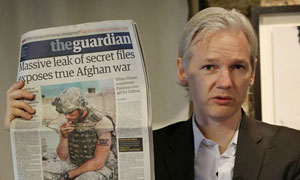
Two things this week have made the hellishness of military violence painfully clear. The first, WikiLeaks' Afghanistan war logs, describes in detail the horror of civilian casualties and "friendly fire" incidents. The second, from the same theatre, is Sean Smith's chilling video of American marines in southern Helmand. Faced with these portraits of war, empathy for the people caught up in it has been unavoidable.
But empathy alone is not enough. If you're not a pacifist, you accept that war is vile, but at times an inevitable part of life on Earth. The question is when and how it can be morally justified. Hence the importance of the just war tradition. Thinkers like the theologian Thomas Aquinas sought a way of containing war, by thinking through the desperate feelings that combat does and should evoke. The aim is to keep a steady view on the demands of natural justice, even when the fog of war threatens to blur everything.
The war logs in particular afford us a steady view on this current conflict, and what's as unsettling as the tragedy they reveal is the possibility that we lost sight of those demands, at least on occasion. The crucial issue is whether that's happened. An answer can be found by thinking about the relationship between jus ad bellum and jus in bello – the justification for the war itself, and the principles that should operate during the conduct of war. Both matter.
Let's assume the war in Afghanistan is justified, and focus on the jus in bello. One of Aquinas's major contributions was the notion of proportionality: how to assess the bad consequences of otherwise well-intended military action. Michael Walzer, a leading modern just war theorist, notes that simply not to intend the death of civilians is not enough. That's "too easy". Instead, there must be a positive commitment to saving civilian lives, rather than just killing no more than is militarily necessary. "Civilians have a right to something more," he concludes. "And if saving civilian lives means risking soldiers' lives, the risk must be accepted."
NY Imam Plans "Muslim Y," not Ground Zero Mosque
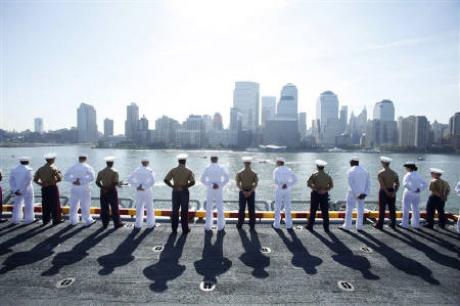
NEW YORK (Reuters) - When Imam Feisal Abdul Rauf decided to build a Muslim cultural centre in lower Manhattan, the model he chose couldn't have been more mainstream American -- the Young Men's Christian Association chapters found in cities across the United States.
The institution he had in mind was the 92nd Street Y, a Jewish adaptation of the YMCA concept that is one of New York's leading addresses for residents of all religions or none to visit for public lectures, debates, concerts or educational courses.
But Rauf's project is better known here now as the "Ground Zero mosque," after the term for the World Trade Centre site. Families of victims of the Sept. 11, 2001, attacks and conservative politicians have mounted an emotional campaign to block it, claiming that locating it only two blocks north of the site was a provocation.
"We repeatedly say we are neither a mosque nor within Ground Zero, but they just shout back 'Ground Zero mosque,' 'Ground Zero mosque,'" Rauf, 61, told Reuters in an interview. The planned building will have a prayer room for Muslims, he said, but it would only be a small part of the 13-story complex.
Rauf said the YMCA, which began in London in 1844 as Christian centre for young working men and quickly spread to the United States and other countries, had long worked to promote understanding across religious, ethnic and social dividing lines in modern societies. Now called simply "the Y," its facilities across the United States offer exercise classes, education and community activities.
"We are trying to establish something that follows the YMCA concept but is not a church or a synagogue or, in this case, a mosque," he said by telephone from Kuala Lumpur, where he is visiting. "We are taking that concept and adapting it to our time and the fact that we're Muslims. It's basically a Muslim Y."
SUPPORTED AND SLAMMED
The plan won overwhelming support at two community board meetings in May after they heard the $100 million complex would include a 500-seat auditorium, swimming pool, meeting rooms, art exhibition spaces, bookstore and a food court featuring dishes from around the Muslim world.
But critics promptly branded the prayer space a mosque, as if the building would feature domes and minarets rather than the sleek modern lines its architects have designed for it.
Faith, Hopes, and Policy: Religion in the Public Sphere
Governments are learning that religion is important, but they still don't understand it. Nor do faith groups understand government.

Well over 100 academics and individuals from think tanks gathered at the British Library to discuss how faith fits with government policy in the UK today. What they found was change, contradiction, and even chaos. Faith communities almost disappeared from public view during the 1990s, and yet now they're rarely out of the headlines. You might put the re-emergence down to any number of things – 9/11 and 7/7; the self-styled champions of science and secularism; a new outpouring of the Holy Spirit of God. But whilst no-one doubts that religion and politics is a subject with a future once more, few in the field have much idea about what that future will hold.
If anything, we must learn to live with contradictions, as events steal headlines and pressure groups wage cultural war. This is a world in which, say, Christian nurses are prosecuted for wearing crosses, even as NHS employees worry about a lack of spiritual care. It's one in which establishment bishops complain of persecution, even as the "big society" agenda, in new government departments, is supplied with ministers and advisers who have explicitly Christian agendas.
Alternatively, ours is a country in which Muslims are told that their religion is good when private and bad when political, at the same time as government Prevent programmes infiltrate Muslim communities, drawing Islam into the public sphere whether they like it or not. Or again, we must get used to situations in which issues that are relatively small in terms of the numbers of people they affect, carry totemic significance – such as when Catholic adoption agencies are forced in principle to place children with the tiny handful of gay couples who come to them for help.
And when the Pope pays a visit, one thing's for sure. It won't be Northern Irish protestants complaining most vocally, as it was in the 1980s. That's a sign of how dramatically the world has changed.
A number of speakers had warnings for faith communities themselves, particularly when tempted by funding to cooperate with government in the delivery of services. Beware that you don't demoralise your volunteers with the weight of bureaucracy that will descend when you're "mainstreamed", advised Margaret Harris of Aston university. Beware when you're asked to deal with social problems that government feels it can't touch, like poor parenting, said Luke Bretherton of King's College, London.
Europe, Face Veils, and a Catholic View of a Muslim Issue
The French National Assembly begins debating a complete ban on Muslim full face veils in public next week and could outlaw them by the autumn. Belgium’s lower house of parliament has passed a draft ban and could banish them from its streets in the coming months if its Senate agrees. The Spanish Senate has passed a motion to ban them after a few towns introduced their own prohibitions.
Calls to ban "burqas" — the word most widely in Europe used for full veils, even if most full veils seen are niqabs — have also been heard in the Netherlands and Denmark. According to a Financial Times poll, the ban proposal also "wins enthusiastic backing in the UK, Italy, Spain and Germany".
Only a tiny minority of Muslim women in these countries actually cover their faces, but that doesn’t seem to matter. That Switzerland has only four minarets didn’t stop Swiss voters from banning them in a referendum last November (and maybe banning veils next). There seems to be a movement to ban religious symbols that Europeans either reject or fear.
Is this the best way for Europe to deal with the veil? Should governments just introduce ever tougher policies and Muslims counter with increasing opposition? Is there another approach that could offer a more harmonious outcome?
Cardinal Angelo Scola, the Roman Catholic Patriarch of Venice, thinks there is. His beautiful city of canals and gondolas might not be the first one would think of when discussing Muslim integration in Europe, but his Oasis Foundation there has been working with Christians and Muslims in the Middle East since 2004. His extensive contacts in the region have led to some ideas he thinks could be relevant for Europe.
Muslim Creationist Preaches Islam and Awaits Christ
(Reuters) - Harun Yahya is one of the most widely distributed authors in the Muslim world. He may also be among the most widely criticized Muslim authors in the Western world.
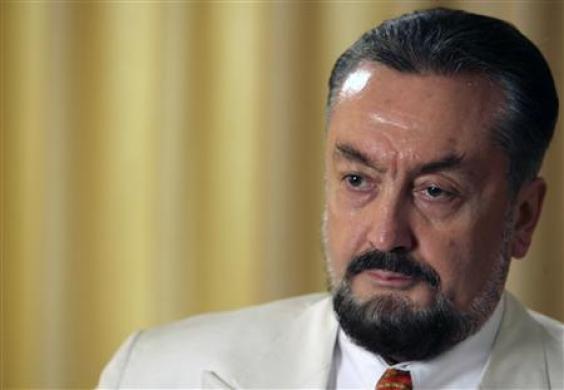
ISTANBUL (Reuters) - Harun Yahya is one of the most widely distributed authors in the Muslim world. He may also be among the most widely criticized Muslim authors in the Western world.
His glossy books and DVDs on religion and science sell in Islamic bookshops around the globe. He gives away thousands of expensive volumes and lets readers download much of his work from his websites for free.
The Council of Europe accuses him of trying to infiltrate schools with religious extremism and French teachers are told to keep his work from their students.
Unknown outside Muslim circles two years ago, Adnan Oktar -- the 52-year-old Turk behind the pseudonym Harun Yahya -- caught the attention of scientists and teachers in Europe and North America by mass-mailing them his 768-page "Atlas of Creation".
His lavishly illustrated book preaches a Muslim version of creationism, the view scientists usually hear from Christian fundamentalists who say God created all life on earth just as it is today and oppose the teaching of Darwin's evolution theory.
"Every academic I know says they've got one of those," retired University of Edinburgh natural history professor Aubrey Manning told the Glasgow Herald when "The Atlas" turned up in Scotland early this year. "And it's peddling an absolute, downright lie."
But Oktar, whose reclusive ways and opaque business have prompted many rumors about why and how he gives away so many books, brushed off all criticism in a rare interview with Reuters.
"This huge impact shows the influence of the book," the author, stylishly turned out in a white suit, red tie and clipped beard, said through an interpreter.
PR STRATEGY
The controversy stirred up by "The Atlas" has turned the spotlight on a publishing empire that boasts about 260 books in 52 languages, over 80 DVDs and dozens of websites.
Well-illustrated and free of theological jargon, they preach that Islam is the one true faith and Darwinism, by undermining religious belief, has led to the discord, atheism, terrorism and extreme political ideologies plaguing the world.
Vetting Tariq Ramadan
Paul Berman suggests that for this scholar of Islam, family is intellectual fate. But that's unfair.

Like attacking the Catholic Church during its heyday of killing heretics and infidels, criticizing Islamism today is not for those who jump at the sound of bubble wrap cracking.
Ibn Warraq, author of Why I Am Not a Muslim and Defending the West, operates under a pseudonym, a wise move considering that goons called for his murder on a British Muslim Web site in 2008. Bassam Tibi, a Muslim liberal who deems Islamism totalitarian, needed 24-hour police protection in Germany for two years. Magdi Allam, an Egyptian-Italian journalist of similar bent (who further outraged some Muslim peers by converting to Catholicism) travels at times with multiple bodyguards, an entourage also necessary for the Somali-Dutch author Ayaan Hirsi Ali (Infidel, Nomad), who fled to the United States when the Dutch scotched (so to speak) her protection.
The list of critics of Islamism who've paid a high price in loss of personal freedom goes on: Italian journalist Fiamma Nirenstein, French critic and gay-rights activist Caroline Fourest, French philosophy teacher Robert Redeker, Danish cartoonist Kurt Westergaard, and the most famous example of all, the novelist Salman Rushdie, forced into underground life for years after the Ayatollah Khomeini demanded his murder.
The examples come courtesy of Paul Berman, the shrewd, engagé New York intellectual and former MacArthur Foundation fellow who has become, after the death of Susan Sontag, our paramount lifeline to the trenches of French intellectual battle. Berman, author of Terror and Liberalism (Norton, 2003), among other important books, doesn't mention whether he's got his own beefy contingent laying low. But his provocative new The Flight of the Intellectuals (Melville House)—a tough-minded examination of Muslim reformist thinker Tariq Ramadan, at various times dubbed the "best-known Muslim in all of Europe," a "Muslim Martin Luther," and "the prophet of a new Euro-Islam"—gets high marks for bravery at the same time that it highlights another modern truth all public intellectuals should acknowledge.
If it's dangerous to zap Islamism these days, it's not easy being a Muslim reformist thinker, either.
Muslim Scholars Recast Jihadists' Favourite Fatwa

An Indonesian Muslim uses magnifying glass to read Koran verses printed on lamb parchment, Jakarta, July 27, 2005/Beawiharta
Prominent Muslim scholars have recast a famous medieval fatwa on jihad, arguing the religious edict radical Islamists often cite to justify killing cannot be used in a globalized world that respects faith and civil rights. A conference in Mardin in southeastern Turkey declared the fatwa by 14th century scholar Ibn Taymiyya rules out militant violence and the medieval Muslim division of the world into a "house of Islam" and "house of unbelief" no longer applies.
Osama bin Laden has quoted Ibn Taymiyya’s "Mardin fatwa" repeatedly in his calls for Muslims to overthrow the Saudi monarchy and wage jihad against the United States.
Referring to that historic document, the weekend conference said: "Anyone who seeks support from this fatwa for killing Muslims or non-Muslims has erred in his interpretation. "It is not for a Muslim individual or a Muslim group to announce and declare war or engage in combative jihad … on their own," said the declaration.
The declaration is the latest bid by mainstream scholars to use age-old Muslim texts to refute current-day religious arguments by Islamist groups. A leading Pakistani scholar issued a 600-page fatwa against terrorism in London early this month. Another declaration in Dubai this month challenged the religious justification for violence used by Islamist rebels in Somalia and calling for peace and reconciliation there ( more on that here).
Fatwas may not convince militants, but they can help keep undecided Muslims from supporting them, the scholars say. Because Islam has no central authority to define the faith in all its details, militants who hijack it by twisting texts for their own purposes need to be confronted by moderates who cite chapter and verse to refute them.
Poetic Justice in a Pint-Sized Pistol
Hissa Hillal, Live! from the land of invisible women
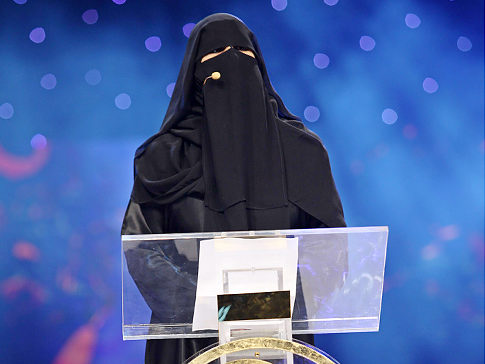
Hissa Hillal is the voice for countless 'Invisible Women." She is the Saudi woman who has captured the Arab world's attention through her poetry on Abu Dhabi's televised poetry competition broadcast by Emirati. Watched by millions, analogies to American Idol readily follow. Her poetry focuses on the abuse of Islam as it is wielded by extremist clerics. Her public challenge to established theocracy has garnered breathtaking attention in the region where women like Hissa, Saudi Arabian stay-at-home moms, are usually neither seen nor heard.
There is however a far more arresting aspect to Hissa's accomplishment. By thrusting her powerful verses into orbit through satellite television, she has thrown dawn a gauntlet in a way that newspapers, bloggers or network media segments cannot begin to compete. Her public poetry contains the latent power that will ignite a new dimension of dialogue in the Arab and wider Muslim world, a power derived of an ancient cultural currency.
Poetry, which speaks to the Arabian Peninsula's heritage of oral poetry as a means of cultural dialogue, invites much more attention than news commentary or opinion editorials. Traditionally, the true forebears of the modern day Saudi Arabia recorded their history and tradition through the medium of poetry, largely unwritten, but instead committed to memory and recited with elaborate, ceremonial oratory. This was the medium through which they preserved feats of arms and celebrated events in their history. Similar oral poetic history is also evident elsewhere in the Middle East including Israel, where fears for the preservation of this fading culture are growing.
Considering the geographic environment and the sparse population comprising pre-Twentieth Century Arabia, preserving cultural memory through transmitted and treasured poetry makes perfect sense. Ornate poetry traveled across the sandstorm-swept nascent Saudi steppe, immortalizing cultural yearnings, history and opinion in a pulsing ebb and flow across barely inhabited land. Vital to the survival of this art across generations, over desiccated Wadis and desolate escarpments was the role of the poet: his dedication, his imagination and his willingness to dialogue with other poets.
Is The Bible More Violent Than the Quran?
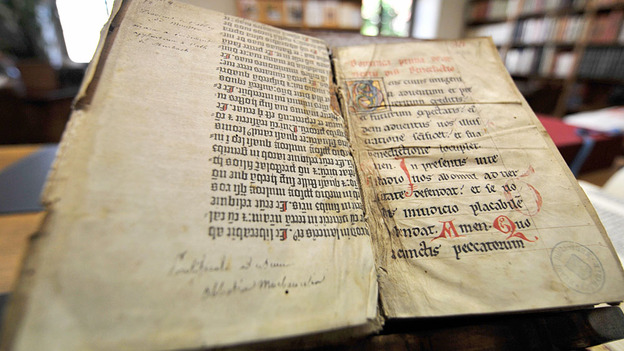
As the hijackers boarded the airplanes on Sept. 11, 2001, they had a lot on their minds. And if they were following instructions, one of those things was the Quran.
In preparation for the suicide attack, their handlers had told them to meditate on two chapters of the Quran in which God tells Muslims to "cast terror into the hearts of unbelievers."
"Slay the idolaters wherever ye find them, arrest them, besiege them, and lie in ambush everywhere for them," Allah instructs the Prophet Muhammad (Quran, 9:5). He continues: "Prophet! Make war on the unbelievers and the hypocrites! ... Hell shall be their home, an evil fate."
When Osama bin Laden declared war on the West in 1996, he cited the Quran's command to "strike off" the heads of unbelievers. More recently, U.S. Army Maj. Nidal Hasan lectured his colleagues about jihad, or "holy war," and the Quran's exhortation to fight unbelievers and bring them low. Hasan is accused of killing 13 people at Fort Hood, Texas, last year. Given this violent legacy, religion historian Philip Jenkins decided to compare the brutality quotient of the Quran and the Bible.
Defense Vs. Total Annihilation
"Much to my surprise, the Islamic scriptures in the Quran were actually far less bloody and less violent than those in the Bible," Jenkins says. Jenkins is a professor at Penn State University and author of two books dealing with the issue: the recently published Jesus Wars, and Dark Passages , which has not been published but is already drawing controversy.
Violence in the Quran, he and others say, is largely a defense against attack.
"By the standards of the time, which is the 7th century A.D., the laws of war that are laid down by the Quran are actually reasonably humane," he says. "Then we turn to the Bible, and we actually find something that is for many people a real surprise. There is a specific kind of warfare laid down in the Bible which we can only call genocide."
listen now or download All Things Considered
- listen… []
The Taliban and Personal Terror
An Italian journalist recalls his captivity witnessing his driver's decapitation and fearing for his life

Over the past decade—as we know too well—the Internet has revolutionized journalism by allowing almost anyone to set up his own virtual news outlet from the comfort of his home-based laptop. But as Daniele Mastrogiacomo reminds us in "Days of Fear," there are still stories that require a willingness to brave fraught circumstances and, at times, to endure unimaginable hardship.
Mr. Mastrogiacomo, a veteran correspondent for the Rome daily La Repubblica, traveled to Afghanistan in 2007 for a promised interview with a Taliban military commander. He ended up spending two weeks in captivity, enduring repeated floggings, witnessing the decapitation of his Afghan driver and more than once coming close to being murdered himself.
Of course this ordeal— shorter yet evidently no less harrowing than the Taliban's later kidnapping of the New York Times's David Rohde— gave Mr. Mastrogiacomo deeper access to his subject than he had ever expected. As Mullah Dadullah, the Taliban commander, told him sardonically when they finally did meet: "You have obtained much more than an interview. You have seen how we live and how we think." The value of "Days of Fear," beyond its tense narrative, is precisely this close look at a far-off tribal society.
As he is taken to a series of squalid hiding places near the Pakistan border, Mr. Mastrogiacomo finds his captors eager to talk about the West, which they see as depraved, selfish and hopelessly anarchic. "Where you're from, the rules are unclear," one tells him. "That's why you are surrounded by murderers, thieves, betrayers." Mr. Mastrogiacomo argues with them, to no avail, in favor of sexual freedom and secular justice. Unable to join in a game of soccer because of his shackles, he ends up in the role of referee. The abductors "follow my instructions and abide by every one of my calls."
France Should Denounce, Ban Muslim face Veils, says Panel
(Reuters) - France's National Assembly should pass a resolution denouncing full Muslim face veils and then vote the strictest law possible to ban women from wearing them, a parliamentary commission proposed on Tuesday.
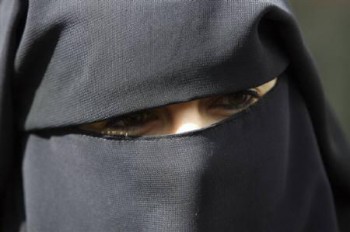
PARIS (Reuters) - France's National Assembly should pass a resolution denouncing full Muslim face veils and then vote the strictest law possible to ban women from wearing them, a parliamentary commission proposed on Tuesday.
Presenting conclusions after six months of hearings, the panel also suggested barring foreign women from obtaining French visas or citizenship if they insisted on veiling their faces.
But it could not agree whether to opt for an absolute ban on the veils, called burqas or niqabs, or one restricted to public buildings because some members thought a total ban would be unconstitutional.
President Nicolas Sarkozy, who last year declared full veils unwelcome in France, said on a visit to a cemetery for Muslim soldiers that he would not allow Muslims to be stigmatized by any measures taken to ensure equality between men and women.
"The full veil represents in an extraordinary way everything that France spontaneously rejects," National Assembly President Bernard Accoyer said as the commission delivered its report.
"It's a symbol of the subjugation of women and the banner of extremist fundamentalism."
While not defending the all-enclosing veils, leaders of the five-million-strong Muslim minority say a legal ban would be excessive since only 1,900 women are said to wear them.
Jamel Debbouze, a highly popular Parisian-born comedian of Moroccan background, condemned the plan as xenophobic. "People who go down that path are racists," he told French radio.
The veil issue has become linked with another controversial debate about national identity that the government launched only months before regional elections in March. "This debate is sterile and dangerous electioneering," Debbouze said.
Supporters of a ban say civil servants need a law to allow them to turn away fully veiled women who cannot be identified when they seek municipal services such as medical care, child support or public transport.
Discussing the Veil Ban
On France 24 and BBC World TV

Being an English-speaking religion editor in Paris these days means being invited to try to explain the story to foreign audiences. Here are videos from BBC World Television today, after a parliamentary report on face veils was issued, and from a France24 television debate broadcast last Thursday but only just posted on its website yesterday. Apart from explaining my analysis of the issue, both show why I didn’t go into television!
Science and Islam in the 21st Century
"Muslim" does not automatically mean terrorist.

Two years after the twin towers fell, a small and disparate movement began that wanted to show the English-speaking world that "Muslim" does not automatically mean terrorist.
I was among those who wanted to balance the relentless images of news footage on our TV screens in which men, women and children from Islamic communities are regularly portrayed next to shots of war, violence and terrorism. Some Muslims are in prison for plotting to blow up airliners, and more will follow them. But many more will never see the inside of a police cell and, like all communities, they live both ordinary and extraordinary lives.
Recent initiatives from the arts and sciences have attempted to document some of those lives. The Festival of Muslim Cultures, a year-long extravaganza of events across the UK, was aimed at showing how creative innovation is central to the British Islamic landscape. In 2006 the Museum of Science & Industry in Manchester opened its doors to 1001 Inventions, an exhibition showcasing leading-edge scientific discoveries from the Middle Ages. This exhibition has since toured the world and will open at the Science Museum in London next week. The BBC created a landmark TV and radio series called Science and Islam, written and presented by Professor Jim Al-Khalili
Attack on CIA:
'This was a victory for al-Qaida'
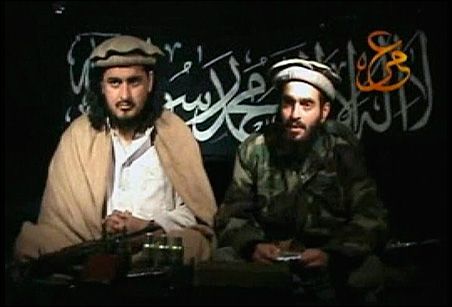
When a suicide bomber killed seven CIA employees operating from a secret base in Afghanistan, the news gave Americans a rare look into the spy agency's expanded role on the front lines against al-Qaida and its allies. It also prompted fresh debate over the military use of an agency that operates in shadows and secrecy.
Afsheen John Radsan was assistant general counsel for the CIA during the tense years after Sept. 11, 2001. Now he directs the National Security Forum at William Mitchell College of Law in St. Paul. He took time to talk to MinnPost about the aftermath of the Dec. 30 bombing in Afghanistan.
MP: Is this expanded use of the CIA sustainable? In other words, can that agency ramp up to face new terrorist fronts as they emerge in Yemen, Somalia and elsewhere?
AJR: The CIA's role is crucial in countering terrorist groups, in going after al-Qaida. We would not be able to do this without a strong and effective CIA. . . . I agree that the CIA can't do everything. And it can't be everywhere. But what other agency would be able to carry out these functions?
This is not the first time that we've ramped up the CIA's activities during a war. During the Vietnam War, we had many CIA officers in Indochina.
MP: Maybe a better question is whether it should ramp up. The incident triggered fresh debate about empowering the CIA to play a larger role in military operations.
AJR: More and more, some people will say that what the CIA is doing in Afghanistan and other places is closer to military activity. And then they conclude it should be folded into the Pentagon. That's a fair debate. . . . When you don't want to send in the Marines but you think the diplomats are insufficient, you need something in between. That's been the CIA.
The America public should understand that the CIA as a collective, did not want to do all of these things after 9/11. There were people who said we should stick to our traditional intelligence-gathering function. . . . But after 9/11, the president looked around the room in his cabinet meetings at Camp David. He wanted people inside Afghanistan. And of all of the agencies, it was the CIA that could put people into place far sooner.
Europe Talks with Faiths It Once Thought Would Fade
Europe, the most secularized region on Earth, has decided to launch a regular dialogue with the organized religions that many on the continent once thought would wither away.

In a little-noticed article of its Lisbon Treaty, which went into effect on December 1, the European Union agreed to hold an "open, transparent and regular dialogue" with churches, religious associations and secular groups.
What this dialogue will look like is not yet clear, but the fact the European Union has agreed to it reflects the evolving role of religion in a region where it is often overlooked.
"Something has happened in the religious culture of Europe," said Joseph Maila, a French political scientist whose new job -- head of the religious affairs section of the French Foreign Ministry's Policy Planning Office -- is another sign of change.
"Countries that were heading for a stricter separation of church and state, as in France, are now more open to religion while countries where the state was not completely separate from religion are introducing more separation," he told Reuters.
To illustrate this change, Maila recalled how in 1999 France opposed any mention of Europe's Christian roots in an EU Charter of Fundamental Rights agreed the next year. The final text spoke of Europe's "cultural, religious and humanist inheritance."
The issue returned in negotiations for the EU's ill-fated constitution, when then Pope John Paul and several traditionally Catholic states tried again to get a reference to Christianity.
"France took a very strong position at the time against countries such as Italy, Poland and Ireland," said Maila. "They succeeded in blocking this, but now it's 10 years later and look how things have changed."
BEFORE AND AFTER 9/11
The change stems from a specific date -- Sept 11, 2001 -- but it took a while before Europe grasped that those attacks in New York and Washington shattered a widespread belief that faith was a private matter due to wither away in modern societies.
Does Fort Hood Have a Meaning?
Thoughts on whether the Ford Hood shootings should be considered a terrorist act

I appreciate (and share) John Judis's concern that calling the Fort Hood shootings terrorism, "arouses fears of a Jihadist conspiracy in our midst that may not exist, or that may be containable by the same means we are presently using."
But that's ultimately why I think it's not a good idea to shy away from using the word terrorism. I agree that the definitive piece of evidence that Nidal Hassan was, in fact, committing a terrorist act would be his own admission that he was doing so (and that may yet be forthcoming now that he's reportedly awake and able to talk). But, with so much other evidence out there about Hassan's increasingly radical political and religious views, I think it's looking increasingly unlikely that his actions weren't motivated, at least in part, by those beliefs. After all, he didn't shoot up a 7-11; he went on a shooting rampage on an Army base. The symbolic statement made by killing soldiers on an American millitary base is certainly consistent with other statements (both oral and written) Hassan had made in recent months about the injustice of America's wars and the justice of suicide bombings and what not. Given that consistency, it doesn't seem like much of a stretch to conclude these things are related. Just like it wasn't a leap for the press to immediately (and correctly) conclude that Scott Hoeder killed George Tiller because Hoeder, based on his previous oral and written statements, held extremist views on abortion.
John thinks "we need to know a little more than we do." And that's a sentiment I would usually share. But this time, the debate over Fort Hood is moving so quickly and some of the loudest voices involved in that debate are saying such hyperbolic and vile things that I think to deny what common sense suggests is to give these voices the upper hand in the debate.
I, for one, don't think Fort Hood suggests there's Jihadist conspiracy in our midst or that, short of maybe getting the Army to do a better job of evaluating the mental health of its soldiers, there's much that should--or even can--be done to prevent other incidents like this. (That is, assuming Hassan acted alone in the belief he was acting on behalf of some larger movement or ideology, which is what, barring any evidence of links to Al Qaeda or other terrorist groups, appears to be the most likely case.) And I think it's important that people start making these points, in order to push back against the unfair, irresponsible, and ultimately counterproductive things some people are saying should be done in the wake of the Fort Hood shootings. But if, in making these points, you continue to deny what, to most fair-minded people, would seem to be an increasingly likely fact, then those fair-minded people are going to discount everything else you say; and Malkin et al will sound more convincing than they are, if only because they're acknowledging what's becoming fairly apparent.
Tariq Ramadan's Project
Tariq Ramadan's book "Radical Reform: Islamic Ethics and Liberation" is neither radical nor particularly reformist. But it will be eagerly read from Kuala Lumpur to Keighley.

Tariq Ramadan's audiences are famously diverse. Those who hang on the Swiss Islamic reformer's every word include college-going Muslim men and women; policymakers and think-tankers in cities such as London and Washington, even the very authoritarian governments in the middle east from where Ramadan is mostly banned.
Each of these constituencies will be delving into Radical Reform: Islamic Ethics and Liberation,a long awaited volume and Ramadan's first scholarly-focused book since his move to St Antony's College, Oxford University. It is ambitious and broad in what it wants to achieve. At times it is highly accessible and at other times technical.
Ramadan's tone is much the same as in his previous work. He takes the role of teacher and critic; the reader is cast in the role of student and learner.
The book is divided into two parts. The first part takes the reader through the history of reform in Islam's first few centuries. Reform is often seen as a post-colonial project. But the early chapters in his book demonstrate that calls for change within Islam have a much older history. In the later chapters Ramadan sets out his own thinking on how an Islamic ethics could apply to modern innovation.
He recognises that the majority of Islamic scholars have little or no training in science or in areas such as bioethics or environmental affairs. He wants them to brush up on advances in modern biology. And he wants them to knock on the doors of ethics committees and make their voices heard alongside other faiths in public debates on science and the environment. He is particularly angry that the states and citizens of Islamic countries have done so little on climate change. Until relatively recently, for example, Saudi Arabia and Kuwait were solidly behind the United States in questioning a human fingerprint in global warming.
More surprisingly, however, Ramadan comes down hard on the global Islamic finance industry. This is unexpected because Islamic finance is widely regarded as a rare successful example of the application of Islamic innovation to modern life. Ramadan, however, thinks the industry is not radical enough: he challenges its architects to be bolder and think about whether Islamic ethics in finance has a role, not just to provide interest-free home loans, but in shaping the world's financial architecture.
Islam's Reformation and Obama's Speech

There has been no dearth of advice, solicited and unsolicited, to U.S. President Barack Obama in the run-up to his eagerly anticipated address to the Muslim world in Cairo this week.
Pundits have second-guessed and advised, suggesting what he could or should say, and even where he should say it. Not surprisingly, many would-be counselors focus on either the Palestinian question or Iran and its nuclear ambitions. Others harp on authoritarian leaders and the continuing democracy deficit in most states with predominantly Muslim populations.
These are all important questions, of course. Obama has already indicated that he will address them, even while cautioning that no instant solutions are possible.
But to say that these immediate political issues -- and America's policy responses to them -- are the topics of greatest importance to the wide and various Muslim world is ultimately to slight that world and the challenges it faces. Worse, it inadvertently endorses the view of those Muslim extremists who would like to reduce the Muslim world to a monolithic bloc of thought, culture, and sensibility, a global community obsessed with the same small set of grievances.
’Civilizational Richness'
Fortunately, Obama, whose father was a Muslim and who spent part of his childhood in Indonesia, knows that Muslim realities are far more complex. With more than 1 billion adherents and scores of internal divisions, the House of Islam is not just a religion but the core component of a civilization -- of many civilizations, to be precise.
Whether Persian, Turkish, South Asian, or other, these civilizations have sustained and helped to shape varieties of Islam, each strongly inflected by ethnic, national, and regional traditions. While such civilizational diversity has often led to conflicts within the wider Islamic world -- think of the ongoing tensions between Persians and Arabs -- it is also a crucial factor behind Islam's intellectual, artistic, and even theological richness.
How Does Afghanistan Treat Women?
Here's what I saw.
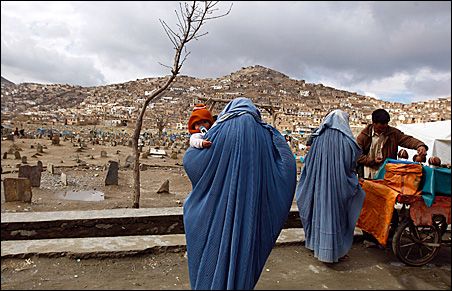
In western minds, the blue burqa stands as an icon for the oppression of Afghanistan's women because the Taliban forced women to wear the full body and face cover while they were in public.
But the misery of millions of Afghan women goes far beyond the confines of the burqa, and it predates the Taliban rule a decade ago.
Women and their supporters worldwide took heart after the Taliban were toppled in 2001 and the new government in Kabul declared a high priority on improving women's lives and rights. Girls went to school; their mothers, to work — most of them trading the burqa for the more traditional scarf draped loosely around their faces.
Now comes news that Afghanistan's Parliament has passed a law forcing Taliban-style restrictions on women in Afghanistan's Shiite minority.
The law reportedly would restrict when and how women could leave their homes. In the case of a divorce, it would grant child custody to the father. And it would force healthy women to have regular sex with their husbands — a provision denounced around the world as a sanction of marital rape.
When I heard the news, I couldn't help but personalize it, remembering faces I had seen while reporting stories in that country in 2004.
There were the tiny faces of baby girls in a hospital ward for malnourished children. Flies swarmed on the listless body of one six-month old girl who weighed just eight and a half pounds. The mother at her bedside was as gaunt as she was. Doctors explained why: When food was scarce it went first to the men and boys in a family, and the women all too often were too malnourished to produce milk for their babies.
Sudden Notoriety
Mosque in Minneapolis draws scrutiny from U.S. Senate, FBI and international media.

A news crew from Dubai arrived at the Abubakar As-Saddique Mosque as I was leaving on Tuesday. Al Jazeera, the Arabic news network, has booked an interview for next week, coming on the heels of reporters from dozens of other news organizations.
The reporters were welcomed, but not the sudden notoriety that drew them to the Minneapolis mosque.
Some Somalis say the mosque invited scrutiny and suspicion by helping to radicalize young Somali men for jihad in their homeland. Others say the mosque is a wrongly accused victim of the politics of war in East Africa.
FBI investigators are saying nothing publicly about the accusations that have flown from the streets of Minneapolis to Capitol Hill and around the world.
After listening to the arguments all week, I don't know what to say. So I'll simply tell you what I heard.
On this much, everyone seems to agree: As many as 20 young Somali men have gone missing from Twin Cities homes during the past few months, some have called relatives to say they are in Somalia, one blew himself up in an apparent suicide bombing and the FBI is investigating alleged connections with Al-Shabaab, which the United States calls a terrorist organization.
THE ACCUSATIONS
Osman Ahmed turned rumor into sworn testimony (PDF) at a U.S. Senate hearing this month when he accused Abubakar's leaders of brainwashing the men and trying to scare their families from talking about their disappearance. Ahmed's nephew, Burhan Hassan, is one of the missing. The uncle was testifying on behalf of several families before the U. S. Senate Committee on Homeland Security and Government Affairs.
Dispute over Muslim Women's Headscarves
Bill in Legislature
Muslim women dressed in flowing headscarves have become a familiar image in Minnesota's human landscape even while debate flared elsewhere over head garb worn for the sake of Islam.
Now a bill before the Minnesota Legislature shows that this state isn't immune to the global controversy.
The bill makes no mention of any religion. Instead, it would require that the full head and face be shown on driver's license photos and state ID cards except for headwear needed in connection with medical treatments or deformities.
It's a simple matter of public safety, the bill's chief author Rep. Steve Gottwalt, R-St. Cloud, told the St. Cloud Times. Law enforcement officials need unobstructed images in order to identify people, and it isn't safe or fair to allow some people to partially cover their heads.
But many Minnesota Muslims feel threatened.
"I'm shocked," said Fartun Ahmed, a student at Century College in White Bear Lake. "I respect the government and its rules and regulations . . . But I am not willing to take off my headscarf."
The safety argument makes no sense to leaders of the United Somali Movement, a group of graduate students and young professionals in the Twin Cities. If anything, photos of bareheaded women could confuse authorities because their images wouldn't look like the same women we see on the streets every day, they said.
"There is no need to see the hair or the head because the face is enough to recognize somebody," said Suban Khalif, 23, a Somalia-born student at the University of Minnesota's College of Design.
"You recognize the nose, the eyes, the mouth and that's enough," said Khalif who wears her hijab every day while away from home.
Whether or not it was intended, the real effect of the bill would be to curb religious freedom, she said, and to marginalize tens of thousands of minorities in Minnesota.
"This legislation will impact the lives of thousands of Muslim women in Minnesota from diverse ethnic and social backgrounds who cover their hair as an expression of faith," she said.
A headwear ban potentially would reach beyond Muslims to affect Catholics, Jews and also Sikhs who consider their turbans to be mandatory, said Taneeza Islam, civil rights director for the Minnesota chapter of the Council on American-Islamic Relations (CAIR-MN).
"We don't want this to turn into a Muslim issue," she said. "We are saying this is an issue that touches all faiths in which believers wear something on their heads."
As for the safety concerns, she noted that the State Department allows religious head coverings to be worn in U.S. passport photos and the Transportation Security Administration allows them to stay in place at airport checkpoints.
Minnesota Muslims plan to air their arguments against the bill on March 10, when they are scheduled to meet at the State Capitol as part of a national movement called "Muslim Day on the Hill."
STARTED WITH POLICE
Obama's Ban on Torture
Minnesotans played a role
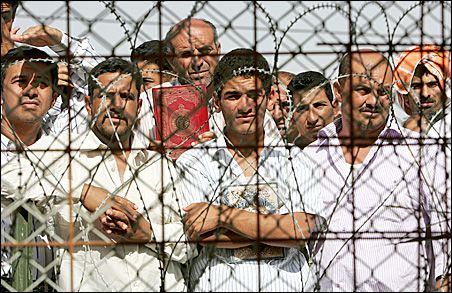
On June 24, 2007, Douglas Johnson from Minneapolis sat at a dinner in Washington, D.C.'s, historic Tabard Inn, brainstorming strategies for stopping coercive interrogation tactics the White House had authorized in the name of fighting terror.
No point in mincing words. They were talking about torture.
On Jan. 22 this year, President Obama sat a few blocks from the scene of that dinner and signed an executive order banning the interrogation tactics at issue.
Many Americans know the arc of the events leading up to Obama's order. But few know the behind-the-scenes work it took to build support that would help the new president end a practice which had bitterly divided the nation.
The idea of an executive order on torture first surfaced in the upstairs dining room of the Tabard Inn where Johnson and some 15 others had gathered amid antique furnishings that called to mind America's traditions.
Eventually, the idea was to win support from Republicans and Democrats, former defense secretaries, CIA officers and secretaries of state as well as human rights advocates, legal scholars and clergy members from many denominations and faiths.
Looking back at the beginning Johnson — who is the executive director of the Center for Victims of Torture — doesn't take credit for the idea. It started, he said, with Marc Grossman who had been Undersecretary of State for Political Affairs during the first term of former President George W. Bush.
Revelations of abuse
Bush had declared in 2002 that fighters for al-Qaeda and the Taliban were not protected under the Geneva conventions' prohibitions against torturing prisoners of war and treating them in cruel, humiliating and degrading ways. Even so, Bush said, detainees would be treated in a manner consistent with the principles of the Geneva conventions.
But evidence to the contrary mounted through revelations of abuses at Abu Ghraib prison in Iraq and the U.S. detention facility at Guantanamo Bay. Then, in 2007, Bush acknowledged that the CIA had maintained secret prisons overseas. Reports surfaced that detainees in those lockups had been subjected to waterboarding (a near-drowning experience) and other tactics that shocked many Americans.
In the Face of Tragedy, Moral and Consequential Reasoning
From the World Trade Center to Mumbai
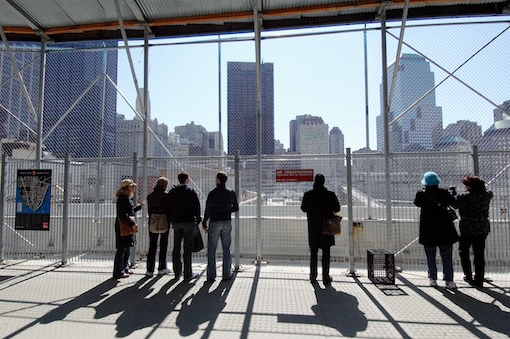
When nearly 200 people in India were killed in terrorist attacks late last month, the carnage received saturation media coverage around the globe. When nearly 600 people in Zimbabwe died in a cholera outbreak a week ago, the international response was far more muted.
The Mumbai attacks have raised talk of war between India and Pakistan and triggered a flurry of diplomatic responses. Nothing remotely on the same scale has occurred over the Zimbabwe cholera outbreak, even though many more people have died as a result of the disease compared with the toll in the Mumbai rampage.
Comparing tragedies is problematic, because human lives cannot be reduced to arithmetic. Yet it is unquestionably true that nations tend to focus far more time, money and attention on tragedies caused by human actions than on the tragedies that cause the greatest amount of human suffering or take the greatest toll in terms of lives.
Is this because terrorism poses a greater threat to us than epidemics? Not likely. If you were to make a list of the world's top 10 killers, suicide bombers would be nowhere on the list. In recent years, a large number of psychological experiments have found that when confronted by tragedy, people fall back on certain mental rules of thumb, or heuristics, to guide their moral reasoning. When a tragedy occurs, we instantly ask who or what caused it. When we find a human hand behind the tragedy -- such as terrorists, in the case of the Mumbai attacks -- something clicks in our minds that makes the tragedy seem worse than if it had been caused by an act of nature, disease or even human apathy.
"When a bad event occurs, this automatically triggers us to seek out whoever is causally responsible," said Fiery Cushman, a cognitive psychologist with Harvard University's interdisciplinary Mind, Brain and Behavior Initiative. "When we assign causal responsibility, it is like, 'Case closed, the detectives can go home.' "
Tragedies, in other words, cause individuals and nations to behave a little like the detectives who populate television murder mystery shows: We spend nearly all our time on the victims of killers and rapists and very little on the victims of car accidents and smoking-related lung cancer. "We think harms of actions are much worse than harms of omission," said Jonathan Baron, a psychologist at the University of Pennsylvania. "We want to punish those who act and cause harm much more than those who do nothing and cause harm. We have more sympathy for the victims of acts rather than the victims of omission. If you ask how much should victims be compensated, [we feel] victims harmed through actions deserve higher compensation."
The point of this research is not to play down one tragedy or inflate another. Rather, the psychologists said, studying how we reach moral conclusions can help us understand how we respond to human suffering and alert us to pitfalls in our thinking.
How Terrorist Organizations Work Like Clubs
Why members sacrifice themselves
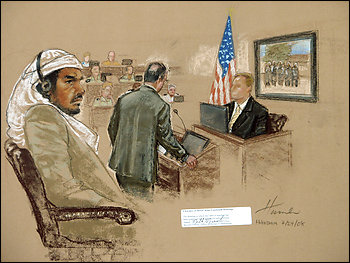
ays before the Sept. 11, 2001, attacks, Osama bin Laden left his compound in Kandahar in Afghanistan and headed into the mountains. His driver, Salim Ahmed Hamdan, traveled with him. As U.S. and Northern Alliance forces stood poised to capture Kandahar a few months later, bin Laden told Hamdan to evacuate his family. Hamdan's wife was eight months pregnant at the time, and Hamdan drove her and his infant daughter to the Pakistani border.
It was on his way back that Hamdan was captured by Northern Alliance warlords, said Jonathan Mahler, an author who has pieced together the events in his upcoming book, "The Challenge: Hamdan v. Rumsfeld and the Fight Over Presidential Power." Hamdan's captors found two surface-to-air missiles in the trunk of his car. They turned him over to the Americans and pocketed a bounty of $5,000.
Hamdan recently became the first detainee at Guantanamo Bay to face trial. Government and defense lawyers are arguing about Hamdan's significance in al-Qaeda and the extent of his knowledge of the group's activities, but it is the facts the lawyers agree on that raise an interesting question for anyone who studies terrorist groups.
Hamdan joined bin Laden after his plan to go to join a jihad in Tajikistan hit a snag. For years, he ferried al-Qaeda's leader to camps and news conferences and was often bored, according to the testimony of his interrogators. Mahler, who interviewed Hamdan's family and attorneys, his FBI interrogators, and the man who recruited Hamdan for jihad, said bin Laden's driver was not particularly religious -- for a poor man from Yemen, jihad was a career move as much as a religious quest.
On the Road to Tarsus
As the Year of St Paul gets under way, focus is shifting to the place of his birth, now in modern secular Turkey, where hopes are high that the city's only Christian church could be reinstated for permanent worship.
"I am a Jew from Tarsus, a citizen of no ordinary city," St Paul says in the Acts of the Apostles. Tarsus was an important city in ancient times but, 2,000 years after Paul’s birth there, it is much like many other cities on Turkey’s Mediterranean coast.
But it could be the scene of an unusual improvement in Turkish Church-State relations if a request by the Roman Catholic Church is accepted. Pope Benedict’s Year of St Paul began on 29 June, the Feast of Sts Peter and Paul. During that time, the Catholic Church in Turkey expects the normal trickle of pilgrims visiting Tarsus to swell to hundreds of thousands.
It launched its Pauline Year commemorations on 21 June in Tarsus and plans to follow up with symposia, pilgrimages and other events there, in Antakya (Antioch) and in other cities in the region during the year.
The only problem is that there is no fulltime church in Tarsus to receive all these pilgrims. There is a former church, a simple
medieval building with whitewashed interior walls and frescos on the ceiling. But the Turkish state, a staunchly secularist enclave in a society that is 99 per cent Muslim, confiscated it in 1943 for use by the army. It was later turned into a museum.
Christians are allowed to hold services in the museum, but they must request permission and pay the entry fee. Priests have to bring a cross and other religious objects and remove them as soon as Mass is over. If more chairs are needed, the priest has to rent them and have them delivered and removed.
"We have asked that the church be entrusted to us, for the use of all Christians," Bishop Luigi Padovese, the Italian Franciscan who is apostolic vicar of Anatolia and head of the Turkish Catholic Bishops’ Conference, told The Tablet. "We could look after the church, but all Christians could and should celebrate their services there. It couldn’t be any other way.
We’re doing this in the name of St Paul, who is an apostle of dialogue, not separation."
That sounds simple, but nothing about religion is simple in Turkey. Set on a firmly secularist path by Mustafa Kemal Atatürk in the 1920s, Turkey keeps all faiths – including Islam – under tight control. Minority religions have no real legal status, so the state can confiscate their property or curtail their activities.
The Greek Orthodox Church, for example, saw its only seminary, situated on the Mamara Sea island of Halki, or Heybeliada as it is known in Turkish, closed in 1971. Since then it has been pressing to have it reopened, but undoing earlier decisions would mean weakening the policy of secularism. In the Orthodox case, officials say they cannot give in because that would encourage fundamentalist Muslims to press their demands.
Vatican Thanks Muslims for Returning God to Europe
PARIS (Reuters) - A senior Vatican cardinal has thanked Muslims for bringing God back into the public sphere in Europe and said believers of different faiths had no option but to engage in interreligious dialogue.
Cardinal Jean-Louis Tauran, head of the Catholic Church's department for interfaith contacts, said religion was now talked and written about more than ever before in today's Europe.
"It's thanks to the Muslims," he said in a speech printed in Friday's L'Osservatore Romano, the official daily of the Vatican. "Muslims, having become a significant minority in Europe, were the ones who demanded space for God in society."
Vatican officials have long bemoaned the secularisation of Europe, where church attendance has dwindled dramatically in recent decades, and urged a return to its historically Christian roots. But Tauran said no society had only one faith.
"We live in multicultural and multireligious societies, that's obvious," he told a meeting of Catholic theologians in Naples. "There is no civilisation that is religiously pure."
Tauran's positive speech on interfaith dialogue came after a remark by Pope Benedict prompted media speculation that the Vatican was losing interest in it. Some Jewish leaders reacted with expressions of concern and the Vatican denied any change.
The "return of God" is clearly seen in Tauran's native France, where Europe's largest Muslim minority has brought faith questions such as women's headscarves into the political debate after decades when they were considered strictly private issues.
"GOD IS AT WORK IN ALL"
Tauran said religions were "condemned to dialogue," a practice he called "the search for understanding between two subjects, with the help of reason, in view of a common interpretation of their agreement and disagreement."
Is This Man a Terrorist?
His Minneapolis lawyers focus on another question.
What if Ahcene Zemiri truly is a terrorist?
The question is chilling. But it hasn't deterred a team of Minneapolis attorneys from donating hundreds of hours and making four trips at their own expense to Guantanamo Bay, Cuba, to represent the Algerian detainee.
They are riveted on a different question: Does the U.S. Constitution call for Zemiri and more than 300 other detainees at the U.S. facility on Guantanamo to get their day in a proper court? The Minneapolis attorneys say it does.
"Vent the charges then let the chips fall where they may," said John Lundquist, one of Zemiri's attorneys.
While the world watches, intense debate over the detainees' rights has thrust the United States into a constitutional showdown where courts, Congress and the White House are vying to shape new legal ground for the age of terrorism.
Now, the U.S. Supreme Court is poised to weigh in on the debate for the third time. It is scheduled to hear arguments Dec. 5 in cases testing whether foreigners locked up at Guantanamo have a right to challenge their detention in U.S. federal courts. A decision in the two combined cases — Boumediene vs. Bush and Al-Odah vs. United States — would come before the end of June.
"This is the defining struggle of our time internationally," said James Dorsey, another Minneapolis attorney working on Zemiri's case. "We've got to determine how we are going to fight this war on terror and what we do when we pick up these suspicious people. There's got to be a way other than deciding on our own that we can keep them forever."
Telephone death threat
The drive to find that other way started in Minneapolis after President Bush assumed in 2001 that federal court jurisdiction would not reach offshore to Guantanamo. Detainees held there would not be prisoners of war, the administration said. But they also would not be ordinary criminals who would have routine access to the full measure of due process provided by the Constitution.
Science of Hope
Across a Fridley street—and a religious divide—a Catholic-school biology teacher and a Muslim-school science instructor reach out to each other, planting seeds of cultural understanding in the process.

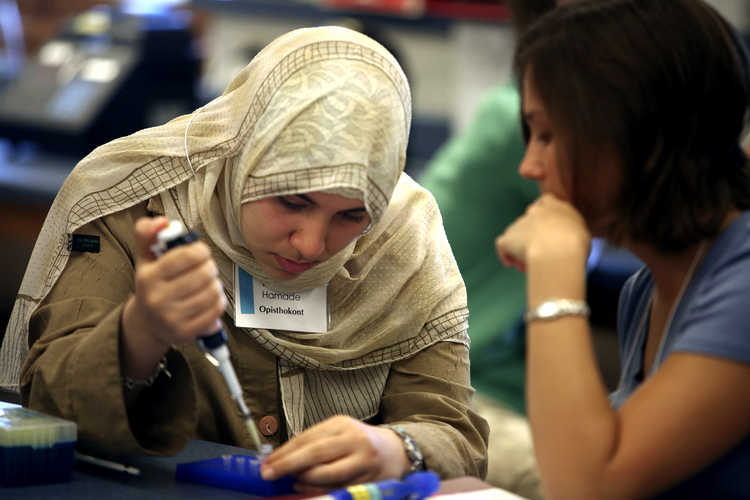
Two-lane Gardena Avenue and a stand of oak trees are all that physically separate the Al-Amal Muslim School and Totino–Grace Catholic School in Fridley. But in the science classrooms, the schools are divided by deep tenets of faith and centuries of East–West tradition.
Totino–Grace’s biology teacher, Marcia Wiger, opens a lesson on evolution by reading from Genesis and then explaining Charles Darwin’s landmark theory. She sees no conflict between the two: "We look at religion as religion and science as science."
Across Gardena, though, evolution stops before it reaches humans. "We cannot believe that man came from apes," said Al-Amal’s science teacher, Hala Bazzi. "Allah gave man full conscience and intelligence and knowledge that made him superior."
Still, science has served as a bridge for Wiger and Bazzi, who started out as collaborators and along the way became friends.
At a time when tension between the Muslim world and the West is dangerously high and news is dominated by violence and body counts, the rarely told story is the quiet diplomacy conducted close to home as Muslims and Christians seek to understand one another.
Young Imam Serves as Islam's Face to Community
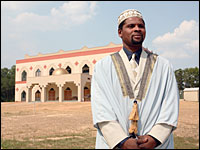
The day is sunny and hot, the hamburgers are on the grill, the kids are jumping on the moon bounce and about 400 people are milling around the brand new Dar Al Noor mosque in Manassas, Va.
Neighbors and members of the congregation are here — even Virginia Gov. Tim Kaine is coming. James Dade, a non-Muslim who lives nearby, is manning the grill. As he hands a burger to a Muslim friend, he turns and gives this assessment of his new neighbors. "They're very friendly, very helpful, very community-oriented," he says, noting that his best friend attends Dar Al Noor. "If there were more Christians like my friend, we wouldn't have any problems in this world."
It is a happy appraisal on this happy Sunday afternoon in July — the ribbon-cutting ceremony for the new mosque. Sheikh Rashid Lamptey, the new imam, can barely contain his excitement as he waits for the governor to arrive. Lamptey is serving a growing mosque in one of America's fastest-rising religions — with more than 2 million faithful to date. The imam plays a dual role: He's the face of Islam to his congregation and to Americans who might be wary of Muslims.
"Look!" says Lamptey, who is slim with dark skin, in contrast to his white robes and a perpetual grin on his face. "Everyone is here: the politicians, the security men, the people who protect us. We have their trust, they have our trust. This is what we want to establish — the trust, so we can work together towards a more peaceful community."
A few moments later, the imam introduces Kaine. The governor greets the crowd in Arabic, eliciting applause from his Muslim onlookers, then speaks about America as the bastion of religious
listen now or download All Things Considered
Poll: U.S. Muslims 'Largely Assimilated, Happy'
Minnesotans reflect national trend of greater satisfaction than counterparts worldwide, poll says.
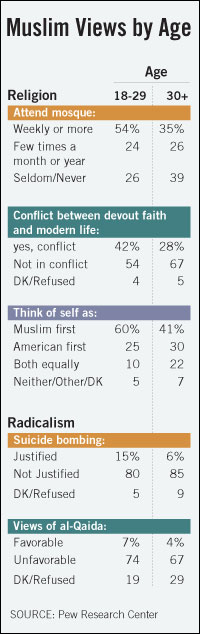
Mukhtar Thakur was not surprised Tuesday by a major new poll finding that American Muslims are more likely than their European counterparts to reject Islamic extremism and express satisfaction with their lives.
"The United States is truly much more of a melting pot than Europe can ever be," said Thakur, a civil engineer who has lived in London and now works for the Minnesota Department of Transportation.
In one of the most comprehensive surveys of Muslim Americans, the Pew Research Center concluded that they are "largely assimilated, happy with their lives and moderate with respect to many of the issues that have divided Muslims and Westerners around the world."
About half of the Muslims surveyed had attended college, for example, and their annual incomes were fairly comparable with those of the overall American public, Pew reported.
That is not to say Muslim Americans are blissful. They overwhelmingly oppose the war in Iraq, and they were far more disapproving than other Americans of President Bush's job performance. More than half of those polled said anti-terrorism efforts single out Muslims for scrutiny.
A quarter of Muslim adults younger than 30 and 13 percent overall said suicide bombing could be justified at least in rare circumstances. On that score and other contentious issues, American Muslims took more moderate views than their counterparts around the world. For example, nearly 80 percent in the United States said suicide bombing of civilian targets never can be justified as a tactic to defend Islam. In a Pew poll last year, 64 percent of Muslims in France said "never" to the bombing. In Egypt it was 45 percent.
Minnesotans are reflected
In Minnesota, despite flareups over Muslims refusing to scan pork at supermarket checkouts and haul alcohol in taxis, Thakur and other Muslims reflect the poll's findings.
"In Islam during the time of the prophet there was no suicide bombing ... it can never be justified," said Hared Mah, a 25-year-old from Somalia now studying economics at the University of Minnesota.
American Muslims have grown more cautious since Mah arrived in Minnesota in 2001, he said. There's more fear of warrantless wiretaps and being accused of participating in terrorist plots. But that tended not to be reflected in sympathy with violence. Five percent of American Muslims in the poll expressed favorable views of Al-Qaida.
"Al Qaida is a bunch of crazy people. ... It does not serve the interests of Muslims," Mah said.
Even in these times of tension between the West and some parts of the Muslim world, two-thirds of the American Muslims polled said there is no conflict between devout faith and modern life.
Co-existence is 'an option'
"There is a misconception that it's hard to be cool and Muslim," said Ayman Balshe, 25, a Palestinian-American dentist who is doing post-graduate studies at Mayo Clinic in Rochester. "My generation feels it takes a spiritual push in order to thrive ... and we are free to be spiritual in our daily activities."
While Balshe's family was displaced by the Palestinian-Israeli conflict, he agreed with 61 percent of the American Muslims polled that "a way can be found for Israel to exist so that the rights and needs of the Palestinian people can be taken care of." By stark contrast, 90 percent of the Muslims in Morocco and 85 percent in Jordan disagreed with the statement in a separate Pew poll.
The lesson of the immigrant experience in the United States is that "co-existence is definitely an option," Balshe said.
Pew Study Sees Muslim Americans Assimilating
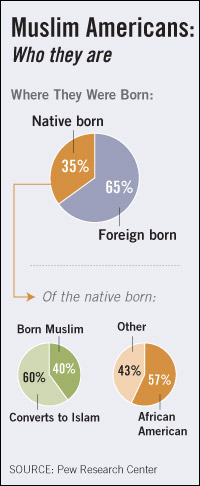
Muslim Americans have integrated into society far better than European Muslims, but there appear to be significant pockets of disaffection — especially among the young and religious. That is the conclusion of an exhaustive survey of Muslim Americans released Tuesday by the Pew Research Center.
More than 1,000 Muslims spoke at length about their American experience, and the results were mostly "good news," says Andrew Kohut, president of the Pew Research Center.
"The Muslim American population is largely middle class, mostly mainstream, assimilated, happy with their lives and moderate on many of the issues that have divided Muslims and Westerners around the world," Kohut says.
But the study found some surprising signs of discontent. More than half of Muslim Americans believe that the U.S. government singles Muslims out for extra surveillance. More than half of Muslims overall hold a very unfavorable view of al-Qaida — but only 36 percent of African-American Muslims do. Only one in four Muslims believes that Arab men conducted the terrorist attacks of Sept. 11, 2001. And most disturbing was what Kohut called "pockets of sympathy for extremism."
"Younger Muslims are both more religiously observant, more self-identifying as Muslims than older Muslims, and they're more likely to say that suicide bombing in defense of Islam can be, at least some times, justified," Kohut says.
One-quarter of Muslims under age 30 said suicide bombing is legitimate on some occasions. That compares with 6 percent of older Muslims.
listen now or download All Things Considered
- listen… []
The Lesson in the Fate of Islamic Science
Creationists sound very much like a 12th-century Muslim who cried 'heresy' and set back a civilization 500 years.

Former Dutch parliamentarian Ayaan Hirsi Ali might be controversial, but a statement she made in a recent Vancouver Sun profile was anything but.
"Judaism and Christianity have gone through a long history of enlightenment and reflection," she said, "but the Islam we see today tends toward the seventh century." Now, this is hardly an original sentiment, as we regularly hear that Islam is an immature, backward religion, desperately in need of reformation or enlightenment.
And there is much evidence to support this contention, from the Muslim Brotherhood's 1981 call to end scientific education, to the proliferation of madrassas that emphasize only one R -- religion -- thereby leaving their students illiterate and innumerate, to the entire Islamic world's rejection of science and loving embrace of creationism and intelligent design.
Despite this evidence, I want to ask some disquieting questions: What if Islam is not 1,000 years behind the West, but 1,000 years ahead? What if it took us until the turn of the third millennium to arrive at the place Islam occupied at the turn of the second?
There is also much evidence for this proposition. From roughly AD 700-1200, while the European world was feeling its way through the Dark Ages, the Islamic world was in the midst of a Golden Age, a period of scientific and cultural innovation not seen since the days of the ancient Greeks.
In fact, the Greek philosophical and scientific texts that would later prove so influential to Christianity and the West were preserved and translated by Muslims. When books were few and far between in the West, the Muslims amassed a library of some 500,000 volumes,
Two Views of the Same News Find Opposite Biases
You could be forgiven for thinking the television images in the experiment were from 2006. They were really from 1982: Israeli forces were clashing with Arab militants in Lebanon. The world was watching, charges were flying, and the air was thick with grievance, hurt and outrage.
There was only one thing on which pro-Israeli and pro-Arab audiences agreed. Both were certain that media coverage in the United States was hopelessly biased in favor of the other side.
The endlessly recursive conflict in the Middle East provides any number of instructive morals about human nature, but it also offers a psychological window into the world of partisan behavior. Israel's 1982 war in Lebanon sparked some of the earliest experiments into why people reach dramatically different conclusions about the same events.
The results say a lot about partisan behavior in general -- why Republicans and Democrats love to hate each other, for example, or why Coke and Pepsi fans clash. Sadly, the results also say a lot about the newest conflicts between Israel and its enemies in Lebanon and the Palestinian territories, and why news organizations are being besieged with angry complaints from both sides.
Partisans, it turns out, don't just arrive at different conclusions; they see entirely different worlds . In one especially telling experiment, researchers showed 144 observers six television news segments about Israel's 1982 war with Lebanon.
Pro-Arab viewers heard 42 references that painted Israel in a positive light and 26 references that painted Israel unfavorably.
Pro-Israeli viewers, who watched the very same clips, spotted 16 references that painted Israel positively and 57 references that painted Israel negatively.
Both groups were certain they were right and that the other side didn't know what it was talking about.
The tendency to see bias in the news -- now the raison d'etre of much of the blogosphere -- is such a reliable indicator of partisan thinking that researchers coined a term, "hostile media effect," to describe the sincere belief among partisans that news reports are painting them in the worst possible light.
Were pro-Israeli and pro-Arab viewers who were especially knowledgeable about the conflict immune from such distortions? Amazingly, it turned out to be exactly the opposite, Stanford psychologist Lee D. Ross said. The best-informed partisans were the most likely to see bias against their side.
The Disbeliever
Sam Harris, author of The End of Faith, on why religious moderates are worse than fundamentalists, 9/11 led us into a deranged holy war, and believers should be treated like alien-abduction kooks.


Three-quarters of all Americans believe the Bible is God’s word, according to a recent Pew poll. Numbers like that make an outspoken atheist like Sam Harris seem either foolhardy or uncommonly brave.
Two years ago, when the 39-year-old launched a full-scale attack on religious belief in his provocative book The End of Faith, he was an unknown. That changed overnight when his book shot up the New York Times bestseller list and later went on to win the 2005 PEN/Martha Albrand Award for First Nonfiction. Since then, The End of Faith has earned an avid following among atheists and lapsed churchgoers; it’s the kind of book that gets passed around from one friend to another to another. Here, finally, was someone willing to do the unthinkable: to denounce religious faith as irrationalâ€"murderous, even.
The heart of Harris' book is a frontal assault on Islam and Christianity, carrying both pages and pages of quotations from the Quran imploring the faithful to kill infidels, and a chilling history of how Christian leaders have brutally punished heretics. Harris argues that much of the violence in today's world stems directly from people willing to live and die by these sacred texts.