

 About the Fellowship
Nature & Nurture
Are Humans Hard-Wired for God?
Some scientists suggest that a belief in God is part of human instinct; others argue that God is a human invention. Mark Vernon looks at the evidence.


MOST human beings, even in the modern world, believe in God or gods. The World Religion Database suggests that at least three-quarters of the world’s population identify with a theistic religion.
Conversely, only two per cent are atheists. It is a phenomenon that researchers in the field of cognitive science are investigating, with results that might be thought unsettling for believers. One way to ask why humans believe in God is to study children.
The University of Oxford’s Institute of Cognitive and Evolutionary Anthropology and its Institute of Social and Cultural Anthropology has been given a three-year, $3.9-million grant by the John Templeton Foundation to explore exactly this.
The psychologist Dr Justin Barrett has concluded that, when young, we are inclined to believe in a kind of natural religion. Children assume that there are divinities who act as agents in the world —which is to say, there are purposive forces abroad in the cosmos. These "God concepts" are associated in the child’s mind with a number of characteristics.
A common one is that the world is designed — and in particular, that it is designed for the child concerned. Children will also explain features of the world around them in ways that adults do not teach them. "For instance," Dr Barrett says, "children are inclined to say rocks are ‘pointy’ not because of some physical processes but because being pointy keeps them from being sat upon."
Children are also likely to ascribe theological attributes to their view of God. Take a child aged five. He or she knows that, say, there are no corn flakes left in the packet, because of having shaken it. The child will also comprehend that Mummy is wrong when, at breakfast, having put the packet on the table, she insists, "You’ve got the cornflakes."
But the child will also understand that God knows that there are no cornflakes left, even though God has not shaken the packet —because, by that age, the child will also assume that God knows everything.
You Have to Be Kind to Be Cruel
Empathy is held up as humanity's moral salvation, but scientific study exposes its dark and dangerous side.


The primatologist Frans de Waal tells a story about a bonobo. One day, a starling smashed into the glass of the ape's enclosure and fell to the ground. The bonobo approached the stunned bird and set it on its feet; the bird failed to move. So the ape carried it to the top of a tall tree, unfolded its wings and set it free like a paper aeroplane. But the starling spiralled back to the ground. The bonobo descended the tree and protected the bird for some time. Eventually, the bird recovered and flew to safety.
De Waal's interest is scientific. Bonobos apparently show empathy, an ability to imagine the circumstances of another creature - another species, in this case. But when he tells the story, he is making a moral point, too. We human beings, by analogy, are not machines run by selfish genes. "We are born with impulses that draw us to others and that later in life make us care about them," he writes in his book Our Inner Ape.
His story resonates powerfully today, as it seems that this capacity has become little short of a panacea for our moral ills. It will solve the climate crisis, according to Jeremy Rifkin, author of The Empathic Civilisation. It is the "core of our humanity", says the novelist Ian McEwan, who has argued that the 11 September 2001 hijackers "would have been unable to proceed" if they had had empathy for their victims. It's as if there's a collective sigh of relief that we're not lonely souls, inferring what's going on inside another person's head as we gaze out of our own, as philosophers have told us; we know others from the inside. But does de Waal's story feed a sentimental myth? Can empathy achieve such dramatic moral gains for us?
A Neuroscientist Uncovers a Dark Secret

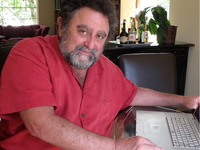
The criminal brain has always held a fascination for James Fallon. For nearly 20 years, the neuroscientist at the University of California-Irvine has studied the brains of psychopaths. He studies the biological basis for behavior, and one of his specialties is to try to figure out how a killer's brain differs from yours and mine.
About four years ago, Fallon made a startling discovery. It happened during a conversation with his then 88-year-old mother, Jenny, at a family barbecue. "I said, 'Jim, why don't you find out about your father's relatives?' " Jenny Fallon recalls. "I think there were some cuckoos back there."
Fallon investigated. "There's a whole lineage of very violent people -- killers," he says.
One of his direct great-grandfathers, Thomas Cornell, was hanged in 1667 for murdering his mother. That line of Cornells produced seven other alleged murderers, including Lizzy Borden. "Cousin Lizzy," as Fallon wryly calls her, was accused (and controversially acquitted) of killing her father and stepmother with an ax in Fall River, Mass., in 1882.
A little spooked by his ancestry, Fallon set out to see whether anyone in his family possesses the brain of a serial killer. Because he has studied the brains of dozens of psychopaths, he knew precisely what to look for. To demonstrate, he opened his laptop and called up an image of a brain on his computer screen. "Here is a brain that's not normal," he says. There are patches of yellow and red. Then he points to another section of the brain, in the front part of the brain, just behind the eyes.
"Look at that -- there's almost nothing here," Fallon says.
This is the orbital cortex, the area that Fallon and other scientists believe is involved with ethical behavior, moral decision-making and impulse control.
"People with low activity [in the orbital cortex] are either free-wheeling types or sociopaths," he says.
Fallon's Scans
He's clearly oversimplifying, but Fallon says the orbital cortex puts a brake on another part of the brain called the amygdala, which is involved with aggression and appetites. But in some people, there's an imbalance -- the orbital cortex isn't doing its job -- perhaps because the person had a brain injury or was born that way.
listen now or download All Things Considered
- listen… []
Chimps Clearly React to Offsprings' Deaths
Are they grieving?


Details of the study are heart wrenching: A chimpanzee called Jire carried the corpse of her infant for some 27 days after the small chimp died in the forests surrounding Bossou, Guinea. She groomed the little body, cuddled it in her nests and objected to any separation from it.
The poignant story is not unique. A research team led by Dora Biro of Oxford University in England reports in Current Biology observing two other chimp mothers stubbornly carrying the remains of their lifeless offspring for up to 68 days — even while the bodies stank with decay and eventually mummified.
Were these animals — our close evolutionary cousins — grieving in human fashion? That is the fascinating question raised by this report and one other in the same journal.
Professor Michael Wilson of the University of Minnesota is among experts who caution us not to anthropomorphize about other species, not to project our own natures on them. Wilson is one of several U of M scientists who have studied chimps extensively in Tanzania’s Gombe National Park, where primatologist Jane Goodall began documenting chimp behavior in the 1960s.Too short vs. too long
Wilson was not part of the Oxford research team reporting these latest observations of chimp mothers. But the findings didn’t surprise him. "I've spent much more of my time than I would like watching dead and dying chimpanzees, and the responses of mothers and others to them," Wilson told MinnPost. "It's fairly common for chimpanzees, as well as various other primates, including baboons and rhesus monkeys, to carry their infants long after they've died." So the behavior is well established. What remains in doubt is the question of what it means. Are these caring mothers expressing grief as we understand it? There could be other explanations, Wilson said. Reproduction is a powerful evolutionary force for survival of a species. That force can extend to care of the offspring at least until they are able to reproduce on their own.Oh, Brother
Why, exactly, do our siblings drive us so crazy?


It seems like such a trivial reason for murder. When God belittled Cain's gift to him of produce from his own garden, then praised his brother Abel for offering a sheep, Cain snapped.
But as you get ready to gather with your family and unwrap presents, the Bible's first homicide starts to make sense. If being with your siblings this Christmas fills you with unalloyed joy, then you might be a member of the Duggar family. The rest of us—and about 80 percent of Americans have siblings—probably experience what evolutionary biologists say is a genetically programmed, emotional tug-of-war with our siblings.
There may be no way out of this difficult combination of allegiance and rivalry. Debra Lieberman, an evolutionary psychologist at the University of Miami, studies the origins of sibling altruism—for example, why we would be far more willing to donate a kidney to a sibling than to a neighbor. She describes the joy of seeing her own sister over the holidays, the pleasure at being with someone who truly understands her. Yet even Lieberman says such togetherness has its limits. "We can hang out for 12 hours, then it all goes to hell," she says. "There will be a misunderstanding, a harsh word."
There are reams of pop-psych books on the effect your parents had on you and that you have on your kids. You couldn't plow through all the literature about getting along with your spouse. But the sibling shelf is sparse. It's as if the self-help movement has given siblings a shrug. Yet your relationship with your siblings is likely to be the longest one of your life. The writers of the Bible, with its parade of warring brothers and sisters, understood its complications and passions.
Evolutionary behaviorists are trying to understand why it is that the emotional connection, and conflicts, between siblings can last a lifetime. The prevailing theory is that it all comes down to math. With our nearest relatives—each parent, our full-siblings, and our children, we share 50 percent of our novel genes. This overlap, and gap, helps explain the continual cycle of family love and conflict. The shared 50 percent is the basis for our instinctive willingness to make all sorts of investments and sacrifices—even perhaps the ultimate sacrifice—for those with whom we are closest. On the level of the gene, it's a good idea to ensure those most like us will
Transgender and Christian: Finding Identity
The idea of transgender Christianity shocks people on both sides of the divide: conservative religious reject any kind of gender variance and the LGBT community can be suspicious of organized religion. In all of this, trans-Christians are forging a new spirituality.


Allyson Robinson is an ordained Baptist minister. But until a few years ago, she lived life as a man.
Robinson had struggled with her transgender identity all of her life, growing up as a little boy who longed for dresses. "I grew up in my mom’s closet," she said.
"For most of my life that was just something I did. It was not who I was. And I understood it as something that was wrong. Then that wrongness became a sin. God was clearly displeased with my need to express myself in feminine ways."
Robinson tried to suppress this desire. She married, had kids and went to divinity school.
As a man, Robinson pastored a Baptist church in a small town in Central Texas. "We were in the kind of place where a pastor’s coming out, it would have been on the front page of the local paper," she said. Robinson said that those congregants, nice and well-meaning as they were, would not have been comfortable with a transgender pastor. She worried about how the community’s reaction would affect her children. So when she made the decision to become a woman, she quietly resigned.
A False Dichotomy
The Human Rights Campaign estimates that transsexuals represent approximately .25 to 1 percent of the US population. That number does not include the transgender people who haven’t undergone sex reassignment surgery (a process many people call "the
Science
A review of Rupert Sheldrak's A NEW SCIENCE OF LIFE

A New Science of Life, the biologist Rupert Sheldrake explores scientifically heretical terrain. In this third edition of his book, originally published in 1981, he postulates his theory of "morphic fields" - elusive forces that bathe nature and influence the development of form. They are imagined as somewhat like electromagnetic fields, only instead of transmitting energy, they store information. Hence, Sheldrake argues, morphic fields act as a kind of memory bank. When a snowflake forms, the details of its shape are recorded by morphic resonance. When birds flock in vast numbers, and shift like dark clouds across the sky, they act as if one because they effectively are one, Sheldrake suggests: they can access another morphic field. Likewise, when laboratory rats learn how to navigate a maze, the solution is morphically imprinted; other rats can then access the memory, navigating the same maze more quickly.
What interests Sheldrake are those features of nature that current science finds hard to explain. If the notion of morphic fields seems excessive, as it does to many, he replies that science needs radically innovative ideas to account for all that we observe. He believes that mechanistic and materialist explanations have been exhausted when it comes to phenomena from cooperation to consciousness. Hence exploring possibilities that lie beyond them. He is also quite clear that he is not conjuring up a pseudo-science. He hopes that every one of his proposals will pass empirical tests.
Sheldrake has been accused of peddling magic, and worse. But then, the same was said of Newton and his theory of gravitation: it was a spooky force that acted at a distance, and seemed to many to illuminate astrology as much as astronomy. Time will be the ultimate arbiter of Sheldrake's ideas. And since it is almost thirty years since this book was first published, and his basic thesis has not yet been verified by repeatable experiments to the satisfaction of peers in the scientific community, it seems that time is making its choice.
How to Design the Perfect Baby

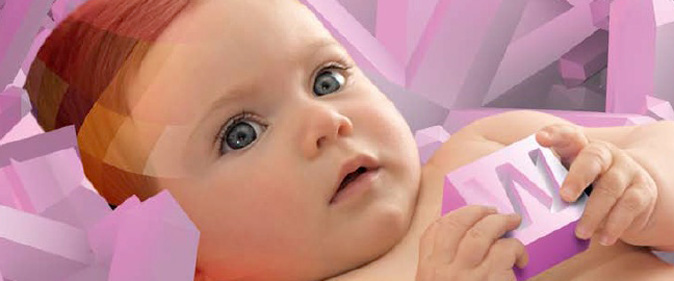
Belinda Kembery was pregnant with her second child when she realised something was wrong with Robbie, her first. "He didn't quite get to walking, and then, when he was just over a year old, he stopped sleeping well. He would wake in the night and it would be as though he'd just had a shot of caffeine... he would be rocking backwards and forwards, very agitated, and it would be very hard to calm him down."
Kembery, 41, a solicitor before her marriage, is sitting in a spacious, shining kitchen conservatory in Clapham, south London, a room so calm and tidy you would think it had never had children in it at all.
"The next sign we noticed was that he would be sitting up or crawling around, and he would suddenly fall over. That's why we put him in a bike helmet. One day, watching him very closely, we realised he was having a blackout. I went to the GP. We had weeks of appointments - brain scans, blood tests, lumbar punctures. The day we had the diagnosis, I was 22 weeks pregnant." The child she was then carrying is now a healthy, seven-year-old boy.
But Robbie, she was told, had Batten disease, caused by the malfunction of a single gene - CLN1, on chromosome 1, in Robbie's case. Normal copies code for a protein that helps to break down fatty molecules - lipofuscins - within brain and nerve cells. Without it, the cells are choked in fat and die. The first symptoms are seizures; then comes blindness, dumbness, paralysis and worse. Robbie would never walk, never speak, and by three he could not see nor swallow. The weakened muscles of his diaphragm gave him acid reflux so terrible that it stripped the enamel from his teeth. Eventually, an operation closed off the top of his stomach. Today, he is fed through a tube.
"Nothing at all had prepared us for this diagnosis," Belinda says. "In the hospital, they asked me to count the number of seizures he had had, and I got to 100 and stopped counting - and that was before lunchtime. Poor little thing. He was really suffering. They told us
Errors of an Old Atheist
Sigmund Freud is despised by most scientists today. But many would accept unthinkingly his views on religion.


Psychoanalysis unfortunately has hardly anything to say about the derivation of beauty ... All that seems certain is its derivation from the field of sexual feeling.
You have to admire that use of "certain". But the thing that really caught my eye was his attack on religion, because it states very clearly one of the central New Atheist rhetorical moves. This is to define religion as the belief system of ignorant fools, the people whom Freud, writing in a much less democratic age, did not hesitate to call "the common man". Watch how it's done. He is concerned, he says, less withthe deepest sources of the religious feeling than with what the common man understands by his religion–with the system ; doctrines and promises which on the one hand explains to him the riddles of this world with enviable completeness, and, on the other, assures him that a careful Providence will watch over his life and will compensate him in a future existence for any frustrations he suffers here. The common man cannot imagine this Providence otherwise than in the figure of an enormously exalted father. Only such a being can understand the needs of the children of men and be softened by their prayers and placated by the signs of their remorse.
Having set up a system in which only fools could believe, he then points out that only fools could believe in it: The whole thing is so patently infantile, so foreign to reality, that to anyone with a friendly attitude to humanity it is painful to think that the great majority of mortals will never be able rise above this view of life. Yet this, he says, is "the only religion which ought to bear that name." Why? I really don't see this. Intelligent, cultured and brave believers do pose a real problem for atheists, but it's not one we honourably solve by simply denying their existence. Freud goes on to dismiss anyone with the brains to see that a God who is merely an enormously exalted father can't be worth worshipping – yet who still isn't an atheist – on the grounds that they are not getting real religion at all:Choosing Tylenol and God

I would like to say I left the faith of my childhood for exclusively noble reasons. While it is true that I made the final break with Christian Science because I was drawn to a simpler, "mere Christianity," as C.S. Lewis described it, what initially beckoned me from the faith was Tylenol.
As a Christian Scientist, I had been taught that prayer and disciplined thinking had the power to alter my experience, whether that was my wracking cough or my employment status, my mood or my love life. I had witnessed many physical healings as a child, and by the age of 34, I had never visited the doctor (except to set a broken bone) never popped a vitamin, never swallowed an aspirin or taken a swig of cough medicine.
But on one frigid winter day in 1994, I came down with the flu. I slipped in and out of consciousness all afternoon, but in a moment of lucidity I envisioned the medicine cabinet above the bathroom sink. At that moment, what flashed in my mind's eye like a blinking neon sign was Tylenol, Tylenol, Tylenol. A friend of mine, I recalled, had left some Tylenol during a visit.
I slipped out of bed and staggered to the medicine cabinet. Before I could stop myself, I downed one tablet, closed the cabinet, and stumbled quickly back to bed. Five minutes passed. My teeth stopped chattering. Another minute or so, I began to feel quite warm, no, hot, hot, what was I doing under all these covers? I felt the fever physically recede like a wave at low tide, and thought, Wow, I feel terrific!
It would take me another 16 months before I would leave the religion of my childhood for good for theological reasons. But I lost something - namely, a way to prove God. Christian Scientists believe that the ultimate evidence for God lay in answered prayers and physical healings - but I no longer counted that as evidence. After all, science has shown the mechanism by which a person's thoughts can affect his body - it has the felicitous name, psychoneuroimmunology, and it has no need for God. Others are looking to quantum mechanics to explain - oh so controversially - why one person's prayers might have an effect on another person's body. God's presence is not required there, either.
I Hate Me, I Really Hate Me

Dear Prudence,
I'm in my early 30s and the married mother of two young children. I have a good job, and my husband and I get along well. My problem lies within myself. I suffer from something I can only describe as "self-loathing." It started as a teenager (with cutting my arms, drinking, smoking, running with the wrong people). Now I try to keep it all neatly tucked away in my psyche. I've been to therapists and take antidepressants, but this lingering self-hate always surfaces. My symptoms cause me to withdraw, hit myself with hangers, and say and think the most horrible thoughts about myself. Even with my accomplishments, I don't think much of myself. I'm not suicidal, but I frequently entertain thoughts of cutting my arms and legs or having someone else beat me until I'm black and blue, as though I deserve punishment for being who I am. I compare myself to others nonstop and sometimes withdraw for days if I meet someone I envy. It's awful! In addition to antidepressants, I've resorted to taking the painkiller Tramadol daily, as it tends to lift my mood and help with these feelings of inadequacy. I do not want to pass this on to my kids, whom I love more than anything. Why in the world won't this stop?
—Wish I Liked MyselfDear Wish,
Through some combination of genes and upbringing, you were given this painful thought disorder. And look at how remarkably you've dealt with it. You have a happy marriage, a good career, and a loving relationship with your children. Many people who were handed easy-going genes and happy childhoods have not been able to pull off that trifecta. Also impressive is your self-insight and ability to
Irreconcilable Differences
Book Review: No Two Alike: Human Nature and Human Individuality by Judith Rich Harris

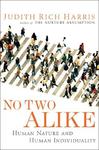
Judith Rich Harris calls No Two Alike a "scientific detective story." The mystery is why people—even identical twins who grow up in the same home with the same genes—end up with different personalities. The detective is Harris herself, a crotchety amateur, housebound because of an illness, who takes on the academic establishment armed only with a sharp mind and an Internet connection. Harris the author scrupulously follows clues; Harris the protagonist drives the story forward through force of character, arriving at a theory of personality that could be said to describe herself.
Eight years ago, Harris’s book The Nurture Assumption set academic psychology on fire by attacking the notion that parenting styles shape children. Scholars, irked by this upstart former textbook writer and grad-school reject, scorned her argument. In her new book, Harris tries to embarrass her critics while synthesizing her work into a theory of personality. No Two Alike is two books: a display of human weakness, and a display of scientific courage and imagination.
Every detective has a favorite method. Harris’s is behavioral genetics, which attempts to tease out the genetic bases of behavior. To sort genetic from environmental factors, you study people with the same genes but different environments: identical twins raised apart. Or you study people with different genes but the same environment: adoptive siblings raised together.