
 About the Fellowship
Tara McKelvey

Tara McKelvey is a senior editor at the American Prospect, where she writes and edits articles primarily about politics, the military, and human rights. She is also a frequent contributor to the New York Times Book Review and a contributing editor at Marie Claire magazine. She is the author of Monstering: Inside America's Policy on Secret Interrogations and Torture in the Terror War. And she is currently working on a book titled Only the Dead Come Home: How Iraq War Veterans Are Fighting the New War Here in America, which looks in part at the role of religion and science in the treatment of veterans.
| Column |
 Hollywood Raids Pentagon FilesThe White House cozies up to the makers of a film about the death of Osama bin Laden. Tara McKelvey on why the usual hard line on classified information has been dropped. 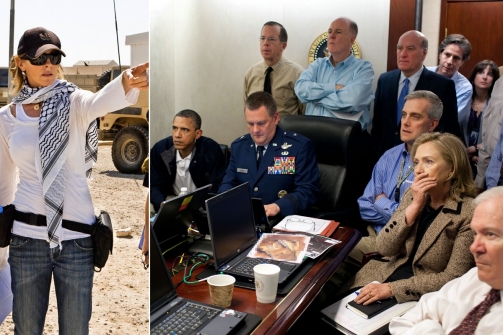 Republicans see it as the height of hypocrisy. While Obama administration officials aggressively prosecute leaks to the press, they are opening the door—perhaps even sharing classified details—to the makers of a movie about the killing of Osama bin Laden. The film will presumably make President Obama look good, and even worse—for Republicans, at least—it is slated to open on Oct. 12, 2012, shortly before the presidential election. One thing is certain: The president has been ruthless with leaks, going after more people for leaking classified information than all previous presidents combined. During Obama's term, government lawyers have prosecuted five individuals under the Espionage Act of 1917. Administration critics believe these prosecutions are unwarranted, designed only to silence those who are speaking out against "government ineptitude, wrongdoing, and illegality," says Jesselyn Radack, a director of the Washington-based Government Accountability Project. The prosecutions have foundered. For instance, Justice Department officials dropped most of the charges against Thomas Drake, a former National Security Agency official who had been accused of leaking classified information about telecommunications and wound up pleading guilty to a misdemeanor. The president’s hardline approach to people such as Drake—including a subpoena in another case for author James Risen—stands in sharp contrast to the red-carpet treatment shown to filmmaker Kathryn Bigelow. She was granted "top-level access to the most classified mission in history," as New York Times columnist Maureen Dowd wrote. Peter King, a Republican who heads the House Homeland Security Committee, cited that line in a letter to inspectors-general at the CIA and the Defense Department, demanding an investigation into whether officials have leaked classified material to Bigelow and fellow filmmaker Mark Boal. |
| Article |
 God, the Army, and PTSDIs religion an obstacle to treatment?  When Roger Benimoff arrived at the psychiatric building of the Coatesville, Pennsylvania veterans’ hospital, he was greeted by a message carved into a nearby tree stump: "Welcome Home." It was a reminder that things had not turned out as he had expected. In Faith Under Fire, a memoir about Benimoff’s life as an Army chaplain in Iraq, Benimoff and co-author Eve Conant describe his return from Iraq to his family in Colorado and subsequent assignment to Walter Reed Army Medical Center. He retreated deep into himself, spending hours on the computer and racking up ten thousand dollars in debt on eBay. Above all, he was angry and jittery, scared even of his young sons, and barely able to make it through the day. He was eventually admitted to Coatesville’s "Psych Ward." For a while the lock-down facility was his home. He wondered where God was in all of this, and was not alone in that bewilderment and pain. In a 2004 study of approximately 1,400 Vietnam veterans, almost 90 percent Christian, researchers at Yale found that nearly one-third said the war had shaken their faith in God and that their religion no longer provided comfort for them. |