
 About the Fellowship
Peter McKnight
Peter McKnight is a columnist for the Vancouver Sun and member of its editorial board. He writes and lectures on a wide variety of topics, including science, religion, philosophy, ethics, and law, and his columns have appeared in many major North American newspapers. He was a Knight Science fellow at the Massachusetts Institute of Technology in 2004, and in 2006 won the Canadian Bar Association's Justicia Award for excellence in legal journalism. He holds master's degrees in journalism and philosophy as well as a law degree.
| Broadcast |
 The Postmodern Condition: The Assault on Truth from Left to Right (video)Vancouver Sun columnist Peter McKnight looks at how postmodernism - a left wing theory that promotes skepticism of truth - is now being championed by those on the right. |
| Review |
God and Philosophy in Hawking's UniverseGiven that the celebrated physicist's thought is bathed in philosophical theories, it's folly to assert that science has dispatched metaphysics. 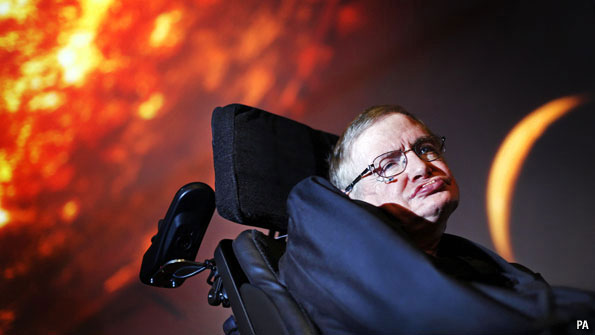 "Philosophy is dead." Stephen Hawking (2010) "Philosophy always buries its undertakers." Etienne Gilson (1949) Upon reading "The Grand Design," one gets the impression that Stephen Hawking has come a little late to the party. Sure, he manages to pronounce philosophy dead on page one of his new book, but philosophers have been heralding the death of philosophy for centuries. Indeed, virtually every generation has produced at least a few philosophers who describe their subject as either finished or futile. It's doubtful Hawking is aware of this, though, since "The Grand Design" provides abundant evidence that the celebrated physicist's philosophical education has been sorely neglected. Most people won't be particularly troubled by that, of course. What has troubled people--and consequently rocketed "The Grand Design" up the bestseller lists--is Hawking's claim that, "It is not necessary to invoke God to light the blue touch paper and set the universe going." Yet God and philosophy are intimately related in Hawking's universe, for it is the same philosophy--yes, philosophy -- that tried to kill them both. In "The Universe in a Nutshell," published in 2001, Hawking called this philosophy "positivist," and described positivism as an "approach put forward by Karl Popper and others." Now let's stop right there, since this is example No. 1 of Hawking's philosophical ignorance. For Popper did not "put forward" positivism; on the contrary, he argued vehemently against it. In fact, he devoted an entire section of his autobiography to explaining how he was responsible for destroying positivism. |
| Column |
Craig Venter and the Nature of LifeThe world has its first synthetic cell, and the question 'what is life?' is more relevant than ever.  Craig Venter may not be a god, but when he makes an announcement, the world shakes. In 2000, the "dazzling showman of science," as he has been called, announced, together with U.S. National Institutes of Health scientist Francis Collins, a draft mapping of the human genome. So momentous was this announcement that not one but two world leaders -the U.S.'s Bill Clinton and the U.K.'s Tony Blair -felt the need to participate. Now a decade later, Venter has done it again with the announcement that scientists at the J. Craig Venter Institute have created the world's first synthetic cell. This announcement also caught the ear of world leaders, as President Barack Obama fired off a missive to the Presidential Commission for the Study of Bioethical Issues, giving it six months to prepare a report on the promises and perils of synthetic biology. Environmental groups were also quick to respond to the announcement, with some calling for a moratorium on such research, and other suggesting some form of regulation is in order. And in response to the news that Venter "created" a synthetic cell, officials with the Catholic Church warned scientists not to forget that "there is only one creator: God." Many of the concerns expressed are not unreasonable, though they aren't without hyperbole either. To see this, let's review what Venter actually did. Venter's team of 25 scientists mapped the genome of a bacterial cell on a computer, modified it, broke it into 1,100 pieces and synthesized the pieces using four chemicals. They then assembled the genome fragments, and transplanted the complete genome into a cell that had had its genome removed. The synthetic genome was then "booted up" and the new "synthetic" cell began self-replicating. Naturally, Venter emphasizes the promise of such research: The U.S. National Institutes of Health have provided him with funding for work that could lead to rapid development of flu vaccines, and Exxon has promised funding to create bacteria that can produce biofuels from algae. Beyond that, it might be possible to create bacteria that can aid in cleaning up oil spills, something that looms large in the American consciousness at present. But just as advocates emphasize the promise of synthetic biology, critics highlight safety and security concerns. There is always the fear that a laboratory-created pathogen could escape the lab, and wreak havoc on the public and the environment. This doesn't have to occur by accident: Critics note that bioterrorists could synthesize their own pathogenic bacteria and hold the world hostage, if there is any world left. That's a little dramatic, of course, but synthetic biology's potential threat to our safety and security is worthy of consideration. Curiously, though, the public doesn't seem particularly concerned, possibly because they don't see the potential threats as appreciably different from those presented by genetic engineering, which has already be the subject of intense debate, and more than a few sci-fi novels. What has piqued public interest, though, is the suggestion that synthetic biology amounts to playing God. This was, of course, a charge also levelled at genetic engineering, and at virtually every new technology. But there seems to be something special about synthetic biology, since all this talk about creating a synthetic cell led some people to question whether Venter created life. |
| Column |
Should there be One Games for All?Some Paralympians would like to compete against the able-bodied. And what about vice-versa?  Paralympic gold medallist Reinhild Moller:"I was disabled, I was a girl, a girl from the countryside. Today I am not disabled, I am a woman, a woman of the world."
The late Ludwig Guttmann must look down and smile when he hears such sentiments. Sixty years ago, the German-British neurologist sought to bring to disabled people the physical and spiritual benefits of sport, and to bring to the world an Olympics for people with disabilities. Moller's sentiments, and the existence and success of the Paralympic Games, suggest that Guttmann's work is done, that he can rest in peace. But not quite. Certainly, disabled sport has come a long way since Guttmann established, at the behest of the British government, the National Spinal Injuries Centre in Stoke Mandeville, England in 1944. According to Canadian Robert Steadward, the founding president of the International Paralympic Committee and author of Paralympics: Where Heroes Come, Guttmann recognized that exercise was essential to the rehabilitation of spinal cord injured Second World War veterans, and that sport could motivate vets to get the exercise they needed. He therefore made sport a mandatory part of his patients' therapy, and on July 28, 1948 -not, coincidentally, the day of the start of the Olympic Games -Guttmann held the first Stoke Mandeville Games for the Paralysed. Subsequent Games were held each year, and in 1952 they became international with the participation of athletes from the Netherlands. |
| Column |
To Know Thyself--Genetically SpeakingOur 'genetic imperative' is a strong drive to find the biological underpinnings for all things human.  You might say that every science has its day -- or century. The 20th century, for example, is often referred to as the century of physics and chemistry. It's an appropriate moniker for the past century, since, among other things, physics and chemistry paved the way for the high-tech revolution that has forever changed our world. It is, however, a lot more difficult to look forward and determine what science will triumph in the next 100 years. Nevertheless, even before the turn of the millennium, many intrepid prognosticators had crowned the 21st century the "century of biology." Developments over the past decade seem to be proving the soothsayers right. Perhaps most auspiciously, researchers announced, at the very dawn of the decade, a draft mapping of all three billion base pairs in a human genome. The $3-billion Human Genome Project--that's one dollar per base pair for those keeping count--was started by the U.S. National Institutes of Health in 1990, produced a working draft of the genome in 2000 and a complete one in 2003. The 13-year project, one of the largest scientific investigations in history, certainly seems to herald the century of biology. According to the NIH, the express aim of the project was "to provide researchers with powerful tools to understand genetic factors in human disease, paving the way for new strategies for their diagnosis, treatment and prevention." Ultimately, the project could usher in the era of personalized medicine, in which health care is tailored to each person's DNA. There is reason to believe the project is accomplishing its objectives: More than 1,800 "disease genes" have been discovered as a result of the project, and there are now more than 1,000 genetic tests that enable patients to learn about their risks for disease. Nevertheless, it's fair to say that what we don't know far exceeds what we do know. Researchers must still learn how to "read" the map -- to understand the complex ways in which genes interact with each other and with the environment -- before the aims of the genome project are realized. This will require, among other things, the sequencing of many more genomes, which at present is prohibitively expensive. |
| Article |
Exploring the Nature of RealityBuddhism and science are not always in agreement, but they still have much in common.  A first glance at Buddhism -- and most Westerners have had at most a quick glance at this ancient religion -- suggests that it has little in common with science. For example, we most frequently hear the Dalai Lama preach about the importance of love and compassion. These subjects, while not at odds with science, concern how the world ought to be, not how the world is, and are therefore not the proper subjects of scientific study. Given the different interests of scientists and Buddhists, then, it might be surprising to learn that some practising scientists are also practising Buddhists, and that the Dalai Lama himself has a longstanding interest in science. Consequently, with the support of His Holiness, a series of "Mind and Life" dialogues between scientists and Buddhists began in 1987. This led to the development of the Mind and Life Institute in 1990, under the initial direction of neuroscientist and Buddhist practitioner Francisco Varela. Varela died in 2001, but the Institute and the dialogues live on, with world-renowned scientists and Buddhist monks meeting regularly at conferences in Dharamsala, India, the residence of the Tibetan government in exile. In the recently released book, Mind and Life: Discussions with the Dalai Lama on the Nature of Reality, University of Rome biologist Pier Luigi Luisi recounts the details of one conference, which probed deeply into physics, among other subjects. In so doing, the conference illuminated much about the current scientific understanding of the nature of the material world, as well as Buddhism's conception of this aspect of reality. And while it revealed that Buddhism and science are not always in |
| Column |
 Should Science Stories Always Strive for Balance?Peter McKnight Answers  Every journalist has been told at one time or another that journalists should write balanced articles—that is, they ought to present both sides in a dispute and keep their opinions to themselves. There are many reasons offered today in support of this approach, but let me take a historical perspective. While newspapers in the 19th century were explicitly partisan, the rise of scientific positivism led journalists to believe that they could seek truth unencumbered by their political persuasions. This meant that journalists would have to limit themselves to reporting the facts, and divest themselves of their own beliefs, opinions, and values—to become, as it were, blank slates who could view the world sub specie aeternitatis, in its universal and eternal form. Journalists soon learned, however, that such an austere form of objectivity was unattainable for mere humans; even if they did their best to keep those values at bay, those values and their life experiences would color the way they saw the facts. The solution, then, was to emphasize fairness, to simply report what others were saying, and to ensure that one reported opinion was balanced against another, competing opinion. This view remains dominant today for a number of reasons, including journalists’ sensitivity to accusations of bias in an increasingly partisan climate. In such a climate, it is much easier to simply report different views than to present one view as more worthy of allegiance. Yet the problem with this approach was evident even in the late 19th century, not long after journalists had first adopted it. David Mindich provides a stunning example in Just the Facts: How "Objectivity" Came to Define American Journalism: Mindich reviewed the coverage of lynchings in major American newspapers and found that "false balance"—the attempt to balance pro- and anti-lynching views, even though one side was right and the other wrong—diminished the horrors of lynching and helped normalize the practice. Mindich’s example shows how the attempt to create balance at all costs does a disservice to the public, and also presents a skewed view of the nature of values. Although it might be unpopular to say today, some values are better than others, and journalists should not be skittish about reflecting that fact. This goes double for reporting on beliefs and theories—the very things that concern science journalism. (Science also involves values, but I will leave that aside.) Not all scientific theories are equally supported by the evidence, and hence journalists who report two unequal theories as equal actually present a biased picture. They also present a biased picture of the nature of science, since such an approach suggests that all scientific theories are equal and that people should be free to choose whichever theory they find more palatable. This, in effect, reduces science—and truth—to politics. |
| Article |
Darwin Lives On As Evolutionary Debate Continues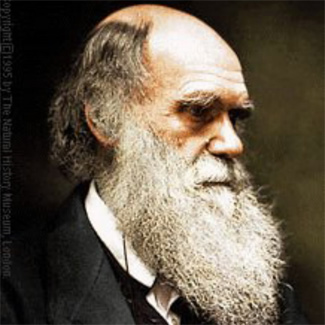 In the 5th century B.C., pre-Socratic Greek philosopher Empedocles developed a rather fanciful theory of the evolution of life. For the following thousand plus years, other philosophers and scientists offered their own evolutionary theories, and by the late 18th century, such ideas had become increasingly common. In particular, members of Britain’s Lunar Society, including industrialist Josiah Wedgewood and especially physician Erasmus Darwin, promoted a theory of evolution informed by the Industrial Revolution. But none of these thinkers managed to solve what 19th century astronomer John Herschel referred to as the "mystery of mysteries" — none could explain the mechanism by which evolution operates, by which new species come into being. None, that is, until the arrival of Darwin’s and Wedgewood’s grandson, who was born shortly after both of his grandfathers died, and who would revolutionize science just a half century after their deaths. Charles Robert Darwin was born in Shrewsbury, England on February 12, 1809. As the son of physician Robert, who had followed in the footsteps of his father Erasmus, Darwin was expected to pursue a career in medicine and was sent to the University of Edinburgh. Darwin’s distaste for medicine was evident to him early on, but his education at Edinburgh did prove important as he met physician Robert Grant, who would introduce Darwin to marine biology, which became a lifelong passion. Grant also introduced Darwin to the ideas of French evolutionist Jean Baptiste Lamarck, whose theory of the inheritance of acquired characteristics is now entirely discredited, but was accepted by Darwin until his death. When Darwin informed his father of his disinterest in medicine, he was sent to Christ College, Cambridge in 1827, to read for a degree in divinity. While he had no more interest in becoming an Anglican clergyman than a doctor, Darwin did graduate near the top of his class in 1831. But Darwin’s years in divinity school did prove to be undeniably important, for it was at Cambridge that he met the men who would |
| Article |
Hitting a Brick WallScientists forsake science when they use Darwin for ideological ends.  Religion is something left over from the infancy of our intelligence, it will fade away as we adopt reason and science as our guidelines. - Bertrand Russell In the Creation-Evolution Struggle, historian and philosopher of biology Michael Ruse writes, "in both evolution and creation, we have rival religious responses to a crisis of faith - rival judgments about the meaning of life [and] rival sets of moral dictates . . . ." This is a startling statement, for several reasons. First, while we often hear creationists equate Darwinism with religion, Ruse, an agnostic, has spent much of his career defending evolutionary theory against creationist attacks. Second, as we discussed in Part II, science is a method for understanding, explaining and controlling the natural world. Nowhere does this method provide us with the basis for making moral judgments or discerning the meaning of life. In other words, science is a descriptive, rather than prescriptive, enterprise - it concerns itself with what is the case, not what ought to be the case, or how we ought to behave. For example, the science of evolutionary biology describes the world by telling us that all living things are descended with modification from a common ancestor, and that this produces a branching tree-like pattern of life. This tells us nothing about how to live or about the meaning of life. Those matters are the province of religion and ethics, which are at least partly prescriptive disciplines. Yet if evolution does concern |
| Column |
Religion in DisguiseIntelligent design stumbles by revealing itself as religious theory.  Given the often amicable relationship between science and religion throughout the history of Islam and Christianity, the current hostilities, centred around creationism and evolution, seem something of a historical anomaly. And many commentators suggest that they are also a geographical anomaly, in that the promotion of creationism and intelligent design is restricted to Islamic countries and the United States. But the latter suggestion is not quite true. While creationism and ID enjoy more "official" support in Islamic countries than anywhere else, and while the U.S. has been the epicentre of the creationism-evolution wars, battles have also been fought in many European countries, Australia and Canada. Witness the 2007 Ontario provincial election, when Progressive Conservative candidate John Tory, in an effort to bring parochial schools within the purview of public education, echoed the American sentiment that evolution is just a theory, and hence advised that schools should teach "that there are other theories that people have out there that are part of some Christian beliefs." Or witness the 2006 controversy in Quebec, after the Ministry of Education, knowing some independent schools were teaching creationism, ordered the schools to teach the theory of evolution or close their doors. Suffice it to say, then, that the creationist movement has been highly successful in its efforts to influence education in Canada. And this is all the more astonishing given that the creationist movement was itself created only about a century ago. Many people believe that young Earth creationism -- the dominant form of creationism, which aintains that God created the world, in roughly its present form, in six literal days some 6,000 years ago -- was widely accepted until the advent of modern science. Yet the young Earth creationist movement is of a much more recent vintage. Most early Christian theologians accepted that parts of the Bible, including the creation story in Genesis I, were meant to be read allegorically, rather than literally. For example, in the fifth century, St. Augustine argued against a literal six-day creation in The Literal Meaning of Genesis. Augustine also displayed a wonderfully cientific mindset, remarking that we should be willing to change our minds in light of new information, and should be wary of reflexively interpreting the Bible literally, for it could discredit the faith. |
| Article |
The Tension between Science and ReligionMust they compete, or can they complete each other? Science and religion together can weave a rich tapestry of new meaning for our age. - Philip Hefner Let us end how we began. At the beginning of Part I, I noted Albert Einstein's famous quote "Science without religion is lame, religion without science is blind." These words, which Einstein may or may not have believed, suggest that science and religion enjoy a mutually beneficial relationship. And as we saw in Part I, there did exist a complementary relationship between science and religion throughout much of the history of Islam and Christianity. But as we discovered in Parts II and III, science and religion now appear locked in a battle to death. So where does this leave us? Must science and religion compete with each other, or can they complete each other? If one believes that Genesis 1 provides a literal account of the natural history of the universe, then the answer is clear: Science must always be at odds with religion, because the results science produces conflict with the Genesis account of creation. But as we have seen, this practice of reading Genesis 1 literally is a cultural and temporal anomaly. While creationism and the Christian fundamentalism that spawned it currently enjoy considerable influence, they are artifacts of 20th-century America, |
| Article |
Coupling of Science and Religion In May 2008, Bloomsbury auctions announced the sale of a letter by Albert Einstein, in which the famed physicist railed against religious beliefs as "childish superstitions . . . the expression and product of human weaknesses." The letter was something of a curiosity, not because it suggested Einstein harboured a certain hostility toward religion, but because the sentiments it expressed seemed markedly at odds with Einstein's much friendlier public pronouncements about religion, including an exceptionally famous quote about the relationship between science and religion: "Religion without science is lame; science without religion is blind." Since Einstein's letter was a private affair, it might well have been a more accurate reflection of his true attitude toward religion than his public comments. And the revelation of the great scientist's less than hospitable views toward religion served as a blow to people who maintained that science and religion are compatible, and who often quoted Einstein's words in support of that thesis. Adherents of this view of science and religion were probably too enthused at the prospect of having the most famous scientist since Isaac Newton on their side. After all, Einstein clearly did not believe in theism, the theory of a transcendent, personal God promoted by the Abrahamic faiths -- Judaism, Christianity and Islam. At the very most, Einstein's views, like those of a not insignificant number of theoretical physicists, leaned toward a kind of deism -- the belief that some form of impersonal intelligence set the universe in motion, but doesn't intervene in the affairs of creation and hence has no relationship with humans. LETTER WAS A SIGN OF THE TIMESIn any case, the letter was a sign of the times, because it seems to lend support for the view that has become dominant today: That there is a necessary conflict between science and religion, that these two magisteria -- these two bodies of learning and teaching -- are and always have been locked in a mortal battle which will only be resolved when one triumphs over the other. |
| Review |
No Intelligence Allowed in Stein's FilmAlthough you're probably not aware of it, scientists, lobby groups, the media and the courts are all united in a massive conspiracy to destroy your freedom. But have no fear, freedom fighter Ben Stein is here.  Although you're probably not aware of it, scientists, lobby groups, the media and the courts are all united in a massive conspiracy to destroy your freedom. But have no fear, freedom fighter Ben Stein is here. That, in effect, is the thesis of Expelled: No Intelligence Allowed, the new anti-science "documentary" which opens across Canada on June 27, was produced by Vancouver's Premise Media, and stars Stein, the lawyer, actor, game show host and speechwriter for former U.S. president Richard Nixon. The subtitle of the film is wholly appropriate as there is precious little intelligence displayed in its more than 90 minutes. But the subtitle's reference to the content of the film was unwitting -- it was meant to refer to a giant conspiracy to banish intelligent design theory from the halls of academe and the culture as a whole. Now, you might ask, what exactly is intelligent design? But don't ask the producers of the film, since they don't even bother to define it. Don't ask Stein, either: I did, but all I got from him was a suggestion that the meaning of the term comes through in the film. Since the producers evidently saw no need to define what their movie is about, allow me: Though proponents deny it, ID is the latest form of creationism, as it states that the apparent design in nature reveals that there must have been a designer. While proponents insist that ID has nothing to do with religion, they inevitably conclude that the designer is none other than the Judeo-Christian God. ID is therefore a religious theory, rather than a scientific one. Scientific theories must yield testable hypotheses -- that is, they must make predictions and we must be able to test whether those predictions come true. But since we never know what God will do next, |
| Article |
How to Reconcile Richard Dawkins?Author of The God Delusion in person is more open-minded than his critics would have you believe. 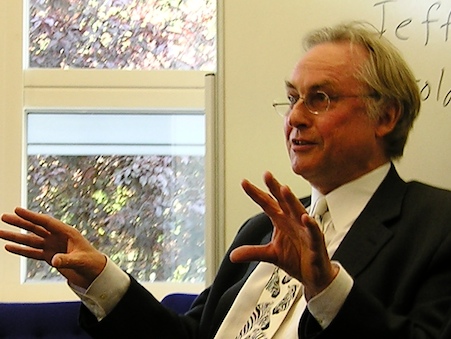 It's often been said that there are two Richard Dawkinses. First, there's the fire-breathing Dawkins of literature, whose books and essays declare religion a virus of the mind, "comparable to the smallpox virus but harder to eradicate," who maintains that religious instruction is a form of child mental abuse, and who will brook no opposition in his war on religious faith. Then there's the personal Dawkins, the debonair Charles Simonyi Professor of the Public Understanding of Science at Oxford University, a man who is polite and gracious to a fault. I had the pleasure of sitting down with the second Dawkins Monday morning in Vancouver, so I decided to ask him about the first, and in particular about the many criticisms levelled at him and his most recent book, the bestselling The God Delusion. The book, which is a sustained attack on both belief in God and the negative consequences that can flow from religious belief, has provoked a litany of hostile reviews, essays and even book-length treatises from theologians, scientists and other observers. Chief among the criticisms is that The God Delusion presents an all-too-rosy picture of atheism -- Dawkins cites John Lennon's Imagine to paint the picture of what an atheist world would look like -- while accusing religion of inspiring all manner of unspeakable acts, including crusades, wars, witch hunts, suicide bombings, and on and on and on. Now on that latter point, Dawkins will get no argument from me: Religion has driven otherwise good people to do many evil things. But what of atheism? Surely Stalin's purges, including his execution of orthodox priests and nuns, and Mao's attempts to eliminate Buddhism count for something, no? Well, yes and no. According to Dawkins, Stalin was an atheist who did evil things, but there is no direct "logical pathway" from atheism to bad deeds, as there is with religious faith. I have to say I don't entirely understand Dawkins's thinking here -- how, after all, could |
| Article |
We're Still Looking for Something to Believe inA consequence of losing religion is the loss of a unifying vision of how we live -- hence the 'accommodation' debate.  We are losing the centre of gravity by virtue of which we have lived; we are lost for a while. Friedrich Nietzsche The Will to Power (1887-88) - - - Bruce Allen is no philosopher, but his recent radio rant does give us the opportunity to consider Nietzsche's prescient diagnosis of our multicultural malaise. As everyone now knows, Allen, the uber-talent agent and CKNW radio editorialist, recently provoked outrage with his comments about "special-interest groups." Referring to the politician-manufactured controversy about veiled women voting and to be-turbaned Sikh RCMP officers, Allen advised immigrants to "shut up and fit in." The self-described "bald-headed white guy" continued his diatribe, telling uppity immigrants that if they don't like Canada "we [bald-headed white guys?] don't need you. You have another place to go. It's called home. See ya!" Predictably, Allen's stream-of-consciousness jeremiad provoked howls of outrage from people who said they believed in freedom of speech, except for ... well, except for speech they dislike. Just as predictably, Allen's supporters charged that Allen was being denied his freedom to speak, his freedom to tell minorities that they ... well, that they shouldn't have the right to speak. So for all their rhetoric, neither of these groups really respects free speech. A pox on both their houses, I say. Now that that ugliness is over, it's time to consider what's behind Allen's words and the not inconsiderable support they've received. Prompted no doubt by the non-issue of veiled voters in the recent Quebec election, Allen was really attacking the notion of official multiculturalism, the notion that we ought to accommodate rather than assimilate other cultures. And Allen is anything but alone in his contempt for accommodation. According to an SES Research/Policy Options survey released this week, only 18 per cent of respondents said that "reasonable accommodation" of immigrants reflected their personal views, while 53 per cent thought immigrants should fully adapt to Canadian values. |
| Article |
The Lesson in the Fate of Islamic ScienceCreationists sound very much like a 12th-century Muslim who cried 'heresy' and set back a civilization 500 years.  Former Dutch parliamentarian Ayaan Hirsi Ali might be controversial, but a statement she made in a recent Vancouver Sun profile was anything but. "Judaism and Christianity have gone through a long history of enlightenment and reflection," she said, "but the Islam we see today tends toward the seventh century." Now, this is hardly an original sentiment, as we regularly hear that Islam is an immature, backward religion, desperately in need of reformation or enlightenment. And there is much evidence to support this contention, from the Muslim Brotherhood's 1981 call to end scientific education, to the proliferation of madrassas that emphasize only one R -- religion -- thereby leaving their students illiterate and innumerate, to the entire Islamic world's rejection of science and loving embrace of creationism and intelligent design. Despite this evidence, I want to ask some disquieting questions: What if Islam is not 1,000 years behind the West, but 1,000 years ahead? What if it took us until the turn of the third millennium to arrive at the place Islam occupied at the turn of the second? There is also much evidence for this proposition. From roughly AD 700-1200, while the European world was feeling its way through the Dark Ages, the Islamic world was in the midst of a Golden Age, a period of scientific and cultural innovation not seen since the days of the ancient Greeks. In fact, the Greek philosophical and scientific texts that would later prove so influential to Christianity and the West were preserved and translated by Muslims. When books were few and far between in the West, the Muslims amassed a library of some 500,000 volumes, |
| Article |
A New Alliance against ScienceThe 'anything goes' academic left is coming to the support of the 'God did it' religious right.  The religious right has a new ally, and it's none other than its erstwhile arch-enemy - the academic left. The latest evidence of this unholy alliance comes from the Social Science and Humanities Research Council of Canada, which recently rejected a research proposal aimed at studying the impact of popularizing intelligent design, the theory that the complexity and supposed design in nature reveal that there must have been a designer. The proposal, by McGill University's Brian Alters, was titled Detrimental Effects of Popularizing Anti-Evolution's "Intelligent Design Theory" on Canadian Students, Teachers, Parents, Administrators and Policymakers, and that title alone was enough give the SSHRC's review panel the willies. In its terse rejection letter, the SSHRC said "the proposal did not adequately substantiate the premise that the popularizing of Intelligent Design Theory had detrimental effects" and there was inadequate "justification for the assumption in the proposal that the theory of Evolution, and not Intelligent Design Theory, was correct." Now those reasons would be laughable if they weren't so pathetic. First, Alters's reference to the detrimental effects of popularizing intelligent design isn't a premise, but a hypothesis. This is what the study was designed to test, so it's a bit much to expect Alters to have the evidence in hand prior to conducting the study. Indeed, were he already in possession of the evidence, there'd be no need to conduct the research. But as it turns out, the panel's second reason for rejecting funding provided exactly the evidence Alters was looking for. That a committee of "experts" could suggest that ID and evolution are equally plausible theories reveals just how great the detrimental effects |