
 About the Fellowship
Carlin Romano
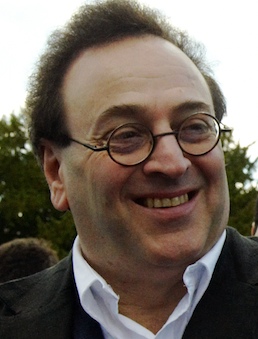
Carlin Romano is critic-at-large of the Chronicle of Higher Education. He is a former president of The National Book Critics Circle in the US and was, for 25 years, the literary critic of the Philadelphia Inquirer. His criticism has appeared in The Nation, New Yorker, Harper's, Slate, Salon, Times Literary Supplement, and other national and international publications. He was one of three finalists for the 2006 Pulitzer Prize in Criticism.
| Column |
 The Dalai Lama, Marxist?The brave spiritual leader's unusual blind spot.  Earlier this month, the Dalai Lama told a group of Chinese students at the University of Minnesota, "I consider myself a Marxist . . . but not a Leninist." The comment struck some as odd—as if Lindsey Lohan had declared herself a Shaker. Students in the audience looked puzzled. One blogger wondered "if Pope Benedict and other world religious leaders are soon to follow." But those who have followed His Holiness Tenzin Gyatso, the 14th Dalai Lama, know that he regularly trots out a Marxist banner. When he came to Radio City Music Hall to lecture for a few days last year, he announced "Still I am a Marxist" even while thanking his good friends in the Chinese Communist Party for bringing capitalist freedoms to their land. That stance leads to some head-scratching. Isn't this esteemed 75-year-old Nobel Peace Laureate the former "Boy King" who fled Mao's Chinese forces in 1959? Isn't he the 50-year exile whose fellow Tibetans suffered genocide, after some 20% of them died at the hands of Chinese forces or from starvation? Isn't Marxism a godless secular thing, and the Dalai Lama himself a manifestation of God on earth? If he doesn't know Marxism is false, who does? The Dalai Lama explained his youthful enthusiasm in a 1999 essay for Time, mentioning that he even considered joining the Communist Party: "Tibet at that time was very, very backward. The ruling class did not seem to care, and there was much inequality. Marxism talked about an equal and just distribution of wealth. I was very much in favor of this. Then there was the concept of self-creation. Marxism talked about self-reliance, without depending on a creator or a God. That was very attractive. . . . I still think that if a genuine communist movement had come to Tibet, there would have been much benefit to the people." It's an old, familiar position in Western secular intellectual life: Marxism wasn't a God that failed, and the Soviet Union and Mao's China don't count against it, because Marxism was never tried—Communism perverted it. The problem is that Marx wasn't just a Marxist—he was a Communist—and many of Mao's most destructive moves came right out of Marx's playbook for destroying self-reliance, among other things. |
| Column |
 Cosmology, Cambridge Style: Wittgenstein, Toulmin, and HawkingHawking Said, "Let There Be No God!," and There was Light! 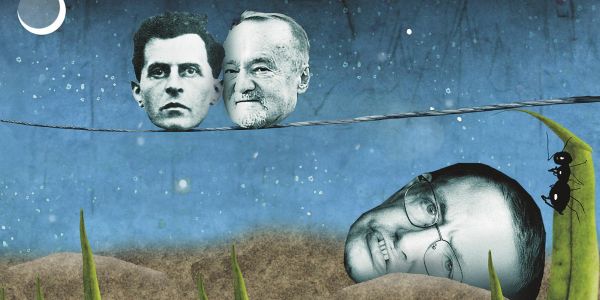 Hawking Said, "Let There Be No God!," and There was Light! That headline flashed to all corners of the media universe this month. Of course, we don't know whether a universe has corners. Truth is, we don't know much about the universe that isn't astonishingly inferential. Alas, you'd hardly know that from listening to the retired Lucasian Professor of Mathematics at the University of Cambridge and his media echo chamber. The breaking news originated in the latest book by Stephen Hawking, The Grand Design (Bantam), co-written with physicist Leonard Mlodinow. It excited front-page editors as few science tomes do. Britain's Mirror exclaimed, "Good Heavens! God Did Not Create the Universe, Says Stephen Hawking." Canada's National Post drolly chimed in with, "In the Beginning, God Didn't Have to Do a Thing." In his new book, Hawking, the celebrated author of A Brief History of Time (Bantam, 1988), declares on the first page that "philosophy is dead" because it "has not kept up" with science, which alone can explain the universe. "It is not necessary to invoke God," the authors write, "to light the blue touch paper and set the universe going." Hawking sound-bited the hard stuff for interviewers: "Science makes God unnecessary," he told Good Morning America. Something simply came out of nothing. If you've followed the science-religion debate in recent times, there's nothing new about such claims. Many scientists take Hawking's side, some do not. Almost everyone agrees that, as Hawking told ABC News, "One can't prove that God doesn't exist." The Templeton Foundation, which specializes in prodding believers and nonbelievers to discuss such things in civilized ways, has published all sorts of booklets, like "Does Science Make Belief in God Obsolete?," in which some eminent scientists answer "Yes" and others answer "No." Why, then, the uproar? Largely because Hawking has been anointed by the media as possibly "the smartest man in the world" (ABC News) and the "most revered scientist since Einstein" (The New York Times)—a genius, and so on. A genius, presumably, must be right about everything. Especially if he managed to sell nine million copies of a book. Hawking's latest claims also sparked attention because A Brief History of Time ended with his observation that, if we could achieve a unified theory in physics, we would "know the mind of God." While Hawking's fellow atheists took that coda as a play on Einstein's earlier use of the phrase, many believers chose to read it as open-mindedness toward a possible creator, making this new book a sharp U-turn. |
| Column |
No One Left to Pray To? If God occasionally intervenes in the world to shoot down an atheist—to show who's boss, or simply to vent—it makes sense for Him to target the esophagus. As organs go, it's long and conveniently placed, stretching from throat to stomach, making a good target for an elderly yet determined deity with possibly shaky hands. Its importance to speech heightens the symbolic force intended. And its connection to swallowing suggests the irony some believers think God enjoys too much: You can't swallow me? You won't swallow anything! For atheist apostle and recent memoirista Christopher Hitchens, who announced on June 30 that he'd cancel the rest of his Hitch-22 book tour to undergo chemotherapy on said cancerous organ, the argument for such personalized intelligent design presumably doesn't hold. Hitch does recognize the role of vengeance and ressentiment in believer/nonbeliever relations, but only in fueling institutions established by believers further down the Great Chain of Being. "Religion," he wrote in God Is Not Great, "does not, and in the long run cannot, be content with its own marvelous claims and sublime assurances. It must seek to interfere with the lives of nonbelievers, or heretics, or adherents of other faiths." One thing's for sure—Hitch is not in great health. Indeed, he faces the possibility of not being at all if the chemo proves useless. Should believers pray for him, a man celebratedly insensitive to norms of politeness and acts of altruism? He is, after all, the same character who, in The Missionary Position (1995) and elsewhere (a film, Hell's Angel, and numerous author appearances), deemed Mother Teresa "the ghoul of Calcutta." To Hitchens, the "world's best-known symbol of selfless charity" (as The Philadelphia Inquirer once described her) evinced "a penchant for the rich and famous, no matter how corrupt and brutal." Hitch is also the stern moralist who judged onetime Oxford acquaintance Bill Clinton, who's done a few good deeds in his time, as "indescribably loathsome," a phony with "no one left to lie to." Hitchens is the self-appointed judge and jury who found Nobel Peace Prize winner Jimmy Carter "a pious, born-again creep," and Jewish philosopher Martin Buber a "pious old hypocrite." Within a week of Hitchens's announcement, 1,619 people offered comments on Huffington Post's report of his bad news. Another 335 kicked in on his own Vanity Fair blog. Hundreds of comments appeared on the personal site of one woman who set out a formal argument for why Christians should pray for Hitchens. |
| Column |
 Vetting Tariq RamadanPaul Berman suggests that for this scholar of Islam, family is intellectual fate. But that's unfair.  Like attacking the Catholic Church during its heyday of killing heretics and infidels, criticizing Islamism today is not for those who jump at the sound of bubble wrap cracking. Ibn Warraq, author of Why I Am Not a Muslim and Defending the West, operates under a pseudonym, a wise move considering that goons called for his murder on a British Muslim Web site in 2008. Bassam Tibi, a Muslim liberal who deems Islamism totalitarian, needed 24-hour police protection in Germany for two years. Magdi Allam, an Egyptian-Italian journalist of similar bent (who further outraged some Muslim peers by converting to Catholicism) travels at times with multiple bodyguards, an entourage also necessary for the Somali-Dutch author Ayaan Hirsi Ali (Infidel, Nomad), who fled to the United States when the Dutch scotched (so to speak) her protection. The list of critics of Islamism who've paid a high price in loss of personal freedom goes on: Italian journalist Fiamma Nirenstein, French critic and gay-rights activist Caroline Fourest, French philosophy teacher Robert Redeker, Danish cartoonist Kurt Westergaard, and the most famous example of all, the novelist Salman Rushdie, forced into underground life for years after the Ayatollah Khomeini demanded his murder. The examples come courtesy of Paul Berman, the shrewd, engagé New York intellectual and former MacArthur Foundation fellow who has become, after the death of Susan Sontag, our paramount lifeline to the trenches of French intellectual battle. Berman, author of Terror and Liberalism (Norton, 2003), among other important books, doesn't mention whether he's got his own beefy contingent laying low. But his provocative new The Flight of the Intellectuals (Melville House)—a tough-minded examination of Muslim reformist thinker Tariq Ramadan, at various times dubbed the "best-known Muslim in all of Europe," a "Muslim Martin Luther," and "the prophet of a new Euro-Islam"—gets high marks for bravery at the same time that it highlights another modern truth all public intellectuals should acknowledge. If it's dangerous to zap Islamism these days, it's not easy being a Muslim reformist thinker, either. |
| Column |
Science Warriors' Ego TripsThe champions of empiricism show an unattractive hubris when they go after what they see as pseudoscience.  Standing up for science excites some intellectuals the way beautiful actresses arouse Warren Beatty, or career liberals boil the blood of Glenn Beck and Rush Limbaugh. It's visceral. The thinker of this ilk looks in the mirror and sees Galileo bravely muttering "Eppure si muove!" ("And yet, it moves!") while Vatican guards drag him away. Sometimes the hero in the reflection is Voltaire sticking it to the clerics, or Darwin triumphing against both Church and Church-going wife. A brave champion of beleaguered science in the modern age of pseudoscience, this Ayn Rand protagonist sarcastically derides the benighted irrationalists and glows with a self-anointed superiority. Who wouldn't want to feel that sense of power and rightness? You hear the voice regularly—along with far more sensible stuff—in the latest of a now common genre of science patriotism, Nonsense on Stilts: How to Tell Science From Bunk (University of Chicago Press), by Massimo Pigliucci, a philosophy professor at the City University of New York. Like such not-so-distant books as Idiot America, by Charles P. Pierce (Doubleday, 2009), The Age of American Unreason, by Susan Jacoby (Pantheon, 2008), and Denialism, by Michael Specter (Penguin Press, 2009), it mixes eminent common sense and frequent good reporting with a cocksure hubris utterly inappropriate to the practice it apotheosizes. According to Pigliucci, both Freudian psychoanalysis and Marxist theory of history "are too broad, too flexible with regard to observations, to actually tell us anything interesting." (That's right—not one "interesting" thing.) The idea of intelligent design in biology "has made no progress since its last serious articulation by natural theologian William Paley in 1802," and the empirical evidence for evolution is like that for "an open-and-shut murder case." Pigliucci offers more hero sandwiches spiced with derision and certainty. Media coverage of science is "characterized by allegedly serious journalists who behave like comedians." Commenting on the highly publicized Dover, Pa., court case in which U.S. District Judge John E. Jones III ruled that intelligent-design theory is not science, Pigliucci labels the need for that judgment a "bizarre" consequence of the local school board's "inane" resolution. Noting the complaint of intelligent-design advocate William Buckingham that an approved science textbook didn't give creationism a fair shake, Pigliucci writes, "This is like complaining that a textbook in astronomy is too focused on the Copernican theory of the structure of the solar system and unfairly neglects the possibility that the Flying Spaghetti Monster is really pulling each planet's strings, unseen by the deluded scientists." |