
 About the Fellowship
Madeline Bunting
Madeleine Bunting, who was chosen as a 2006 fellow, has left journalism to become the director of Demos, a prominent UK think tank. As a columnist and associate editor at The Guardian for over a decade, she had written extensively on religious affairs, most recently on Islam and Britain's Muslim community, and was awarded a national Race in the Media award in 2005 for her work in this area. Her books include Willing Slaves: How the Overwork Culture Is Ruling Our Lives (2004) and The Model Occupation: Channel Islands under German Rule 1940-45 (1995). She received her master’s degree from Corpus Christi College, Cambridge. She has a keen interest in the social and political implications of scientific and technological developments and how they affect people’s sense of identity and relationship. Among her other particular journalistic interests are issues of global development, environment, and poverty.
| Article |
 The New Atheists Loathe Religion Far Too Much to Plausibly Challenge ItAnti-faith proselytising is a growth industry. But its increasingly hysterical flag-bearers are heading for a spectacular failure  It's an extraordinary publishing phenomenon—atheism sells. Any philosopher, professional polemicist or scientist with worries about their pension plan must now be feverishly working on a book proposal. Richard Dawkins has been in the bestseller lists on both sides of the Atlantic since The God Delusion came out last autumn following Daniel Dennett's success with Breaking the Spell. Sam Harris, a previously unknown neuroscience graduate, has now clocked up two bestsellers, The End of Faith and Letter to a Christian Nation. Last week, Christopher Hitchens' God Is Not Great: How Religion Poisons Everything was published in the US. The science writer, Matt Ridley, recently commented that on one day at Princeton he met no fewer than three intellectual luminaries hard at work on their God books. This rising stack of books has prompted screeds of debate, flushing out all manner of belief and unbelief in blogs, reviews, essays and internet exchanges in the US. The Catholic columnist Andrew Sullivan has just concluded his exchange with Sam Harris on the net, while the philosopher Michael Novak recently took on the whole genre of New Atheism, or neo-atheism. Surely not since Victorian times has there been such a passionate, sustained debate about religious belief. And it's a very ill-tempered debate. The books live up to their provocative titles: their purpose is to pour scorn on religious belief—they want it eradicated (although they differ as to the chances of achieving that). The newcomer on the block, Hitchens, sums up monotheism as "a plagiarism of a plagiarism of a hearsay of a hearsay, of an illusion of an illusion, extending all the way back to a fabrication of a few non-events." He takes the verbal equivalent of an AK47 to shoot down hallowed religious figures, questioning whether Muhammad was an epileptic, declaring Mahatma Gandhi an "obscurantist" who distorted and retarded Indian independence, and Martin Luther King a "plagiarist and an orgiast" and in no real sense a Christian, while the Dalai Lama is a "medieval princeling" |
| Article |
The Venomous Media Voices Who Think No Muslim is Worth Talking ToAs government efforts to “tackle” extremism flounder, it should beware the advice of armchair warriors and fantasists 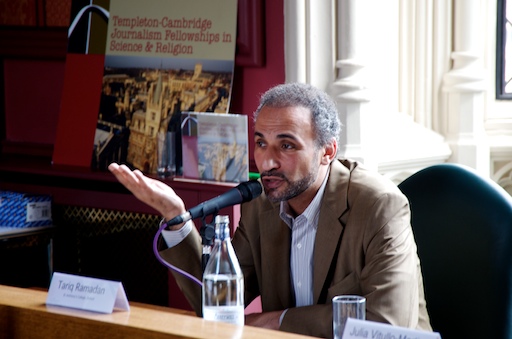 One could almost feel sorry for them. A minister like Ruth Kelly is wrenched from her bucket-and spade holiday on a rainy British beach with the kids to launch yet another push to "engage" with Muslims and to step up efforts to "tackle" extremism. A ministerial tour of nine cities to meet Muslims is announced. It's all designed to sound energetic and purposeful. We pay fat cabinet salaries and we want our politicians to sound like they are earning them. But in truth, beneath the rhetoric—an odd verbal combination of rugby tackles and romantic engagement—is a profound confusion in government policy as to what to do about British-grown Islamist terrorism, apart from large amounts of surveillance and frequent use of detention. Beyond that, the hearts-and-minds strategy is running on empty. I've seen government ministers do "engagement": Paul Murphy, when he had the community-cohesion brief, listened carefully, answered questions patiently and got precisely nowhere. His young, angry Muslim audience heard him out but were profoundly cynical; their views didn't change a jot. Events of the last few days will have immeasurably increased that cynicism: Muslim MPs and peers have been roundly ticked off by a succession of government ministers as if they were imperial vassals who should know their place. Yet they were simply stating the obvious—that British foreign policy is incubating (we can argue whether it's the root cause another time) Muslim extremism. Given that kind of opening salvo from her colleagues, perhaps Kelly should save herself the trouble and return to the beach for some more sandcastles and rock pools. While she's there, the best thing she can do is to get a bit of perspective on a worn-out policy. Even more importantly, she would do well to take stock of a pernicious media onslaught in danger of spiralling out of control. The ministerial tours, the meetings with selected Muslims—most of whom are as baffled by Islamic extremism as ministers—were the responses to last summer's London bombings. The danger is that as the government's "community cohesion" policy flounders, there is no shortage of media commentators pouring out a flood of venomous advice on exactly why no Muslim is worth talking to anyway. |
| Article |
Faith Can Make a Vital Contribution to Both Democracy and Scientific EthicsFor the first time in a generation, religion is part of the national conversation. To reject its wisdom would be folly. It's time to say goodbye. After 17 years on this newspaper, I'm leaving journalism to run a thinktank. Looking back to the fresh-faced reporter who arrived in the newsroom in 1989, I realise that I've spent as long here as I did in formal education—and it has been a comparably life-forming experience. The decision I made, at the age of 18, to go into journalism—to understand how the world worked (prompted by observing, as a volunteer, Sri Lanka's plunge into civil war in 1983)—has been vindicated here. Not a day has gone by when I haven't glimpsed another small portion of that huge complexity, whether from interviewees, colleagues or readers: any insight or knowledge I have acquired owes much to the generosity of thousands of other minds. Thank you. But I've reached a point where I want to do more than describe and comment—I want to try to shape debates, to move upstream in the process of how ideas bring about change. A tall order, murmur sceptics, but life has to include some gambles. As a columnist I have championed particular issues—and some, I'm glad to see, are now part of a new progressive consensus of both left and right, as David Cameron takes up a politics of wellbeing and quality of working life. Soon, I hope, he and Gordon Brown will even start to talk about the care ethic—the vital principle alongside the work ethic at the heart of any society. However, other issues are still floundering on the margins of public debate—or worse. Some I plan to devote more attention to in my new capacity: for example, the regeneration of an intellectual grounding for centre-left politics beyond the tired managerialism and bankrupted concept of choice. For several decades the left has failed to mount a challenge to Thatcher's ambition that "the economy is the means, the goal is to remake the soul." Another example is the vexed and embittered debate around the entangled questions of the representations of Islam in the west, the boundaries of freedom of expression and what the sociologist Richard Sennett calls the "pivotal concept" of respect. |
| Article |
Why the Intelligent Design Lobby Thanks God for Richard DawkinsAnti-religious Darwinists are promulgating a false dichotomy between faith and science that gives succour to creationists.  On Wednesday evening, at a debate in Oxford, Richard Dawkins will be gathering the plaudits for his long and productive intellectual career. It is the 30th anniversary of his hugely influential book The Selfish Gene. A festschrift, How a Scientist Changed the Way We Think, has been published this month, with contributions from stars such as Philip Pullman. A week ago it was the turn of the US philosopher Daniel Dennett, second only to Dawkins in the global ranking of contemporary Darwinians, to be similarly feted at a series of lectures and debates across the UK launching his book on religion, Breaking the Spell. The two make quite a team, each lavishing the other with generous praise as the philosopher Dennett brings to bear his discipline on the scientific findings of Dawkins. The curious thing is that among those celebrating the prominence of these two Darwinians on both sides of the Atlantic is an unexpected constituency—the American creationist/intelligent-design lobby. Huh? Dawkins, in particular, has become their top pin-up. How so? William Dembski (one of the leading lights of the US intelligent-design lobby) put it like this in an email to Dawkins: "I know that you personally don't believe in God, but I want to thank you for being such a wonderful foil for theism and for intelligent design more generally. In fact, I regularly tell my colleagues that you and your work are one of God's greatest gifts to the intelligent-design |
| Review |
 Book Review: Breaking the Spell, by Daniel DennettDaniel Dennett, one of America's most brilliant philosophers, wants to provoke. That's obvious not just from the title of his new book, Breaking the Spell but the image he uses to begin his 400 page analysis of why people have religious faith. An ant climbs laboriously up a blade of grass. Up it climbs, falls and climbs again… and again. Why? A parasite, a tiny brain worm, has commandeered the ant's brain because it needs to get itself into the stomach of a sheep or cow to complete its reproductive cycle. The ant's wellbeing is redundant. Could religion have commandeered human brains to ensure the survival of its own precepts without any regard to its hosts' wellbeing? Dennett has spent much of his distinguished career as a philosopher explaining how some of our most cherished ideals such as freedom and justice can be explained by evolution because they gave human genes an advantage in their struggle to replicate. In this, his new book, he's turned his formidable intellectual firepower on religion itself: his book is the boldest and most ambitious attempt of a Darwinian to account for the phenomenon of religion. Can religion—its practices, beliefs and experiences—be explained simply in terms of genetic advantage? And has that genetic advantage passed its sell-by date—in other words, if religion was useful in the past, is it now? These are big questions so it seems fitting that a tall man with a big beard—with an uncanny resemblance to Charles Darwin or a child's idea of God—has launched himself into the centre of one of America's most fraught public debates, the nature of religion. In the UK on a tour of public debates across the country to promote the book, it's immediately clear that here is a man who has thought deeply about what he is contributing to that debate and why. He is a captivating thinker because he's a master of accessible, vivid analogies—such as that brain worm. Or to take a couple more: referring to the tendency amongst humans for a sweet tooth (he explains why that evolved in the book) he goes on to ask me, "Is religion sugar or saccharine. If it's the latter, we eliminate it at our peril because sugar is worse. But if its sugar, can we develop saccharine?" |
| Article |
No Wonder Atheists are Angry: They Seem Ready to Believe AnythingRichard Dawkins's latest attack on religion is an intellectually lazy polemic not worthy of a great scientist  On Monday, it's Richard Dawkins's turn (yet again) to take up the cudgels against religious faith in a two-part Channel 4 programme, The Root of All Evil? His voice is one of the loudest in an increasingly shrill chorus of atheist humanists; something has got them badly rattled. They even turned their bitter invective on Narnia. By all means, let's have a serious debate about religious belief, one of the most complex and fascinating phenomena on the planet, but the suspicion is that it's not what this chorus wants. Behind unsubstantiated assertions, sweeping generalisations and random anecdotal evidence, there's the unmistakable whiff of panic; they fear religion is on the march again. There's an aggrieved frustration that they've been short-changed by history; we were supposed to be all atheist rationalists by now. Secularisation was supposed to be an inextricable part of progress. Even more grating, what secularisation there has been is accompanied by the growth of weird irrationalities from crystals to ley lines. As GK Chesterton pointed out, the problem when people don't believe in God is not that they believe nothing, it is that they believe anything. There's an underlying anxiety that atheist humanism has failed. Over the 20th century, atheist political regimes racked up an appalling (and unmatched) record for violence. Atheist humanism hasn't generated a compelling popular narrative and ethic of what it is to be human and our place in the cosmos; where religion has retreated, the gap has been filled with consumerism, football, Strictly Come Dancing and a mindless absorption in passing desires. Not knowing how to answer the big questions of life, we shelve them––we certainly don't develop the awe towards and reverence for the natural world that Dawkins would want. So the atheist humanists have been betrayed by the irrational, credulous nature of human beings; a misanthropy is increasingly evident in Dawkins's anti-religious polemic and among his many admirers. This is the only context that can explain Dawkins's programme, a piece of intellectually lazy polemic which is not worthy of a great scientist. He uses his authority as a scientist to claim certainty where he himself knows, all too well, that there is none; for example, our sense of morality cannot simply be explained as a product of our genetic struggle for evolutionary advantage. More irritatingly, he doesn't apply to religion––the object of his repeated attacks––a fraction of the intellectual rigour or curiosity that he has applied to evolution (to deserved applause). Where is the grasp of the sociological or anthropological explanations of the centrality of religion? Sadly, there is no evolution of thought in Dawkins's position; he has been saying much the same thing about religion for a long time. |