
 About the Fellowship
On the Road to Tarsus
As the Year of St Paul gets under way, focus is shifting to the place of his birth, now in modern secular Turkey, where hopes are high that the city's only Christian church could be reinstated for permanent worship.
by Tom Heneghan
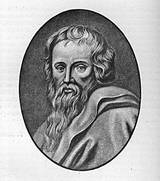
"I am a Jew from Tarsus, a citizen of no ordinary city," St Paul says in the Acts of the Apostles. Tarsus was an important city in ancient times but, 2,000 years after Paul’s birth there, it is much like many other cities on Turkey’s Mediterranean coast.
But it could be the scene of an unusual improvement in Turkish Church-State relations if a request by the Roman Catholic Church is accepted. Pope Benedict’s Year of St Paul began on 29 June, the Feast of Sts Peter and Paul. During that time, the Catholic Church in Turkey expects the normal trickle of pilgrims visiting Tarsus to swell to hundreds of thousands.
It launched its Pauline Year commemorations on 21 June in Tarsus and plans to follow up with symposia, pilgrimages and other events there, in Antakya (Antioch) and in other cities in the region during the year.
The only problem is that there is no fulltime church in Tarsus to receive all these pilgrims. There is a former church, a simple
medieval building with whitewashed interior walls and frescos on the ceiling. But the Turkish state, a staunchly secularist enclave in a society that is 99 per cent Muslim, confiscated it in 1943 for use by the army. It was later turned into a museum.
Christians are allowed to hold services in the museum, but they must request permission and pay the entry fee. Priests have to bring a cross and other religious objects and remove them as soon as Mass is over. If more chairs are needed, the priest has to rent them and have them delivered and removed.
"We have asked that the church be entrusted to us, for the use of all Christians," Bishop Luigi Padovese, the Italian Franciscan who is apostolic vicar of Anatolia and head of the Turkish Catholic Bishops’ Conference, told The Tablet. "We could look after the church, but all Christians could and should celebrate their services there. It couldn’t be any other way.
We’re doing this in the name of St Paul, who is an apostle of dialogue, not separation."
That sounds simple, but nothing about religion is simple in Turkey. Set on a firmly secularist path by Mustafa Kemal Atatürk in the 1920s, Turkey keeps all faiths – including Islam – under tight control. Minority religions have no real legal status, so the state can confiscate their property or curtail their activities.
The Greek Orthodox Church, for example, saw its only seminary, situated on the Mamara Sea island of Halki, or Heybeliada as it is known in Turkish, closed in 1971. Since then it has been pressing to have it reopened, but undoing earlier decisions would mean weakening the policy of secularism. In the Orthodox case, officials say they cannot give in because that would encourage fundamentalist Muslims to press their demands.
The rise to power of Prime Minister Tayyip Erdogan in 2002 brought hopes for reform. A former Islamist, Erdogan and his Justice and Development Party (AKP) dropped the dream of an Islamic state years ago in favour of a democracy with basic rights including freedom of religion. These "Muslim Democrats" saw Turkey’s bid to join the European Union as a way both to help its large business constituency and to counter the powerful military and secularist establishment. Under pressure from Brussels and the wary eye of the secularists, Erdogan cautiously pushed through reforms that widened basic rights.
Shortly after starting its EU accession talks in 2005, however, Ankara seemed to lose interest in making the efforts needed to join. Once Erdogan won re-election last year, he took on the secularist establishment directly by passing a law abolishing a ban on Islamic headscarves at state universities. The secularists, who are firmly entrenched in the military, judiciary and urban intelligentsia, responded by appealing against the law and charging the AKP with subverting secularism.
The Constitutional Court overturned the headscarf law on 5 June and this week began hearing evidence to determine whether
Erdogan and 70 other AKP leaders should be barred from membership of a political party.
This political struggle has basically ended any hope the AKP will continue with reform. "They have depleted their reformist arsenal. This is as far as they can go," said Ankara University sociologist Dogu Ergil, who argues the AKP cared more about establishing itself as a political force in Turkey than actually reforming the country.
"For them, religious freedom would come through the overall democratisation of society," said Cengiz Aktar, political scientist at Istanbul’s Bahcesehir University. "But the party is not interested in reform any more."
Minority religions have seen their ambitious hopes frustrated. "Neither has the Halki seminary been reopened nor has there been any settlement of the property problems of our communities, our churches and our foundations," Ecumenical Patriarch Bartholomew, spiritual head of all Orthodox, told Greek pilgrims visiting him in Istanbul in April. In fact, said a church official, an Orthodox church had recently been seized and might be turned into a mosque.
"We are very disappointed," he said. A recent reform law was meant to help non-Muslim faiths reclaim confiscated property,
but a senior Catholic priest said legal details ensured it would fall short of its promise. "It doesn’t help us because we don’t have any legal status, so we cannot get anything back that used to belong to the Church," he said.
All this has taken place in a tense atmosphere in which nationalists opposed to the AKP have stepped up pressure on minority faiths. A gunman killed a Catholic priest in Trabzon in 2006. A Turkish Armenian journalist and three Protestants were killed in January 2007. "I do think Turkey is evolving towards a more pluralistic society, but there are still many problems," the Catholic priest said. "I have to travel with a bodyguard, and I’m not the only one. The Government doesn’t want anything to happen, but we have to be careful."
Nationalist newspapers occasionally conjure up a supposed "Christian threat" to the country if secularism is relaxed, he added. "They talk about Christians as if they wanted to destroy Turkey. We Catholics don’t proselytise. Only some Protestant groups do it, but they have also become very careful. This nationalism is in retreat and reactions like this are like a parting shot."
There are about 100,000 Christians in Turkey’s population of 73 million. About 35,000 are Catholics of the Latin and Eastern
rites. The Tarsus church issue has also been complicated by pressure from Cardinal Joachim Meisner, the Cologne archbishop who has criticised plans by German Turks to build a large mosque there. Meisner has urged Erdogan to
allow the construction of a pilgrimage centre and a church in Tarsus. Such a step would be "a strong sign of understanding and would help balance things out here in Cologne," he said last December. When the local Turkish community protested against the linkage, Meisner denied he had given Ankara an ultimatum.
Other German bishops are also showing a keen interest in Tarsus. A delegation of them plans to visit the city in September. They have also invited German parishes, schools and other organisations named after St Paul to organise pilgrimage. Cardinal Walter Kasper attended the inauguration of the Pauline Year in Tarsus. Since representatives from other Christian churches (as well as Muslims from Turkey’s Religious Affairs Department) were also invited, it is natural that he, as head of
the Pontifical Council for Promoting Christian Unity, would be there. But the fact he is German has not gone unnoticed.
Bishop Padovese is hopeful that the Tarsus church could be handed back at some point. Civic officials in Iskenderun, to the east of Tarsus, recently returned to the Assyrian Church a church building that had been used as a cinema showing pornographic films. Tarsus officials have been helpful in planning for an event that promises to boost tourism in the area. They’ve stopped charging the entrance fee when Mass is held at the church and have indicated it can be used for services during the Pauline Year. But Tarsus Mayor Burhanettin Kocamaz has opposed handing it over completely, saying there is no Christian community in Tarsus. He has also expressed concern that such a move could encourage evangelical Protestant missionaries he believes are operating clandestinely in the region.
"Tarsus is so important that it deserves a church," Bishop Padovese said. "I think it is understandable that the home of St Paul has a church where we can honour him. What does it feel like to pray in a museum with no cross? This empty building is not a church. We want to have a cross and some icons in this church. We think this could be a good sign of religious
freedom in Turkey. "We are waiting for the Government to fulfil its promise to allow us to be able to pray in a church, not a museum," he said. "The Turkish authorities have been open to our request and we still have faith the church will be opened."
(end of article)
return to list of publications