
 About the Fellowship
Tom Heneghan
Tom Heneghan launched the post of religion editor for Reuters in 2003, after 25 years of reporting from 30 countries, covering events including the fall of the Berlin Wall and wars in Afghanistan, Sri Lanka, and Kosovo. From Paris, he now directs the agency's coverage of religion worldwide and writes mostly on the Vatican and Islam in Europe. He coordinates with Reuters editors for science, health, environment, and pharmaceuticals to ensure reports include relevant religious and ethical issues. He published Unchained Eagle: Germany after the Wall in 2000 and has written chapters in several Reuters books. In early 2005, he helped lead the Reuters multimedia team in Rome covering the death of Pope John Paul II and election of Pope Benedict XVI, which won the Reuters Story of the Year award.
| Column |
 Gaddafi's Secret Missionaries (Reuters) - On a tidy campus in his capital of Tripoli, dictator Muammar Gaddafi sponsored one of the world's leading Muslim missionary networks. It was the smiling face of his Libyan regime, and the world smiled back. The World Islamic Call Society (WICS) sent staffers out to build mosques and provide humanitarian relief. It gave poor students a free university education, in religion, finance and computer science. Its missionaries traversed Africa preaching a moderate, Sufi-tinged version of Islam as an alternative to the strict Wahhabism that Saudi Arabia was spreading. The Society won approval in high places. The Vatican counted it among its partners in Christian-Muslim dialogue and both Pope John Paul and Pope Benedict received its secretary general. Archbishop of Canterbury Rowan Williams, spiritual head of the world's Anglicans, visited the campus in 2009 to deliver a lecture. The following year, the U.S. State Department noted approvingly how the Society had helped Filipino Christian migrant workers start a church in Libya. But the Society had a darker side that occasionally flashed into view. In Africa, rumors abounded for years of Society staffers paying off local politicians or supporting insurgent groups. In 2004, an American Muslim leader was convicted of a plot to assassinate the Saudi crown prince, financed in part by the Society. In 2011, Canada stripped the local Society office of its charity status after it found the director had diverted Society money to a radical group that had attempted a coup in Trinidad and Tobago in 1990 and was linked to a plot to bomb New York's Kennedy Airport in 2007. Now, with the Gaddafi regime gone, it is possible to piece together a fuller picture of this two-faced group. Interviews with three dozen current and former Society staff and Libyan officials, religious leaders and exiles, as well as analysis of its relations with the West, show how this arm of the Gaddafi regime was able to sustain a decades-long double game. Yet Libya's new leaders, the same ones who fought bitterly to overthrow Gaddafi and dismantle his 42-year dictatorship, are unanimous in wanting to preserve the WICS. They say they can disentangle its religious work from the dirty tricks it played and retain the Society as a legitimate religious charity - and an instrument of soft power for oil-rich Libya. A committee led by a leading anti-Gaddafi Islamic scholar, Sheikh Al Dokali Mohammed Al Alem, is now investigating the Society's activities. Their report may take months to appear, but a Reuters investigation has found Libyan officials in Tripoli now say openly what under Gaddafi was taboo - that the religious Society was allied to a huge shadow network, especially in Africa. "There are still some loose ends in the Islamic Call Society in Africa," said Noman Benotman, a former member of an al-Qaeda-linked Libyan Islamist group who now works on deradicalization of jihadists at the Quilliam Foundation in London. "They still have a lot of money going around through these channels that used to belong to the Islamic Call Society," he said. "Huge amounts of money are involved. I think we're talking about one to two billion dollars." |
| Column |
 Catholics and Muslims Pursue Dialogue Amid Mideast TensionOnly five years ago, critical remarks by Pope Benedict about Islam sparked off violent protests in several Muslim countries. Never very good, relations between the world’s two largest religions sank to new lows in modern times. This week, while protesters in the Arab world were demanding democracy and civil rights, Catholics and Muslims met along the Jordan River for frank and friendly talks about their differences and how to get beyond their misunderstandings. The Catholic-Muslim Forum, which grew out of the tensions following Benedict’s speech in the German city of Regensburg, was overshadowed by events in Egypt, Yemen and Syria. The lack of any dramatic news here reflected the progress the two sides have made since 2006. "We have passed from formal dialogue to a dialogue between friends," Cardinal Jean-Louis Tauran, head of the Vatican’s department for interfaith dialogue, said at the conference held near the Jordan River site believed to be where Jesus was baptised. "We realised that we have a common heritage," Recalling the strains that prompted Muslims to suggest a dialogue in 2007, Jordan’s Prince Ghazi bin Muhammad bin Talal said: "Since then, despite some misunderstandings, I dare say the general Muslim-Catholic ambiance has ameliorated considerably." The 24 Catholic and 24 Muslim religious leaders, scholars and educators meeting here debated how each religion uses reason to strengthen insight into its beliefs. Roman Catholicism has long argued that faith without reason can breed superstition while nihilism can emerge from reason without faith. POPE'S ILL-FATED SPEECH This was the core message of Benedict’s Regensburg speech, but it was drowned out when he quoted a 14th century Byzantine emperor describing Islam as violent and irrational. Radical Islamists responded with violent protests. |
| Column |
Report: New Law Needed on Religious DemandsPARIS - French companies are increasingly facing religious demands from their employees and need a change in the labour code to be able to reject requests they find unreasonable, an official report said on Thursday. Most cases concern Muslims seeking time off for prayers or halal food in company cafeterias, but demands have also come from other faith groups as well as workers resentful of colleagues who get special treatment, officials said. In recent years, France has banned religious dress such as Muslim headscarves in state schools and full facial veils in public, but it has no laws covering religious issues that may arise in private companies. The High Council for Integration (HCI) report suggested a labour code amendment allowing companies "to include in their internal rules clauses about clothing, religious insignia and religious practices in the company." Giving legal force to rules restricting religion in the workplace would ensure equal treatment for all employees and protect companies from discrimination suits based on religion, it added. "The principles of neutrality and impartiality favour the correct functioning of a company," the report said. "So the absence of any expression of religion, be it a practice or ostentatious insignia, is strongly recommended." Alain Seksig, author of the report, said the proposal would go to Prime Minister Francois Fillon and any change in the labour code would need to be approved by parliament. HUNDREDS OF CASESFrance's legal separation of church and state relegates religion to the private sphere, an approach challenged by a growing Islamic identity among some of the five million Muslims in the country's 65 million population. The report gave no figures for the extent of demands for exceptions linked to religion but said they came up so often in hearings the HCI had conducted that they merited attention. HCI chairman Patrick Gaubert told journalists his council had learned of hundreds of cases of religious demands in companies in recent years and found they were appearing in many regions around the country. |
| Broadcast |
Du 11 Septembre aux RÃ�©volutions Arabes2001 -2011 la dÃ�©cennie de l�islam ? Peur de l’islam, amalgame islamisme –- islam, théorie du choc des civilisations mais dans le même temps, jamais autant de livres, d’articles, de dossiers spéciaux n’ont été publiés après le 11 Septembre sur une religion mal connue, perçue en Occident comme inconciliable avec les valeurs de la démocratie et de la modernité. 2001-2011 la décennie de l’islam avec la montée de mouvements fondamentalistes extrémistes, l’islamisation grandissante des sociétés musulmanes partout à travers le monde fragilisant les minorités notamment chrétiennes, avec la manifestation en Occident de revendications identitaires ouvrant des débats inédits comme celui en France de l’interdiction du port de la burqa. Mais la fin de cette décennie a contredit les prévisions les plus pessimistes avec le surgissement inattendu des révolutions arabes menées par une jeunesse assoiffée de liberté politique mais aussi de liberté individuelle. 2001-2011 : une décennie difficile pour le monde musulman victime à la fois de la manipulation de l’islam à des fins politiques, de la suspicion à l’égard de leur religion mais aussi de la paralysie de leurs sociétés construites sur un système religieux sclérosé. La décennie 2001-2011 a ainsi mis en lumière l’impérative nécessité de réforme de l’univers musulman quant à la relecture de ses textes fondateurs, à commencer bien sûr par le Coran. Des voix existent dans ce sens. Le monde musulman marche t-il vers son émancipation? Ce sera une des questions de la table ronde qui réunira : - Rachid Benzine : islamologue , enseignant à l’Institut d’études politiques d’Aix- en-Provence au sein du master « Religion-société ». Il est l’auteur d’un ouvrage remarqué : « Les nouveaux penseurs de l’islam » Albin Michel. Format poche 2008. - Tom Heneghan, en charge des religions à l’agence Reuters où il anime un blog « Faithworld ». Tom Heneghan est né à new York, il a reçu le prix Templeton du meilleur journaliste européen d’information religieuse pour ses articles sur l’islam. Tom Heneghan a été notamment en poste à Islamabad. - Jean-François Bayart : chercheur en géopolitique, spécialiste de l’Afrique sub-saharienne et aujourd’hui de l’islam. Directeur du Ceri (1994-2000), cofondateur de la revue Politique africaine et fondateur de la revue Critique internationale. Jean- François Bayart a publié chez Albin Michel « L’islam républicain : Ankara , Téhéran , Dakar, Paris » (2010) et travaille actuellement sur l’islam républicain dans le contexte des révolutions arabes. |
| Column |
Flashback to 2001Taliban with a small 't' dream of Afghan jihad after 9/11  Right after 9/11, Reuters editors asked correspondents with experience in Afghanistan and Pakistan if they wanted to go back there to report. Within days, I flew from Paris to Islamabad, a city I’d left 15 years earlier. Soon, I set up a temporary bureau in Peshawar for several weeks of reporting from there. Among my trips outside of Peshawar was one to Chitral, a mountain town to the north that was close to the Afghan border. One morning, I visited the local mosque and sat down with the teenaged boys gathered in a corner to avoid the disapproving gaze of the imam giving Koran recitation lessons in the main hall. After I introduced myself in Urdu as a journalist from New York, all they wanted to talk about was 9/11. My story is repeated here to show the confused mix of reactions I found.CHITRAL, Pakistan, Oct 3, 2001 (Reuters) – It was a hot, lazy morning at the Jamia mosque in Chitral, high in Pakistan’s mountainous north, and the teenage boys here to learn the Koran were talking more about Afghanistan than about Allah. "The Americans will attack Afghanistan and all Muslims will go to fight against them," Mohammad Karim, a sharp-eyed boy with a whispy beard, declared with a certain bravado. "Yes, jihad (holy war)!" others sitting in the circle chimed in, pointing to the Afghan border only 60 km (40 miles) to the west. "Amreeka murdabad! (death to America!)," they murmured. Then something their Koran training never prepared them for happened. An American reporter sat down with them and began asking each one if he really was ready to go fight. "I’m ready," one piped up, adjusting his prayer cap. "Me, too," another said, grinning. Boys sitting in other circles with teachers stole furtive glances over to the discussion, but then buried their faces back in the Koran. When his turn came, Attaullah hesitated before blurting out, "It’s dangerous there. I don’t want a war. Islam is a peace-loving religion." Slowly, others backpedalled too, despite the efforts of an older boy named Saidullah to end this talk with the infidel and herd the students back to their Koran readings. "Stop talking to that American!" he shouted in the local Khowar dialect, rather than the Urdu they were speaking. "Doesn’t he know the Jews did it? The Jews destroyed the World Trade Center to get America to start a war against Islam." The youngest boys, maybe about 10 or so, watched in fascination, even if they could not follow the whole discussion in Urdu, Pakistan’s national language. One waif nibbled absentmindedly at a corner of his Koran as he listened to the bigger boys talk war. These are taliban (Koran students) with a small "t" – poor Muslim boys whiling away their days at the madrassa (religious school) at the local mosque like millions of others around Pakistan who have no other school to go to. Pakistani madrassas have earned a bad name abroad ever since the Afghan Taliban, a movement of fire-and-brimstone fundamentalists, transformed seemingly overnight from studying at hardline Koran schools at refugee camps in this country to seizing power in Kabul in 1996. Their draconian rule, including barring females from work and school and destroying unique Buddhist art from the pre-Islamic past, made them world pariahs even before September 11. |
| Column |
Defusing Radical FaithCAMBRIDGE, England (Reuters) - When Henry Kissinger published "Diplomacy," his study of international relations, in 1994, it had no index entries for Islam or religion. Ten years later, another secretary of state, Madeleine Albright, wrote her own study on world affairs: "The Mighty and the Almighty: Reflections on America, God and World Affairs." Almost half the book dealt with Muslims and Islam. The contrast between the two books highlights the way the world changed after 19 Muslims flew hijacked planes into the World Trade Center, the Pentagon and a Pennsylvania field on September 11, 2001. The attacks brought religion back into public affairs for many western countries where faith had largely faded into the private sphere. "9/11 showed religion can no longer be ignored," Scott Appleby, a historian at the University of Notre Dame, Indiana, told a seminar on religion after September 11 at Cambridge University. "It is a critical element in many national systems and in radical and extremist movements, but also in movements oriented to human rights, peace-building and civil society," he said. Since that day, governments and researchers in North America and Europe have turned to sociology, psychology, anthropology and other disciplines trying to understand religiously motivated violence and work out how to prevent it. "SECULAR MYOPIA"The results are mixed. Religion's exact role in radicalism is unclear. Psychology and group dynamics may drive extremists more than faith. The Arab Spring could become a democratic option that trumps the jihadist ideology of al Qaeda. For decades before September 11, policymakers and analysts in western countries exhibited what Appleby called a "secular myopia" about religion in politics. Since faith was supposed to be private, they mostly left it out of their analyses. This happened despite the fact that ultra-conservative religious movements had appeared in many world faiths in those years and were often reflected in political action. |
| Column |
Libya Stresses Forgiveness, Reconciliation and RebuildingMuslim theologian runs stabilisation team  (Reuters) - When the officials guiding Libya's post-Gaddafi transition list their most urgent tasks, they talk about supplying water, paying salaries or exporting oil, and then add something quite different -- fostering reconciliation. The focus on forgiveness might have seemed out of place at meetings in Paris on Thursday and Friday where world leaders and Libya's new administration discussed problems of democracy, investment and the unblocking of Libyan funds held abroad. But the example of Iraq, which plunged into chaos and bloody strife after the United States-led invasion in 2003, convinced the Libyans planning the transition from dictatorship and war that the country's needs were more than just material. "You cannot build a country if you don't have reconciliation and forgiveness," said Aref Ali Nayed, head of the stabilization team of the National Transitional Council (NTC). "Reconciliation has been a consistent message from our president and prime minister on, down to our religious leaders and local councils," he told Reuters in an interview. The stabilization team, about 70 Libyans led by Nayed from Dubai, was so versed in the mistakes following the overthrow of Saddam Hussein that they made sure they didn't repeat one of the more shocking -- the looting of Baghdad's main museum. "I'm happy to report that no museum was looted in Tripoli," said Nayed, stressing the country's cultural heritage had to be protected. "The banks were also safeguarded early on." WRONG ROAD TO TAKE In contrast to Iraq, where the U.S. decision to sack all members of Saddam's military and Baath party helped drive men into an armed insurgency, Tripoli will keep almost all Gaddafi-era officials in their posts to ensure continuity. "Destruction and disbandment is the wrong road to take," said Nayed. "It's better to take a conservative approach, even if it's not perfect, and build on it slowly." The focus on reconciliation comes naturally to Nayed who, apart from being the head of an information technology company and the new NTC ambassador to the United Arab Emirates, is an Islamic theologian active in interfaith dialogues. |
| Column |
Insight: Arab Spring Raises Hopes of Rebirth for Mideast Science CAMBRIDGE, England (Reuters) - Egyptian chemist Ahmed Zewail first proposed building a $2 billion science and technology institute in Cairo 12 years ago, just after he won a Nobel Prize. Then-President Hosni Mubarak promptly approved the plan and awarded Zewail the Order of the Nile, Egypt's highest honor. Within months, the cornerstone was laid in a southern Cairo suburb for a "science city" due to open in five years. But while Zewail, who has taught at Caltech in California since 1976, went on to collect more awards and honorary doctorates abroad, his pet project got mired in a jungle of bureaucracy and corruption. His growing popularity in Egypt, where he was touted as a possible presidential candidate after mass protests brought down Mubarak this year, seemed to threaten the officials overseeing the institute, so they blocked it every way they could. "We didn't get anywhere," Zewail told Reuters back in February. But with revolution now sweeping the Middle East, Egypt's ruling military council and interim civilian government gave the project the green light in June. Supporters hail the decision as a positive step toward a new, more modern Middle East. "Some people in the old regime were not happy with the limelight focused on Dr Zewail," said Mohammed Ahmed Ghoneim, a professor of urology at Egypt's University of Mansoura and a member of the board of trustees. But now, he noted with satisfaction, "the decision makers have changed." The project is a "locomotive that will pull the train of scientific research in this country," he said. The poor state of science in the Middle East, especially in Arab countries, has been widely documented. Only about 0.2 percent of gross domestic product in the region is spent on scientific research, compared to 1.2 percent worldwide. Hardly any Arab universities make it into lists of the world's 500 top universities. But Arab scientists say the first steps toward change have been taken. A recent Thomson Reuters Global Research Report showed countries in the Arab Middle East, Turkey and Iran more than doubled their output of scientific research papers between the years 2000 and 2009. The progress admittedly started from a low base, rising from less than 2% of world scientific research output to more than 4% at the end of the decade, but the curve is definitely pointing upwards. "The region is taking a growing fraction of an expanding pool," the report said. "The Arab-Muslim world has improved greatly, even if the universities are still pretty mediocre by and large," said Nidhal Guessoum, an Algerian astrophysicist who teaches at the American University of Sharjah in the United Arab Emirates. "The educational system in primary and secondary schools is still lagging behind world standards, but relative to what it was 30-50 years ago, there is clearly a huge improvement." |
| Column |
Mideast Christians Struggle to Hope in Arab Spring (Reuters) - Middle East Christians are struggling to keep hope alive with Arab Spring democracy movements promising more political freedom but threatening religious strife that could decimate their dwindling ranks. Scenes of Egyptian Muslims and Christians protesting side by side in Cairo's Tahrir Square five months ago marked the high point of the euphoric phase when a new era seemed possible for religious minorities chafing under Islamic majority rule. Since then, violent attacks on churches by Salafists -- a radical Islamist movement once held in check by the region's now weakened or toppled authoritarian regimes -- have convinced Christians their lot has not really improved and could get worse. "If things don't change for the better, we'll return to what was before, maybe even worse," Coptic Catholic Patriarch of Alexandria Antonios Naguib said at a conference this week in Venice on the Arab Spring and Christian-Muslim relations. "But we hope that will not come about," he told Reuters. The Chaldean bishop of Aleppo, Antoine Audo, feared the three-month uprising against Syrian President Bashar al-Assad spelled a bleak future for the 850,000 Christians there. "If there is a change of regime," he said, "it's the end of Christianity in Syria. I saw what happened in Iraq." The uncomfortable reality for the Middle East's Christians, whose communities date back to the first centuries of the faith, is that the authoritarian regimes challenged by the Arab Spring often protected them against any Muslim hostility. DEPENDENT ON DICTATORSApart from Lebanon, where they make up about one-third of the population and wield political power, Christians are a small and vulnerable minority in Arab countries. The next largest group, in Egypt, comprises about 10 percent of the population while Christians in other countries are less than 5 percent of the overall total. Under Saddam Hussein, about 1.5 million Christians lived safely in Iraq. Since the U.S.-led invasion in 2003, so many have fled from Islamist militant attacks that their ranks have shrunk to half that size, out of a population of 30 million. Arab dictators led secular regimes not to help minorities but to defend themselves against potential Islamist rivals. Christians had no choice but to depend on their favour. |
| Column |
EU Assures It Backs Religious Freedom in Mideast Reuters) - European Union leaders assured senior religious figures on Monday they would defend the freedom of belief in the Middle East as part of their support for the spread of democracy in the Arab world. European Commission President Jose Barroso told 20 Christian, Muslim, Jewish and Buddhist leaders at an annual consultation in Brussels that the EU aimed to promote democracy and human rights. Several of the Christian representatives present expressed concern about religious freedom in the mostly Muslim Arab world, which has seen more freedom of speech in recent months but also more violent attacks on Christian minorities in some countries. Barroso said the changes in the Arab world were "of historic proportions" and compared the challenge of anchoring democracy there to the task the EU found in post-communist Europe. "I strongly believe these challenges cannot be met without the active contribution of the religious communities," Barroso told the meeting. Democratic rights included freedom of religion and belief, he stressed. European Council President Herman Van Rompuy said "there is no contradiction between Islam and democracy. This period of openness must be maintained after the revolutions and religious and other minorities must be respected." CHRISTIAN CONCERNSRotterdam Bishop Adrianus van Luyn, head of the COMECE commission of Roman Catholic bishops conferences in the EU, said the progress and stability the EU sought in the Arab world would depend on an improved relationship between religions there. "This requires freedom for all faiths, an end to the discrimination of smaller religious communities and the participation of moderate forces in the construction of society," he said. In recent months, Arab Christians and Muslims have both prayed together and clashed, he said. "Religious differences have often been manipulated or even whipped up on purpose," he said. "The role of the different regimes in this is unclear." |
| Column |
Harun Yahya's Muslim Creationists Tour France Denouncing Darwin France’s staunchly secularist educational establishment was shocked four years ago when schools around the country suddenly began receiving free copies of a richly illustrated Muslim creationist book entitled the "Atlas of Creation." The book by Istanbul preacher and publisher Harun Yahya had come out in Turkey the year earlier. After the French Education Ministry warned teachers not to use it and held a seminar on how to deal with creationist pupils, the issue dropped out of the public discussion. But the Harun Yahya group has been spreading its view in France and is now holding a series of conferences on them. Here is my feature after visiting one of the first meetings in the current series: Muslim creationists tour France denouncing DarwinAUBERVILLIERS, France (Reuters) – Four years after they first frightened France, Muslim creationists are back touring the country preaching against evolution and claiming the Koran predicted many modern scientific discoveries. Followers of Harun Yahya, a well-financed Turkish publisher of popular Islamic books, held four conferences at Muslim centers in the Paris area at the weekend with more scheduled in six other cities. At a Muslim junior high school in this north Paris suburb, about 100 pupils — boys seated on the right, girls on the left — listened as two Turks from Harun Yahya’s headquarters in Istanbul denounced evolution as a theory Muslims should shun. "We didn’t descend from the apes," lecturer Ali Sadun told the giggling youngsters. Charles Darwin’s theory of evolution, he said, was "the scientific basis to defend atheism." |
| Column |
Osama's Islam-Violence Link Weighs Heavy on Muslims PARIS (Reuters) - Osama bin Laden's radical Islamism has had a devastating impact on Muslims around the world by linking their faith with violence and using religious texts to justify mass killings. His "jihadist" strategy has claimed the lives of many thousands of Muslims in Iraq, Pakistan and Afghanistan, as well as in the United States, Europe and Africa. It has also tarred Muslims with suspicion and helped feed prejudice against them. Especially in the West, many Muslims felt pressured to denounce a man they never identified with. "The link he made between violence and Islam made people think this was a religion of terrorists," said Dalil Boubakeur, rector of the Grand Mosque of Paris. "In Western countries, we've had to show on a daily basis that Islam is not violent and Osama bin Laden does not represent Muslims," he said. France is home to Europe's largest Muslim minority of about five million people. Muslim leaders have issued many denunciations of the radical Islamist violence championed by bin Laden. Mainstream scholars have drawn up declarations and fatwas to counter his arguments with opposing views from the Koran. While these may have influenced some undecided Muslims, they had little apparent success in shaking a view that bin Laden represented an important current within Islam. ARAB REVOLTS HELP CHANGE IMAGEThe recent wave of pro-democracy uprisings in the Arab world has gone some way to weakening the perceived link between Islam and violence. The world's media have shown pictures of young Muslims campaigning for civil rights without resorting to religious violence. "In public and private discussion on the main issues facing the Muslim world, violence through radical religious means used to be quite prominent," said H.A. Hellyer, a fellow at Warwick University in Britain. "That has disappeared in recent months." |
| Column |
Libyan Islamic Scholars Issue Fatwa for Muslims to Rebel A coalition of Libyan Islamic leaders has issued a fatwa telling all Muslims it is their duty to rebel against the Libyan leadership. The group also demanded the release of fellow Islamic scholar Sadiq al-Ghriani, who was arrested after criticising the government, and "all imprisoned demonstrators, including many of our young students." Calling itself the Network of Free Ulema of Libya, the group of over 50 Muslim scholars said the government and its supporters "have demonstrated total arrogant impunity and continued, and even intensified, their bloody crimes against humanity." Open dissent by established Muslim clerics is rare in North Africa, but the crackdown on protesters rallied the scholars to form the previously unknown Network of Free Ulema. Their first statement issued on Saturday denounced the government for firing on demonstrators who were demanding "their divinely endowned and internationally recognised human rights" and stressed the killing of innocent people was "forbidden by our Creator." |
| Column |
France Plans Nation-Wide Islam and Secularism Debate France’s governing party plans to launch a national debate on the role of Islam and respect for French secularism among Muslims here, two issues emerging as major themes for the presidential election due next year. Jean-François Copé, secretary general of President Nicolas Sarkozy’s UMP party, said the debate would examine issues such as the financing and building of mosques, the contents of Friday sermons and the education of the imams delivering them. The announcement, coming after a meeting of UMP legislators with Sarkozy on Wednesday, follows the president’s declaration last week that multiculturalism had failed in France. German Chancellor Angela Merkel and British Prime Minister David Cameron have made similar statements in recent months that were also seen as aimed at Muslim minorities there. France’s five-million strong Muslim minority is Europe’s largest. Copé said the debate, due to start in early April, would ask "how to organise religious practice so that it is compatible in our country with the rules of our secular republic." UMP parliamentarians said Sarkozy told them they had to lead this debate to ensure it stays under control. The far-right National Front, reinvigorated with its new leader Marine Le Pen, has recently begun a campaign criticising Muslims here. "Our party, and then parliament, must take on this subject," they quoted Sarkozy as saying. "I don’t want prayers in the streets, or calls to prayer. We had a debate on the burqa and that was a good thing. We need to agree in principle about the place of religion in 2011." France has sought to keep religion out of the public sphere since it officially separated the Catholic Church and the state in 1905. The growth of a Muslim minority in recent decades has posed new challenges that lead to sometimes heated debates. The government banned headscarves in state schools in 2004 and outlawed full face veils in public last year. But there are no rules about halal meals in schools, for example, or whether Muslims can pray in the streets outside an overcrowded mosque. |
| Column |
France Set to Renew Tight Limits on Stem Cells, IVF--a Priority for French Catholic Church (Reuters) - France's parliament opened debate on revising its bioethics laws on Tuesday amid protests that Catholic Church lobbying had thwarted plans to ease the existing curbs on embryonic stem cell research. The bill, originally meant to update a 2004 law in light of rapid advances in the science of procreation, would also uphold bans on surrogate motherhood and assisted procreation for gays. The debate coincided with news of France's first "saviour sibling," a designer baby conceived in vitro to provide stem cells to treat a brother suffering from a severe blood disorder. Critics of the bill said last-minute changes by deputies of the governing conservative UMP party meant the revision would hardly change the restrictive law currently on the books. The text retains tight limits for research on embryonic stem cells, a technology the Catholic Church vigourously opposes because the in-vitro fertilisation (IVF) method used to produce them creates extra embryos that are later discarded. "The Catholics have succeeded in imposing their view on embryos and seem to be succeeding in their attack on this method," said Francois Olivennes, a leading fertility expert. "We propose the authorisation" of this research, said Alain Claeys, a deputy from the opposition Socialist Party. The French Catholic Church has made bioethics a priority issue and overseen reports, public meetings and lobbying efforts to oppose an easing and aim for a tightening of the current law. The bill does not meet all the Church's demands. Among other things, it supports prenatal screening for Down's syndrome, which if found usually leads to an abortion. PEOPLE ARE NOT INSTRUMENTSOlivennes said the bill, which bans embryonic stem cell research in all but a few specific cases, tightened the 2004 law because it permitted production of only three embryos rather than the unlimited number allowed until now. "We already have a very retrograde law compared to those in Spain, Britain, Belgium, Netherlands and all of Scandinavia," he said. "Nothing is advancing." Paris Cardinal Andre Vingt-Trois kept up Catholic criticism of controversial new medical techniques, saying the "saviour baby" whose birth was announced on Tuesday was produced to be used to heal another child. |
| Column |
Concern about Islamists Masks Wide Differences Among Them PARIS, Feb 4 (Reuters) - Politicians and pundits wondering if Islamists will soon take power in Egypt or Tunisia might usefully ask first what the term "Islamist" means and what the Muslim leaders it describes say they want to do. "Islamist" denotes an ideology that uses Islam to promote political goals. But it is so broad a term that it can apply both to Shi'ite Iran's anti-Western theocracy and to pro-business Sunnis trying to get Turkey into the European Union. While the politically charged word can evoke violent action, such as that of Osama bin Laden's al Qaeda, many Islamists say they abhor the use of force and want to work within the law. "We have to distinguish between different combinations of Islam and politics," said Mustafa Akyol, a columnist in Istanbul for Hurriyet Daily News. "A party can take its values and inspiration from Islam but still accept a secular state." Noah Feldman, a Harvard University expert on Islamic law, said taking part in democratic politics can change Islamist parties, citing the AK Party in Turkey that came to power in 2002 after scrapping its ideal of creating an Islamic state. "Once in power, you can no longer rely on slogans or ideology for votes, you actually have to deliver things," he said. "They've done an extraordinary job of that." Egypt's Muslim Brotherhood and the Islamist Ennahda ("Renaissance") party in Tunisia have so far not been able to operate in open political systems, so their professed commitment to democracy has not yet been tested in daily practice. Their programmes reflect a more moderate approach, however, than those of Lebanon's Hezbollah, the Palestinian Hamas or Iran. |
| Column |
Factbox: Egyptians Want More Islam in Politics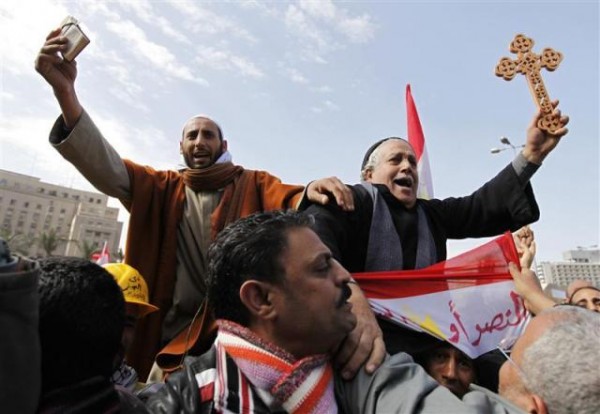 PARIS (Reuters) - Egyptians want Islam to play a large role in politics, reject radical Islamists and think democracy is the best political system, according to poll data collected in Muslim countries last year. The data, published by the U.S.-based Pew Research Center in December, gives an idea of Egyptian public opinion before the current protests there broke out. Collected in April and May of last year for Pew's Global Attitudes Project, the report described Muslim attitudes about religion in politics in seven countries -- Egypt, Indonesia, Jordan, Lebanon, Nigeria, Pakistan and Turkey. A sample group of 1,000 was surveyed in face-to-face interviews. Here are the data for Egyptian responses: ON ISLAM IN POLITICS -- Is it good that Islam plays a large role in politics? 95 percent said "yes" and 2 percent "bad." -- Is Islam's influence in politics positive or negative? 85 percent said "positive," 2 percent said "negative." -- How much of a role does Islam play in Egyptian politics now? 48 percent said "large" and 49 percent said "small." -- Is there a struggle between groups that want to modernize Egypt and Islamic fundamentalists? 31 percent said "yes." Of them, 27 percent described themselves as modernizers and 59 percent called themselves fundamentalists. ON ISLAMIST EXTREMISM -- Are suicide bombings justified? 46 percent said "never," 34 percent "rarely," 12 percent "sometimes" and 8 percent "often." (NOTE: Support for suicide bombing has dropped since 2006, when 28 percent said they were justified sometimes or often.) -- Are you concerned about Islamist extremism in the world? 70 percent said they were "very concerned" or "concerned." -- Are you concerned about Islamist extremism in Egypt? 61 percent said they were "very concerned" or "concerned." ON FOREIGN ISLAMIST MOVEMENTS -- What do you think of Hamas? 49 percent were favorable. -- What do you think of Hezbollah? 30 percent were favorable. -- What do you think of al Qaeda? 20 percent were favorable. -- Do you have confidence in Osama bin Laden? 19 percent said "some" or "a lot," 73 percent said "not much" or "none." (NOTE: Confidence in bin Laden has fallen from 27 percent in 2006). |
| Article |
Will Pew Muslim Birth-Rate Study Finally Silence the “Eurabia” Claim? One of the most wrong-headed arguments in the debate about Muslims in Europe is the shrillEurabia claim that high birth rates and immigration will make Muslims the majority on the continent within a few decades. Based on sleight-of-hand statistics, this scaremongering (as The Economist called it back in 2006) paints a picture of a triumphant Islam dominating a Europe that has lost its Christian roots and is blind to its looming cultural demise. The Egyptian-born British writer Bat Ye’or popularised the term with her 2005 book "Eurabia: The Euro-Arab Axis" and this argument has become the background music to much exaggerated talk about Muslims in Europe. Some examples from recent weeks can be found here, here and here. A good example is the video Muslim Demographics, an anonymous diatribe on YouTube that has racked up 12,680,220 views since being posted in March 2009. Among its many dramatic but unsupported claims are that France would become an "Islamic republic" by 2048 since the average French woman had 1.8 children while French Muslim women had 8.1 children — a wildly exaggerated number that it made no serious effort to document. It also predicted that Germany would turn into a "Muslim state" by 2050 and that "in only 15 years" the Dutch population would be half Muslim. "Some studies show that, at Islam’s current rate of growth, in five to seven years, it will be the dominant religion of the world," the video declares as it urges viewers to "share the Gospel message in a changing world." |
| Column |
Merkel to Germans on Islamism: Stand up for Christian Values (Reuters) - Chancellor Angela Merkel urged Germans debating Muslim integration to stand up more for Christian values, saying Monday the country suffered not from "too much Islam" but "too little Christianity." Addressing her Christian Democratic Union (CDU) party, she said she took the current public debate in Germany on Islam and immigration very seriously. As part of this debate, she said last month that multiculturalism there had utterly failed. Some of her conservative allies have gone further, calling for an end to immigration from "foreign cultures" -- a reference to Muslim countries like Turkey -- and more pressure on immigrants to integrate into German society. Merkel told the CDU annual conference in Karlsruhe that the debate about immigration "especially by those of the Muslim faith" was an opportunity for the ruling party to stand up confidently for its convictions. "We don't have too much Islam, we have too little Christianity. We have too few discussions about the Christian view of mankind," she said to applause from the hall. Germany needs more public discussion "about the values that guide us (and) about our Judeo-Christian tradition," she said. "We have to stress this again with confidence, then we will also be able to bring about cohesion in our society." References to the CDU's Christian roots and "Christian view of mankind" are standard in party convention speeches, but the phrases have become more frequent in recent months as Germany has been gripped by a heated debate over Islam and immigration. DEFINING CULTURAL IDENTITYThe debate began last summer when former Bundesbank board member Thilo Sarrazin published a bestselling book arguing that Muslim immigrants were simple-minded welfare spongers who threatened the country's economy and its long-term future. President Christian Wulff, a Christian Democrat, fueled the controversy last month by saying Islam "belongs to Germany" because of the four million Muslims who now live there. Merkel has sharpened her rhetoric on immigration in recent weeks while avoiding the toughest tones coming from the CDU's Bavarian sister party, the Christian Social Union (CSU). But her party looks set to pass a resolution Tuesday stressing that German culture has Judeo-Christian roots, an idea that critics say aims to marginalize Islam. |
| Broadcast |
IVF Spawns Host of Ethical and Religious IssuesIn vitro fertilization (IVF), the pioneering technique that won Robert Edwards the 2010 Nobel Prize for medicine, opened up a wealth of scientific options and a Pandora’s box of ethical dilemmas. Edwards’s success in fertilizing a human egg outside of the womb led not only to "test tube babies" but also to innovations such as embryonic stem cell research and surrogate motherhood. Amid the applause for these medical breakthroughs, ethicists from some Christian churches oppose IVF and techniques related to it because they involve the destruction of human embryos. The bewildering array of options due to the IVF revolution — from the morality of making "designer babies" to exploitation of poor women as surrogate mothers — has created much concern and many debates among secular ethicists as well. The Roman Catholic Church ranks as probably the most vocal opponent of IVF and the once unimaginable options it has spawned. Its top official for life issues slammed the award to Edwards as "completely misplaced." "Without Edwards there would be no market for human eggs; without Edwards there would not be freezers full of embryos waiting to be transferred to a uterus, or, more likely, used for research or left to die, abandoned and forgotten by all," said Ignazio Carrasco de Paula, President of the Pontifical Academy for Life, in what the Vatican described as personal statement. The director of a Catholic bioethics institute in Britain said IVF "has led directly to the deliberate destruction of millions of human embryos." "It has made possible the manipulation of the human embryo on a scale never possible before," Professor David Albert Jones of the Anscombe Bioethics Center in Oxford told Reuters. VARIED RELIGIOUS RESPONSESMany evangelical Protestants and Orthodox Christians agree with Catholics that destroying embryos amounts to killing because human life, dignity and rights start at fertilization. "To argue that one human being is more developed and therefore in greater need in no way justifies the cannibalizing of another to benefit him," Richard Land, top ethics official for the Southern Baptist Convention (SBC), has said. The SBC is the largest Protestant church in the United States. The Vatican restated its teaching on IVF and related techniques in 2009, saying that humans are persons from the moment of conception "and therefore from the same moment, his or her rights as a person must be recognized" and the first of these is "the inviolable right of every innocent being to life." |
| Column |
 Prayer and Protest at Ground Zero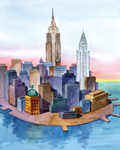 Imam Feisal Abdul Rauf is in many ways the epitome of an integrated American Muslim. He has lived in the United States since the 1960s, moving there as a teenager with his father, and is a graduate of Columbia University. For more than 25 years he has been leading prayers at a mosque based in a store in Lower Manhattan. But reactions to his plans to expand his work with the building of an Islamic cultural centre in New York, just a few blocks from Ground Zero, must have made him wonder about the country of which he has been a part for so long. It has unleashed a storm of protests, fuelled by emotions about 9/11; developed into a row over freedom of religion; and become a tale of contemporary America, where PR, celebrity politicians, shock-jock radio and ignorance about the wider world all play their part. So huge is the row over Rauf's Islamic centre that even President Barack Obama weighed in last week, and it could become a key issue in the mid-term US elections in November. Rauf, who now holds three Friday prayer sessions each week to accommodate all the faithful at his existing mosque in New York, is one of America's leading thinkers on Sufism, the mystical, pluralistic and moderate arm of Islam. For several years he and his wife, Daisy Khan, had been keen to set up a community-centre-cum-prayer room in New York along the lines of the YMCA. Indeed, they took as their template the 92nd Street "Y", a Jewish adaptation of the YMCA concept that is a leading New York centre for people of all religions or none to visit for lectures, debate and educational courses. When Imam Rauf found his site and developed his ambitious proposal for a 13-storey building with a large prayer room, auditorium, meeting rooms, a swimming pool and a food court, he and his supporters sought backing from some Jewish and Christian groups. For them, the centre would be a symbol of a moderate Islam opposed to the hijacking of the faith by extremists and open to the non-Muslim community. But a combination of naivety and events combined to turn their proposal into an explosive plan. While certain religious groups, willing to engage in dialogue, supported them, other New Yorkers still raw from 9/11 were outraged when they discovered that the ground bought for it is only two blocks from the site of the World Trade Center destroyed by Islamist terrorists on 11 September 2001. |
| Column |
 Faith and Smart Phones Commune in Religion Apps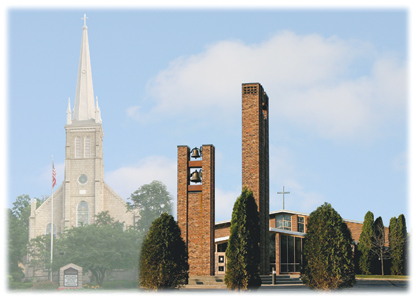 CEDARBURG, Wisconsin (Reuters) - Father Tom Eichenberger began a recent sermon by playing an iPhone ring tone of church bells into the microphone and talking about how praying is like using the popular mobile device. "The same rules apply," he told the Sunday mass congregation at St. Francis Borgia Catholic Church in this small town north of Milwaukee. "You don't just use your iPhone for phone calls, you have to use the apps," he said, referring to small programs that make the popular smart phones perform specific tasks. "And you don't just use prayer to beg for things and treat God like Santa Claus," said Eichenberger, 60, reminding parishioners that prayers are also for giving praise or listening to the Spirit. With smart phones boasting apps to do everything from finding convenient restaurants to identifying stars in the night sky, developers were bound to make programs that bring age-old religious practices into the digital world. Many contain full texts of scriptures like the Bible or Torah. Muslims can calculate the times for their five daily prayers and Hindus can present virtual incense and coconut offerings to the elephant-headed god Ganesh. Not all religious leaders are as enthusiastic as Eichenberger. But many recognize that youth often use new media like smart phones or Facebook to define themselves, interact socially and seek answers for their deepest questions. "Technology is one way we project outward our sense of the self," said Rachel Wagner, assistant professor of religion at Ithaca College in New York. "Religion is an important part of the search for the self. Which apps people run says something about who they are." |
| Column |
NY Imam Plans "Muslim Y," not Ground Zero Mosque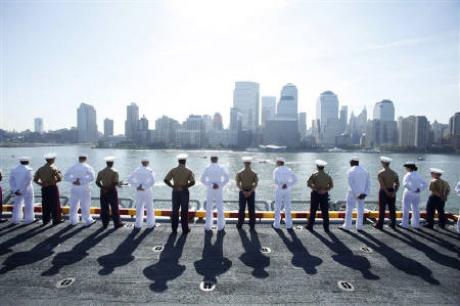 NEW YORK (Reuters) - When Imam Feisal Abdul Rauf decided to build a Muslim cultural centre in lower Manhattan, the model he chose couldn't have been more mainstream American -- the Young Men's Christian Association chapters found in cities across the United States. The institution he had in mind was the 92nd Street Y, a Jewish adaptation of the YMCA concept that is one of New York's leading addresses for residents of all religions or none to visit for public lectures, debates, concerts or educational courses. But Rauf's project is better known here now as the "Ground Zero mosque," after the term for the World Trade Centre site. Families of victims of the Sept. 11, 2001, attacks and conservative politicians have mounted an emotional campaign to block it, claiming that locating it only two blocks north of the site was a provocation. "We repeatedly say we are neither a mosque nor within Ground Zero, but they just shout back 'Ground Zero mosque,' 'Ground Zero mosque,'" Rauf, 61, told Reuters in an interview. The planned building will have a prayer room for Muslims, he said, but it would only be a small part of the 13-story complex. Rauf said the YMCA, which began in London in 1844 as Christian centre for young working men and quickly spread to the United States and other countries, had long worked to promote understanding across religious, ethnic and social dividing lines in modern societies. Now called simply "the Y," its facilities across the United States offer exercise classes, education and community activities. "We are trying to establish something that follows the YMCA concept but is not a church or a synagogue or, in this case, a mosque," he said by telephone from Kuala Lumpur, where he is visiting. "We are taking that concept and adapting it to our time and the fact that we're Muslims. It's basically a Muslim Y." SUPPORTED AND SLAMMEDThe plan won overwhelming support at two community board meetings in May after they heard the $100 million complex would include a 500-seat auditorium, swimming pool, meeting rooms, art exhibition spaces, bookstore and a food court featuring dishes from around the Muslim world. But critics promptly branded the prayer space a mosque, as if the building would feature domes and minarets rather than the sleek modern lines its architects have designed for it. |
| Column |
Questions for the CardinalThe resignation of the Bishop of Bruges after he admitted abusing a young boy unleashed a chain of events culminating in a police raid in Brussels. The scandal surrounding allegations of clerical abuse now threatens to engulf Cardinal Denneels.  Belgium’s bishops met on Thursday 24 June, and there was no reason to think that the monthly meeting would be different from any other. They had gathered at the Archbishop’s Palace in Mechelen, just outside Brussels, and were settling down to business when a team of police officers arrived. The police said they were authorised to search the premises as part of an investigation into sexual abuse by priests of the diocese. The bishops and the diocesan staff had to stay where they were for nine hours, their mobile phones confiscated, while inspectors searched the offices and took away a computer. At the same time, other police raided the nearby flat of Cardinal Godfried Danneels and seized his computer. A third team searched the Leuven offices of the Church’s commission of inquiry into child abuse. In a bizarre move, officers even visited the crypt of St Rumbold’s Cathedral in Mechelen. A church spokesman said they drilled into the tombs of two archbishops, Cardinals Leo Jozef Suenens and Jozef-Ernest van Roey, and inserted a tiny camera to search inside. The Brussels prosecutor’s office disputes this, saying that only one tomb was disturbed. The police raids highlight the growing tension between Church and State in Belgium that has emerged since the Bishop of Bruges, Roger Vangheluwe, resigned in April after admitting sexually abusing his nephew. Another consequence of Vangheluwe’s resignation was an increase in calls to the Belgian Church’s abuse hotline. By last week the commission on child abuse had built up 475 dossiers or cases – all of which were seized in the police raids. Bishop Vangheluwe’s disgrace also threatens the reputation of Cardinal Danneels, until recently a much-loved figure who was Archbishop of Brussels-Mechelen for more than 30 years until his retirement last January. Did he know anything about his friend’s crimes and if he did, was he aware that other diocesan priests had also abused children? Conflicting answers have been given to these questions. The Belgian media believe the cardinal was involved in a cover-up. "The Danneels Code," the Brussels daily De Standaard headlined one front page alongside a picture of the cardinal. An article was entitled "Searching for Danneels’ hiding places." Cardinal Danneels said after Bishop Vangheluwe’s resignation that he had only learned about the case shortly before it became public. Asked about this after the raids, Danneels’ successor, Archbishop André-Joseph Léonard, said he had no reason to doubt what his predecessor had said. |
| Column |
Europe, Face Veils, and a Catholic View of a Muslim IssueThe French National Assembly begins debating a complete ban on Muslim full face veils in public next week and could outlaw them by the autumn. Belgium’s lower house of parliament has passed a draft ban and could banish them from its streets in the coming months if its Senate agrees. The Spanish Senate has passed a motion to ban them after a few towns introduced their own prohibitions. Calls to ban "burqas" — the word most widely in Europe used for full veils, even if most full veils seen are niqabs — have also been heard in the Netherlands and Denmark. According to a Financial Times poll, the ban proposal also "wins enthusiastic backing in the UK, Italy, Spain and Germany". Only a tiny minority of Muslim women in these countries actually cover their faces, but that doesn’t seem to matter. That Switzerland has only four minarets didn’t stop Swiss voters from banning them in a referendum last November (and maybe banning veils next). There seems to be a movement to ban religious symbols that Europeans either reject or fear. Is this the best way for Europe to deal with the veil? Should governments just introduce ever tougher policies and Muslims counter with increasing opposition? Is there another approach that could offer a more harmonious outcome? Cardinal Angelo Scola, the Roman Catholic Patriarch of Venice, thinks there is. His beautiful city of canals and gondolas might not be the first one would think of when discussing Muslim integration in Europe, but his Oasis Foundation there has been working with Christians and Muslims in the Middle East since 2004. His extensive contacts in the region have led to some ideas he thinks could be relevant for Europe. |
| Column |
Muslim Creationist Preaches Islam and Awaits Christ(Reuters) - Harun Yahya is one of the most widely distributed authors in the Muslim world. He may also be among the most widely criticized Muslim authors in the Western world. 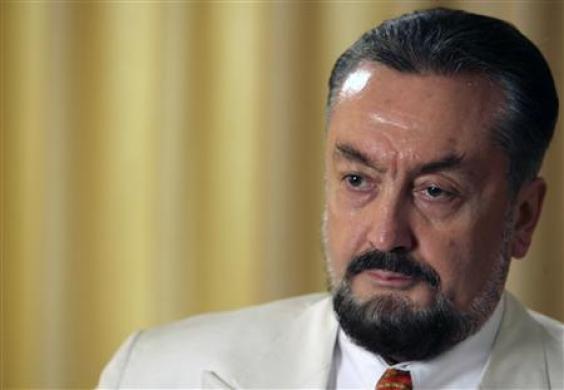 ISTANBUL (Reuters) - Harun Yahya is one of the most widely distributed authors in the Muslim world. He may also be among the most widely criticized Muslim authors in the Western world. His glossy books and DVDs on religion and science sell in Islamic bookshops around the globe. He gives away thousands of expensive volumes and lets readers download much of his work from his websites for free. The Council of Europe accuses him of trying to infiltrate schools with religious extremism and French teachers are told to keep his work from their students. Unknown outside Muslim circles two years ago, Adnan Oktar -- the 52-year-old Turk behind the pseudonym Harun Yahya -- caught the attention of scientists and teachers in Europe and North America by mass-mailing them his 768-page "Atlas of Creation". His lavishly illustrated book preaches a Muslim version of creationism, the view scientists usually hear from Christian fundamentalists who say God created all life on earth just as it is today and oppose the teaching of Darwin's evolution theory. "Every academic I know says they've got one of those," retired University of Edinburgh natural history professor Aubrey Manning told the Glasgow Herald when "The Atlas" turned up in Scotland early this year. "And it's peddling an absolute, downright lie." But Oktar, whose reclusive ways and opaque business have prompted many rumors about why and how he gives away so many books, brushed off all criticism in a rare interview with Reuters. "This huge impact shows the influence of the book," the author, stylishly turned out in a white suit, red tie and clipped beard, said through an interpreter. PR STRATEGYThe controversy stirred up by "The Atlas" has turned the spotlight on a publishing empire that boasts about 260 books in 52 languages, over 80 DVDs and dozens of websites. Well-illustrated and free of theological jargon, they preach that Islam is the one true faith and Darwinism, by undermining religious belief, has led to the discord, atheism, terrorism and extreme political ideologies plaguing the world. |
| Article |
Sarkozy Wants Religious Voices Heard during Economic Crisis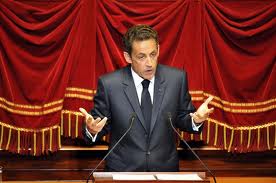 RESIDENT Nicolas Sarkozy has once again praised the role of religion in society, saying that France’s main faiths must speak out at a time when economic crisis reveals a need for more ethical behaviour, and scientific progress challenges society’s moral values. Speaking at the Protestant Institute of Theology in Paris, Mr Sarkozy said religions were "the trustees of an essential part of human wisdom". The institute, which offers university-level theological training, transmits "part of the heritage of a civilisation we want to keep alive", he added. Protestantism, whose followers make up about two per cent of the French population, was part of France’s national identity, he said, praising its adherents for their intellectual and ethical rigour. To underline this, he announced that a working group would study how to have the institute’s degrees officially recognised, as he has done for theology degrees from Catholic institutions of higher learning. Since his election in 2007, Mr Sarkozy has openly praised religion several times and granted certain concessions as part of his drive to loosen the grip of laïcité, France’s strict separation of Church and State. While this always evokes protests from militant secularists, the reactions seem to be getting calmer. Under laïcité, France has traditionally refused to validate theology degrees from religious institutions because state universities do not teach the subject, leaving theology graduates without a university education in the state’s eyes. The president seemed to be thinking of fundamentalists in all faiths when he said the Reformed and Lutheran theology taught at the Institute was a safeguard against "backward sectarian thinking" incompatible with French values and ideals. "The whole society will suffer if we leave those who feel the need to believe in the hands of those without a serious theological training anchored in a long intellectual tradition," he said. This is a point he has also made about the training of imams, which the state has promoted through a programme run by the Catholic Institute and Grand Mosque in Paris. |
| Column |
Muslim Scholars Recast Jihadists' Favourite Fatwa An Indonesian Muslim uses magnifying glass to read Koran verses printed on lamb parchment, Jakarta, July 27, 2005/Beawiharta Prominent Muslim scholars have recast a famous medieval fatwa on jihad, arguing the religious edict radical Islamists often cite to justify killing cannot be used in a globalized world that respects faith and civil rights. A conference in Mardin in southeastern Turkey declared the fatwa by 14th century scholar Ibn Taymiyya rules out militant violence and the medieval Muslim division of the world into a "house of Islam" and "house of unbelief" no longer applies. Osama bin Laden has quoted Ibn Taymiyya’s "Mardin fatwa" repeatedly in his calls for Muslims to overthrow the Saudi monarchy and wage jihad against the United States. Referring to that historic document, the weekend conference said: "Anyone who seeks support from this fatwa for killing Muslims or non-Muslims has erred in his interpretation. "It is not for a Muslim individual or a Muslim group to announce and declare war or engage in combative jihad … on their own," said the declaration. The declaration is the latest bid by mainstream scholars to use age-old Muslim texts to refute current-day religious arguments by Islamist groups. A leading Pakistani scholar issued a 600-page fatwa against terrorism in London early this month. Another declaration in Dubai this month challenged the religious justification for violence used by Islamist rebels in Somalia and calling for peace and reconciliation there ( more on that here). Fatwas may not convince militants, but they can help keep undecided Muslims from supporting them, the scholars say. Because Islam has no central authority to define the faith in all its details, militants who hijack it by twisting texts for their own purposes need to be confronted by moderates who cite chapter and verse to refute them. |
| Column |
The Ethics Angle is Missing in Financial Crisis DebateThe debate about fixing the financial crisis seems to be missing a key factor -- a broad ethical discussion of what is the right and wrong thing to do in a modern economy. 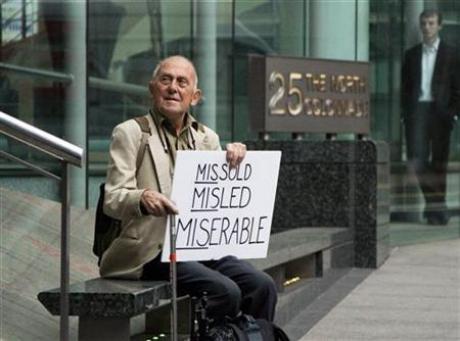 The debate about fixing the financial crisis seems to be missing a key factor -- a broad ethical discussion of what is the right and wrong thing to do in a modern economy. This omission stands out at a time when a survey by the World Economic Forum, host of the glittering annual Davos summits of the rich and powerful, says two-thirds of those queried think the crunch is also a crisis of ethics and values. Voters in western countries may have a gut feeling that huge bonuses and bank bailouts are somehow unfair, but politicians seem unable to come up with a solid response that reflects it, according to a group trying to kickstart an ethics debate. "People have strong emotions about right and wrong - that sense of justice is hard-wired into the way we view the world," Madeleine Bunting, one of three founders of the Citizen Ethics Network launched in London last week, told Reuters. "Our politics have lost the capacity to connect with that kind of emotion," said Bunting, associate editor of Britain's Guardian newspaper. "Politics has become very technocratic and managerial, all about who's going to deliver more economic growth." The backlash against bank bail-outs has forced several chief executives of major banks to lose their bonuses this year. Despite this, the Royal Bank of Scotland (RBS.L), 84 percent publicly owned, announced bonuses of 1 million pounds each to over 100 bankers last week. U.S. President Barack Obama has proposed tighter regulations on banks but also said he didn't begrudge the $17 million bonus awarded to JPMorgan Chase & Co (JPM.N) CEO Jamie Dimon or the $9 million for Goldman Sachs Group Inc (GS.N) CEO Lloyd Blankfein because "they are very savvy businessmen" and some athletes earned more. ENDURING VIRTUES Perhaps not surprisingly in Britain's pre-election period, the Network -- organized by Bunting, Adam Lent of the Trades Union Congress (TUC) and writer Mark Vernon -- had no problem getting top British politicians to contribute to the debate. |
| Column |
Global Economic Crisis is Also Ethical CrisisTwo-thirds of people around the world think the global economic crisis is also a crisis of ethical values that calls for more honesty, transparency and respect for others, according to a World Economic Forum poll.  Almost as many name business as the sector that should stress values more to foster a better world, said the poll for the Forum's annual Davos summit that opened on Wednesday. Only 12.9 percent of the 130,000 people polled said businesses were primarily accountable to their shareholders. Another 18.2 percent said clients and customers, 22.9 percent named employees and 46 percent cited all of them equally. "The poll results point to a trust deficit regarding values in the business world," the Forum said in a statement. "Only one-quarter of respondents believe that large multinational businesses apply a values-driven approach to their sectors." The poll was conducted through Facebook in France, Germany, India, Indonesia, Israel, Mexico, Saudi Arabia, South Africa, Turkey and the United States. A large majority of 67.8 percent said the current global economic crisis was "also a crisis of ethics and values." Only 62.4 percent of younger respondents aged 18-23 agreed here but the total jumped to 78.6 percent for those over 30 years old. The highest "yes" votes came in Mexico (80.1 percent), South Africa (77.4 percent), Indonesia (72.8 percent) and the United States (70.7 percent). France was lowest at 60.3 percent. Only 19 percent of total responses thought faulty ethics played no role in the current economic crisis, according to the poll that can be downloaded at http//www.weforum.org/faith. Sixty percent said businesses large and small should stress values more, compared to 23 percent for politics and 16.1 percent for global institutions. Asked which values were most important in the global political and economic system, 39.3 percent said honesty, integrity and transparency, 23.7 percent chose respecting others, 19.9 percent said considering the impact of actions on others and 17 percent said preserving the environment. The survey showed several variations according to countries. "Religion and faith are most likely to drive values in the United States, Saudi Arabia and South Africa," it said. France and Germany are way ahead of others in saying firms are primarily accountable to their employees, while Israelis led both among those who said businesses were most accountable to shareholders and among those saying to clients and customers. While two-thirds of respondents saw an ethical crisis, only 54.2 percent believed that universal values -- a possible basis for a more moral approach to business -- actually exist. |
| Broadcast |
 Discussing the Veil BanOn France 24 and BBC World TV 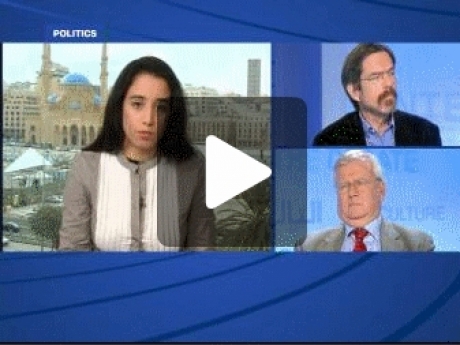 Being an English-speaking religion editor in Paris these days means being invited to try to explain the story to foreign audiences. Here are videos from BBC World Television today, after a parliamentary report on face veils was issued, and from a France24 television debate broadcast last Thursday but only just posted on its website yesterday. Apart from explaining my analysis of the issue, both show why I didn’t go into television! |
| Column |
France Should Denounce, Ban Muslim face Veils, says Panel(Reuters) - France's National Assembly should pass a resolution denouncing full Muslim face veils and then vote the strictest law possible to ban women from wearing them, a parliamentary commission proposed on Tuesday. 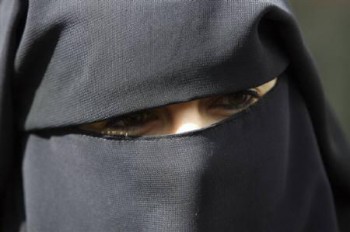 PARIS (Reuters) - France's National Assembly should pass a resolution denouncing full Muslim face veils and then vote the strictest law possible to ban women from wearing them, a parliamentary commission proposed on Tuesday. Presenting conclusions after six months of hearings, the panel also suggested barring foreign women from obtaining French visas or citizenship if they insisted on veiling their faces. But it could not agree whether to opt for an absolute ban on the veils, called burqas or niqabs, or one restricted to public buildings because some members thought a total ban would be unconstitutional. President Nicolas Sarkozy, who last year declared full veils unwelcome in France, said on a visit to a cemetery for Muslim soldiers that he would not allow Muslims to be stigmatized by any measures taken to ensure equality between men and women. "The full veil represents in an extraordinary way everything that France spontaneously rejects," National Assembly President Bernard Accoyer said as the commission delivered its report. "It's a symbol of the subjugation of women and the banner of extremist fundamentalism." While not defending the all-enclosing veils, leaders of the five-million-strong Muslim minority say a legal ban would be excessive since only 1,900 women are said to wear them. Jamel Debbouze, a highly popular Parisian-born comedian of Moroccan background, condemned the plan as xenophobic. "People who go down that path are racists," he told French radio. The veil issue has become linked with another controversial debate about national identity that the government launched only months before regional elections in March. "This debate is sterile and dangerous electioneering," Debbouze said. Supporters of a ban say civil servants need a law to allow them to turn away fully veiled women who cannot be identified when they seek municipal services such as medical care, child support or public transport. |
| Column |
Europe Talks with Faiths It Once Thought Would FadeEurope, the most secularized region on Earth, has decided to launch a regular dialogue with the organized religions that many on the continent once thought would wither away.  In a little-noticed article of its Lisbon Treaty, which went into effect on December 1, the European Union agreed to hold an "open, transparent and regular dialogue" with churches, religious associations and secular groups. What this dialogue will look like is not yet clear, but the fact the European Union has agreed to it reflects the evolving role of religion in a region where it is often overlooked. "Something has happened in the religious culture of Europe," said Joseph Maila, a French political scientist whose new job -- head of the religious affairs section of the French Foreign Ministry's Policy Planning Office -- is another sign of change. "Countries that were heading for a stricter separation of church and state, as in France, are now more open to religion while countries where the state was not completely separate from religion are introducing more separation," he told Reuters. To illustrate this change, Maila recalled how in 1999 France opposed any mention of Europe's Christian roots in an EU Charter of Fundamental Rights agreed the next year. The final text spoke of Europe's "cultural, religious and humanist inheritance." The issue returned in negotiations for the EU's ill-fated constitution, when then Pope John Paul and several traditionally Catholic states tried again to get a reference to Christianity. "France took a very strong position at the time against countries such as Italy, Poland and Ireland," said Maila. "They succeeded in blocking this, but now it's 10 years later and look how things have changed." BEFORE AND AFTER 9/11 The change stems from a specific date -- Sept 11, 2001 -- but it took a while before Europe grasped that those attacks in New York and Washington shattered a widespread belief that faith was a private matter due to wither away in modern societies. |
| Broadcast |
State, Religion... and Freedom?The debate examines if the French Model of a state without religion works. Is it possible to have a model for Society where beliefs and signs thereof are kept separate from the State? 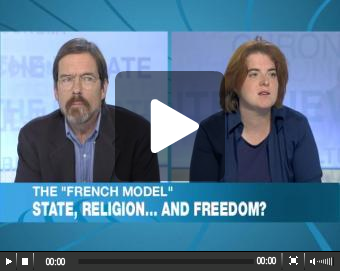 [Professor Tariq Modood was also a guest on this program.] France has had a legal scenario where religion is not allowed in public life since the French Revolution. This was made more concrete by a law in 1905 of the Separation of Church and State. This dilemma is most evident today in the issue of Muslim headscarves in state schools. Should France allow freedom of religious expression? Or do the principles of Liberty, Equality and Fraternity help prevent symbols of faith being hijacked by extremists? Debate hosted by France 24’s Mark Owen. Watch… [Video on france24.com] |
| Column |
Brain Science Starting to Impact Varied FieldsIt used to be that only doctors were interested in brain scans, searching the images for tumors, concussions or other health problems hiding inside a patient's skull.  PHILADELPHIA (Reuters Life!) - More and more, though, images showing neurons firing in different areas of the brain are gaining attention from experts in fields as varied as law, marketing, education, criminology, philosophy and ethics. They want to know how teachers can teach better, business sell more products or prisons boost their success rates in rehabilitating criminals. And they think that the patterns and links which cognitive neuroscience is finding can help them. "Suddenly, neuroscience is seen as a source of answers to these questions," said Martha Farah, director of the Center for Cognitive Neuroscience at the University of Pennsylvania in Philadelphia. "Neuroscience has gotten to the point now, in 2009, that it can actually explain many different types of human behavior that 10 years ago, certainly 20 years ago, it was nowhere near explaining," she told Reuters at a recent seminar explaining the latest progress in brain research for non-scientists. Much of this research focuses on brain scans, especially by functional magnetic resonance imaging (fMRI), which produces images showing the areas of the brain where neurons fire as the patient reacts to stimuli or thinks about something. Activity at certain points, such as the amygdala where fear and anxiety are processed, sometimes shows connections in a person's behavior that are not visible from the outside. Brain scans also show some of the neural bases for emotions and such complex reactions as love, empathy and trust. STRONG INTEREST AMONG LAWYERSNeuroscience has attracted strong interest in the legal profession, where it can challenge fundamental notions of guilt, responsibility, intentions and testimony. Law professor Deborah Denno said the United States legal system assumed the brain had a kind of on-off switch while neuroscience shows it has varying levels of consciousness. "Now it's all or nothing -- you're either conscious and guilty or not conscious and innocent," said Denno, who teaches at Fordham University in New York. |
| Review |
Faith Rites Boost Brains, Even for AtheistsBrain scanners show that intense meditation alters our gray matter, strengthening regions that focus the mind and foster compassion while calming those linked to fear and anger.  PHILADELPHIA, Aug 17 (Reuters) - Buddhist monks and Catholic nuns boost their brain power through meditation and prayer, but even atheists can enjoy the mental benefits that believers derive from faith, according to a popular neuroscience author. The key, Andrew Newberg argues in his new book "How God Changes Your Brain," lies in the concentrating and calming effects that meditation or intense prayer have inside our heads. Brain scanners show that intense meditation alters our gray matter, strengthening regions that focus the mind and foster compassion while calming those linked to fear and anger. Whether the meditator believes in the supernatural or is an atheist repeating a mantra, he says, the outcome can be the same - a growth in the compassion that virtually every religion teaches and a decline in negative feelings and emotions. "In essence, when you think about the really big questions in life -- be they religious, scientific or psychological -- your brain is going to grow," says Newberg, head of the Center for Spirituality and the Mind at the University of Pennsylvania. "It doesn't matter if you're a Christian or a Jew, a Muslim or a Hindu, or an agnostic or an atheist," he writes in the book written with Mark Robert Waldman, a therapist at the Center. NEUROTHEOLOGY In his office at the University of Pennsylvania's hospital, Newberg told Reuters that "neurotheology" - the study of the brain's role in religious belief - is starting to shed light on what happens in believers' heads when they contemplate God. Science and religion are often seen as opposites, to the point where some in each camp openly reject the other, but this medical doctor and professor of radiology, psychology and religious studies sees no reason not to study them together. |
| Column |
Is a Moral Instinct the Source of our Noble Thoughts? Until not too long ago, most people believed human morality was based on scripture, culture or reason. Some stressed only one of those sources, others mixed all three. None would have thought to include biology. With the progress of neuroscientific research in recent years, though, a growing number of psychologists, biologists and philosophers have begun to see the brain as the base of our moral views. Noble ideas such as compassion, altruism, empathy and trust, they say, are really evolutionary adaptations that are now fixed in our brains. Our moral rules are actually instinctive responses that we express in rational terms when we have to justify them. Thanks to a flurry of popular articles, scientists have joined the ranks of those seen to be qualified to speak about morality, according to anthropologist Mark Robinson, a Princeton Ph.D student who discussed this trend at the University of Pennsylvania’s Neuroscience Boot Camp. "In our current scientific society, where do people go to for the truth about human reality?" he asked. "It used to be you might read a philosophy paper or consult a theologian. But now there seems to be a common public sense that the authority over what morality is can be found by neuroscientists or scientists." This change has come over the past decade as brain scan images began to reveal which areas of the brain react when a person grapples with a moral problem. They showed activity not only in the prefrontal cortex, where much of our rational thought is processed, but also in areas known to handle emotion and conflicts between brain areas. Such insights cast doubt on long-standing assumptions about reason or religion driving our moral views. "A few theorists have even begun to claim that that the emotions are in fact in charge of the temple of morality and that moral reasoning is really just a servant masquerading as the high priest," University of Virginia psychologist Jonathan Haidt, one of the leading theorists in this field, has written. Haidt’s Moral Foundations Theory argues that morality is based on five concepts that evolved in all cultures: harm/care, fairness/reciprocity, ingroup/loyalty, authorty/respect and purity/sanctity. Those concepts have real-life consequences, he says — political liberals and conservatives disagree so much on so-called "culture war issues" because liberals base their moral views on the first two concepts while conservatives use all five. Other theorists such as Marc Hauser of Harvard and John Mikhail of Georgetown suggest humans have a universal moral grammar akin to the universal grammar that linguist Noam Chomsky claims underlies all the world’s languages. |
| Article |
Knowing the UnknownOnce he's finished paying taxes on his £1 million Templeton Prize, Bernard d'Espagnat says that he wants to use part of his award to foster study of apophatic, or “negative”, theology. “It's the only form of theology that I appreciate,” the French physicist said. “It would be a good thing if it were investigated a little more than it now is.” D'Espagnat is the 2009 winner of the Templeton Foundation's annual award for affirming life's spiritual dimension. The award, which boasts a monetary value pegged above that of the Nobel Prize, was announced on Monday at Unesco in Paris and will be presented to D'Espagnat by Prince Philip in a private ceremony at Buckingham Palace on 5 May. Now a spry 87, the laureate can look back on a long and illustrious career as senior physicist at the Cern particle physics laboratory in Geneva and physics professor in leading French and American universities. But it's his metaphysical thinking, most recently set out in his 2006 book On Physics and Philosophy, that won him the prize. Click here to read the full article (65K pdf) |
| Interview |
The Scientist Who Leaves Room for Spirituality The German philosopher Immanuel Kant once wrote that he "had to deny knowledge to make room for faith." The French physicist Bernard d’Espagnat hasn’t denied knowledge in his long career developing the philosophy that won him this year’s $1.42 million Templeton Prize. He was pursuing knowledge to better understand what we can know about the ultimate reality of the world. But just like his philosophy echoes that of Kant’s with its conviction that there are limits on knowing reality, his work leaves some room — he would say for spirituality — by saying that human intuitions like art, music and spirituality can help us go further when science searching to understand the world reaches the end of its tether. D’Espagnat’s prize was announced at UNESCO in Paris on Monday. The quantum physics at the core of his work presents baffling insights about reality, but his philosophical conclusions from them sound like common sense. Science is an amazing discipline that opens vast areas of knowledge but cannot go all the way to explaining ultimate reality. There’s a mystery at the core of our existence that we can get a little closer to through the untestable but undeniable intuitions we have. That "little closer" still leaves a large black hole in our knowledge, but it is more than we have if we only rely on empirical science. As often happens in cases like this, d’Espagnat was available for embargoed interviews several days before the prize was announced. I had the pleasure of meeting him on Friday at the Lutetia, a five-star hotel only a short bike ride from my more modest digs in Paris. Now 87 years old, d’Espagnat can look back on a long and illustrious career as a senior physicist at the CERN laboratory in Geneva, professor at the University of Paris ( at its science hub in the suburb of Orsay) and guest lecturer at universities and conferences abroad. His latest book in English, On Physics and Philosophy, came out in the United States in 2006. At the end, I asked what he would do with his prize money. After paying the taxes on it, he stressed as he started his answer, he would divide it into three equal parts. One would go to promote the study of "negative theology," a theology that he says fits his spiritualist outlook and conviction that we can only describe God by concepts that say what God is not. The second part would go to associations helping the homeless. And the last third he and his wife would use to make their home more senior-friendly. "My wife is handicapped and she would very much like to remain at home as long as possible," he said. You can read our story here or consult the prize website for more information and an extensive collection of links about his work. Some excerpts from my interview with d’Espagnat are on the next page. Taking a page from Paul Krugman’s economics blog, let me put a health warning on it right away — (wonkish). |
| Column |
French Physicist d'Espagnat Wins Prestigious Templeton PrizeFrench physicist and philosopher Bernard d'Espagnat has won the 2009 Templeton Prize, billed as the world's largest annual award to an individual, for his work affirming the spiritual dimension of life.  The Templeton Foundation announced the $1.42 million prize at the United Nations Educational, Scientific and Cultural Organization (UNESCO) in Paris on Monday. Award organizers said his work in quantum physics revealed a reality beyond science that spirituality and art could help to partly grasp. John Templeton Jr, president of the foundation launched by his late father, said at the ceremony that d'Espagnat, 87, had "explored the unlimited, the openings that new scientific discoveries offer in pure knowledge and in questions that go to the very heart of our existence and humanity." Previous winners include Russian writer Alexander Solzhenitsyn, United States evangelist Billy Graham and Albanian-born Mother Teresa. D'Espagnat, a former senior physicist at the CERN particle physics laboratory in Geneva and professor at French and United States universities, argues in his books that modern quantum physics shows that ultimate reality cannot be described. Classical physics developed by Isaac Newton believes it can describe the world through laws of nature that it knows or will discover. But quantum physics shows that tiny particles defy this logic and can act in indeterminate ways. D'Espagnat says this points toward a reality beyond the reach of empirical science. The human intuitions in art, music and spirituality can bring us closer to this ultimate reality, but it is so mysterious we cannot know or even imagine it. "Mystery is not something negative that has to be eliminated," he said. "On the contrary, it is one of the constitutive elements of being." ON PHYSICS AND PHILOSOPHY In an interview on Friday, d'Espagnat told Reuters he was brought up a Roman Catholic but did not practice any religion and considered himself a spiritualist. Some baffling discoveries of quantum physics led him to believe all creation has a wholeness and interrelatedness that many scientists miss by trying to break problems down into their component parts rather than understand them in larger contexts. One of these is entanglement, the way that paired subatomic particles remain linked even if they move far apart, so that experimenting with one automatically effects the other without any apparent communication between them. This view clashes with the materialist outlook widespread among scientists.
|
| Article |
On the Road to TarsusAs the Year of St Paul gets under way, focus is shifting to the place of his birth, now in modern secular Turkey, where hopes are high that the city's only Christian church could be reinstated for permanent worship.  "I am a Jew from Tarsus, a citizen of no ordinary city," St Paul says in the Acts of the Apostles. Tarsus was an important city in ancient times but, 2,000 years after Paul’s birth there, it is much like many other cities on Turkey’s Mediterranean coast.
But it could be the scene of an unusual improvement in Turkish Church-State relations if a request by the Roman Catholic Church is accepted. Pope Benedict’s Year of St Paul began on 29 June, the Feast of Sts Peter and Paul. During that time, the Catholic Church in Turkey expects the normal trickle of pilgrims visiting Tarsus to swell to hundreds of thousands. It launched its Pauline Year commemorations on 21 June in Tarsus and plans to follow up with symposia, pilgrimages and other events there, in Antakya (Antioch) and in other cities in the region during the year. The only problem is that there is no fulltime church in Tarsus to receive all these pilgrims. There is a former church, a simple medieval building with whitewashed interior walls and frescos on the ceiling. But the Turkish state, a staunchly secularist enclave in a society that is 99 per cent Muslim, confiscated it in 1943 for use by the army. It was later turned into a museum. Christians are allowed to hold services in the museum, but they must request permission and pay the entry fee. Priests have to bring a cross and other religious objects and remove them as soon as Mass is over. If more chairs are needed, the priest has to rent them and have them delivered and removed. "We have asked that the church be entrusted to us, for the use of all Christians," Bishop Luigi Padovese, the Italian Franciscan who is apostolic vicar of Anatolia and head of the Turkish Catholic Bishops’ Conference, told The Tablet. "We could look after the church, but all Christians could and should celebrate their services there. It couldn’t be any other way. We’re doing this in the name of St Paul, who is an apostle of dialogue, not separation." That sounds simple, but nothing about religion is simple in Turkey. Set on a firmly secularist path by Mustafa Kemal Atatürk in the 1920s, Turkey keeps all faiths – including Islam – under tight control. Minority religions have no real legal status, so the state can confiscate their property or curtail their activities. The Greek Orthodox Church, for example, saw its only seminary, situated on the Mamara Sea island of Halki, or Heybeliada as it is known in Turkish, closed in 1971. Since then it has been pressing to have it reopened, but undoing earlier decisions would mean weakening the policy of secularism. In the Orthodox case, officials say they cannot give in because that would encourage fundamentalist Muslims to press their demands. |
| Column |
Vatican Thanks Muslims for Returning God to EuropePARIS (Reuters) - A senior Vatican cardinal has thanked Muslims for bringing God back into the public sphere in Europe and said believers of different faiths had no option but to engage in interreligious dialogue. Cardinal Jean-Louis Tauran, head of the Catholic Church's department for interfaith contacts, said religion was now talked and written about more than ever before in today's Europe. "It's thanks to the Muslims," he said in a speech printed in Friday's L'Osservatore Romano, the official daily of the Vatican. "Muslims, having become a significant minority in Europe, were the ones who demanded space for God in society." Vatican officials have long bemoaned the secularisation of Europe, where church attendance has dwindled dramatically in recent decades, and urged a return to its historically Christian roots. But Tauran said no society had only one faith. "We live in multicultural and multireligious societies, that's obvious," he told a meeting of Catholic theologians in Naples. "There is no civilisation that is religiously pure." Tauran's positive speech on interfaith dialogue came after a remark by Pope Benedict prompted media speculation that the Vatican was losing interest in it. Some Jewish leaders reacted with expressions of concern and the Vatican denied any change. The "return of God" is clearly seen in Tauran's native France, where Europe's largest Muslim minority has brought faith questions such as women's headscarves into the political debate after decades when they were considered strictly private issues. "GOD IS AT WORK IN ALL"Tauran said religions were "condemned to dialogue," a practice he called "the search for understanding between two subjects, with the help of reason, in view of a common interpretation of their agreement and disagreement." |
| Column |
When to Let Go? Medicine's Top Dilemma(Reuters) - A terminal leukemia patient must have daily blood transfusions or die. A family begs doctors to do everything possible to keep their elderly mother alive. Parents cannot accept their newborn baby will not survive.  WASHINGTON (Reuters) - A terminal leukemia patient must have daily blood transfusions or die. A family begs doctors to do everything possible to keep their elderly mother alive. Parents cannot accept their newborn baby will not survive. End-of-life issues top the list of ethical dilemmas hospitals face as medical progress enables doctors to extend an endangered life to the hard-to-determine point where they may actually only be dragging out death. Private dramas like these play out in hospitals every day, rarely hitting the headlines as did the family feud over ending life support for Terri Schiavo in the United States in 2005 or a British couple's fight to save their severely handicapped baby Charlotte Wyatt in 2003 when doctors wanted to give up on her. These patients used to just die naturally, but now it might be doctors, hospital ethics committees or courts that decide if and when to let them. The more science discovers, especially about the brain, the harder it can get to make that decision. "The ability of medicine to keep people alive for such long periods of time -- despite their best efforts to die -- has changed the way people perceive the end of life," said Susan desJardins, a pediatric cardiologist and member of the ethics committee at Arnold Palmer Hospital in Orlando, Florida. "We have to ask when to provide care, when to stop care, when care is futile," she said during a recent bioethics course for health care professionals at Georgetown University's Kennedy Institute of Ethics. |
| Column |
Pope: Science is too Narrow to Explain Creation PARIS (Reuters) - Pope Benedict, elaborating his views on evolution for the first time as Pontiff, says science has narrowed the way life's origins are understood and Christians should take a broader approach to the question. The Pope also says the Darwinist theory of evolution is not completely provable because mutations over hundreds of thousands of years cannot be reproduced in a laboratory. But Benedict, whose remarks were published on Wednesday in Germany in the book "Schoepfung und Evolution" (Creation and Evolution), praised scientific progress and did not endorse creationist or "intelligent design" views about life's origins. Those arguments, proposed mostly by conservative Protestants and derided by scientists, have stoked recurring battles over the teaching of evolution in the United States. Some European Christians and Turkish Muslims have recently echoed these views. "Science has opened up large dimensions of reason ... and thus brought us new insights," Benedict, a former theology professor, said at the closed-door seminar with his former doctoral students last September that the book documents. "But in the joy at the extent of its discoveries, it tends to take away from us dimensions of reason that we still need. Its results lead to questions that go beyond its methodical canon and cannot be answered within it," he said. "The issue is reclaiming a dimension of reason we have lost," he said, adding that the evolution debate was actually about "the great fundamental questions of philosophy - where man and the world came from and where they are going." |
| Column |
Human Organ Trafficking Threatens Donation Schemes(Reuters) - Illegal trafficking of human organs from poor to rich countries threatens to undermine donation programs in industrialized states and worsen a growing shortage, transplant experts said on Monday.  ROTTERDAM (Reuters) - Illegal trafficking of human organs from poor to rich countries threatens to undermine donation programs in industrialized states and worsen a growing shortage, transplant experts said on Monday. Exploiting poor donors, especially for kidneys, is creating a kind of "medical apartheid" that risks turning public opinion against transplantation schemes and could threaten rich states' legal donation programs, experts said. "Organ trafficking and its consequences are of grave concern for transplantation and public trust in medical establishments," University of Pennsylvania bioethicist Debra Budiani told a conference aimed at a common European policy on transplants. Andre Kottnerus, chairman of the Netherlands Health Council, said health officials had to speak out more publicly against organ trafficking, which the World Health Organization (WHO) says accounts for up to 10 percent of transplants worldwide. "As a scientific community, we have to be accountable to society not only for the successes but also for the failures and threats," he said. Transplantation is a growing problem in rich states because waiting lists are growing far faster than the supply of organs. Kidneys are in dramatically short supply, prompting a black market where the poor receive small sums for donating kidneys sold to rich recipients for many thousands of dollars. There are about 95,000 people waiting for kidney transplants in the United States and about 65,000 in Europe, said Michael Bos of the Netherlands Health Council. Annual transplant rates run about 25,000 in the United States and 16,000 in Europe. |
| Article |
French Scientists Rebut U.S., Muslim Creationism With creationism now coming in Christian and Muslim versions, scientists, teachers and theologians in France are debating ways to counteract what they see as growing religious attacks on science. Bible-based criticism of evolution, once limited to Protestant fundamentalists in the United States, has become an issue in France now that Pope Benedict and some leading Catholic theologians have criticized the neo-Darwinist view of creation. An Islamist publisher in Turkey mass-mailed a lavishly illustrated Muslim creationist book to schools across France recently, prompting the Education Ministry to proscribe the volume and question the way the story of life is taught here. The Bible and the Koran say God directly created the world and everything in it. In Christianity, fundamentalists believe this literally but the largest denomination, Catholicism, and most mainline Protestant churches read it more symbolically. This literalism led Christian fundamentalists to reject the theory of evolution elaborated in the 19th century by Charles Darwin, the foundation stone of modern biology. Muslim scholars also dispute evolution but have not made this a major issue. "There is a growing distrust of science in public opinion, especially among the young, and that worries us," said Philippe Deterre, a research biologist and Catholic priest who organized a colloquium on creationism for scientists at the weekend. "There are many issues that go beyond strictly scientific or strictly theological explanations," he said at the colloquium in this university |
| Article |
Call for "Neuroethics" as Brain Science Races Ahead Neuroscientists are making such rapid progress in unlocking the brain’s secrets that some are urging colleagues to debate the ethics of their work before it can be misused by governments, lawyers or advertisers. The news that brain scanners can now read a person’s intentions before they are expressed or acted upon has given a new boost to the fledgling field of neuroethics that hopes to help researchers separate good uses of their work from bad. The same discoveries that could help the paralyzed use brain signals to steer a wheelchair or write on a computer might also be used to detect possible criminal intent, religious beliefs or other hidden thoughts, these neuroethicists say. "The potential for misuse of this technology is profound," said Judy Illes, director of the Stanford University neuroethics program in California. "This is a truly urgent situation." The new boost came from a research paper published last week that showed neuroscientists can now not only locate the brain area where a certain thought occurs but probe into that area to read out some kinds of thought occurring there. Its author, John-Dylan Haynes of the Max Planck Institute for Human Cognitive and Brain Sciences in Leipzig, Germany, compared this to learning how to read books after simply being able to find them before. "That is a huge step," he said. Haynes hastened to add that neuroscience is still far from developing a scanner that could easily read random thoughts. |
| Article |
France Warns Schools Over Islamic Anti-Darwin BookFrance’s Education Ministry has warned schools around the country against Islamic creationism theories after several thousand copies of an anti-Darwinist book from Turkey were mailed to them, an official said on Friday. The lavishly illustrated Atlas of Creation by Harun Yahya, a shadowy figure who runs a large Islamic publishing operation from Istanbul, was sent to schools and universities over the past 10 days in a move that has baffled authorities, she said. The Turkish original of the 768-page book, which rejects evolution, first appeared in Turkey late last year when it wa also sent unsolicitedly to schools. It sees Charles Darwin’s theory of the survival of the fittest as the root of many of today’s ills, including modern terrorism. |
| Article |
Creation vs. Darwin Takes Muslim Twist in Turkey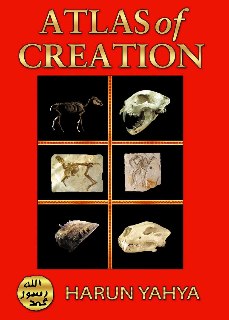 A lavishly illustrated Atlas of Creation is mysteriously turning up at schools and libraries in Turkey, proclaiming that Charles Darwin’s theory of evolution is the real root of terrorism. Arriving unsolicited by post, the large-format tome offers 768 glossy pages of photographs and easy-to-read text to prove that God created the world with all its species. At first sight, it looks like it could be the work of United States creationists, the Christian fundamentalists who believe the world was created in six days as told in the Bible. But the author’s name, Harun Yahya, reveals the surprise inside. This is Islamic creationism, a richly funded movement based in predominantly Muslim Turkey which has an influence U.S. creationists could only dream of. Creationism is so widely accepted here that Turkey placed last in a recent survey of public acceptance of evolution in 34 countries—just behind the United States. "Darwinism is dead," said Kerim Balci of the Fethullah Gulen network, a moderate Islamic movement with many publications and schools but no link to the creationists who produced the atlas. Scientists say pious Muslims in the government, which has its roots in political Islam, are trying to push Turkish education away from its traditionally secular approach. Aykut Kence, biology professor at the Middle East Technical University in Ankara, said time for discussing evolution had been cut out of class schedules for the eighth grade this year. |
| Article |
Pope's Debate Group to Publish Evolution TalksPope Benedict and his former doctoral students plan to publish the proceedings of their weekend seminar on evolution to promote a dialogue between faith and science on the origins of life, participants said. The minutes, to be issued later this year, will show how Catholic theologians see no contradiction between their belief in divine creation and the scientific theory of evolution, they said after the annual closed-door meeting ended on Sunday. The theory of evolution has long been controversial in the United States, where conservative Christians oppose teaching it in public schools and promote rival views such as "intelligent design" that scientists reject as religion in disguise. Benedict and some aides have joined the debate in the past year, arguing for evolution as a scientific theory but against "evolutionism"—which he calls a "fundamental philosophy … intended to explain the whole of reality" without God. "He said this meeting could be an impulse to revive the discussion between theologians and evolutionists," said Father Stephan Horn, who organizes the sessions for top students the then Professor Joseph Ratzinger mentored in the 1960s and 1970s. "He’s been concerned for a long time, and especially now that he is pope, about fostering a discussion between faith and reason," Horn said by telephone from Rome. "He probably believes there is not enough public discussion about this, so that’s why he wants to revive it." Philosophy, Not ScienceVienna Cardinal Christoph Schönborn, the papal associate most active in presenting the Catholic view of evolution in public, said the proceedings could be published in November. |
| Article |
Pope and Former Students Ponder Evolution, Not “ID”Pope Benedict and his former doctoral students spent a weekend pondering evolution without discussing controversies over intelligent design and creationism raging in the United States, a participant said on Sunday. The three-day closed-door meeting at the papal summer residence of Castel Gandolfo outside Rome ended as planned without drawing any conclusions but the group plans to publish its discussion papers, said Father Joseph Fessio S.J. Media speculation had said the debate might shift Vatican policy to embrace "intelligent design," which claims to prove scientifically that life could not have simply evolved, or even the "creationist" view that God created the world in six days. |
| Article |
Pope to Debate Evolution with Former StudentsPope Benedict gathers some of his former theology students on Friday for a private weekend debate on evolution and religion, an issue conservative Christians have turned into a political cause in the United States. Benedict, who taught theology at four German universities before rising in the Catholic Church hierarchy, has pondered weighty ideas with his former Ph.D students at annual meetings since the late 1970s without any media fuss. But his election as pope last year and controversies over teaching evolution in the United States have aroused lively interest in this year’s reunion on September 1–3 at the papal summer residence of Castel Gondolfo outside Rome. |
| Article |
Don't Preach to Scientists in Evolution Row: Küng Hans Küng is not a man afraid of challenging authority. The liberal Swiss priest has confronted the Vatican so often that he was barred from teaching Catholic theology in 1979 and was long a "persona non grata" in Rome. He also has clear ideas about where theologians should not tread. The row about evolution and intelligent design, a major issue in the United States, is a case where he says believers should not claim to know more science than the scientists.As a man of faith, Küng sees God reflected in creation, but says this does not mean the Almighty tinkers with the laws of nature or creates life forms so complex they could not have evolved. Supporters of the intelligent design theory, which they say offers scientific proof a higher power designed life on Earth, suffered a setback in December when a Pennsylvania court ruled they could not teach their views as science in public schools. "There’s no use casting doubt on (scientific) results with some little problems, as the intelligent design people or the creationists do," Küng told Reuters in a telephone interview from his office at Tuebingen University in Germany. "What’s there is there. A theologian should not cast doubt on a scientific consensus, but see how he can deal with it." This debate has been dominated mostly by evangelical Protestants. Conservative Catholics such as Pope Benedict and Vienna Cardinal Christoph Schoenborn have joined in but not openly embraced intelligent design. |
| Interview |
 Catholics and Evolution: Interview with Cardinal Christoph SchönbornAre Christian values compatible with Darwinism? A Catholic leader sets out his views on evolution and intelligent design.  Cardinal Christoph Schönborn of Vienna touched off a storm in July 2005 with an op-ed page article in the New York Times questioning Charles Darwin’s theory of evolution and appearing to endorse the concept of intelligent design—the theory that life forms are too complex to have been the product of random mutation. Scientists accused the 60-year-old cardinal, who has often been named as a possible future pope, of trying to steer Catholic teaching away from its cautiously positive view of evolution and toward what they said was the pseudo-science of intelligent design. In a recent interview with Beliefnet in the Austrian capital, Schönborn set out his sometimes misunderstood views, clearly distinguishing between evolution and what he calls "evolutionism." He explained that while he believes that God is the intelligent designer of the universe, his position on evolution springs from a philosophical rather than a scientific standpoint. His main concern, he said, was not to denigrate evolution as a natural process but to criticize atheistic materialism [the idea that only matter, not spirit, exists] as the dominant philosophy of today’s secular societies. Framing the question this way, this close associate of Pope Benedict XVI echoed views that the new pontiff has expressed about the dangers of relativism. Saying he was not qualified to comment on American legal issues, Schönborn declined to comment on the recent Pennsylvania case in which U.S. District Judge John Jones ruled that intelligent design is not science and cannot be taught in public-school biology classrooms. The following is an English translation of Schönborn’s remarks in German:
|